Just accept it by faith — a No! No!

Take Flight


ChristArt

Spencer D Gear

Time Australia magazine, 10 January 2005, published this letter: As a “Sunday-School teacher, I tell my students what most of us here in the Bible Belt [USA] believe: the Scripture is the inerrant word of God, given by inspiration to the writers of the Bible. That Matthew and Luke record different details makes neither of them inaccurate. Nor does the fact that some of this cannot be corroborated by other sources. That’s why we call it faith.”[1a]

This was a response to a liberal theological view in Time that debunked the Christmas story.Is this teacher’s response the way to go with Aussies who don’t care about God and the Bible?This view seems to be a blind leap of Bible-Belt faith that accepts the inspired, infallible word of God.

When the apostle Paul was dealing with those in the synagogue, the marketplace and with the pagan philosophers at Mars Hill (the Areopagus), Athens, he took a different line (see Acts 17:16-34).

If they didn’t care about God, he started where they were with their issues.He got to know his audience: “He was greatly distressed to see that the city was full of idols” (v. 16). If God was not at the forefront of their views, he reasoned daily with them – even in the marketplace (v. 17).This was no one-way communication.It was a vigorous question and answer dialogue.

On Mars Hill, the apostle showed us how to do it:

Know people and their “idols” (vv. 16-22);

Nature of God and human beings (vv. 23-27);

Ordinary quotes from life (vv. 28-29);

Word of God (repent, judgement, resurrection, vv. 30-31).

This is hardly a politically correct method in these days of so-called tolerance toward many things – except tolerance toward born-again Christianity.

One contemporary apologist says that we need to unmask the “intellectual bluff” of people and “follow-through” with an exposé of their ways.[1b]What are some of these Aussie idols that need to be unmasked?

Following the events of Sept. 11, 2001 and the tsunami in Dec. 2004, I received comments such as: “What a monster of a God you have who would allow such slaughter!””Did your God cause this?He’s a cosmic Saddam Hussein.”We need solid answers to the problem of evil.

J. B. Phillips wrote: “Evil is inherent in the risky gift of free will. . .Exercise of free choice in the direction of evil is what we call the ‘fall’ of man, is the basic reason for evil and suffering in the world.It is man’s responsibility, not God’s.He could stop it, but in so doing would destroy us all.”[2] So, do you want God to wipe out all evil?Also take a read of Genesis ch. 3 to understand the origin of evil. Check out Ron Rhodes, Why Do Bad Things Happen If God Is Good?[3]

Around Christmas & Easter times, trusty old chestnuts are trotted out.

Recently, flack against the Bible has been fuelled by the mass media coverage given to the Jesus Seminar Fellows and others of their kind.These Fellows concluded that “eighty-two percent of the words ascribed to Jesus in the gospels were not actually spoken by him.”[4]

Dr. John K. Williams, retired Uniting Church minister, wrote in The Age, January 19 2004: “An evangelist who preaches the ‘old time religion’ is asking hearers to stake the living of their lives upon beliefs for which there is no evidence whatsoever and that fly against humankind’s painfully acquired knowledge of the world and of themselves. That is not simply, as we today are taught to say, a ‘big ask’ but an outrageous ask.”[5]

In responding, we could examine: (a) What are a writer’s presuppositions about the nature of God and the supernatural?Has he/she reached conclusions before considering the evidence? (b) What is the evidence in support of the reliability of any document from history, including Julius Caesar, Captain James Cook, the Old & New Testaments?

F. F. Bruce, formerly of the University of Manchester, investigated the accuracy of the New Testament and concluded: “The earliest preachers of the gospel knew the value of this first-hand testimony, and appealed to it time and again.’We are witnesses of these things,’ was their constant and confident assertion.And it can have been by no means so easy as some writers seem to think to invent words and deeds of Jesus in those early years, when so many of His disciples were about, who could remember what had and had not happened… The disciples could not afford to risk inaccuracies.”[6]

All of us can be guilty of assuming the truth or otherwise before we deal with the evidence.Check out these resources: F. F. Bruce[7], Walter C. Kaiser Jr., The Old Testament Documents: Are They Reliable & Relevant?[8] and K. A. Kitchen, On the Reliability of the Old Testament.[9] Kitchen concludes: “In terms of general reliability . . . the Old Testament comes out remarkably well, so long as its writings and writers are treated fairly and evenhandedly.”[10]

Biblical Christianity does not say, “Just believe!”It provides evidence for faith: “After his suffering, [Jesus] showed himself to these men and gave many convincing proofs that he was alive. He appeared to them over a period of forty days and spoke about the kingdom of God” (Acts 1:3). Unthinking Christianity is sick Christianity.

To God Be the Glory!


[1a]  Available from: http://www.time.com/time/magazine/article/0,9171,1013262,00.html [cited 18 June 2009].

[1b] J. Budziszewski 2003, “Off to College: Can We Keep them?” in Ravi Zacharias & Norman Geisler (gen. eds.), Is Your Church Ready?  Grand Rapids, Michigan:  Zondervan, p. 121.

[2] Cited in Paul E. Little 1987, Know Why You Believe, Victor Books, Wheaton, IL., pp. 115-116.

[3] 2004, Harvest House Publishers, Eugene, Oregon.

[4] Robert W. Funk, Roy W. Hoover and the Jesus Seminar 1993, The Five Gospels, Macmillan Publishing Company (A Polebridge Press Book), New York, p. 5.

[5] Williams, J. K. 2004, ‘It’s not good enough for us’, The Age [Melbourne, Australia], January 19 2004.

[6] F. F. Bruce 1960, The New Testament Documents: Are They Reliable?Inter-Varsity Press, Leicester, pp. 45-46 (a revised 2003 edition is available).

[7] Ibid.

[8] 2001, InterVarsity Press, Downers Grove, IL.

[9] 2003, William B. Eerdmans Publishing Company, Grand Rapids, MI.

[10] Ibid., p. 500.

Content of the Gospel and Discipleship[1]

Ticket to Heaven
(courtesy ChristArt)

Compiled by Spencer D Gear [1a]

Some people ask me questions such as these:

  • What must I accept and do in order to become a Christian?
  • What’s the difference between a real Christian and one who goes to church?
  • What must I do to receive salvation?
  • How can I get to heaven and avoid hell?

 The following broad outline is designed to answer these questions.

A. You must understand God’s holiness.

 “God’s holiness means that he is separated from sin and devoted to seeking his own honor.”[2]

Proverbs 9:10; Psalm 111:10; Job 28:28; Proverbs 1:7; 15:33; Micah 6:9.

1. God is utterly holy and His law, therefore, demands perfect holiness.

See Leviticus 11:44-45; Joshua 24:19; I Samuel 2:2; 6:20.

2. Even the New Testament gospel requires this holiness.

See I Peter 1:15-16; Hebrews 12:14.

3. Because the Lord God Almighty is holy, He hates sin.

Exodus 20:5.

4. Sinners cannot stand before Him

¨ What is sin? “Sin is any failure to conform to the moral law of God in act, attitude, or nature. . . Sin is more than simply painful and destructive–it is also wrong in the deepest sense of the word. . . Sin is directly opposite to all that is good in the character of God.”[3]

Psalm 1:5

B. You must understand God’s righteousness/justice.

In English, the terms “righteousness” and “justice” are different words. This is not so in the Hebrew Old Testament and the Greek New Testament. There is only one word group behind these two English terms.[4]

1. What is God’s righteousness/justice?

  • “God always acts in accordance with what is right and is himself the final standard of what is right.”[5]
  • What is right or just? “Whatever conforms to God’s moral character is right.”[6]
  • Deuteronomy 32:4; Genesis 18:25; Psalm 19:8; Isaiah 45:19; Romans 9:20-21.

2. Christ’s sacrifice was to show God’s righteousness

When God sent Christ as a sacrifice to bear the punishment for sin, it was to show God’s righteousness. See Romans 3:25-26.

C. You must understand that you are a sinner who sins & God hates sin.

  • Gospel means “good news.”
  • What makes it truly “good news” is not only that heaven is free, but also God’s Son has conquered that sin.
  • Jesus said: “It is not the healthy who need a doctor, but the sick. I have not come to call the righteous, but sinners” (Mark 2:17). What do you think Jesus meant by that?

1. Sin is what it is that makes true peace impossible for unbelievers.

Isaiah 57:20-21

2. All have sinned.

Romans 3:10-18

3. Sin makes the sinner worthy of death.

James 1:5; Romans 6:23

4. Sinners can do nothing to earn salvation.

Isaiah 64:6; Romans 3:20; Galatians 2:16; Revelation 21:8

D. You must understand the wrath(anger) of God.

“If God loves all that is right and good, and all that conforms to his moral character, then it should not be surprising that he would hate everything that is opposed to his moral character. God’s wrath directed against sin is therefore closely related to God’s holiness and justice.”[7]

1. What is the wrath of God?

“God’s wrath means that he intensely hates all sin.”[8]

Exodus 32:9-10; Deuteronomy 9:7-8; 29:23; 2 Kings 22:13; John 3:36; Romans 1:18; 2:5, 8; 5:9; 9:22; Colossians 3:6; 1 Thessalonians 1:10; 2:16; 5:9; Hebrews 3:11; Revelation 6:16-17; 19:15.

2. God is slow to inflict his wrath on people. Why?

See Psalm 103:8-9; Romans 2:4; 2 Peter 3:9-10.

E. How can God’s wrath be pacified/appeased?

1. God has provided a way through blood-sacrifice.

Leviticus 8:15; 17:11

2. By Christ’s death (blood-sacrifice), he appeased the wrath of God.

Hebrews 9:7, 12, 20, 22, 24.

3. God calls this “propitiation” and it makes God favourable towards sinners.

Romans 3:25; Hebrews 2:17; I John 2:2; 45:10 (atoning sacrifice/sacrifice of atonement = propitiation)

  • Propitiation is important “because it is the heart of the doctrine of the atonement. It means that there is an eternal, unchangeable requirement in the holiness and justice of God that sin be paid for. Furthermore, before the atonement ever could have an effect on our subjective consciousness, it first had an effect on God and his relation to the sinners he planned to redeem. Apart from this central truth, the death of Christ really cannot be adequately understood.”[9]

  • “The atonement is the work Christ did in his life and death to earn our salvation.”[10]

F. Who is Christ and what has He done for you?

The solution for the sinner is found in the Lord Jesus Christ.

1. Christ is eternally God

John 1:1-3, 14; Colossians 2:9

2. Christ is Lord of all

Revelation 17:14; Philippians 2:9-11; Acts 10:36

3. Christ became man

Philippians 2:6-7

4. Christ is utterly pure and sinless

Hebrews 4:15; 1 Peter 2:22-23; 1 John 3:5

5. The sinless one became a sacrifice for YOUR sin

Corinthians 5:21; Titus 2:14

6. He shed His own blood as an atonement for sin

Ephesians 1:7-8; Revelation 1:5

7. He died on the cross to provide a way of salvation for sinners

1 Peter 2:24; Colossians 1:20

8. Christ rose triumphantly from the dead

Romans 1:4; 4:25; 1 Corinthians 15:3-4

G. What does God demand of you?

“Repentant faith is the requirement. It is NOT merely a ‘decision’ to trust Christ for eternal life, but a wholesale forsaking of everything else we trust, and a turning to Jesus Christ as Lord and Saviour.”[11]

1. Repent

What is repentance? “Repentance is a heartfelt sorrow for sin, a renouncing of it, and a sincere commitment to forsake it and walk in obedience to Christ.”[12]

Ezekiel 18:30, 32; Acts 17:30; 26:2

2. Turn your heart from all that you know dishonours God

Thessalonians 1:9

      3. Follow Jesus

Luke 9:23, 62; John 12:26

4. Trust Jesus as your Lord and Saviour

Acts 16:31; Romans 10:9

5. Repentance and faith continue throughout your life

Repentance and faith must start together at the beginning of the Christian life. See Acts 20:21. Repentance and faith must be lived by Christians throughout their lives.

Concerning faith, see Galatians 2:20; I Corinthians 13:13.

Concerning repentance, see Revelation 3:19; 2 Corinthians 7:10

H. You must count the cost of following Jesus with much thought.

  • Salvation is absolutely free.
  • So is joining the army; you don’t have to pay to get into it. Everything you need is provided.[13]
  • Following Christ is like joining the army. It will cost you daily. It will cost you freedom, family, friends, doing things your own way (autonomy), and possibly even your life.[14]
  • I must tell you, a prospective believer, the full truth and nothing but the truth.
  • Read what Jesus said about this in Luke 14:26-33; Matthew 10:34-38; Romans 6:6.

A.W. Tozer wrote:

“The cross is the most revolutionary thing ever to appear among men. The cross of Roman times knew no compromise; it never made concessions. It won all its arguments by killing its opponent and silencing him for good. It spared not Christ, but slew Him the same as the rest. He was alive when they hung Him on that cross and completely dead when they took Him down six hours later. That was the cross the first time it appeared in Christian history. . . The cross effects [i.e. brings about] its ends by destroying one established pattern, the victim’s, and creating another pattern, its own. Thus it always has its way. It wins by defeating its opponent and imposing its will upon him. It always dominates. It never compromises, never dickers nor confers, never surrenders a point for the sake of peace. It cares not for peace; it cares only to end its opposition as fast as possible.

With perfect knowledge of all this, Christ said, ‘If any man will come after me, let him deny himself, and take up his cross, and follow me.’ So the cross not only brings Christ’s life to an end, it ends also the first life, the old life, of every one of His true followers. It destroys the old pattern, the Adam pattern, in the believer’s life, and brings it to an end. Then the God who raised Christ from the dead raises the believer and a new life begins.

This, and nothing less, is true Christianity. . .

We must do something about the cross, and one of two things only we can do – flee it or die upon it.”[15]

  • Read Mark 8:35-37.

I. I urge you to trust (have faith in) Christ alone for your salvation.

  • 2 Corinthians 5:11, 20; Isaiah 55:7; Romans 10:9-10;
  • What will you do with Jesus?


J. After you trust Christ alone, what should you do? Where do good works fit in?

  • Good works: See Hebrews 5:9; Titus 2:14; Ephesians 2:10;
  • Baptism: See Acts 2:28; 8:36-39; Mark 16:16; Romans 4:10-11;
  • Join with a local church. See Hebrews 10:25.

K. What was the first creed of the early church?

See Romans 10:9-10; 1 Corinthians 12:3; 2 Corinthians 4:5.

L. How will you know that you are a Christian?

1. You presently continue to trust Christ for salvation

Colossians 1:23; Hebrews 3:14; 6:12; John 3:16 (“believes” means “continues believing in him.”[16])

2. There will be evidence in your heart of the regenerating work of the Holy Spirit[17]

  • Through the subjective testimony of the Holy Spirit within your hearts. Romans 8:14-16; 1 John 4:13.
  • Your life will produce the fruit of the Spirit. Galatians 5:22-23
  • You continue to believe and accept the sound teaching of the church. 1 John 2:23-24
  • You will have a continuing relationship with Jesus Christ. John 15:4, 7
  • You will have a life of obedience to God’s commands. 1 John 2:4-6, 10, 19; 3:9-10, 14, 17, 24; 4:7; 5:18; James 2:17-18.
  • You will give to needy people. Matthew 25:31-46

3. You will have a long-term pattern of growth and obedience in your Christian life

2 peter 1:5-7, 10; John 6:40

M. How will other people know that you are a Christian?

By the fruit in your life

Galatians 5:22-23; Matthew 7:16-20; 25:31-46; James 2:17-18

N. Do you want to repent and trust Christ alone for your salvation and live eternally for and with him?

O. What happens to those who reject God’s offer of salvation?

Because God is an absolutely just God, if you reject his offer of salvation you will receive the consequences God has decided. At death, God sends you to hell.

1. Hell forever

“Hell is a place of eternal conscious punishment for the wicked.”[18] David Kingdon writes: “Sin against the Creator is heinous to a degree utterly beyond our sin-warped imaginations’ [ability] to conceive of. . . Who would have the temerity to suggest to God what the punishment . . . should be?”[19]

Matthew 25:30, 41, 46; Mark 9:43, 48; Luke 16:22-24, 28; Revelation 14:9-11; 19:3

2. Is hell just?

Revelation 19:1-3

Notes:


[1] This summary of the content of the Gospel is based on John F. MacArthur Jr., Faith Works: The Gospel According to the Apostles. Milton Keynes, England: Word Publishing, 1993, p. 247ff.

[1a] Spencer D Gear PhD is ordained with the Christian & Missionary Alliance Australia, is an independent researcher, Bible teacher and Christian apologist, based in Brisbane, Qld, Australia.

[2] Wayne Grudem, Systematic Theology: An Introduction to Biblical Doctrine. Leicester, England: Inter-Varsity Press, 1994, p. 201

[3] Ibid., p. 490, 492.

[4] Ibid., p. 203.

[5] Ibid.

[6] Ibid., p. 204.

[7] Ibid., pp. 205-206.

[8] Ibid., p. 206.

[9] Ibid., p. 575.

[10] Ibid., p. 568.

[11] MacArthur., p. 252.

[12] Grudem, p. 713.

[13] MacArthur, p. 253.

[14] Ibid.

[15] Ibid., pp. 254-55, from A. W. Tozer, The Root of the Righteous. Harrisburg, Pa.: Christian Publications, 1955, pp. 61-63.

[16] Grudem, p. 803.

[17] Ibid., p. 803-806.

[18] Ibid., p. 1148.

[19] In ibid., p. 1151

Copyright © 2012 Spencer D. Gear. This document last updated at Date: 14 December 2015.

Answering Bright Atheists [1]

 
theglobaldispatch.com

By Spencer D Gear

Some prominent Australians have identified themselves as atheists. These include Australia’s 21st Governor-General and federal minister in Gough Whitlam’s Labor government, Bill Hayden.  He refused to swear on the Bible when he became Governor-General in 1989.  Atheism is alive and well to the point that while I was surfing the Internet recently, I came across this link to a fellow promoting that he is legally ordained as an atheist with the Universal Life Church.

To put it simply, an atheist is a person who does not believe in the existence of God. How many atheists are there in the world?  In a 1991 worldwide poll, it was found that 4.4% of the world’s population were atheists.[3] However, if we add the figure of “non-religious,” the highest figure rises to about 20% of the world population, or about 1.2 billion people.[4] Most of these would be agnostic – they are not sure about whether God exists.  According to the International Bulletin of Missionary Research by David B. Barrett & Todd M. Johnson, the estimated number of atheists worldwide in mid-2005 was 151,548,000 and the numbers are decreasing.[5]

This should not cause Christians to become complacent.  There is a group of atheists making its presence felt on the Internet.  I encountered a couple of them recently, making their views known on a Christian forum.  They called themselves, “Brights” (see also, The Brights) and one of them claimed that he was a person whose worldview was entirely naturalistic, with no room for the mystical or supernatural.  They have as much right to be debating on the Internet as I have as an evangelical Christian who is committed to proclaiming the gospel of Jesus Christ.  This gospel presents Jesus Christ as the one and only way to eternal life (John 14:6; Acts 4:12) but I found these atheists to be just as one-eyed with their views.  I’ll share some of my interaction with Frank (not his real name).

The kinds of questions raised by Frank point to a need for Christian teaching in our churches that seems not to have received high priority for everyday believers in the part of Australia where I live.  This ministry was critical to the survival of the early church and there is an urgent call for it today.  I’m speaking of the theological discipline of apologetics – a defence of the Christian faith. 

First Peter 3:15-16 calls all of us: “In your hearts regard Christ the Lord as holy, always being prepared to make a defense to anyone who asks you for a reason for the hope that is in you; yet do it with gentleness and respect, having a good conscience” (ESV).  “A defense” (ESV, NASB) is translated by the KJV and NIV as “an answer.”  This is too weak a translation as the original Greek, “apologia,” refers to a defence before a judge in the court (as in Acts 22:1; 25:16).  This is the responsibility of every believer to defend his or her case as to what this hope in Christ means. This is everyone’s responsibility when unbelievers and believers question the basis of our faith. 

After the death of the twelve apostles, those who defended the Christian faith (apologists) had a prominent ministry in the church.  These names may not be as well-known today as Frank Peretti, Rick Warren, James Dobson and Tim LaHaye, but the Lord provided the ministry gift of the apologist to expose secular thinking and defend the Christian faith in those early centuries. 

I’m speaking of  Christian leaders in the first five centuries of the church such as: Justin Martyr, Tatian, Athenagoras, Theophilus of Antioch, Tertullian, Origen and Augustine.  With the exception of  St. Augustine, most of these are not well known in today’s church, but they exercised critical ministries in a hostile pagan world for the early church.

Justin Martyr (from André Thevet)

Justin Martyr

Tertullian of Carthage (from André Thevet)

Tertullian

Augustine of Hippo (from André Thevet)

St Augustine

As apologists, they had positive and negative ministries through their writings.  “Negatively, they sought to refute the false charges of atheism, cannibalism, incest, indolence, and anti-social action” of their pagan neighbours and writers.  “They also developed a positive, constructive approach by showing that in contrast to Christianity, Judaism, pagan religions and state worship were foolish and sinful.”[6]

These people were obedient to the apostle Peter’s call to persecuted believers in first century culture (1 Pt. 3:15).

We of the West continue to live in antagonistic cultures to Christian claims.  Today the ministry of the apologist is sorely needed.  Recently I engaged in some apologetic response swith Frank, a Bright.  The name, “Bright,” in referring to atheists, seems to be derived from the time of the Enlightenment, the Age of Reason, 17th –18th  centuries.  It was an intellectual revolution that attempted to exclude faith from cultural influence.  It marked the birth of secularism.

Frank’s pointed questions are deserving of a considered response.

A.  An atheist’s good questions

This is my summary of Frank’s concerns.  They need good answers of defense:

1. If God is all-knowing, all-powerful, all-merciful and all-good, why would He allow people to live and die without the opportunity of salvation?
2. Why isn’t God’s word available universally?
3. Frank does not believe in free will.
4. Wouldn’t it be fair for God to allow people to choose Him (and not be coerced) by allowing the Gospel to be available to everyone?
5. There are many people who live and die without hearing your Gospel.
6. If the only way to salvation is through Christ, how is it merciful or good for God not to make salvation available to all people?
7. Frank lives in a country where the Word of God is available to him.  He has rejected it and objects to the Christian claim that he faces eternal damnation after death, merely because he has not accepted Jesus as his Saviour.
8. How is eternal damnation for unbelievers “all-merciful”?
9. Why is accepting God’s Word necessary when he can get into heaven another way?

I attempted to address one of these questions.

B. Why would God allow people to live and die without the opportunity of salvation?

Thoughtful Christians have often asked this another way, “Are the unevangelised lost?”  Or, “What happens to those who have never heard the Gospel?”  This applies to those who lived before and after Christ.  How will the person who has no Bible translation and no missionaries be exposed to the gospel message that will lead to salvation?  Or, are they forever lost without the Gospel?  If so, is this fair of God?

There is something critical that we need to understand.

1. We deserve nothing from God

Before the fall of the human race into sin, God warned Adam:

And the LORD God commanded the man, “You are free to eat from any tree in the garden; but you must not eat from the tree of the knowledge of good and evil, for when you eat of it you will surely die” (Gen. 2:16-17).

There is nothing complicated here.  The future of the human race depended on one and only one divine prohibition.  Adam had only one divine command to remember at this point of the human race, but the command was serious with “the strongest form of prohibition,” evidenced by the translation, “You must not eat.”  The penalty was: “dying you shall die,” which means that you shall “certainly die.”[7]

This at once raises the question, “Why was this penalty not carried out as threatened?”  We answer: “It was; if the Biblical concept of dying is kept in mind, as it unfolds itself ever more clearly from age to age.” Dying is separation from God.  That separation occurred the very moment when man by his disobedience broke the bond of love.  If physical death ultimately closes the experience, that is not the most serious aspect of the whole affair.  The more serious is the inner spiritual separation.[8]

Since God writes the laws of the universe, when Adam disobeyed God by eating of the fruit, human beings (Adam as our representative) immediately entered the world of death – separation from God, including physical death.
Why couldn’t God have changed his mind as some theological liberals want to contend?  If God did an about-turn on this threatened punishment, he would be like a fickle parent who gives severe threats to his children and then does a flip-flop when he is faced with the child’s consequences.  God is not like that.  What he says he means!

We are assured that God’s nature is unchangeable: “You [God] remain the same, and your years will never end” (Ps. 102:27); “I the LORD do not change. So you, O descendants of Jacob, are not destroyed” (Mal. 3:6).  Isaiah 46:9-11 states it powerfully:

I am God, and there is no other;
I am God, and there is none like me.
I make known the end from the beginning,
from ancient times, what is still to come.
I say: My purpose will stand,
and I will do all that I please. . .
What I have said, that will I bring about;
what I have planned, that will I do.

You can depend absolutely on what God says.  He will not change his mind.  Since God warned Adam that sinning would amount to the consequence of separation from God, that is exactly what happened when Eve disobeyed by listening to and obeying the serpent’s temptation, “You will not surely die” (Gen. 3:4).  God’s consequences followed.

Therefore, we deserve nothing other than eternal separation from God.  God could have allowed all human beings to go on their wilful way and be separated from God forever.  This would mean that all people would be damned because of the sinful choice by Adam and Eve as our representatives.  If God had chosen to save nobody from all of humanity, he would be completely just and nobody would complain about his unfairness.

If [God] had decided to save only five human beings out of the entire human race, that would have been much more than justice: it would have been a great demonstration of mercy and grace.  If he had decided to save only one hundred out of the whole human race, it would have been an amazing demonstration of mercy and love.  But God in fact has chosen to do much more than that.  He has decided to redeem out of sinful mankind a great multitude, whom no man can number, “from every tribe and tongue and people and nation” (Rev. 5:9).  This is incalculable mercy and love, far beyond our comprehension.  It is all undeserved favor: it is all of grace.[9]

In God’s justice, he did not change the punishment when Adam and Eve sinned.  However, in his mercy, grace and love, he provided a way for people “from every tribe and tongue and people and nation” to be saved.  God promised this Saviour in Genesis 3:15, “And I will put enmity between you and the woman, and between your offspring and hers; he will crush your head, and you will strike his heel.”

How does that work out with people who have never ever heard the Gospel?

2.  Some foundational truths

Before we examine how God reaches out to the people who have never heard the gospel, we need to nail down some fundamental teaching about God’s view of salvation for any people.

a. All people are in a sinful, lost condition

The Bible is clear that all people are sinful from conception (Ps. 51:5) and that all people are “by nature objects of [God’s] wrath” (Eph. 2:3).  Rom. 5:12 confirms that “just as sin entered the world through one man, and death through sin, and in this way death came to all men, because all sinned.”

b. The lost are damned forever

One of the best known portions of Scripture confirms the eternal condition of those who do not believe (put their trust) in Jesus Christ:

For God so loved the world, that he gave his only Son, that whoever believes in him should not perish but have eternal life. For God did not send his Son into the world to condemn the world, but in order that the world might be saved through him. Whoever believes in him is not condemned, but whoever does not believe is condemned already, because he has not believed in the name of the only Son of God (John 3:16-18 ESV).

c. There is only one Saviour

God’s word is clear that there is no salvation apart from Christ’s work of redemption.  Jesus said, “”I am the way and the truth and the life. No one comes to the Father except through me” (John 14:6).  When the apostle Peter preached before the Council, he declared concerning Jesus: “Salvation is found in no one else, for there is no other name under heaven given to men by which we must be saved” (Acts 4:12).  Paul, the apostle, affirmed this: “There is one God and one mediator between God and men, the man Christ Jesus” (I Tim. 2:5).

These verses confirm that there is only one way to be saved and that is through faith in Jesus Christ (see also John 3:16, 18; 5:24; Rom. 10:9ff).  The Bible holds only one view – salvation from sin is found in nobody other than faith in Jesus Christ.

So, where does that leave the ungodly who have never heard of Christ’s salvation?

For the heathen who do not have access to the Word of God or a Christian missionary proclaiming the good news, the situation is: “For since the creation of the world God’s invisible qualities—his eternal power and divine nature—have been clearly seen, being understood from what has been made, so that people are without excuse.” (Rom. 1:20 TNIV).  Their conscience also bears witness, either accusing or excusing them (Rom. 2:15). What have they done with this light that they have received? 

3.  Eternity in their hearts

There’s a fascinating verse that appears in a rather neglected book of the Bible,  Ecclesiastes 3:11, that provides a window into God’s view of the unevangelised: “God has made everything beautiful for its own time. He has planted eternity in the human heart, but even so, people cannot see the whole scope of God’s work from beginning to end” (NLT).  What does it mean that God has placed eternity into a person’s heart (inner being)?

Don Richardson wrote a provocative non-fiction book back in 1981, Eternity in their Hearts: Startling Evidence of Belief in the One True God in Hundreds of Cultures throughout the World.[10] He examined cultures and histories from around the world and presented testimonies of missionaries who went into pagan cultures.  This book showed how God had been active amongst unreached, unevangelised people groups.

Richardson provided evidence of God’s action amongst these unreached peoples, pointing towards redemption.  Many of these people had been prepared for the Gospel’s entrance.  This book provides remarkable evidence for people like me who grieve over the answer to this question: “What about those who have never heard the Gospel, whether that be in the Old Testament era, or after Christ?”

Current world population is 6.35 billion people as I type in August 2005.[11] The population of unreached people groups is about 2.5 billion people.  This means that 39.4% of the world’s population groups have not been reached with the Gospel of Christ.[12]

In his first chapter, Richardson gives the story behind the altar “to the unknown god” that the apostle Paul found when he went to the Areopagus in Athens, told in Acts 17:23.  Richardson’s chapter also tells the stories of other biblical examples of God’s evidence and action amongst pagans (Canaanites, Melchizedek – see Hebrews 7, Genesis 14, Psalm 110).

The story is told of the Incas and their renewal under Pachacutec,  the builder of the mountain fortress Machu Picchu, who believed in a triune creator.  Pachacutec (aka Pachacuti) attempted to direct his people to the worship of Viracocha, the creator.  However, much of his time was spent in building temples to Inti, the Inca sun god.  This happened before his renewal.  Unfortunately he limited the worship of Viracocha (God) to the upper classes.  Nevertheless, there was evidence among unbelievers of seeking after the worship of the creator God.

Richardson tells of the Santal people of India who had legends about being reconciled to Thakur Jiu, who was the “genuine God” in Santal.  It was not surprising that these people were enraptured with the Gospel message when it reach them through missionaries, Lars Skrefsrud and Hans Borrenson, in 1867.[13]
Now to a response.

C.  A reply to Frank

You raised a number of thought-provoking matters for me as a Christian believer.  I’ll only tackle one of your issues. You ask: “If god is all-knowing, all-merciful, all-good, and all-powerful (and I may have left out some “alls”), why does s/he permit some humans to live and die without an opportunity to be saved? Why is god’s word not universally available? . . .  many humans live and die without ever having heard of the Bible, Jesus Christ, or christianity. Are they saved anyway?”

It seems to me that you need to consider the following:

Your statement here assumes too much.  From a finite human perspective, your explanation seems as though it sinks the Christian ship, that God has not revealed himself to all human beings.  But when I check God’s view I find something quite different.   Take a look at the Book of Romans 1:18-20:

“For the wrath of God is revealed from heaven against all ungodliness and unrighteousness of men, who by their unrighteousness suppress the truth. For what can be known about God is plain to them, because God has shown it to them. For his invisible attributes, namely, his eternal power and divine nature, have been clearly perceived, ever since the creation of the world, in the things that have been made. So they are without excuse” (ESV).

Based on God’s revelation of himself in the natural world, he states that we are “without excuse.”  I find this world replete with intelligent design, behind which is the Intelligent Designer.  When I look at the plan of my human eye, right down to the design of the universe, I am overwhelmed by the nature of the Intelligent Designer behind it.

I read in the January 1994 issue of National Geographic: “Several hundred billion spinning stars revolve around the center of the Milky Way galaxy.  Midway out its arms, stars—including our sun—move at about 500,000 miles per hour, taking 250 million years to make a single circuit.”[14] That is only one galaxy.  How many galaxies are there in the universe?  When I examine the enormity and design of the cosmos I see what God means.  This is light from God (about himself) from creation.  What have we done with it?

This all-loving, all-knowing magnificent Creator, Lord and Saviour of the universe has declared that on the basis of general revelation in the world around us, all people “are without excuse” before Him.   Neither you nor I writes the laws of the universe (we only discover them), but the God who made us declares without equivocation that all of us will face Him, but we will not be excused for not knowing God.  He’s the absolutely just God.  Of God, the Rock, it is stated,  “All his ways are justice.  A God of faithfulness and without iniquity, just and upright is he” (Deut. 32:4 ESV).
There will be no lawyers or judicial decisions that fake the evidence when we face Him.  On the basis of God’s evidence, we stand defenceless before Him.  What have all these human beings done with the light that God has already provided?

I want to pick up a point that I would like you to ponder.  You stated, “I am a Bright.  Specifically, I’m an atheist.”  For you to affirm a universal negative that God does not exist (atheism), you have to look behind every nook and cranny on Mars, Jupiter, Neptune, etc., and under every leaf of the cane fields, avocado trees and macadamia nut trees, wild carrots and thistles in the yards, in my region, plus everywhere else in the universe – all at the same time.

I find atheism to be an absurd position.  You need the omniscience (all-knowledge) of God himself to be able to assert such a universal negative view.  I consider atheism to be illogical on these grounds.

I note that former British philosophical atheist, Antony Flew, has become a theist.  He told Christian philosopher & apologist, Gary Habermas, “I don’t believe in the God of any revelatory system, although I am open to that.  But it seems to me that the case for an Aristotlean God who has the characteristics of power and also intelligence is now much stronger than it ever was before.”[15] The New York Times (16 April 2010) reported, “Antony Flew, Philosopher and Ex-Atheist, Dies at 87” (died 8 April 2010, Reading, England).

French atheistic novelist and philosopher, Jean Paul Sartre, wrote: “The idea that a transcendent, creator God does not exist is fairly unique to this [20th] century.  If there is no infinite, personal, creator-God who transcends His creation then there is no infinite reference point which can give meaning to the particulars of life.  Man is alone, there is only the cosmos, and man’s consciousness of himself.”[16]

Sartre rejected the infinite reference point but Jesus claimed this infinite reference point as God.  When I consider the Intelligent Design in the universe, history, archaeology, Old Testament and New Testament prophecy, the manuscript evidence that affirms the integrity of the Scriptures, the logical consistency of the Christian world and life view, and the lives changed through an encounter with the living Christ, I have not been able to find a serious contender – and certainly not in atheism.

However, Jesus did say, “Enter by the narrow gate. For the gate is wide and the way is easy that leads to destruction, and those who enter by it are many.  For the gate is narrow and the way is hard that leads to life, and those who find it are few” (Matthew 7:13-14). 

Sounds to me, Frank, that you have chosen the gate that is wide to destruction.  To do that, you have suppressed the truth that God has revealed in creation. 

Thank you for considering these matters.

D.  Frank’s atheistic reply

How does an atheist respond to a theist like me who quoted Romans 1:18-20, showing that all human being “are without excuse” before God when it comes to knowledge of God’s “invisible attributes, namely, his eternal power and divine nature” as these “have been clearly perceived, ever since the creation of the world, in the things that have been made”?

Frank began his reply by telling that when he checked “god’s view,” he could interpret it many ways and that the many different religious beliefs confirm his view.  Please notice what he did.  Even though he quoted the Romans passage that I gave him, he did not deal with the content of this passage but used a customary diversionary tactic.

This is how I responded:

You have scuttled our prospects of having a rational conversation with your using logical fallacies.  Here you have erected a straw man by drawing a false picture of my argument.  Your use of the straw man here is enough to show me your attempt to get away from the exact content of my post. 

His response was primarily imposing his agenda of atheistic naturalism, with no possibility of supernatural intervention.  He spoke of other Christians and me as “CF denizens,” ie. Christian fundamentalist aliens.
At one point Frank wrote, “But I understand your basic point that I am over-assuming when I say that there are people who live their whole lives without being exposed to god.”

That’s not what I said at all.  My quoting from Romans ch. 1 stated clearly, “For what can be known about God is plain to them, because God has shown it to them.”  This applies to all people everywhere – including you, Frank.  This is your use of a fallacy again. [Frank referred to the remote tribesman who has no opportunity to hear of anything like Christianity.  He begged to differ with the biblical evidence that god’s existence is clearly apparent in the universe and is sufficient to alert any person of the existence of God.]

In speaking of the knowledge of God in creation, you stated: “Even if it’s true, you seem to be implying that mere recognition of some vaguely defined, ‘higher (supernatural) power’ is sufficient for salvation, as opposed to getting and embracing the christian message. Am I right on this?” 

Dead wrong, Frank!  This is not “mere recognition” of  “some vaguely defined, ‘higher (supernatural) power.’”  What God provides in evidence from creation means that you, me and everybody else in the world stands “without excuse” before the Creator and Sustainer of the world.  Does it provide eternal salvation?  No!  But it provides us with evidence to pursue God.

But what do you, Frank, and all other God-haters and God-rejectors do with this evidence?  Exactly as Romans 1 states: “who by their unrighteousness suppress the truth.”  I’m not pointing the finger only at you (I was like it at one time) but it is a tragedy that from God’s view, you are responsible for your own blindness to God’s “invisible attributes, namely, his eternal power and divine nature.”  How?  By your suppressing God’s truth through your unrighteous living.  That’s stating it as God sees it.  I hope you realise what you are doing before it is too late. 

If I used Frank’s tactics in my Rostrum debating club, my supervisors would immediately cry, ‘Foul’, and my results would be zilch!

Peter, another Bright atheist, gave his reasons for why Frank responded as he did.  Speaking for myself, although he assumed Frank and other Brights would agree, he considers the Bible as a set of man-made stories being used to explain various aspects of a growing religion. “It is riddled with flaws and inaccuracies, and is not seen to be in any way divinely inspired. To quote from the bible to argue the point that God has revealed himself to all human beings immediately stops rational discussion from occurring.”

E.  A learning experience

1. I consider that there is an urgent need for apologetics to return to its place in biblical teaching and equipping in the local church.  The young of today are the Internet generation.  If they visit chat rooms and www forums, they will encounter agnostics, sceptics and hard-headed atheists.  Frank was of the latter category.    My response to Peter was: “You have demonstrated to me again how your position is dogmatically bigoted against evidence. Unless the evidence is your kind of evidence, you won’t listen to me.”

2. Frank was so committed to his atheistic worldview that he would not consider anything outside his naturalistic framework.  Don’t be conned by the idea that Christian evangelicals are the only ones who are fixed in their agendas.  I found as much one-eyed intolerance to beliefs among these atheists as I have ever found among evangelicals committed to the inerrancy of Scripture.  I am one of the latter group.
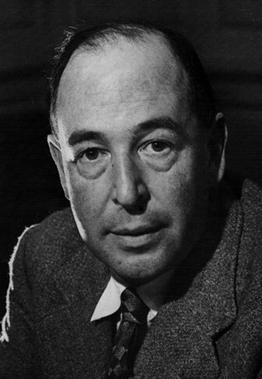
Monochrome head-and-left-shoulder photo portrait of 50-year-old Lewis

C. S. Lewis, courtesy Wikipedia

3. Should we persist with defending the faith among hard-headed atheists like Frank who do not want to be evangelised but claim that they desire to find out how Christians think?  The temptation is that we should not “cast our pearls before swine.”  But I am reminded of C. S. Lewis, the once hard-headed atheist before he submitted to Christ.  Lewis later wrote: “If Christianity is untrue, then no honest man will want to believe it, however helpful it might be: if it is true, every honest man will want to believe it, even if it gives him no help at all.”[17]

4. When the rules of debate are rigged, it’s very difficult to have a rational conversation.  Frank did this through his use of logical fallacies.[18] Too many Christians I know use this kind of methodology as well.  A logical fallacy is used when someone arrives at an incorrect conclusion through faulty reasoning.  However, some instructors in debating recommend the use of logical fallacies as a technique of debate (see “Logical Fallacies and the Art of Debate”).[19]

It is virtually impossible to have a reasonable discussion when somebody engages in techniques such as attacking the character of a person (ad hominem), creating a version of my story that is not correct (straw man, which Frank used).  Frank also used a stacking the deck fallacy, which means that he ignored evidence that disproved his point and only used examples supporting his anti-supernaturalism.  How did he do this?  He refused to consider the Scriptures because he contended that they were “full of contradictions and errors.”  I could not have a continuing conversation when he refused to consider all of the evidence for Christianity.  Imagine being trained to be criminal lawyer but you were refused access to knowledge of the criminal code!

5. This encounter confirmed my understanding of the unflinching bigotry of hard-headed atheism.  This is not the place for new Christians to be when they are not grounded in the faith, but, sadly, too many other Christians have faith without deep roots in the Scripture and are ill prepared for apologetic encounters.

6. Those who are engaged in this kind of apologetic ministry desperately need to have prayer intercessors.  If God could change the heart of a C. S. Lewis, he can do it again with the Franks and Peters from the atheistic establishment.
If God places it on your heart to be engaged in evangelistic discussions with non-Christians, whether they be Buddhist, Mormon, Muslim, secularist or atheist, Dean Halverson’s recommendations are on target:

blue-satin-arrow-small Be patient;
blue-satin-arrow-smallRead widely in the religion or worldview on which you are focusing, and
blue-satin-arrow-smallPray fervently.[20]


One of the leading defenders of the faith in the world today, William Lane Craig, provides this analysis:
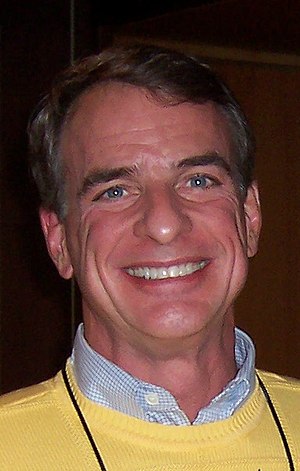
Williamlanecraig.jpg

William Lane Craig, Apologist

Courtesy Wikipedia

“Our churches are filled with Christians who are idling in intellectual neutral.  As Christians, their minds are going to waste.  One result of this is an immature, superficial faith.…  As I speak in churches around the country  [USA], I continually meet parents whose children have left the faith  because there was no one in the church to answer their questions.  For the sake of our youth, we desperately need informed parents who are equipped to wrestle with the issues at an intellectual level.”  He quotes J. Gresham Machen of an earlier generation: “The church is perishing today through the lack of thinking, not through an excess of it.”[21]


The New York Times (16 April 2010) reported, “Antony Flew, Philosopher and Ex-Atheist, Dies at 87” (died 8 April 2010, Reading, England).

Bibliography

John Blanchard 2000, Does God Believe in Atheists?  Evangelical Press, Darlington, England.

E. E. Cairns 1981. Christianity through the Centuries. Zondervan Publishing House, Grand Rapids, Michigan.

William Lane Craig 1994, Reasonable Faith: Christian Truth and Apologetics, Crossway Books, Wheaton, Illinois

Norman L. Geisler 1999, Baker Encyclopedia of Christian Apologetics, Baker Books, Grand Rapids, Michigan.

Wayne Grudem 1994, Systematic Theology, Inter-Varsity Press, Leicester, England.

H. C. Leupold 1942, Exposition of Genesis, vol. 1, Evangelical Press, London.

D. Richardson 1981, Eternity in Their Hearts: Startling Evidence of Belief in the One True God in Hundreds of Cultures Throughout the World, Regal Books, Ventura, Calif.

Ravi Zacharias & Norman Geisler (gen. eds.) 2003, Is Your Church Ready?  Motivating Leaders to Live an Apologetic Life, Zondervan, Grand Rapids, Michigan.

Ravi Zacharias & Norman Geisler (gen. eds.), 2003, Who Made God? And Answers to Over 100 Other Tough Questions of Faith, Zondervan, Grand Rapids, Michigan.

Notes:

3. John Blanchard (2000:18).
4. Adherents.com 2005, “Major Religions Ranked by Number of Adherents,” available from:  http://www.adherents.com/Religions_By_Adherents.html#Nonreligious.
5. Center for the Study of Global Christianity, available from: http://www.globalchristianity.org/resources.htm.
6. Cairns (1981:105).
7. H. C. Leupold (1942:128).
8. Ibid.
9. Wayne Grudem (1994:403).
10. D. Richardson (1981).
11. See a world population meter at: http://www.ibiblio.org/lunarbin/worldpop.
12. Joshua Project 2005, available from: http://www.joshuaproject.net/index.php.
13. Berkana 2003, “Review: Eternity in their Hearts, by Don Richardson”, available from: “Christdot” at: http://christdot.org/modules.php?name=News&file=article&sid=1715.
14. “Guide to the Milky Way,” p. 17.
15. G. Habermas  & A. Flew 2005, “My Pilgrimage from Atheism to Theism: An Exclusive Interview with Former British Atheist Professor Antony Flew,” published in Philosophia Christi, Journal of the Evangelical Philosophical Society, Winter 2005, available at: http://www.biola.edu/antonyflew/flew-interview.pdf.
16. J. P. Sartre n.d., cited in “CIM Briefing Papers: Existentialism”, available from:
http://www.fni.com/cim/briefing/exist.html.
17. C. S. Lewis, excerpted from his essay “Man or Rabbit”, from God In The Dock, cited in “The Skeptic’s Prayer,” available from:  http://shakinandshinin.org/TheSkepticsPrayer.html#(c).
18. For a description of logical fallacies, see, “A list of fallacious arguments,” available from: http://www.don-lindsay-archive.org/skeptic/arguments.html#straw.
19. Available from: http://www.csun.edu/~dgw61315/fallacies.html#Introduction.
20. Dean C. Halverson, “Issues and Approaches in Working with Internationals,” in Ravi Zacharias & Norman Geisler (2003:146-147).
21. William Lane Craig (1994:xi-xv).

All people are without excuse.

To God Be the Glory!


Copyright (c) 2005 Spencer D. Gear. This document last updated at Date: 7 October 2015.

6pointGold-small6pointGold-small6pointGold-small6pointGold-small6pointGold-small6pointGold-small6pointGold-small


Evil and Its Cure

(rape during occupation of Germany, Wikipedia)

By Spencer D Gear

The closest I saw a recent secular writer get to what is wrong with our world was Paul Wilson’s article, “The essence of evil.”[i] It was his response to the mass murder and suicide within the doomsday religious cult in Uganda.

He also was provoked by the retired Austrian doctor who was charged with experimenting on the brains of children who had been exterminated by the Nazis. The word, “evil,” came to his mind as he thought on these atrocities.

Evil from a secular view

Paul Wilson didn’t accept the theologians’ views of evil. Rather, he prefers psychologist, Roy Baumeister’s, simple definition that evil is “the intentional serious physical harm of another person or persons.”[ii] Simple it might be, but I am still left with questions: What causes people to want to intentionally harm anybody? Where does the motivation come from?

We need solid answers to these questions if we are ever to get to the heart of greedy, selfish, and violent examples of serious physical harm. If the evils of the Nazis are to be accounted for, and sense is to be made of the Ugandan cult murders and suicides, we must have a more penetrating explanation for the origin of evil than an intentional demonstration of serious physical harm.

That’s a description of what happens when evil is let loose, but it does not get to the core of the problem of evil

A 13-year-old boy phoned me this afternoon. His sister had poked him with a broomstick and he retaliated by thrashing her on the spine with the same stick. She is very sore and beaten. He wanted help.

You don’t have to go to the extremes of the Russian Gulag or Nazi atrocities to know that we have horrible evil in our midst. From where does it come?

Values learned in a Russian prison

Aleksandr Solzhenitsyn 1974crop.jpg

(Solzenitsyn in 1974, Wikipedia)


Aleksandr Solzenitsyn, the Russian writer, was exiled for many years after being expelled from the Soviet Union in 1974. His accounts of tyranny under Stalin’s communist regime led to his being exiled from his homeland. He documented “the arrest, enslavement, torture, and murder of an estimated 65 million in Soviet labour camps.”[iii] He spent 11 years[iv] in Soviet prison camps. He writes from first-hand experience of what wicked people in a putrid system can do to people.

His assessment of the state of our world is penetrating, even though it was printed 25 years ago:

If only there were evil people somewhere insidiously committing evil deeds, and it were necessary only to separate them from the rest of us and destroy them. But the line dividing good and evil cuts through the heart of every human being. And who is willing to destroy a piece of his own heart?[v]

He explained how human beings can waiver between doing the good and reverting to the bad.

“During the life of any heart this line keeps changing place; sometimes it is squeezed one way by exuberant evil and sometimes it shifts to allow enough space for good to flourish… At times he is close to being a devil, at times to sainthood… From good to evil is one quaver, says the proverb.”[vi]

Evil is within all of us

Solzhenitsyn’s view of human nature has a strong biblical ring. It was Jesus Christ who knew human nature and cultures thoroughly. Jesus declared:

What comes out of a man is what makes him ‘unclean.’ For from within, out of men’s hearts, come evil thoughts, sexual immorality, theft, murder, adultery, greed, malice, deceit, lewdness, envy, slander, arrogance and folly. All these evils come from inside and make a man ‘unclean.’[vii]

It was Solzhenitsyn, raised in an atheistic, communist society, who reached his conclusions after observing what the tyrants of his society did to people. Of course, he also was informed by a Christian worldview.

Charles Colson of Watergate fame visited the Soviet Union and its prisons. He found himself at a negotiating table with Vadim Viktorovich Bakatin, the Minister of Internal Affairs and the fourth-highest ranking official in the Communist Government.

Bakatin candidly told Colson of the crime problem in the Soviet Union, with crime increasing by 38% in 1989. Colson’s candour was as devastating as Bakatin’s admission of the crime situation:

I told him that crime is not caused by economic or political or ethnic factors. It is caused by sin — by the fundamental evil in the human heart.

In a system that rejects God, there can be no transcendent values or authority to which people are accountable — so one can only reasonably expect unfettered human behavior. And that means crime.[viii]

This message was similar to that of another Russian writer, Fyodor Dostoyevski in The Brothers Karamazov, “When there is no God, everything is permitted. Crime becomes inevitable.”[ix]

Since this is the case, R. C. Sproul’s assessment is not that shocking after all: “If you think about it, we are all really more like Adolf Hitler than like Jesus Christ.”[x] Christopher Browning wrote a very distrubing book, Ordinary Men, in which he “conveys to us that it was not a few brutes, but many good and ordinary men, who committed murder for Hitler.”[xi]

Are there solutions to the problems that are rocking our society?

These are personal problems such as crime, marriage breakdown, violence towards family members and others, sexual and domestic abuse, children’s rebellion and delinquent parents.

We have problems in society such as injustice, discrimination, poverty, war and hatred. Paul Wilson raised the crime of “three Bosnian Serb soldiers [who] became the first men to stand trial for using rape and sexual enslavement as weapons of war.”[xii]

There is sense in what Paul Wilson writes: “The recognition of past evil acts is a precursor to stopping future acts involving genocide and other forms of violence against individuals or groups.”[xiii] He approvingly quotes the Dalai Lama when dealing with the essence of evil: “Forgiving but not forgetting.”[xiv]

However, this does not deal with the core of our problems!

As to the solution to the problem, Solzhenitsyn said what is outlandish in our day, “If I were to identify the principal trait of the entire twentieth century, I would repeat once again, ‘Men have forgotten God.’”[xv]

There is a solution to the problems in our society and for us personally. It involves an accurate diagnosis of the problem of every human being — sin–something that is anathema to today’s postmodern worldview. Recognition of past evil acts will not penetrate to the core of the sin problem. The sin problem is a spiritual issue requiring God’s cure. But how will we ever get to dealing with the sin problem when there is such a public aversion to such an explanation? Our secular society has rejected that which provides ultimate answers.

Martin Luther was spot on when he said that “the ultimate proof of the sinner is that he doesn’t know his own sin. Our job is to make him see it.”[xvi]

Evil and Good News

The solution to personal and society ills is that given by the Lord Almighty. It is called the Gospel of Jesus Christ. Truly it is “good news” (the meaning of the word, “Gospel”) Briefly, it involves these actions:[xvii]

1. There is something to admit.

You need to admit the core of your human problem — sin. Acknowledge that you have broken God’s laws, falling short of God’s standards, and rejecting his love and authority over us (see I John 3:4; James 4:17; John 3:18). At heart we are rebels and enemies of God and we need to own up to it.

2. There is something to believe.

The contents of your belief are not extensive, but they are demanding. Recognise who Jesus

is: He is God-man who has come to rescue us. That’s what the word Jesus means, “God to the rescue.” The Easter event is accurately described as the ultimate rescue.[xviii] This annual celebration reminds us that:

  • The Jesus who became flesh,
  • Died on the Cross for our sin (he took God’s punishment that all of us deserve).
  • He is alive forever through his resurrection from the dead. Bible verses such as Romans 5:8; 2 Corinthians 5:18; Galatians 3:10 and Mark 10:45 help us see the mystery of God himself dealing with our sins by putting the weight of them on Christ. You need to understand the heart of the cross of Christ and his atonement clearly grasp how the guilt of human sin can be atoned.. This rescue by God through Christ, reconciled those who repent and confess to God.

3. Consider this!

To follow Jesus Christ as a disciple is costly. Entrance to the Christian life is free, but it will cost you the commitment of your whole being for all of your life. Read Luke 14:25-35. You will be opposed as a minority movement. You are called to be “salt” and “light” in dark and depraved society.

What you need to consider can be summarised in three questions:

  • Are you willing to let Christ clean up the wrong things in your life?
  • Are you willing to put him in the number one place, above all other affections?
  • Are you willing to be known as a Christian and join the Christian community?

4. There is something to do.

You need to repent of your sin, ask Jesus to forgive you of your sins, and receive the gift of

eternal life by faith (see John 1:12; John 3:16). When you do this from the centre of your being (your heart), you instantly become a Christian and a member of Christ’s church.

Now you need to seek out a Bible-believing, Gospel-proclaiming church and seek for somebody or a group to help you grow in your new-found faith. This is called discipleship.

Welcome to the Christian family! A person who truly disciples you will define and teach a Christian worldview that influences and directs every aspect of your life.

At the beginning of this section, I said that the solution to personal and societal ills is that given by the Lord Almighty. It is called the Gospel of Jesus Christ. You might be objecting, “How will a personal commitment to Jesus Christ change society’s ills?” Changed individuals lead to changed societies. The born-again Christian must become involved in “salt” and “light” ministries in our culture. See Matthew 25:31-46 for practical examples of what this will involve.

William Wilberforce did it in Great Britain in his fight against slavery during the 19th century. William Booth of the Salvation Army led his denomination in a demonstration of “Christianity with its sleeves rolled up.” Tens of thousands of Christians are doing it in Australia today in ministries to the hungry, deprived, sick, aged, oppressed and other examples of social deprivation and alienation.

I have found this Christian answer not to be unscientific, simplistic or anti-intellectual. It is a perfect fit for what I see in my dark world. I encourage you to pursue the big answers that the Christian world view provides for the big problems we face as a nation.

Endnotes:

[i] Australian criminologist, Paul Wilson, “The essence of evil,” The Courier-Mail, March 28, 2000, p. 13.

[ii] Ibid.

[iii] Peggy Jackman, with reports from TASS News Service, “A Call to Repentance,” Christianity Today, August 15, 1994, p. 56.

[iv] Aleksandr I. Solzhenitsyn, The Gulag Archipelago (1918-1956). New York: Harper & Row Publishers, 1974, p. x.

[v] Ibid., p. 168.

[vi] Ibid.

[vii]Mark 7:20-21, New International Version of the Bible.

[viii]Charles Colson with Ellen Santilli Vaughn, The God of Stones & Spiders. Wheaton, Illinois: Crossway Books, 1990, p. viii.

[ix] In ibid.

[x] In Charles Colson with Ellen Santilli Vaughn, The Body. Milton Keynes, England: Word Publishing, 1992, p. 191,

[xi] Ravi Zacharias, Can Man Live Without God. Dallas: Word Publishing, 1994, p. 172. Zacharias is referring to Christopher Browning, Ordinary Men. New York: HarperCollins, 1991, jacket cover.

[xii] Paul Wilson, 13.

[xiii] Ibid.

[xiv] Ibid.

[xv] “Solzhenitsyn’s Bad Press,” Christianity Today, February 7, 1994, p. 57.

[xvi] In Colson and Vaughn, The Body, p. 191.

[xvii] This outline of the Gospel is based on Michael Green, Evangelism through the Local Church. London: Hodder & Stoughton, 1990, p. 268 ff.

[xviii] This is the title of D. Eryl Davies profound book, The Ultimate Rrescue: Christ’s saving work on the cross. Darlington, Co. Durham, England: Evangelical Press, 1995.


Copyright © 2009 Spencer D. Gear. This document last updated at Date: 25 May 2017.

Does God Create Evil?

 
(www.publicdomainpictures.net)

By Spencer D Gear

At a Christian Witness Ministries‘ outreach men’s breakfast, I spoke on the topic, “Can you believe in God after September 11 and the tsunami? Which ‘monster’ created evil?” [1] At question time, a thoughtful Christian asked: “How does your view of the creation of evil line up with God who said in Isaiah, ‘I created evil.'” My response was inadequate, so I have investigated further. The following is my understanding of this verse from Isaiah.

Isaiah 45:7 in the KJV states, “I form the light, and create darkness: I make peace, and create evil: I the LORD do all these things.”

In the NIV it reads: “I form the light and create darkness, I bring prosperity and create disaster; I, the LORD, do all these things.”

In the ESV, the translation is: “I form light and create darkness, I make well-being and create calamity, I am the LORD, who does all these things.”

The NASB translation is: “The One forming light and creating darkness, causing well-being and creating calamity; I am the LORD who does all these.”

Here is the contrast:

  • “I make peace, and I create evil” (KJV);
  • “I bring prosperity and create disaster” (NIV);
  • “I make well-being and create calamity” (ESV);
  • “Causing well-being and creating calamity; I am the LORD who does these” (NASB).

 Does God, the Lord, create moral evil, i.e. does God create sin, or does he create calamity or disaster? There is quite a difference in the meaning. If God creates all the evil in the world, from the beginning of time until the end of this world, what kind of a God is he? If he creates calamities or disasters what kind of God is he?

The word translated “evil” or “disaster/calamity” is the Hebrew, ra. It is true that the word can be used to refer to natural disasters or calamities. It is a very common word for evil as a general description in the OT. The “tree of the knowledge of good and evil” in Gen. 2:9 uses this word, as is the evil of the people that brought the judgment of Noah’s flood (Gen. 6:5). The evil of the men of Sodom and Gomorrah in Gen. 13:13 uses this word (Grudem 1994, p. 326 n7).

Ps. 34:14 reads, “Turn away from evil and do good.” There’s that word, ra, again. We read of it again in Isa. 59:7, speaking of those whose “feet run to evil.” You can read it also in other passages in Isaiah (see Isa. 47:10, 11; 56:2; 57:1; 59:15; 65:12; 66:4)

There are many other OT passages that use ra to refer to moral evil (i.e. sin) and to disaster/calamity. How do we know how to translate? The context will tell us. Does God create evil/sin, or does God create disaster?

  • As Gordon Lewis and Bruce Demarest put it: “Isaiah does not teach the blasphemous idea that the Lord creates sin!” (1987, p. 312). If we look to the context of Isa. 45:7, this is what we find:

Isa.45:11, “Thus says the Lord, the Holy One of Israel.” He is the God of holiness. So, God could not be the creator of sin. Sin is incompatible with God’s holiness.

  • Isaiah predicted that sudden disaster would come to Babylon: “But evil shall come upon you, which you will not know how to charm away; disaster shall fall upon you, for which you will not be able to atone; and ruin shall come upon you suddenly, of which you know nothing” Isa 47:11 (ESV).

 You can read a similar emphasis in Amos 3:6, which the KJV translates as: “Shall a trumpet be blown in the city, and the people not be afraid? Shall there be evil in a city, and the LORD has not done it?” The NIV translates as: “When a trumpet sounds in a city, do not the people tremble? When disaster comes to a city, has not the LORD caused it?”

It is only when there is judgment for sin that the prophets write as in Isa 45:7, “I bring prosperity and create disaster; I, the LORD, do all these things” (NIV). “Like a just judge, God decrees punishment for sin but he does not decree acts of sin” (Lewis and Demarest 1987, p. 312).

Remember Jonah who was thrown overboard by men on that ship travelling to Tarshish? “Then they [the men on the boat] took Jonah and threw him overboard, and the raging sea grew calm” (Jonah 1:15, NIV).

However, five verses later, in Jonah 2:3, Jonah is praying to God, “You hurled me into the deep, into the very heart of the seas, and the currents swirled about me; all your waves and breakers swept over me” (NIV).

How is it that the men on the boat threw Jonah overboard and that God hurled Jonah into the deep? The Bible can affirm that men did it and that it was God in action. God brought about his plan by using the men on the boat. In a way that we don’t quite understand, “God caused [the men] to make a willing choice to do what they did” (Grudem 1994, p. 326).

Alec Motyer observes:

Prosperitydisaster: the older, literal rendering ‘peace … evil’ caused unnecessary difficulties. Can the Lord ‘create evil’? Out of about 640 occurrences of the word ra’, which range in meaning from a ‘nasty’ taste to a full moral evil, there are about 275 cases where it refers to trouble or calamity. Each case must be judged by its context and NIV has done so correctly here. Cyrus was ‘bad news’ to the kings he conquered and the cities he overthrew. But Isaiah’s (and the Bible’s) view of divine providence is rigorous – and for that reason full of comfort. Sinful minds want the comfort of a sovereign God but jib at saying with Job (2:10), ‘Shall we accept good from God, and not trouble (ra)?’ (1999, p. 287).

How does this relate to Isa. 45:7? God used people in Jonah’s day to perform an evil action. In Isaiah’s day, God brought disaster on Babylon through the use of human means.

God does not create all of the sinful evil in the world, but God does bring disaster or calamity as his judgment. It was God who created “the tree of the knowledge of good and evil” (Gen. 2:9).

Notes:

[1] Spencer Gear is a retired counsellor and counselling manager who obtained his PhD in NT in 2015. He is an active Christian apologist and independent researcher based in Brisbane, Qld., Australia. He may be contacted through the Contact Form on this website.

References:

Wayne Grudem 1994, Systematic Theology, Zondervan Publishing House, Grand Rapids, Michigan.

Gordon R. Lewis and Bruce A. Demarest 1987, Integrative Theology, vol. 1, Academie Books (Zondervan Publishing House), Grand Rapids, Michigan.

Alec Motyer 1999, Isaiah (Tyndale Old Testament Commentaries), Inter-Varsity Press, Leicester, England.

Copyright © 2015 Spencer D. Gear. This document last updated at Date: 31 December 2015.

Is Mormonism just another kind of Christianity?

Mormon Temple In San Diego

(Mormon Temple, San Diego, public domain)

By Spencer D Gear

I have noticed that the Christian church in Australia, where I live, does not do a very good job in equipping God’s people to deal with the cults who come to our doors.  As a result, we most often do not engage them because we don’t know what they believe and we are not confident in presenting the Christian gospel to them.

Evangelical Christians, who ought to treat a religious door-knockers, whether Jehovah’s Witnesses or Mormonism, as opportunities for evangelism, do not interact readily with these cultists because, I believe,

(1) They don’t know what the cults believe;

(2) They don’t know their own orthodox theology very well, and

(3) We in the evangelical church are not equipping God’s people for the ministry of apologetics and polemics – defending the faith against secularists and defending orthodox doctrine against liberals and cultists.

It is 25 years this year (2008) since God got a hold of me in regard to this ministry of apologetics.  I was sitting in a university classroom in pursuing doctoral studies, when a professor responded to my comment on creation, “Your views are b-s” (and he didn’t abbreviate).  I did not know how to respond.  That was the Holy Spirit’s jolt to me to become equipped to defend my faith in a secular, antagonistic culture like Australia.

Baptist Press’s (USA) articles on Mormonism

The Southern Baptists in the USA produced (in late 2007) an excellent series of short articles on the Mormons that I hope you will read, imbibe and use when you share the Gospel with those Mormon missionaries who come to the front door.

For pastors, I ask that you use this and other material to equip your people to answer the Mormon who knocks on the door. All Mormons that I have met confirm that the Book of Mormon is the foundation of their religion.If the Book of Mormon were found to be false, how could Mormonism possibly survive as a religion?Isn’t that a reasonable question?Take a read below of information concerning the truth or otherwise of the Book of Mormon.

To give you a taste of some of this excellent material, here’s an excerpt from the article (below) “Archaeology & the Book of Mormon.”

Take these comments by Mormon archaeologists:

“The first myth that we need to eliminate is that Book of Mormon archaeology exists. Titles on books full of archaeological half-truths, dilettante on the peripheries of American archaeology calling themselves Book of Mormon archaeologists regardless of their education, and a Department of Archaeology at BYU devoted to the production of Book of Mormon archaeologists do not insure that Book of Mormon archaeology really exists” (endnote 21).

“What I would say to you is there is no archeological (sic) proof of the Book of Mormon. You can look all you want. And there’s been a lot of speculation about it. There’ve (sic) been books written by Mormon scholars saying that ‘this event took place here’ or ‘this event took place here.’ But that’s entirely speculative. There is absolutely no archeological (sic)evidence that you can tie directly to events that took place” (endnote 22).

Non-Mormon archaeologists state:

Earlier we read from the Smithsonian Institution’s statement “The Bible as History.” We saw that archaeology confirms much of the Bible and that professional archeologists use the Bible in their work. The Smithsonian also has a “STATEMENT REGARDING THE BOOK OF MORMON.” This statement can be requested at the same address. Every one of the statements are damaging to the reliability of the Book of Mormon. Here is the first of eight statements: “The Smithsonian Institution has never used the Book of Mormon in any way as a scientific guide. Smithsonian archeologists see no direct connection between the archeology of the New World and the subject matter of the book.”

In 1989, Michael Ammons wrote to the National Geographic Society requesting information on the Book of Mormon and archaeology. The Society replied in a letter dated April 26, 1989:

“Neither the Society nor any other institution of equal prestige has ever used the Book of Mormon in locating archaeological sites. Although many Mormon sources claim that the Book of Mormon has been substantiated by archaeological findings, this claim has not been verified scientifically.”

Also in 1989, Linda Hansen wrote to the Department of Archaeology at Boston University with a similar request. In a reply letter dated April 5, 1989, Julie Hansen of the department responded:

“The Archaeological Institute of America has never used the Book of Mormon as a scientific guide in locating historic ruins on the Western Hemisphere…. Over the past 30 years The New World Archaeological Foundation, located at Brigham Young University in Provo, Utah, has conducted numerous scientific excavations in Mesoamerica, originally with a view to confirming the claims in the Book of Mormon. They have discovered no evidence that supports the Book of Mormon in any way. Nonetheless, they have published in full detail the results of their excavations in Papers of the New World Archaeological Foundation, Volumes 1-55, 1959 and following…. They are accepted by the Archaeological Institute of America and the Society of American Archaeologists as legitimate scientific investigations and the New World Archaeological Foundation is to be commended for publishing the results of their work that essentially refutes the basic beliefs of the Mormon Church on which the Foundation is based” (endnote 24).

This article concluded: “Therefore, there is a consensus from professional archaeologists, Mormon and non-Mormon alike, that there is no specific confirmation of the Book of Mormon from archaeology.”

Here are the articles:

1. INTRODUCTION: When Mormons come

2.   Is Mormonism Christian? (Part 1)

3. Is Mormonism Christian? (part 2)

4.   Is Mormonism Christian? (part 3)

5.   Christian & Mormon doctrinal differences

6.   PART 1: About the Mormons

7.PART 2: Mormons & the Bible

8.   PART 3: Archaeology & the Book of Mormon

9.   PART 4: Mormonism & its Book of Abraham

10.  PART 5: Mormon evidence?

Enjoy and please distribute the links.

Some other resources

1.I located another site that includes content by some ex-Mormons who are not evangelical Christian believers, “What is Mormonism?

2.I highly recommend the ministry out of Salt Lake City, UT, right in the heart of Mormon territory, Mormonism Research Ministry.Here you will find excellent articles on:

a. Introductory Articles

·“We’re Christians just like you!”

·Eight Characteristics of a Counterfeit Christian Church

·Eight Mormon Myths

·Has Mormonism Criticized Other Churches?

·Some Questions for our LDS Friends

·Fooling the Prophet with the Kinderhook Plates

·The Book of Abraham

b. Some other articles

·The Relationship Between Jesus and Lucifer in a Mormon Context, by Bill McKeever. When recently asked if Jesus and the Devil are brothers, LDS spokesperson Kim Farah gave anything but a clear answer. What have LDS leaders taught about the relationship between Jesus and Lucifer?

·What is the Status of the First Half of the Lorenzo Snow Couplet in Mormonism?, by Aaron Shafovaloff.

·Luke Wilson, our good friend from the Institute for Religious Research, passes away.

·Trouble in Palmyra, Rescue the Prophet, and Time Travelers in Church History. Two reviews by Sharon Lindbloom in one article.

3.For more information on evangelising Mormons or countering the Mormon missionary who knocks on your door, I invite you to check out these apologetics websites and use their search facilities for “Mormon”:

Watchman Fellowship

Let Us Reason

Christian Research Institute

Christian Apologetics & Research Ministry

Probe Ministries.On this website you’ll find an article, “As an ex-Mormon, how can I find a church that is not a cult?“Good question!Take a read.

I’m reminded that the Holy Spirit is the Spirit of truth (see John 14:17; 15:26; 16:13).God does not lie (Heb. 6:18); he is the God of truth (Isa. 45:19) who hates lies (Ps. 101.7).

Jude vv 3-4 reminds us: “Beloved, although I was very eager to write to you about our common salvation, I found it necessary to write appealing to you to contend for the faith that was once for all delivered to the saints. For certain people have crept in unnoticed who long ago were designated for this condemnation, ungodly people, who pervert the grace of our God into sensuality and deny our only Master and Lord, Jesus Christ” (ESV).

It has been necessary throughout Christian history to “contend for the faith,” but this is even more so in the later days, according to First Timothy 4:1, “Now the Spirit expressly says that in later times some will depart from the faith by devoting themselves to deceitful spirits and teachings of demons” (ESV).

The God of truth calls all Christians to a ministry of discernment, with regard to false doctrine, and a ministry of contending for the faith.Will you be an active evangelical Christian contender for the faith?

Copyright © 2014 Spencer D. Gear. This document last updated at Date: 29 January 2014.

Voluntary Active Euthanasia: A Compassionate Solution for Those in Pain?

Image result for clipart euthanasia

DEBATE: MICHAEL MOORE, MLA & REV. SPENCER GEAR.This is Spencer Gear’s presentation.

8.00 pm Thursday 10 June 1993,

Erindale Theatre, McBryde Cr., Wanniassa ACT, Australia

EXAMPLE

“Jennie was only forty-eight when she found the breast lump.The surgeon had been hopeful, but the pathology report showed the cancer was very aggressive and had already spread to the lymph nodes.Radiation and chemotherapy were completed.

Before long, Jennie’s cancer had spread to her spine.Itgalloped through her bones, liver and lungs.She lost weight very rapidly, became depressed, and required large doses of morphine.The medication only partially relieved her severe pain.Any movement was excruciating.

Eventually her husband Sam asked the doctor to give Jennie one large injection of morphine so that she won’t suffer anymore?She’s been in so much pain for so long.She just wants to get it over with… All involved were ready for Jennie to die” (Orr, et. al., Life & Death Decisions, 151-152).

IF THE LARGE INJECTION OF MORPHINE HAD CAUSED DEATH, THIS WOULD HAVE BEEN VOLUNTARY ACTIVE EUTHANASIA.

DEFINITION OF EUTHANASIA

I must define my terms.

Euthanasia is “the intentional killing of a person, for compassionate motives, whether the killing is by a direct action, such as a lethal injection, or by failing to perform an action necessary to maintain life” (from “Euthanasia: killing the dying.’It’s OK – isn’t it?’ Foundation For Human Development, Site 4A, 32 York Street, Sydney 2000).

Voluntary active means that the person asks to be killed.It must be realised however that those who promote euthanasia do not use the word “kill”, but it is the only accurate word to describe the reality of what happens.Besides, it is the word the law uses.

People are sometimes confused by the current debate on “the legality of disconnecting mechanical life support systems for long-term comatose patients or the patients’ right to request that no extraordinary means be used to keep them alive when all hope is gone.”This is often called passive euthanasia, but it is not euthanasia

This refers to the common law right of all Australians to decide which treatments they want to have for themselves.

But I must insist that this is not euthanasia.The Canadians got it correct in their 1983 Law Reform Commission when, following an inquiry, they concluded that “mercy killing not be made an offence separate from homicide” (in Brian Pollard, Euthanasia: Should We Kill the Dying?, p. 45).

Tonight when I use the term euthanasia, I will be referring to voluntary, active euthanasia.

OVERHEAD NO. 1

Euthanasia is not a compassionate solution to those in pain for the following reasons:

1.The first reason for not supporting voluntary active euthanasia is that: We already know the consequences of a permissive approach to euthanasia. We have glaring examples before us of where permissive euthanasia laws will lead us.

a.  GERMANY

In Germany in 1920, there was a publication by a lawyer, Karl Binding, and a psychiatrist, Alfred Hoche, called The Permission to Destroy Life Not Worth Living, that opened the floodgates and led to open discussion and legislation to permit euthanasia in Germany in the 1920s and 1930s.

Initially, it was seen to have a beneficial social effect in dealing with the so-called “useless” sick.

Why did they do it?For the very same reasons that are being advocated today: compassion, quality of life, and to cut the cost of caring for these so-called “useless people”.They stressed the cost of caring for the handicapped, the retarded and the mentally ill.They were called “useless eaters”.

This led to experimentation on human beings and genocide.It was a small step from euthanasia to the Nazi government’skilling of 6 million Jews, and it is estimated that about 6 million others also were killed.

Dr. Leo Alexander, a Boston psychiatrist at the Nuremberg trials after World War II (in 1946 and 1947) says:”it started with the acceptance of the attitude basic in the euthanasia movement, that there is such a thing as life not worthy to be lived “Medical Science Under Dictatorship”, New England Journal of Medicine 241:39-47, July 14, 1949.(This was also covered in Newsweek magazine, July 9, 1973)].

It started when doctors, lawyers, legislators and even clergy–against their professional and ethical obligations to respect all human life, decided to destroy life that they considered not worth living

Michael, there is no way to control voluntary euthanasia.

We have a much more recent example in Holland.

b.  HOLLAND

At St. Mark’s National Theological Centre, Canberra on Feb. 26, 1993, Michael, you said that your brief to the Parliamentary Council would be to give criteria (and you articulated them) similar to Holland.What is happening in Holland?

The official Dutch Government report (The Remmelink Report, 1991) gives conclusive evidence of abuse.The Dutch report shows clearly that doctors are killing without the explicit request of the patient.Doctors have violated the ‘strict medical guidelines’ provided by the Dutch courts (John Fleming, “Euthanasia, The Netherlands, and the Slippery Slopes”, Bioethics Research Notes Occasional Paper No.1, June 1992, published by the Southern Cross Bioethics Institute, PO Box 206, Plympton SA 5038, Australia).

OVERHEAD NO. 2

EUTHANASIA IN HOLLAND: CRITERIA LAID DOWN BY THE COURTS

(Although officially illegal at the time of the Remmelink Report)

1.The request for euthanasia must come only from the patient and must be entirely free and voluntary.

2.The patient’s request must be well considered, durable and persistent.

3.The patient must be experiencing intolerable (not necessarily physical) suffering, with no prospect of improvement.

4.Euthanasia must be a last resort.Other alternatives to alleviate the patient’s situation must have ben considered and found wanting.

5.Euthanasia must be performed by a physician.

6.The physician must consult with an independent physician colleague who has experience in the field.

Summarised by Mrs. Borst-Eilers, Vice-President of the Health Council (a body which provides scientific advice to the Dutch government on health issues).In I.J. Keown, “The Law and Practice of Euthanasia in The Netherlands”, The Law Quarterly Review, Vol. 108, January 1992, p. 56]

OVERHEAD NO. 3

BUT WHAT WERE THE RESULTS IN HOLLAND?

The Dutch report in the British medical journal, The Lancet, states that “in cases of euthanasia the physician often declares that the patient died a natural death” (p. 669).This report indicates that 0.8% of the 38.0% of all deaths involving euthanasia were “life-terminating acts without explicit and persistent request” (p. 670) (Paul J. van der Maas, Johannes J.M. Delden, Loes Pijnenborg, and Caspar W.N. Looman, “Euthanasia and other medical decisions concerning the end of life”,

The Lancet, 338:8768, September 14, 1991, 669).

This means that the deaths of about 1,000 Dutch people in a single year were caused by a doctor who hastened the death of a patient without the patient’s explicit request and consent.

But there is more.Another assessment is that the real number of physician assisted deaths, estimated by the Remmelink Committee Report is, in reality 25,306 which is made up of (they’re on the overhead projector for you to see):

  • 2,300euthanasia on request (Remmelink Report, 13),
  • 400 assisted suicide (ibid.15),
  • 1,000life-ending treatments without explicit request (ibid.),
  • 4,756died after request for non-treatment or the cessation of treatment

with the intention to accelerate the end of life. cf, ibid, 15; there were 5,800 such cases but only 82% (i.e. 4,756) of these patients actually died. cf Dutch Euthanasia Survey Report, 63ff

  • 8,750life prolonging treatment was withdrawn or withheld without the

request of the patient either with the implicit intention (4,750) or with the explicit intention (4,000) to terminate life.

[ibid., 69; There were 25,000 such cases but only 35% (i.e. 8,750) were done with the intention to terminate life. Cf ibid., 72; cf also Remmelink Report, 16),]


  • 8,100morphine overdose with the implicit intention (6,750) or explicit

intention (1,350) to terminate life. Of these, 61% were carried out without consultation with the patient, i.e. non-voluntary euthanasia.

  • There were 22,500 patients who received overdoses of morphine, cf

Remmelink Report, 16.36% were done with the intention to terminate life, cf Dutch Euthanasia Survey Report, 58.See ibid., 61, Tabel 7.7 (“Besluit niet besproken”)].

THIS TOTAL OF 25,306 PHYSICIAN-ASSISTED DEATHS AMOUNTED TO 19.61% OF TOTAL DEATHS [129,000] IN THE NETHERLANDS IN 1990.[“To this should be added the unspecified numbers of handicapped newborns, sick children, psychiatric patients, and patients with AIDS whose lives were terminated by doctors according to the Remmelink Report” (pp. 17-19). Source: Dutch-speaking Dr. Daniel Ch Overduin, Vita, Vol. 7, No. 1, March 1992, pp. 2-3]

OVERHEAD NO. 4

(Title of Lancet article, “”Euthanasia and other medical decisions concerning the end of life”)

Dr. John Keown, Director of the Centre for Health Care Law, in the Faculty of Law, University of Leicester, U.K., has completed a research project on euthanasia in Holland.He concludes:

OVERHEAD NO. 5

“It appears that the overwhelming majority of cases are falsely certified as death by natural causes and are never reported or investigated… It is clear from the evidence set out in Keown’s research that all that is known with certainty in the Netherlands is that euthanasia is being practised on a scale vastly exceeding the ‘known’ (truthfully reported and recorded) cases.There is little sense in which it can be said, in any of its forms, to be under control” (I.J. Keown, “The Law and Practice of Euthanasia in The Netherlands”, in The Law Quarterly Review, 108, January 1992, 67, 78).

Yet Michael Moore stated at St. Mark’s that he wants to follow the Dutch guidelines.

2.  A second reason why euthanasia is not a compassionate solution is that there is no guarantee it will be limited to terminal illness for those in pain.The recent history of the euthanasia movement demonstrates this.

3.Michael has made his views clear.On the Matthew Abraham show, Radio 2CN, February 2, 1993, he was asked by:

Matthew Abraham: “What about an old married couple? Maybe in their 80s and they’ve been relatively independent in their own home, they don’t want to be of trouble to their kids, they’ve had a good life… They want to commit suicide as a couple…

Michael Moore: “I think it should be covered in the act and I think that under certain circumstances, given appropriate counselling and appropriate time to make that kind of decision.

He reinforced this at St. Mark’s National Theological Centre, Canberra on 26 Feb. 1993, I heard him say:

“I’m not just talking about the terminally ill, but also a couple, say who have been married 60 years, one of them is terminally ill and they want to die together. I would agree with that, but I don’t expect legislative support for that.”

No civilised society like ours will remain civilised if we endorse this kind or another kind of homicide.

How can we say where to limit? Chronic illness? Mental illness? Multiple sclerosis? Those crippled with arthritis? Persons who are handicapped? What about some of the people I counsel, like a 16-year-old who is on drugs, severely depressed and suicidal?

This is one of Michael’s core problems–where to draw the line.

The most recent review of the need for euthanasia in Australia was the Social Development Committee of the Parliament of Victoria. The report, called Options for Dying with Dignity in 1988 concluded: “It is neither desirable nor practicable for any legislative action to be taken establishing a right to die” (in Pollard, 45).

Those who start with euthanasia for the terminally ill, most often broaden their base:

One of the most blatant examples of how far euthanasia advocates will go is this (HOLD UP) Australian Human Rights Commission Occasional Paper No. 10 (published in August 1985): “Legal and Ethical Aspects of the Management of Newborns with Severe Disabilities”.

When published, this paper created quite an uproar because of what it recommended for babies with disabilities:

  • one of the main emphases was to support euthanasia for deformed newborn babies,
  • Dr Helga Kuhse promotes “a quick and painless injection” (to kill) for a Down’s Syndrome infant with an intestinal obstruction (p. 4).
  • Yet this Human Rights Commission document also cites the United Nations “Declaration of the Rights of the Child” which states: “The child who is physically, mentally or socially handicapped shall be given the special treatment, education and care required for his particular condition” (p. 28).

You can’t have it both ways: kill off the handicapped newborn, and give the handicapped special treatment, education and care.This is a shocking report advocating the killing of the handicapped newborn, all in the name of the Human Rights Commission.I believe this is eugenics (selective breeding).

Do you really think, if we were to legalise euthanasia, that doctors and nurses would stick to the rules?

In 1988, doctors surveyed in the State of Victoria were asked, “Have you ever taken steps to bring about the death of a patient who asked you to do so?”29% (of 369) replied “Yes”. (Helga Kuhse and Peter Singer, “Doctors’ Practices and Attitudes Regarding Voluntary Euthanasia”, The Medical Journal of Australia, 148:12, June 20, 1988, 623-627).

The situation with nurses is just as alarming.

In 1992, “of those nurses who had been asked by a patient to hasten death, 5% had taken active steps to do so without having been asked by a doctor.

Almost all of the 25% who had been asked by a doctor to engage in active steps to end a patient’s life had done so” (Helga Kuhse and Peter Singer, “Euthanasia: A survey of nurses’ attitudes and practices”, Australian Nurses’ Journal, 21:8, March 1992, 21-22).

With euthanasia illegal, some doctors and nurses are breaking the law.Do you honestly think they will follow, say Dutch guidelines, if they became legal?

3.The third reason: It is a strange paradox that euthanasia is being strongly promoted at a time when the medical profession has made great advances in the treatment of pain. This is not the time to recommend assistance in the killing of the terminally ill or others.

According to Dr. Bob Allan, president of the ACT branch of the Australian Medical Association, “Modern palliative care ensured that patients should never have to consider euthanasia on the grounds of severe pain.Treatments are available to ensure death with dignity and without pain” (The Canberra Times, Feb. 3, 1993, p. 5).

Medical doctors, Robert D. Orr and David L. Schiedermayer, conclude:

“The hospice movement has demonstrated that physicians should be better educated about pain management and better equipped to treat pain effectively.More than ninety-five percent of cancer patients can be kept virtually pain free if given adequate doses of pain medication at appropriate intervals” (Orr, Schiedermayer, & Biebel, Life & Death Decisions, Navpress, 1990, p. 165).

Retired anaesthetist at Concord Hospital, Sydney, Dr. Brian Pollard, says:

“Most cancer pain is well within the competence of any doctor to treat effectively.It is necessary to regard unrelieved pain as a medical emergency to be dealt with as energetically as possible and to address also the emotional turmoil which is usually present” Euthanasia: Sould We Kill the Dying? Little Hills Press, Bedford, U.K. 1989, pp. 9-10, 65).

At a time when there is every reason to offer caring, compassionate palliative care to the sufferer, Michael wants to eliminate the sufferer rather than eliminate the suffering.

4.A fourth reason is that it debases the medical profession and has harmful effects on the doctor/patient relationship.

The standard form of the Hippocratic Oath that is taken by many medical doctors, dating back to the time of the Greeks, says:

“I will follow that method of treatment which, according to my ability and judgment, I considerfor the benefit of my patients, and abstain from whatever is deleterious and mischievous.I will give no deadly medicine to anyone if asked, nor suggest any such counsel” (in Francis A. Schaeffer and C. Everett Koop, Whatever Happened to the Human Race, 207).

Dr Bob Allan, president of the ACT branch of the Australian Medical Association confirms this position.He stated in The Canberra Times that “the association’s position, and that of the World Medical Association, was that euthanasia, even if requested by a patient, was unethical.

“Dr Allan said doctors would have great moral difficulty in actively bringing about the end of a patient’s life.

“To actively set out to end someone’s life is an enormous break from medical standards” (The Canberra Times, “Euthanasia row fires both sides”, February 3, 1993, p. 5).

Michael Moore has stated in The Canberra Times (Feb. 3, 1993, p.5), “I’m interested in facilitating the right of people to make a decision about their own life.It is the most fundamental of human rights–the right to life and the right to death”.

Michael is fundamentally and legally wrong at this point.He is not advocating the right to die.People can do that legally now by committing suicide.Michael is advocating something much more devastating to our society.He is claiming the right for somebody to be killed on request in certain circumstances.He is also calling for the right of others to assist in the killing of others.

This right does not exist in our society and it should never be introduced if we want to maintain a country with respect for one another.

5.The fifth reason to resist voluntary active euthanasia is: There is a better alternative: promote life and become actively involved in compassionate care for the dying, persons who are handicapped, and other sufferers in our society.

This compassionate care involves a competent doctor effectively treating severe pain, emotional support and caring communication from others.Empathy is needed by the doctor and others.

We need to improve the standards of care for dying patients.I commend the ACT government’s initiatives to develop a hospice.It is urgently needed.

Inter-disciplinary teams will be needed involving doctors, nurses, clergy, social workers, other professionals and caring paraprofessionals.

6.The sixth and final reason: human beings are not animals, but unique beings made “in the image of God”.

As a doctor put it to me recently: We put down dogs, why shouldn’t we offer the elderly in a vegetative state the same?The reason is that human beings are not animals.Human beings are unique, “made in the image of God”, according to the Bible.

We could find support for this proposition by referring to Noam Chomsky’s work on the uniqueness of human language, or neurosurgeon, Wilder Penfield’s, research on the difference between the brain and the mind—both affirming the difference between human beings and animals.

As God’s image bearers, each of us has the capacity to be personal, rational, volitional, emotional, and moral. Our responsibility is to reflect God’s character and purposes in all that we do.

When we reduce human beings to animals, it logically follows that a whole range of horrendous evils could eventuate.

Human life is sacred and God has forbidden that any life be murdered.To do so it indirectly an attack on God.

Any society that engages in the killing of innocent life will pay a grave price.When we do not respect life before birth, if affects our view of life after birth.If we do not respect the dying, it will affect our attitude towards the living.As the Bible puts it: “For none of us lives to himself alone and none of us dies to himself alone.If we live, we live to the Lord, and if we die, we die to the Lord” (Romans 14:7-8).

Euthanasia is not a compassionate solution to those in pain for the following reasons:

1.We already know the consequences of a permissive approach to euthanasia.We have glaring examples before us of where permissive euthanasia laws will lead us.

2.There is no guarantee it will be limited to terminal illness for those in pain.The recent history of the euthanasia movement demonstrates this.

3.It is a strange paradox that euthanasia is being strongly promoted at a time when the medical profession has made great advances in the treatment of pain. This is not the time to recommend assistance in the killing of the terminally ill or others.

4.It debases the medical profession and has harmful effects on the doctor/patient relationship.

5.There is a better alternative: promote life and become actively involved in compassionate care for the dying, persons who are handicapped, and other sufferers in our society.

6.Human beings are not animals, but unique beings made “in the image of God”.

SUMMING UP

I oppose voluntary active euthanasia because of:

  • Abuse
  • Error
  • The historical and contemporary examples
  • Distrust, and
  • Coercion

I CONCLUDE:

The case for euthanasia is based on the following:

  • It intentionally kills or assists in the killing of innocent human beings.
  • It destroys the doctor-patient relationship that is meant to promote life.
  • It flies in the face of the medical advances made in the treatment of pain and is at odds with compassionate methods of care.
  • It does not fully consider the historical and contemporary examples that show euthanasia cannot be legislatively controlled.
  • It rests on presuppositions that do not respect human life.
  • It plays God.
  • Ethically, it rests on self-defeating assertions.
  • It is not in the patient’s or society’s best interests.
  • It eliminates the sufferer, rather than the suffering.

FRANCIS A. SCHAEFFER & C. EVERETT KOOP dedicated their book, Whatever Happened to the Human Race,

” To those who were robbed of life,

the unborn, the weak, the sick,

the old, during the dark ages of

madness, selfishness, lust and greed

for which the last decades of the

twentieth century are remembered”

(Fleming H. Revell Company, Old Tappan, New Jersey, p. 118).


For further study:

  1. Tony Sheldon, Utrecht, Holland, “Being ‘tired of life’ is not grounds for euthanasia” (British Medical Journal).
  2. Dutch legalise euthanasia” (BBC News)
  3. Deadly diagnosis in the Netherlands” (Concerned Women for America)
  4. Dutch doctors want to kill the healthy” (Christianity Today)
  5. Euthanasia does not seem to be under effective control in the Netherlands.”
  6. Dutch euthanasia law should apply to patients ‘suffering from living.” (British Medical Journal)
  7. Who killed Grandpa? (Chuck Colson)
  8. From a slippery slope to an avalanche” (Chuck Colson)
  9. Coming soon to a hospital near you” (Chuck Colson)
  10. Professor of Death: Peter Singer” (Christianity Today)
  11. Interview with Phillip Nitschke: Australian euthanasia advocate
  12. Bishop Fisher & Dr. Phillip Nitschke in Sydney euthanasia debate

Flower6Flower6Flower6Flower6Flower6Flower6Flower6

Legendary Jesus rot refuted

By Spencer D Gear

This is a review for Amazon.com: The Jesus Legend: A Case for the Historical Reliability of the Synoptic Jesus Tradition.

I have spent hundreds of hours reading skeptics of the Gospels, particularly John D. Crossan, as I write my doctoral dissertation. Crossan claims that “the last chapters of the gospels and the first chapters of Acts taken literally, factually, and historically trivialize Christianity and brutalize Judaism” (see Crossan “Almost the whole truth” 1993).

Others promote that we need to distinguish “the ‘mythical’ (anything legendary or supernatural) in the gospels from the historical.” Speaking of Crossan’s, The Historical Jesus, British scholar, N. T. Wright, claims “the book is almost entirely wrong.”

Bruno Bauer, Arthur Drews and G. A. Wells argue that the Jesus tradition is perhaps entirely fictional in nature.

To these and other doubters of Gospel content, Paul Eddy & Greg Boyd, in The Jesus Legend, challenge the Jesus-legend thesis and defend the historical reliability of the Synoptic Jesus tradition – based on evidence.

This is a book for those who want the challenges of the skeptical left addressed in a substantive, scholarly way. The authors examine (1) The historical method & the Jesus tradition in first-century Palestine, (2) Other witnesses, including ancient historians & the apostle Paul, (3) The early oral tradition between Jesus and the Gospels, and (4) The Synoptic Gospels as historical sources for reliable evidence for Jesus.

They reach the researched decision that “our broad cumulative case for the historicity of the essential portrait(s) of Jesus found in the Synoptic Gospels” refutes the legendary-Jesus thesis, based on the Gospels an examination of “the general religious environment Jewish Palestine” (p. 452).

They are in agreement with James Dunn that “if we are unsatisfied with the Jesus of the Synoptic tradition, then we will simply have to lump it; there is no other truly historical or historic Jesus” (cited in p. 453).

This is one of the most refreshing books I have read in my scholarly escapades. It is not for those who want a nice bed-time story, but for those who seek answers to the scholarly rot of recent years that has infected the church and the Christian faith.


Copyright © 2015 Spencer D. Gear. This document last updated at Date:  7 October 2015.

Flower15Flower15Flower15Flower15Flower15Flower15Flower15


Ben Meyer’s, The Aims of Jesus, a brief review [1]

I was reading N. T. Wright’s, The New Testament & the People of God, when he recommended ch. 4 of Ben Meyer’s book, The Aims of Jesus, as giving “what is probably the finest statement on historical method by a practicing contemporary New Testament scholar” (Wright p. 98 n32).Meyer died in 1995.Wright has written a new introduction to this edition of Meyer’s book, indicating that “we are dealing with a book which stands out from the crowd” (Meyer, p. 9l).

I took his recommendation, read Meyer’s chapter on historical method, and I have to agree that this is a superb discussion on method but it also gives a realistic view of the historical Jesus in the midst of postmodern reconstructions by people such as J. D. Crossan.

Meyer’s historical method involves 4 principles: (1) History is knowledge; (2) Historical knowledge is inferential; (3) The technique of history is hypothesis; and (4) Hypotheses require verification (pp. 88-92).The practice of this method goes through these steps: questions (about the topic), developing hypotheses to test, and verification or otherwise of the hypotheses.This requires, interpretation and explanation, controlling the data, establishing the facts, and arriving at conclusions that are “beyond criticism” (ch. 4).

The beauty of this book is that Meyer then fleshes out his application of this method to examine history and faith.In discovering “the aims of Jesus,” he pursues the judgment and salvation of Israel through an understanding of John the Baptist.The public proclamation and career of Jesus is found in the Gospels.He also assesses “the secret of the reign of God” (ch. eight) before arriving at his conclusions.

While critical scholars of the Quest have used criteria for historicity such as embarrassment, discontinuity, multiple attestation, coherence, rejection & execution (Crossan 1998), Meyer prefers to describe these as indices of historicity that “will necessarily be open, supple, and delicate. . .No method will be admitted to which caution, nuance, and the admission of doubt are alien” (Meyer p. 84).

Meyer comes to the Gospels with a view that they have data on past events about Jesus, but he comes without a prior view about genre.This means that the data are examined without excluding “the possibility of legend, midrash, folklore, parable, paradigm, and so forth” (p. 72).

He asks what conclusion can be drawn from the form critical approach that “the form of the gospel traditions is narrative about Jesus but their substance is the earliest church’s expression of its own self-understanding and concerns”.He rejects it as an “inexplicable” supposition (pp. 82-83).

This is not a bedtime storybook but is a scholar’s book for scholars of the historical Jesus.But be warned!He gives a solid review of the skeptical quest for the historical Jesus from Reimarus onwards, observing that “scholars of the Straussian cast, like Wrede or Bultmann, make no effort to reconstruct history, whereas the fearless hypotheses of a Reimarus or a Schweitzer collapse like playing cards” (Meyer p. 24).Meyer could have applied the same judgment to the fellows of the Jesus Seminar and questers such as Funk, Crossan, Mack & Borg.

This is an outstanding book defining methodology, assessing Jesus from gospel data, and showing how the Gospel materials about Jesus can be scrutinised on solid historical grounds.

The End


[1]This review was sent to Amazon .com as “A Jesus book of substance,” since I purchased the book from Amazon.

Flower15Flower15Flower15Flower15Flower15Flower15Flower15
Whytehouse designs

Blessings through the fear of God

Image result for clipart Fear the Lord

By Spencer D Gear

In the 1920s, there was a popular promoter of liberal Christianity in New York City, pastor of Riverside Church, formerly pastor of a Presbyterian Church in NYCity (Fosdick 2009). He was Harry Emerson Fosdick , a theologically liberal Baptist. Even though he remained committed to liberalism, he was open enough to admit what his new kind of theology was doing to our understanding of the nature of God. He wrote:

Jonathan Edwards’ Enfield sermon [“Sinners in the Hands of an Angry God”] pictured sinners held over the blazing abyss of hell in the hands of a wrathful deity who at any moment was likely to let go, and so terrific was that discourse in its delivery that women fainted and strong men clung in agony to the pillars of the church. [Fosdick stated], Obviously, we do not believe in that kind of God any more, and as always in reaction we swing to the opposite extreme, so in the theology of these recent years we have taught a very mild, [benign] sort of deity. . . Indeed, the god of the new theology [he was speaking of liberalism] has not seemed to care acutely, about sin; certainly he has not been warranted to punish heavily; he has been an indulgent parent and when we have sinned, a polite “Excuse me” has seemed more than adequate to make amends (Fosdick 1922, pp. 173-174).

Fosdick was right on target with some of that content. He saw that liberalism leads to an anaemic, warped view of God – but he continued to promote liberal Christianity.

One of today’s most influential evangelical expositors of the Word of God, John MacArthur Jr. responded to Fosdick’s comments. MacArthur said: “The simple fact is that we cannot appreciate God’s love until we have learned to fear Him. We cannot know His love apart from some knowledge of His wrath. We cannot study the kindness of God without also encountering His severity. And if the church of our generations does not regain a healthy balance soon, the rich biblical truth of divine love is likely to be obscured behind what is essentially a liberal, humanistic concept” (MacArthur Jr. 2008].

Please think on this with me : Is what you believe about God the most important thing about you! Yes or No?

With the emergence of the seeker-sensitive approach in many churches, there is a dumbing down of a thorough understanding of the nature of God. There is an upsurge in interest in the love of God and self-esteem, but what about such doctrines as hell, the anger of God, and the fear of God?

The title of my article is, “God says you receive blessings through the fear of God.” It is straight from the Bible: “Blessed are those who fear the LORD” (Psalm 112:1 TNIV).

There’s a word that appears at least 49 times in the Book of Psalms 1, especially throughout the O.T., but also in the N.T. that helps to define true believers and their relationship with God.2

It’s a view of God that is a long way from our lips today in the church. This hardly goes along with rock and roll Christianity that wants to draw in outsiders with a softly, softly kind of Christianity. We may want to turn our backs on this kind of God and run from him. But this is at the core of true Christianity.

Psalm 112 begins with, “Praise the Lord. Blessed are those who fear the LORD” (NIV). For what are we to praise the Lord? This should be the true state of every Christian believer.

I. THE STATE OF THE TRUE BELIEVER (Ps. 112:1)

“Blessed are those who fear the LORD”. The truly godly person is one who fears the Lord. This is a radically different relationship than God being your daddy or mate. Some people have told me that when we pray to Abba Father, we are praying to one who is like a daddy or mate.

If you are ever going to be blessed, you must be one who fears the Lord.

1.1 What does it mean to “fear the Lord.”

Some of the old time theologians used to speak of the “terror of the Lord.” (Baxter 1863, p. 188). However, the King James Version and the modern versions I checked (NIV, NASB, RSV, NRSV, and ESV) speak of blessings coming to those who fear the Lord.

When we want to understand any biblical teaching, we need to compare Scripture with Scripture. This is a basic rule of biblical interpretation. Many of us get into trouble with interpretation when we take just one verse in isolation.

So, what does it mean to “fear the Lord.” Let’s look at . . .

1.1.1  Isaiah 8:13

“The Lord Almighty is the one you are to regard as holy, he is the one you are to fear, he is the one you are to dread” (NIV).

When we fear people it is very different from the fear of Jehovah.

When we fear people, we fear their power to hurt us:

  • hurt our reputation,

  • damage our property,

  • hurt those we love,

  • hurt us physically if they are more powerful,

  • we may fear the power of the government over us to tax us, punish us when we break the law, take away our freedom, etc.

On the human level, we may have sound reasons for a healthy fear of people and government

Jesus said to Pilate: “You would have no power over me if it were not given to you from above” (John 19:10).

Human beings are absolutely powerless against God. God can shatter any plans they have against you. God could strike them dead at any moment.

Fear of human beings may cause us to do many things, even ungodly things.

The fear of human beings is condemned in Scripture.3 Just one example, I Peter 3:13-16: “Who is going to harm you if you are eager to do good? But even if you should suffer for what is right, you are blessed. `Do not fear what they fear; do not be frightened. But in your hearts set apart Christ as Lord. “

Let’s return to Isa. 8:13, “The Lord Almighty is the one you are to regard as holy.” In contrast to the fear of human beings, the fear of God, according to Isa. 8:13, is based on two convictions:

Firstly, He is “the Lord Almighty.” We fear him because of his power.

Never forget this: Human beings can only injure you as far as temporal things are concerned. The most human beings can do to you is “kill your body.” God’s powers go beyond the grave.

As Jesus put it: “Do not be afraid of those who kill the body but cannot kill the soul. Rather, be afraid of the One who can destroy both soul and body in hell” (Matt. 10:28).

We fear him because of his might.

1.1.2  Isa. 8:13 emphasises

  • We fear God because of His absolute holiness.

“The Lord Almighty is the one you are to regard as holy.”

a. What does “holy” mean? (based on Sproul 1992, chs. 16, 17)

We mostly think of the purity and righteousness of God, but that is not the primary meaning of holiness. It is more than a moral or ethical quality.

b. Holy has two distinct meanings:

(1) Its primary meaning is: “apartness” or “otherness.”

“Holy” comes from an old word that meant “to cut” or “to separate.” To put it into contemporary language, we could say He is “a cut above something.”

When we say that God is holy we are saying, by nature, there is a profound difference between God and all creatures. We understand . . .

(a)  God’s transcendent majesty;

(b)   His absolute superiority;

(c)  Therefore, He is worthy of our:

  • Honour

  • reverence or fear

  • adoration

  • worship

He is completely “other.” He is different from us in his glory–radically different. R. C. Sproul put it beautifully:

             “When the Bible calls God holy it means primarily that God is transcendentally separate. He is so far above and beyond us that He seems almost totally foreign to us. To be holy is to be `other,’ to be different in a special way” (Sproul 1985, pp. 54-55).

When the angels were calling to one another in Isa. 6:3, “Holy, holy, holy is the Lord Almighty; the whole earth is full of his glory,” they were not saying primarily “pure, pure, pure is the Lord Almighty,” but “wholly other, transcendent One, absolutely superior, is the Lord Almighty.”

The secondary meaning of holy relates to God’s pure and righteous actions.

God does what is correct. He never does what is wrong. He doesn’t have a sinful nature to tempt him to evil. God always acts in a righteous way because his nature is holy. We find that difficult to comprehend–somebody who is absolutely just and correct in everything he does. But that’s our God.

Thanks to God revealing himself through the Bible, we know and can say that:

  • internally (by nature), God is righteous. Therefore,
  • externally, his actions are righteous.

Because God is holy, He is both great and good. There is no evil mixed with His goodness.

Why then, according to Isa. 8:13 are we to “fear” or “dread” this Lord?

This is the God of the universe who reveals Himself through the Bible and through creation. The Scriptures tell us this about God: “How awesome is the Lord Most High, the great King over all the earth” (Ps. 47:2).

Politicians may legislate the killing of human beings through voluntary, active euthanasia, through abortion, but it is the Lord Most High who is King over all the earth. He is the one who judges individuals and nations. Australians may think they can thumb their noses at almighty God, but God’s law is absolute. We are finally accountable to this awesome God. The superior, transcendent One.

When the Israelites were driving out the Canaanites from the Promised Land, the Bible says:

  • “Do not be terrified by them, for the Lord your God, who is among you, is a great and awesome God” (Deut. 7:21);

  • Again in Deuteronomy: “The Lord your God is God of gods and Lord of lords, the great God, mighty and awesome, who shows no partiality and accepts no bribes. He defends the cause of the fatherless and the widow. . . Fear the Lord your God and serve Him” (Deut. 10:17-20).

What does it mean to fear God? Let’s compare another Scripture! Job gives us a summary of what it means to fear the Lord:

2. Job 23:13-17

This is the One whom he fears:

  2.1  “He stands alone” (v. 13, NIV)

“He is unique” (NASB). Literally: “For he is in one” (Spence & Exell n.d., p. 397). It speaks of the unity of God, the One true God. As Deut. 6:4 puts it: “Hear. O Israel: The Lord our God, the Lord is one.”

Job does not have to answer to many gods, just the One true God. Thanks to later revelation we know that this one God is in three persons, Father, Son and Holy Spirit, each of whom are God. Not polytheism (many gods) as in Mormonism (Wright n.d.). The three persons in the one Godhead act totally in one accord. They are one.

He not only stands alone, but:

  2.2  “Who can oppose him?” (Job 23:13)

Literally, “who can turn him?” As James 1:17 says of God the Father “who does not change like shifting shadows.”

For Job, there was the realisation that nothing could change God’s resolve to treat Job the way God did by afflicting him. We need to understand this. The Almighty God we serve is, as B. B. Warfield put it, “a Spirit, infinite, eternal, and unchangeable, in His being, wisdom, power, holiness, justice, goodness and truth; incomparable in all that He is” (Warfield 1970). This means that God’s laws for us, this world, including the ungodly, never, ever change.

No matter how much the leaders and ordinary people of this country thumb their noses at God, scoff at His laws, this world is heading towards God’s conclusion, based on His unchanging person.

Sinners don’t get away with their sin.

Nations that reject God’s laws will suffer the consequences.

God’s Law is king. It is a foolish government that wants to establish laws that contradict the law of God. God’s law will always be king. We, personally, and nations, are accountable to God. We may not see the consequences in this life. But God’s unchanging consequences will be experienced.

There is no circumstance anywhere in the world or in your life or mine that can affect this absolutely perfect God. He is “the same yesterday, and today and forever.”

I ask you: “Who can oppose him?” NOBODY!

To Job, God emphasises:

  2.3  “He does whatever he pleases” (v. 13)

Literally: “And his soul desires, and he does.” (Warfield 1970, p. 398). This sounds rather harsh, but God does what is absolutely best for this world and us. There is no favouritism with him. He always acts according to his perfect righteous nature.

Surely we see this all around us in the moral world. God has told us that sexual relations are reserved for marriage. People reject that and we have sexually transmitted diseases, including HIV, devastating our world.

God says it is one man for one woman for life in the covenant of marriage. We break it and we are reaping the consequences of shattered relationships, adults and children who are full of hate and are devastated.

God does whatever he pleases, but it is totally good, holy and just. We must understand what this meant in Job’s life in Job 1:8:

  • There is no one on earth like Job;

  • He is blameless and upright;

  • He is a man who fears God and shuns evil.

God gave Satan permission to:

  • slaughter Job’s servants;

  • his animals were destroyed;

  • his sons and daughters were all killed;

  • [“in all this, Job did not sin by charging God with wrongdoing” (1:22).]

But there is more:

  • “Satan… afflicted Job with painful sores from the soles of his feet to the top of his head” (2:7).

  • Then Job’s “wife said to him, `Are you still holding on to your integrity? Curse God and die!'” (2:9). Imagine a wife like that! “Curse God and die.” But there is still more.

  • His three friends then came to try to comfort him, but they wanted to blame him for bringing this on himself.

  • But in the end, Job 42:10 & 12 states: “The Lord made him prosperous again and gave him twice as much as he had before… The Lord blessed the latter part of Job’s life more than the first.”

But God made it very clear to Job that God does whatever God pleases in Job’slife. By application, whatever takes place in our lives is what God has sovereignly ordered for us in his goodness, holiness and righteousness.

I trust that you can conclude with Job at the end of his life. He says to the Lord, “I know that you can do all things; no plan of yours can be thwarted” (42:2).

3  Job’s view on his situation

3.1  Job 23:14

“He carries out his decree against me, and many such plans he still has in store.”

That is: God will do what he has planned for Job. From the human perspective, it does not look very nice. But this is God’s perfect will for Job. Perhaps Job was thinking that God had many more doses of affliction for him.

What is Job’s response to this God?

  3.2  Job 23: 15-17

  • “I am terrified before him”;

  • “I fear him”;

  • “God has made [his] heart faint”;

  • “The Almighty has terrified [him]”;

This last verb, “terrified” (“dismayed”, NASB) is a very strong one and means that God “has filled [Job] with horror and consternation.” (Spence & Exell n.d. Vol. 7, p. 393).

The thought of an all-powerful God who does not change, and puts into action what he decrees against Job, caused Job to have inward fear, confusion, terror, dismay.

The effect on Job as he meditated on God’s character as an all-wise, irresistibly powerful, moral Governor, who does whatever he pleases according to His will, is not something that people think very seriously about these days.

I am convinced that we don’t understand our weakness and insufficiency until we truly have contact with God. Until we begin to understand God as he is.

When faced with God’s holiness, Isaiah saw himself: “Woe is me!” he cried. “I am ruined! For I am a man of unclean lips, and I live among a people of unclean lips, and my eyes have seen the King, the Lord Almighty” (Isa. 6:5).

When Job contemplated God, he said, “Therefore I despise myself and repent in dust and ashes” (Job. 42:6).

Since this is the true fear of God by one who is godly, what should the fear be for those who are rebels against God, those who have no peace with God, and on whom the wrath of God will be poured out in hell forever and ever?

Paul, the apostle, saw this very clearly when he said in 2 Cor. 5:11, “Since, then, we know what it is to fear the Lord, we try to persuade men.”

Many Christian people are puzzled. They don’t understand why, in God’s sovereignty, they receive difficulties, affliction, even death, from God. Why are they treated with such severity?

Most of us have never experienced what Job went through. But he came through it with a fresh understanding of who God is. Too often our knowledge of God’s plan is imperfect. Our understanding of God is deficient. This causes us to think that God is against us. Like Job we don’t have genuine trust in God.

Rather than impeach God’s unchanging love towards his faithful followers and charge God with being an enemy of believers, we need to understand the nature of God.

Let me touch on two other Scriptures, briefly, to help us get a handle on what it means to “fear the Lord.”

3.3  Psalm 111:10

“The fear of the Lord is the beginning of wisdom.” (same as Prov. 9:10; similar to Prov. 1:7, “the fear of the Lord is the beginning of knowledge.”)

How can the “fear of the Lord” be the beginning of “wisdom” or “knowledge.”

Does this mean that if you study science, agriculture, medicine, teaching, without a knowledge of God, you do not have any knowledge? That’s certainly not what it states.

It means that “the initial step or starting-point” for anybody who wants to gain true wisdom is the “fear of the Lord.” No matter what human knowledge you attain, if you do not have the knowledge of God as your foundation, your framework is faulty. If you want to advance in knowledge and wisdom, you must have a holy fear of God (Spence & Exell n.d., vol. 9, pp. 5-6).

One other verse gives us another view of what it means to fear the Lord.

3.4  Proverbs 8:13

“To fear the Lord is to hate evil.” This is the reverse side of what I’ve been saying. When you know that your sin is forgiven, you can truly hate evil.

Prov. 8:13 tells what evil the true believer is to hate: “pride and arrogance, evil behavior and perverse speech.”

Since God is holy, to reverentially fear Him means that we adore God’s character, his goodness. It should be natural then that we revolt against that which is opposite to God—evil.

When we fear God, we need to hunger and thirst after his righteousness. We must have a passion to be Christ-like in our thoughts, actions and attitudes towards people.

This makes evil look hideous, detestable, abhorrent. We must resist any evil desires or actions. We must loathe evil from the bottom of our hearts.

Yes, we practise morality because we fear God the Judge who will punish us for doing wrong. But it is far more than that. We love goodness and hate evil for God’s sake.

4. SUMMARY

What is the fear of the Lord? Caleb Rosado summarises it precisely:

“It means . . . to quake or tremble in the presence of a Being so holy, so morally superior, so removed from evil, that in his presence, human boasting, human pride, human arrogance vanish as we bow in speechless humility, reverence, and adoration of the One beyond understanding” (1994, p. 24).

5.  APPLICATION

How can we learn to fear God?\

  5.1  Firstly, Seek him.

It will not fall into your lap. It comes through perseverance and diligence in prayer in his presence..

Ps. 27:8, “My heart says of you, `Seek his face! Your face, Lord, I will seek.”

Ps. 105:4, “Look to the Lord and his strength; seek his face always.”

If you will seek God,

  5.2  Secondly, He will teach you to fear him.

Ps. 34:9 & 11, “Fear the Lord, you his saints, for those who fear him lack nothing. . . Come, my children, listen to me; I will teach you the fear of the Lord.”

God teaches us to fear Him through his Word and in prayer.

If you will feed your mind on who God is and his past dealings with the people of God through the Scriptures, you will learn how to fear the Lord. You will quickly see how Jehovah blessed the obedient.

We read in Deut. 31:12-13: “Assemble the people—men, women and children, and the aliens living in your towns—so they can listen and learn to fear the LORD your God and follow carefully all the words of this law. Their children, who do not know this law, must hear it and learn to fear the LORD your God as long as you live in the land you are crossing the Jordan to possess.”

By application, we must teach the people, adults and children, to fear the Lord our God and to put into action his words. How do you come to fear the Lord?

Seek Him and He will teach you.

Finally,

  5.3  Psalm 86:11

“Teach me your way, O Lord, and I will walk in your truth; give me an undivided heart, that I may fear your name.”

You must want to seek God with “an undivided heart.” Believers, if you truly want to fear God, you have to seek him with all your heart. Wholeheartedly! No distractions.

God does not give his fear to those who are spiritually lazy.

The fear of the Lord was the secret of the early church.

When Ananias and Sapphira dropped dead in judgment because they lied to God (they trampled on the holy), Acts 5:11 says, “Great fear seized the whole church and all who heard about these events.”

The contemporary, user-friendly, meeting felt-needs, church seems to be the opposite of one that fears the Lord. John MacArthur says that today’s church wants to “portray [God] as fun, jovial, easygoing, lenient, and even permissive. . . Sinners hear nothing of divine wrath” (MacArthur 1993, p. 63).

Is it going to take a modern day Ananias and Sapphira to get the church back to an awesome fear of God?

God promises blessings on Christian believers through fearing God. Will you seek Him for this holy fear of God? God promises blessings through fearing!

A W Tozer wrote in The Knowledge of the Holy:

“When the psalmist saw the transgression of the wicked his heart told him how it could be. ‘There is no fear of God before his eyes,’ he explained, and in so saying revealed to us the psychology of sin.  When men no longer fear God, they transgress His laws without hesitation. The fear of consequences is no deterrent when the fear of God is gone. In olden days men of faith were said to ‘walk in the fear of God’ and to ‘serve the Lord with fear.’ However intimate their communion with God, however bold their prayers, at the base of their religious life was the conception of God as awesome and dreadful….

“Wherever God appeared to men in the Bible times the results were the same – an overwhelming sense of terror and dismay, a wrenching sensation of sinfulness and guilt.  When God spoke, Abram stretched himself upon the ground to listen.  When Moses saw the Lord in the burning bush he hid his face in fear to look upon God.  Isaiah’s vision of God wrung from him the cry, ‘Woe is me!’ and the confession, ‘I am undone; because I am a man of unclean lips” (Tozer 1965, p. 77).

References:

Baxter, R. 1863 (reprinted 1981) The Practical Works of Richard Baxter: Select Treatises. Grand Rapids, Michigan: Baker Book House, reprinted 1981 (from 1863 edition).

Fosdick, H. E. 1922, Christianity and Progress, Revell, New York, (emphasis added), in John MacArthur Jr., “The Goodness and the Severity of God,” Bible Bulletin Board, available from: http://www.biblebb.com/files/mac/love.htm [7 January 2008].

Fosdick, H. E. 2008, “Harry Emerson Foscick”, Wikipedia, available from:http://en.wikipedia.org/wiki/Harry_Emerson_Fosdick [10 January 2008].

MacArthur Jr. J. F. 1993,, Ashamed of the Gospel. Westchester, Illinois: Crossway Books.

MacArthur Jr., J. 2008, “The Goodness and the Severity of God,” Bible BulletinBoard, available from: http://www.biblebb.com/files/mac/love.htm [7 January 2008].

Rosado, C 1994, “America the Brutal,” Christianity Today, August 15, p. 24.

Spence, H. D. M. & Exell (eds.), n.d.,Pulpit Commentary, Vol. 7. Grand Rapids,Michigan: Wm. B. Eerdmans Publishing Company.

Sproul, R. C. 1985, The Holiness of God. Wheaton, Illinois: Tyndale House Publishers, Inc.

Sproul, R. C. 1992, Essential Truths of the Christian Faith. Wheaton, Illinois: Tyndale House Publishers, Inc.

Tozer, A W 1965. The Knowledge of the Holy. London: James Clarke & Co Ltd.

Warfield, B. B. 1970 (ed. John E. Meeter), “A Brief and Untechnical Statement of the Reformed Faith,” available from: http://www.reformed.org/calvinism/index.html?mainframe=/calvinism/warfield_reformed_theology.html [10 January 2009].

Wright, D. A. n.d., “Mormonism: Monotheistic or Polytheistic?” Sword & Spirit,available from: http://www.swordandspirit.com/LIBRARY/texts/mono_poly.php [10 January 2008].

Notes: 

1. Psalm 2:11; 15:4; 19:9; 22:23, 25; 25:12, 14; 27:1; 31:19; 33:8, 18; 34:7, 9, ; 36:1; 40:3; 46:2; 52:6; 55:19; 56:4; 60:4; 61:5; 64:9; 66:6; 67:7; 72:5; 85:9; 86:11; 90:11; 96:9; 102:15; 103:11, 13, 17; 111:5, 10; 112:1; 115:11, 13; 118:4; 119:38, 63, 74, 120; 128:1, 4; 135:20; 145:19; 147:11.

2. Other verses on the “fear of God” (not comprehensive) include: Gen. 20:11; Deut. 6:13; 2 Chron. 6:31; Job 1:8; 24:14; 28:28; Prov. 1:7; 2:5; 3:7; 8:13; 9:10; 10:27; 14:26-27; 15:16, 23; 16:6; 19:23; 22:4; 23:17; 24:21; 29:25; Eccl. 3:14; 12:13; Isa. 33:6; Jer. 2:19; 36:16, 24; 2 Cor. 5:11; Rev. 14:7.

3. Ps. 35:4; 51:7; Jer. 1:8; Ezek. 3:9; Matt. 10:28; Luke 12:4.

4. This article states: “Joseph Smith taught that God the Father, Jesus Christ, and the Holy Ghost are “three distinct personages and three Gods” (Teachings, p. 370). Bruce McConkie declared, Three separate personages – Father, Son, and Holy Ghost–comprise the Godhead. As each of these persons is a God, it is evident from this standpoint alone, that a plurality of Gods exists. To us, speaking in the proper finite sense, these three are the only Gods we worship. But in addition there is an infinite number of holy personages, drawn from worlds without number, who have passed on to exaltation and are thus gods (Mormon Doctrine, pp. 576- 577).”


Copyright © 2017 Spencer D. Gear. This document last updated at Date: 18 March 2018.

Flower15Flower15Flower15Flower15Flower15Flower15Flower15