Why were gospels heretical in the early church?[1]

Image result for Bart Ehrman photo public domain

(Bart Ehrman, courtesy callingchristians.com)

By Spencer D Gear

Matthew, on Christian Forums, has asked some good questions: “Why were the heretical books considered heretical?”  Below is how I responded to him.

I’ll suggest some responses below but first we need to note that you have been reading Bart Ehrman who has moved from being an evangelical Christian to an agnostic.

Therefore, his book, Jesus, Interrupted: Revealing the Hidden Contradictions in the Bible (And Why We Don’t Know About Them) [2010. New York, NY: HarperOne] is promoting his agnostic thesis about early Christianity.  Here’s a brief critique of Jesus, Interrupted by Ben Witherington III.  Part of what Witherington writes is:

One of the problems however with some of Bart’s popular work, including this book, is that it does not follow the age old adage— “before you boil down, you need to have first boiled it up”. By this I mean Bart Ehrman, so far as I can see, and I would be glad to be proved wrong about this fact, has never done the necessary laboring in the scholarly vineyard to be in a position to write a book like Jesus Interrupted from a position of long study and knowledge of New Testament Studies. He has never written a scholarly monograph on NT theology or exegesis. He has never written a scholarly commentary on any New Testament book whatsoever! His area of expertise is in textual criticism, and he has certainly written works like The Orthodox Corruption of Scripture, which have been variously reviewed, not to mention severely critiqued by other textual critics such as Gordon D. Fee, and his own mentor Bruce Metzger (whom I also did some study with). He is thus, in the guild of the Society of Biblical Literature a specialist in text criticism, but even in this realm he does not represent what might be called a majority view on such matters.

I suggest that you also read scholarly books such as:

1.  Richard Bauckham 2006, Jesus and the Eyewitnesses: The Gospels as Eyewitness Testimony, Grand Rapids, Michigan/Cambridge, U.K., William B. Eerdmans Publishing Company.

2.  Craig A. Evans 2005, Ancient Texts for New Testament Studies: A Guide to the Background Literature, Peabody, Massachusetts: Hendrickson Publishers

On a more popular level, one of the best books I have read to answer your question is: Craig Evans, Fabricating Jesus: How Modern Scholars Distort the Gospels. Here, Evans will provide you with a critique of: Questionable texts (chs. 3 & 4): The Gospel of Thomas, the Gospel of Peter, the Egerton Gospel, the Gospel of Mary, and the Secret Gospel of Mark.

The question of the heretical vs genuine books of early Christianity has become more prominent in recent years because of the sceptical conclusions of the liberal Jesus Seminar since its publication in 1993 of The Five Gospels (Polebridge Press of Macmillan Publishing Company, New York) in which it was claimed that “eighty-two percent of the words ascribed to Jesus in the gospels were not actually spoken by him, according to the Jesus Seminar” (p. 5).  It reached similar conclusions about the activities of Jesus.

Back to your question: “Why were the heretical books considered heretical?”

Let’s use the Gospels as examples.  The simple answer is that the texts of our Gospels are close to the eyewitness reports of the words and deeds of Jesus that were conveyed by oral tradition and written manuscripts until the books became canonical.  If the texts did not agree with the eyewitness reports, they were regarded as heretical  This oral tradition was capable of preserving the eyewitness testimony of the apostles and thus preserving the words and works of Jesus in a reliable form.  However, it was also possible to create a tradition that was contrary to the eyewitness testimony.  We see this in the Gnostic writings.  I suggest a reading of chs. 10 & 11 of Bauckham, Jesus and the Eyewitnesses (details above).  These are titled, “Models of Oral Tradition” and “Transmitting the Jesus Traditions.”

Down through the years, scholars have developed historical and literary criteria for assessing biblical literature, but these criteria are not used on a consistent basis by some sceptical scholars.

These criteria (based on Craig Evans 2007, p. 48ff) are:

Historical coherence, which means that the Gospel writers wrote about things that cohere with what we know about the historical context of Jesus’ life and ministry.

Multiple attestation refers to the sayings and deeds of Jesus that appear in two or more independent sources (e.g. Mark and Q – Q is the sayings’ source assumed to have been used by Matthew & Luke). With multiple attestation, it suggests that the material was circulated in a wide realm at an early date and was not invented by a single writer.  There is a fair amount of material that is supported by multiple attestation.

Embarrassment.  This should not be misunderstood.  It simply means that “material that potentially would have created awkwardness or embarrassment for the early church is not likely something that a Christian invented sometime after Easter.  ‘Embarrassing’ sayings and actions are those that are known to reach back to the ministry of Jesus, and therefore, like it or not, they cannot be deleted from the Jesus data bank.” (Craig Evans, 2007, p. 49).

Dissimilarity (which has involved a lot of discussion by scholars): It tries to exclude sayings and deeds of Jesus that may have originated in Jewish or early Christian circles.  If a saying, say, is not dissimilar to both Jewish & Early Christian contexts, it is called “double dissimilarity”; there is no guarantee that the saying or deed originated with Jesus.  Use of this criterion has been questioned by some scholars.

Semitisms and Palestinian background.  “Sayings and deeds that reflect Hebrew or Aramaic language (Semitisms), or reflect first-century Palestine (geography, topography, customs, commerce) are what we should expect of authentic material” (Evans 2007, pp. 50-51).

Coherence or consistency refers to “material that is consistent with  material judged authentic on the basis of the other criteria may also be regarded as authentic” (Evans 2007, p. 51).

Craig Evans concludes that

Here is where I think many skeptical scholars, especially among the prominent members of the Jesus Seminar, go wrong.  They not only misapply some of the criteria (such as dissimilarity) and ignore or misunderstand others (such as Semitisms and Palestinian background), they tend to assume that sayings and deeds not supported by the criteria must be judged as inauthentic.  This severe, skeptical method leads to limited results, results that can be badly skewed, if the starting points themselves are off-base and wrong-headed.

The portrait of Jesus can be distorted badly through misapplication of the authenticity criteria to the New Testament Gospels.  When the extracanonical Gospels and sources are thrown into the mix and treated as though they were as ancient and as reliable as the canonical Gospels, then the problem of distortion is taken to new levels (2007, p.51).

You might like to look up this article: “Ancient Gnosticism: Traditions and Literature,”by Pheme Perkins; Theological Studies, Vol. 69, 2008. It’s available from Questia.

We can conclude that if the early Christian texts did not agree with the eyewitness reports from the apostles and others at the time of Jesus, they were regarded as heretical.

Works Consulted

Evans, C 2007. Fabricating Jesus: How modern scholars distort the gospels. Nottingham, England: Inter-Varsity Press.

Notes:


[1] Posted by Ozspen to Christian Forums, Christian Apologetics, “Why are heretical gospels heretical?”, 23 May 2009, available at: http://www.christianforums.com/t7369059/#post51756793 [Accessed 23 May 2009].


Copyright © 2009 Spencer D. Gear. This document last updated at Date: 9 October 2015.

Flower17Flower17Flower17Flower17Flower17Flower17Flower17
Whytehouse designs

Are there degrees of punishment in hell?[1]

By Spencer D Gear

Hell is Real

(image courtesy ChristArt)

Some people object to the doctrine of hell, saying that it is not something a loving God would do. I do some blogging[2] on the Christian Fellowship Forum and there is a Seventh-Day Adventist, Harold, on that Forum. He wrote to me:

“Malachi states that the dead are ashes
. God states that there will be no tears in Heaven. Can you honestly state that you can stand there and know that some of your loved ones are burning and not shed a tear?  How can you? Is YOUR God that cruel?”[3]

He goes on further to give another emotional response that is not based on the exegesis of the biblical text:

“Eternal punishment  simply means that the results of it are permanent. They last forever.  Stick a piece of paper in a can. Light it. It burns ‘up’.  FOREVER. It is gone. Forever.
“What would the purpose be for God to punish anyone for the sin of one short lifetime?  They have thrown away their chance to be with God, forever. They are lost. They know that. Now. Why put them through something you wouldn’t do to a dog?
Your ‘doctrine’ has driven people to leave the church, some even to the point of suicide.  Is that God’s plan? THINK.”[4]

Others ask the honest question, “How can a God of love make eternal hell the punishment for all unbelievers?” Some have committed horrendous crimes and engaged in disgusting immorality, while others have not done that. Is it fair for God to treat all people in hell the same and give them equal punishment?

This very brief article is an attempt to answer this latter question, “Are there degrees of punishment in hell?”

1. Since God is “the righteous Judge” (2 Tim. 4:8), we would expect that sinners would be punished according to the extent of their sin. This is what the Bible affirms.

2. Matthew 10:14-15 states, “And if anyone will not receive you or listen to your words, shake off the dust from your feet when you leave that house or town. Truly, I say to you, it will be more bearable on the day of judgment for the land of Sodom and Gomorrah than for that town” (ESV).

So it will be more tolerable on the day of judgment for Sodom and Gomorrah than for those who do not welcome and listen to the apostles. This is an amazing statement: it is going to be fairer for those who committed sexual immorality in Sodom & Gomorrah than for those who rejected the gospel. What is this saying about punishment in hell?

3. A similar affirmation of degrees of punishment can be found in Matthew 11:21-24,

“Woe to you, Chorazin! Woe to you, Bethsaida! For if the miracles that were performed in you had been performed in Tyre and Sidon, they would have repented long ago in sackcloth and ashes. 22 But I tell you, it will be more bearable for Tyre and Sidon on the day of judgment than for you. 23 And you, Capernaum, will you be lifted to the heavens? No, you will go down to Hades. For if the miracles that were performed in you had been performed in Sodom, it would have remained to this day. 24 But I tell you that it will be more bearable for Sodom on the day of judgment than for you”  (NIV).

4. Luke 12:47-48 speaks of many blows and few blows: “And that servant who knew his master’s will but did not get ready or act according to his will, will receive a severe beating. But the one who did not know, and did what deserved a beating, will receive a light beating. Everyone to whom much was given, of him much will be required, and from him to whom they entrusted much, they will demand the more” (ESV).

The lesson is that where one has greater privileges, there will be greater responsibilities. J. C. Ryle warned: “The saddest road to hell is that which runs under the pulpit, past the Bible and through the midst of warnings and invitations.”[5]

5. When Jesus criticised the religious leaders at his time on earth, he said that “such men will be punished more severely” (NIV, see Mark 12:38-40). This clearly indicates degrees of punishment in hell.

6. John’s vision of the judgment against “Babylon” (Rev. 18:1-7) indicates degree of punishment in proportion to sin committed.

7. Other verses to contemplate include Mark 9:42 and Romans 2:5. John Blanchard writes: “Every day the sinner lives, every selfish penny he makes, every unholy pleasure he enjoys, every ungrateful breath he takes, are storing up God’s anger against him.”[6]

8. We need to remember that:

a. Only God’s kind of justice will be experienced in hell;

b. There will be degrees of punishment, but

c. That is nothing to gloat about because punishment in hell is eternal, no matter what it is like.

A red herring logical fallacy of infinite punishment for a finite sin

Those who claim that hell is an infinite punishment for finite sin, commit a red herring logical fallacy. This article, ‘Is hell an infinite punishment?’ shows the red herring nature of this kind of argumentation.

This article of mine, “Are there degrees of punishment in hell?’ also demonstrates the false nature of the infinite punishment vs. finite sin view.

The seriousness of sin against the Almighty God is what sends unbelievers to hell.  Degrees of punishment in hell do not lessen the eternal dimensions of hell and its suffering.  For a more detailed assessment of God’s view of hell, see my article, “Hell & Judgment.”

Notes:

[1] Many of the ideas in this article were suggested by Blanchard (1993:182ff). My article here was a response to a question by Claudette on the TDELTA Forum, “Are there degrees of punishment in hell?” This was posted about Thursday, 27 September 2001. This forum is not available to a public audience.  It is restricted to the students of Trinity Theological Seminary, Newburgh IN (where I was studying at the time).  For further support of degrees of punishment in hell, see Morey (1984:250); Peterson (1995:198-200). See also Peterson’s Index.

[2] I’m ozspen.

[3] Christian Fellowship Forum, Public Affairs, “Climate change worst scientific scandal,” 18 December 2009, #182, available at: http://community.compuserve.com/n/pfx/forum.aspx?tsn=180&nav=messages&webtag=ws-fellowship&tid=119873 (Accessed 25 December 2009).

[4] Harold to ozspen (me), Christian Fellowship Forum, ibid. #190, 20 December 2009, available at: http://community.compuserve.com/n/pfx/forum.aspx?tsn=180&nav=messages&webtag=ws-fellowship&tid=119873 (Accessed 25 December 2009).

[5] In Blanchard (1993:183).

[6] Blanchard (1993:185). This comment is based on what Blanchard considers are the “terrifying words” (p. 185) of Roman 2:5.


Works consulted

Blanchard, J 1993. Whatever Happened to Hell? Darlington, Co. Durham, England: Evangelical Press.

Morey, R A 1984. Death and the Afterlife. Minneapolis, Minnesota: Bethany House Publishers.

Peterson, R A 1995. Hell on Trial: The Case for Eternal Punishment. Phillipsburg, New Jersey: P&R Publishing,


Copyright © 2013 Spencer D. Gear. This document last updated at Date: 9 December 2017.

6pointblue6pointblue6pointblue6pointblue6pointblue6pointblue6pointblue6pointblue6pointblue6pointblue

Can the worst of people be changed – without God?

Ribbon Salvation Button

By Spencer D Gear

In my work with abused children and abusers, I often hear statements like, “There is no hope for the paedophile. Once a molester, always a molester.” As I see it, rebellious behaviour is in plague proportions in the cities in which I work as a youth and family counsellor.. Parents say things to me like, “She’s been a difficult child from birth, a rebel all her life. She’s heading for the clink. She’s out of control. You fix her.”

Can a leopard change its spots? Definitely not! But there is Someone who can change paedophiles into people with true love. Prostitutes are being remade. The dishonest can become people of integrity. Rebels can be turned into law-abiding citizens and cons into upright, Christian citizens. But self-effort won’t do it.

I am reminded of an event in the life of Dr Harry Ironside[1], an evangelist and Bible teacher of renown in the USA in the early part of the 20th century. He was walking past a Salvation Army open-air meeting in San Francisco when he was recognised by the Salvos. They invited him to share how Christ had changed him.

As Dr. Ironside finished his testimony, a known lecturer on socialism provoked the doctor with this challenge: “Sir, I challenge you to debate with me the question ‘Agnosticism vs. Christianity’ in the Academy of Science Hall next Sunday afternoon at four o’clock. I will pay all expenses.”

Dr. Ironside agreed, but on two conditions. First, the agnostic must promise to bring with him one man who was once a no-hoper. The exact nature of what wrecked his life did not matter. He could find a drunkard, criminal, sex pervert, or any other such person. That person had been changed into an upstanding citizen by becoming an agnostic. Righteousness and goodness came flooding into his life through pursuing the ideals of “I don’t know if there is a God.”

Second, Dr. Ironside asked the agnostic to promise also to bring with him one woman who was once an outcast, slave to evil passions and a victim of corrupt living. She was ruined and wretched but had been turned around. She had attended a meeting where the agnostic was proclaiming the benefits of agnosticism and was ridiculing the message of the Bible.

As she listened to him, new hope was born in her life. She concluded that the agnostic message could deliver her from her ways and she has now become an intelligent agnostic who no longer lives in her depraved lifestyle. She now lives a clean, virtuous and happy life — all because she is an agnostic.

Dr Ironside offered the challenge: “If you will promise to bring these two people with you as examples of what agnosticism can do, I will promise to meet you at the Hall of Science at 4 o’clock next Sunday. I will bring with me at the very least 100 men and women who for years lived in just

such sinful degradation as I have tried to depict, but who have been gloriously saved through believing the gospel which you ridicule. I will have these men and women with me on the platform as witnesses to the miraculous saving power of Jesus Christ and as present-day proof of the truth of the Bible.”

Dr. Ironside turned to the Salvation Army officer in the open-air meeting, a woman, and asked, “Captain, have you any who could go with me to such a meeting?” The Captain offered at least 40 such people from just one Salvation Army Corps and said she would bring a brass band to lead the procession.

Dr. Ironside said that he would have no difficulty picking up the 100 radically changed people from the Salvos, other missions, gospel halls and evangelical churches. He said that the Salvation Army band would play “Onward Christian Soldiers” as they led the procession to the debate.

The enthusiastic agnostic who wanted to big-note himself at the open-air meeting and brashly challenged Dr. Ironside to the debate, smiled wryly, waved his hand and left the meeting, as if to say, “Nothing doing!” He edged his way through the crowd as these bystanders clapped enthusiastically for Ironside and the other Christians.

The power of the living Christ is changing lives today, even the lives of the most wicked. He has done it throughout history. John Newton, the British slave trader, became a preacher of the gospel. Chuck Colson, former President Richard Nixon’s hatchet man, was sent to jail for his part in the Watergate scandal in the USA. He met the risen Christ and has been engaged in an active prison and public ministry since then.

I wish you could have met my Bundaberg, Qld. (Australia) friend, the late George Clarke. He’s in heaven now. This gangster was changed into a child of God and an honourable family man. Talk to his family members and they’ll verify that Jesus Christ does change lives.

The worst of people can be changed. Many people can confirm that. The apostle Paul, the persecutor of the early Christian church, was threatening to murder believers. Then the turning point came. He tells how it can happen for anybody: “If anyone is in Christ, he is a new creation; the old has gone, the new has come!”

Notes:


[1] Details of Dr. Harry Ironside’s challenge to the agnostic can be found at, “A Challenge By An Agnostic To Debate Dr. Harry Ironside:Agnosticism vs. Christianity,” available at: http://www.calvarywilmington.org/christian-testimonies/christianity-vs-agnosticism-harry-ironside.htm [Accessed 25 December 2009].


Copyright © 2014 Spencer D. Gear. This document last updated at Date: 9 October 2015.

Why I Am Not An Atheist!

Atom of Atheism Vector Graphics

(publicdomainvectors.org)

by Spencer D Gear


A.W. Tozer wrote that “what we believe about God is the most important thing about us.”[1] Philosopher, Mortimer Adler, agreed: “More consequences for thought and action follow the affirmation or denial of God than from answering any other basic question.”[2]

I am not an atheist or an agnostic for at least two reasons:

First, take a look at the world around us! There is such incredible order and design in the universe. If we were nearer to the sun we would fry, but we’d freeze to death if we were further away.

When I examine how human life is sustained, I am amazed. Plants produce oxygen which human beings need. We produce carbon dioxide which plants need.

What about human reproduction? How are fingers, legs, hair, skin, blood and brains formed?

Atheism leaves me cold amongst such grandeur in our world.

Second, when I look at human beings, I see two opposites. There are incredible beauty and good will among us.

Australians give multiple millions of dollars every year to help the starving and oppressed. Others have left lucrative trades and professions to go to war-torn and destitute countries. What about the hospitals that have been built and staffed? Welfare agencies, both government and private, that make life easier for the hurting?

But there is another side: frustration, apathy, violence, nastiness, ugliness. And yet in the midst of this mess, people have a cry for meaning and purpose, for love, freedom, forgiveness, hope, even a cry for God.

I notice society is on the skids. I have met people sucked into the sexual freedom philosophy whose lives are in ruins. In over 25 years of counselling, I have never yet met a person who jumped into bed with as many people as he/she wanted and ended up saying this is the great life with no negative consequences.

George Bernard Shaw, atheist, writer and the brains behind My Fair Lady wrote,

“The science to which I pinned my faith is bankrupt. I believed it once. In its name I helped destroy the faith of millions of worshippers in the temples of a thousand creeds. And now they look at me and witness the tragedy of an atheist who has lost his faith.”[3]

Atheism is powerless. When did you last hear somebody proclaim, “I have become an atheist and it has revolutionised my life. I was an alcoholic who abused my wife and now I have become the ideal man.” Atheism doesn’t have that power.

God does! There are hundreds in this city who can declare, “If anyone is in Christ, he/she is a new creation; the old has gone, the new has come!”

With confidence, God can say: “The fool says in his heart, ‘There is no God'” (Psalm 53:1).

Notes:


[1] In Paul Little, Know What You Believe.  Wheaton, Illinois: Victor Books, 1970, p. 25.

[2] Mortimer Adler, Great Books of the Western World, ed. Robert Maynard Hutching, vol. 2.  Chicago: Encyclopaedia Britannica, 1952, p. 561.  Quoted in Paul Little, Know Why You Believe.  Wheaton, Illinois: Victor Books, 1987, p. 21.

[3] G. B. Shaw, Too True to be Good.  Constable & Co.  Quoted in Stephen Gaukroger, It Makes Sense. London: Scripture Union, 1989, p. 9.


Copyright (c) 2013 Spencer D. Gear. This document last updated at Date: 7 October 2015.

6pointLight-small6pointLight-small6pointLight-small6pointLight-small6pointLight-small6pointLight-small6pointLight-small6pointLight-small6pointLight-small6pointLight-small6pointLight-small6pointLight-small6pointLight-small6pointLight-small6pointLight-small

The real message behind September 11 disaster? [1]

Has the disaster that struck the USA on September 11 really brought us to our senses? Are we Aussies any different following this shock? Could this really happen here?

As I reflect on these events that shocked the world, I am alarmed by what I see in Australia. I spoke with a man the other day and asked if Sept. 11 has had any impact on him. His immediate response was, “All I’ve noticed are the insurance prices.”

I have not heard words like, “This could be the judgment of God on the USA. We deserve it just as much.”

At a presentation on Capitol Hill, Washington DC, in the middle of the year 2001, researcher George Barna said that, “Twenty-five years from now, historians are likely to say the year 2001 was right around the time when the era of moral and spiritual anarchy began.”[2] Barna’s comments were prophetic. His view was that within the next few years moral chaos would be inflicted on American culture.

Then came September 11.

Why limit the moral chaos to USA culture? We have it here with shocking levels of sexual abuse, out-of-control youth and children, abusive parents, and the killing of about 80,000 unborn children every year.

Now the talk of embryonic stem cell research where the embryo is spoken of as just matter. Queensland Senator, Ron Boswell, told the Australian Senate on August 28 about the “false claims made by Alan Trounson. I would like to put on the record Professor Trounson’s response. His associate, Martin Pera, told ABC Radio (Aug. 28, 2002) that this is merely a simple mistake and Alan corrected [it] quite quickly. This is very serious, because a second case of misrepresenting embryo research has come to light today. It is not a case of a simple mistake at all but one that has been repeated. First, the video was proven to be false and now a paper offered as proof that embryo cells work on motor neurone disease has turned out to be wrong as well.”

What has this to do with Sept. 11?

Jeremiah the prophet warned the nation of Judah, “Even the stork in the heavens knows her times, and the turtledove, swallow, and crane keep the time of their coming, but my people know not the rules of the Lord. (Jeremiah 8:7)

Jeremiah continued to warn: “But the Lord is the true God; he is the living God and the everlasting King. At his wrath the earth quakes, and the nations cannot endure his indignation. (Jer. 10:10)

What has this to do with September 11?

What brings on God’s wrath? If you read the books of Jeremiah (chs. 4, 8 & 10), Hosea and Romans (chs. 1 & 2) in the Bible, these are the kinds of activities that provoke the Lord God to wrath against humanity: the evil you have done, idolatry, no faithfulness, no love, no acknowledgment of God in the land, sin that “breaks all bounds, and bloodshed follows bloodshed”, “all the godlessness and wickedness of men”; and because of “your stubbornness and unrepentant heart.”

I have heard little of this kind of assessment over the last 12 months. Those who proclaim peace when there is no peace are false prophets who will be brought down with the other sinful people when judgment comes. See Jeremiah 6:13-15. There is a clear link between sin and judgment.

David Chilton explained how this applies to contemporary American culture. He wrote:

A few years ago when I worked with the Institute for Christian Economics, a reporter for a national Christian magazine called. He was polling economists and economic writers around the country, asking us a single question: “If you could change one government policy in order to pull us out of our economic problems, what would that change be?”

“That’s easy,” I said. “Stop killing the babies.”

The journalist’s instincts were keen and he said: “Uh…what?”

“Stop killing babies,” I repeated. “You know, abortion? In case you’ve missed the story, over 4,000 unborn babies are slaughtered in this country [USA] every day. They’re poisoned, chopped in pieces, suctioned, or simply delivered and left to die. Sometimes the doctor strangles or smothers them.”

“Uh, yeah, I know that.” He sounded nervous. “But I think you misunderstood the question. I was asking what economic policy you would recommend to alleviate the country’s problems.”

“Yes, I know that. But you misunderstood my answer. I said that if I could change only one thing to solve our economic problems, I would stop abortion. That’s not the only thing wrong, of course. Many other things should be stopped, such as the government’s manipulation of money and credit. Confiscatory taxation should be stopped. Protectionism should be abolished. Fractional reserve banking should be outlawed. We could talk about a lot of things. But you asked for one thing. Life isn’t that simple, but I was willing to play along. So I said baby-killing.”

“Wait a minute,” he said, exasperated. “What has abortion got to do with our economic problems?”

“Maybe that’s the real problem,” I replied. “Here you are, a writer for a respected Christian publication, and you don’t get the connection between (a) the legalized murder of one and a half million people every year, and (b) the fact that God is selling us into economic bondage to other nations. It’s called Divine Judgment.

“And it won’t stop with mere economic judgment. Murder is a capital crime.”

The reporter suddenly discovered he had other calls to make.[3]

There is something fundamentally important here. God’s law is eternal. His justice works throughout history to fulfil His purposes. Nobody can escape the consequences of God’s absolute and universal law. When a nation breaks His laws, it suffers the consequences.

Australian culture is under a similar sentence of judgment. We have failed to outlaw the abominations that are plagues in our culture. Think about our acceptance of relativism. We create our own values. You believe what is right for you and I believe what is right for me – even if they are contradictory.

Consider the real consequences! If a person chooses what is right for him or her, why should we complain if that choice is the terrorism of September 11, rape, stealing, lying and murder? This relativism, as Frank Sinatra would sing it, “I did it my way,” is leading our nation to anarchy. After all, there is widespread endorsement of this view of ethics today in Australia, “I create my own values.”

September 11 has more in common with Bundaberg, Australia, than you could imagine. The Old Testament prophet, Obadiah, gave a warning that is very contemporary, “The day of the Lord is near for all nations. As you have done, it will be done to you; your deeds will return upon your own head” (Obadiah 15).

Nations have been warned before by prominent figures:

“The strength or weakness of a society depends more on the level of its spiritual life than on its level of industrialization. Neither a market economy nor even general abundance constitutes the crowning achievement of human life. If a nation’s spiritual energies have been exhausted, it will not be saved from collapse by the most perfect government structure or by industrial development: a tree with a rotten core cannot stand.”[4].

“When there is no God, everything is permitted. Crime becomes inevitable.”[5].

We must be serious about the implications of September 11. So far, it hasn’t changed us much at all. Will it take a similar tragedy at Parliament House (when parliament is sitting), Canberra, or a packed-out Sydney Opera House to move us?

We live in a universe with moral laws. Those laws are demonstrate the character of God Himself. When we break those laws, we have moral guilt before the Great Judge. The most loving thing we can do is to warn of judgment when God’s laws are flaunted as they are in Australia.

We urgently need another John Bunyan who will show us what happens when we turn to Vanity Fair.

To God be the Glory!


[1] I, Spencer Gear, delivered this at a meeting of the Bundaberg Ministers’ Association [Qld., Australia]. Spencer may be contacted at PO Box 3107, Hervey Bay 4655, Australia.

[2] In Charles Colson, “Christians’ Rotting Values: Conforming to the Culture” BreakPoint with Charles Colson; Commentary #010719 – 19 July 2001.

[3] David Chilton 1987, Power in the Blood: A Christian Response to AIDS. Brentwood, Tennessee: Wolgemuth & Hyatt, Publishers, Inc., 1987, pp. 41-42.

[4] Aleksandr Solzhenitsyn, In a National Review article (Sept. 23, 1991, p.24), quoted in: http://www.forerunner.com/forerunner/X0698_Solzhenitsyns_Triump.html [Accessed 25 December 2009].

[5] Fyodor Dostoyevski, quoted in Charles Colson with Ellen Santilli Vaughn, The God of Stones & Spiders. Wheaton, Illinois: Crossway Books, 1990, p. viii.

Does God create evil?


(courtesy themostimportantnews.com)

By Spencer D Gear [1]

At an outreach men’s breakfast, I spoke on the topic, “Can you believe in God after September 11 and the tsunami? Which ‘monster’ created evil?” At question time, a thoughtful Christian asked: “How does your view of the creation of evil line up with God who said in Isaiah, ‘I created evil.'” My response was inadequate, so I have investigated further. The following is my understanding of this verse from Isaiah.

Isaiah 45:7 in the KJV states, “I form the light, and create darkness: I make peace, and create evil: I the LORD do all these things.”

In the NIV it reads: “I form the light and create darkness, I bring prosperity and create disaster; I, the LORD, do all these things.”

In the ESV, the translation is: “I form light and create darkness, I make well-being and create calamity, I am the LORD, who does all these things.”

The NASB translation is: “The One forming light and creating darkness, causing well-being and creating calamity; I am the LORD who does all these.”

Here is the contrast:

  • “I make peace, and I create evil” (KJV);
  • “I bring prosperity and create disaster” (NIV);
  • “I make well-being and create calamity” (ESV);
  • “Causing well-being and creating calamity; I am the LORD who does these” (NASB).

Does God, the Lord, create moral evil, i.e. does God create sin, or does he create calamity or disaster? There is quite a difference in the meaning. If God creates all the evil in the world, from the beginning of time until the end of this world, what kind of a God is he? If he creates calamities or disasters what kind of God is he?

Related image

(courtesy www.carbonbrief.org)

The word translated “evil” or “disaster/calamity” is the Hebrew, ra. It is true that the word can be used to refer to natural disasters or calamities. It is a very common word for evil as a general description in the OT. The “tree of the knowledge of good and evil” in Gen. 2:9 uses this word, as is the evil of the people that brought the judgment of Noah’s flood (Gen. 6:5). The evil of the men of Sodom and Gomorrah in Gen. 13:13 uses this word (Grudem 1994, p. 326 n7).

Ps. 34:14 reads, “Turn away from evil and do good.” There’s that word, ra, again. We read of it again in Isa. 59:7, speaking of those whose “feet run to evil.” You can read it also in other passages in Isaiah (see Isa. 47:10, 11; 56:2; 57:1; 59:15; 65:12; 66:4)

There are many other OT passages that use ra to refer to moral evil (i.e. sin) and to disaster/calamity. How do we know how to translate? The context will tell us. Does God create evil/sin, or does God create disaster?

As Gordon Lewis and Bruce Demarest put it: “Isaiah does not teach the blasphemous idea that the Lord creates sin!” (Lewis & Demarest 1987:312). If we look to the context of Isa. 45:7, this is what we find:

  •  Isa.45:11, “Thus says the Lord, the Holy One of Israel.” He is the God of holiness. So, God could not be the creator of sin. Sin is incompatible with God’s holiness.
  •  Isaiah predicted that sudden disaster would come to Babylon: “But evil shall come upon you, which you will not know how to charm away; disaster shall fall upon you, for which you will not be able to atone; and ruin shall come upon you suddenly, of which you know nothing” Isa 47:11 (ESV).

You can read a similar emphasis in Amos 3:6, which the KJV translates as: “Shall a trumpet be blown in the city, and the people not be afraid? Shall there be evil in a city, and the LORD has not done it?” The NIV translates as: “When a trumpet sounds in a city, do not the people tremble? When disaster comes to a city, has not the LORD caused it?”

It is only when there is judgment for sin that the prophets write as in Isa 45:7, “I bring prosperity and create disaster; I, the LORD, do all these things” (NIV). “Like a just judge, God decrees punishment for sin but he does not decree acts of sin” (Lewis & Demarest 1987:312).

Remember Jonah who was thrown overboard by men on that ship travelling to Tarshish? “Then they [the men on the boat] took Jonah and threw him overboard, and the raging sea grew calm” (Jonah 1:15, NIV).

However, five verses later, in Jonah 2:3, Jonah is praying to God, “You hurled me into the deep, into the very heart of the seas, and the currents swirled about me; all your waves and breakers swept over me” (NIV).

How is it that the men on the boat threw Jonah overboard and that God hurled Jonah into the deep? The Bible can affirm that men did it and that it was God in action. God brought about his plan by using the men on the boat. In a way that we don’t quite understand, “God caused [the men] to make a willing choice to do what they did” (Grudem 1994:326).

Alec Motyer observes concerning Isa. 45:7,

Prosperity 
 disaster: the older, literal rendering ‘peace 
 evil’ caused unnecessary difficulties. Can the Lord ‘create evil’? Out of about 640 occurrences of the word ra’, which range in meaning from a ‘nasty’ taste to a full moral evil, there are about 275 cases where it refers to trouble or calamity. Each case must be judged by its context and NIV has done so correctly here. Cyrus was ‘bad news’ to the kings he conquered and the cities he overthrew. But Isaiah’s (and the Bible’s) view of divine providence is rigorous – and for that reason full of comfort. Sinful minds want the comfort of a sovereign God but jib at saying with Job (2:10), ‘Shall we accept good from God, and not trouble (ra)?’ (Motyer 1999:287).

How does this relate to Isa. 45:7? God used people in Jonah’s day to perform an evil action. In Isaiah’s day, God brought disaster on Babylon through the use of human means.

God does not create all of the sinful evil in the world, but God does bring disaster or calamity as his judgment. It was God who created “the tree of the knowledge of good and evil” (Gen. 2:9) but it was not God who created evil.

References:

Wayne Grudem 1994, Systematic Theology, Zondervan Publishing House, Grand Rapids, Michigan.

Gordon R. Lewis and Bruce A. Demarest 1987, Integrative Theology, vol. 1, Academie Books (Zondervan Publishing House), Grand Rapids, Michigan.

Alec Motyer 1999, Isaiah (Tyndale Old Testament Commentaries), Inter-Varsity Press, Leicester, England.

Notes

[1] Spencer Gear is a retired counsellor, counselling manager, active Christian apologist and ordained Christian minister who obtained his PhD in New Testament in 2015. He may be contacted through the Contact Form on this website.


Copyright © 2015 Spencer D. Gear. This document last updated at Date: 29 December 2016.

What gets your attention?

Image result for clipart Attention

(image courtesy Kathleen Halme)

By Spencer D Gear

For some, it may be the death of a relative, but for others it may be something stated or given by another. When I was told in 1973 that my 57-year-old Christian father had died from a heart attack, it sure got my attention about life-after-death and the need to be in close relationship with my parents and my heavenly Father.

Today two things gained my attention and they came from different and unusual sources. This is what struck me:

1. There is no difference in behaviour between Christians and unbelievers.

In 2004, the George Barna Research Group in the USA, a cultural analysis company, conducted research that indicated

that people’s faith does not make as much of as difference as might be expected – especially among non-evangelical born again Christians. Based on a national survey that related people’s faith and 19 lifestyle activities that might be expected to be affected by faith views, the report concludes that two groups – Christian evangelicals and those without a faith preference (i.e., atheists and agnostics) are those that stand out from the crowd.[1]

Who are these “non-evangelical born again Christians” who don’t act much differently to non-believers. Barna describes this type of Christian this way:

Non-evangelical born again adults have accepted Christ as their saviour but do not necessarily accept the Bible as completely accurate in its teachings, accept a personal responsibility to share their faith with others, cite their faith as very important in their life, believe that Jesus Christ was holy, believe that God is the Creator who continues to rule the universe today, or believe that Satan is not symbolic but truly exists. This segment constitutes about one-third of the national adult population [in the USA].[2]

In fact, Barna goes so far as to say that non-evangelical born again people are “more similar to notional Christians (i.e., people who consider themselves Christian but have not accepted Jesus Christ as their savior) and to adherents of other faiths (such as Islam, Buddhism and Scientology) than to evangelical Christians.”[3]

Therefore, the group of “Christians” whose behaviour varies little from non-Christians and those of other religions, are those who have “accepted Christ as their savior” but who reject major biblical doctrines such as:

  • the authority and infallibility of Scripture,
  • the need for them to engage in evangelism;
  • acknowledging faith as important in their lives;
  • the attributes of Jesus such as His holiness;
  • the character of God as creator and ruler of the universe; and
  • the literal existence of Satan.

These are fundamentals of biblical faith, but these born again, non-evangelicals cannot accept them. Does this then mean that this group is not genuinely Christian? What is it that makes the difference in behaviour between Christians and unbelievers?

George Barna found that that this radically different behaviour belonged to a group of only 7% of the adult USA population that he described as

the group whose faith is most clearly evident in their behavioral choices. The survey divided the population into five faith segments (evangelicals, non-evangelical born again Christians, notional Christians, adherents of non-Christian faiths, and atheists/agnostics). Evangelicals emerged as the group most likely to do each of the following:

  • discuss spiritual matters with other people
  • volunteer at a church or non-profit organization
  • discuss political matters with other people
  • discuss moral issues and conditions with others
  • stop watching a television program because of its values or viewpoints
  • go out of their way to encourage or compliment someone.[4]

The conclusion Barna reached from this survey was

that many Christians are hard-pressed to convert their beliefs into action. “The ultimate aim of belief in Jesus is not simply to possess divergent theological ideas but to become a transformed person. These statistics highlight the fact that millions of people who rely on Jesus Christ for their eternal destiny have problems translating their religious beliefs into action beyond Sunday mornings.”[5]

The George Barna Research Group describes “born again” Christians in the USA this way (The Barna Group 2008):

Definition

In Barna Research Group studies, born again Christians are not defined on the basis of characterizing themselves as “born again” but based upon their answers to two questions. The first is “have you ever made a personal commitment to Jesus Christ that is still important in your life today?” If the respondent says “yes,” then they are asked a follow-up question about life after death. One of the seven perspectives a respondent may choose is “when I die, I will go to Heaven because I have confessed my sins and have accepted Jesus Christ as my savior.” Individuals who answer “yes” to the first question and select this statement as their belief about their own salvation are then categorized as “born again.”

Beliefs

  • Compared to 72% of all adults, 92% of born again Christians believe “the Bible is totally accurate in all of the principles it teaches.” (2007)
  • Three-quarters of born again Christians (74%) believe they “personally have a responsibility to tell other people their religious beliefs” compared to 52% of all adults. (2007)
  • Nearly all born again Christians (99%) say their religious faith is very important in their life, compared to 87% of all adults. (2007)
  • Half of born again Christians (46%) agree that Satan is “not a living being but is a symbol of evil.” (2007)
  • 37% of born agains believe that if a person is good enough they can earn a place in Heaven. (2007)
  • 26% of born agains agree that “while he lived on earth, Jesus committed sins, like other people,” compared to 41% of all adults. (2007)
  • Born again Christians are more likely than non-born again individuals to accept moral absolutes. Specifically, 36% of born agains said they believe in moral absolutes, compared to just 16% among non-born agains. (2006)

How Many

  • Looking across the past decade we find the following percentages of born again Christians: 2007 – 42% 2006 – 45% 2005- 40% 2004-38% 2002-40% 2001- 41% 2000- 41% 1999- 40% 1998- 39% 1997- 43% 1996-39% 1995-35% 1994- 36% 1993-36% 1992- 40% 1991- 35%

There are approximately 101 million born again Christians in the USA. (2006)

The Barna Update (21 July 2008) briefly defines this differentiation among Christians:

“Born again Christians” are defined as people who said they have made a personal commitment to Jesus Christ that is still important in their life today and who also indicated they believe that when they die they will go to Heaven because they had confessed their sins and had accepted Jesus Christ as their savior. Respondents are not asked to describe themselves as “born again.”

“Evangelicals” meet the born again criteria (described above) plus seven other conditions. Those include saying their faith is very important in their life today; believing they have a personal responsibility to share their religious beliefs about Christ with non-Christians; believing that Satan exists; believing that eternal salvation is possible only through grace, not works; believing that Jesus Christ lived a sinless life on earth; asserting that the Bible is accurate in all that it teaches; and describing God as the all-knowing, all-powerful, perfect deity who created the universe and still rules it today. Being classified as an evangelical is not dependent upon church attendance or the denominational affiliation of the church attended. Respondents were not asked to describe themselves as “evangelical.”

Non-evangelical born again Christians meet the born again criteria described above, but not the evangelical criteria.

Notional Christians are those who consider themselves to be Christian but do not meet the not born again criteria.

2. “Be holy as I am holy”

There is a book that is making the rounds of our house to different rooms as my wife, Desley, reads it. I’m speaking of C. H. Spurgeon’s, Twelve Sermons on Holiness.[6] This sounds like a forbidden subject in many Christian circles in the 21st century. A hundred years ago it was being addressed openly by prominent preachers. I’m also thinking of J. C. Ryle’s, A Call to Holiness.[7]

References

The Barna Group 2008, “Born again Christians,” available from: http://www.barna.org/FlexPage.aspx?Page=Topic&TopicID=8 [cited 1 February 2009].

The Barna Group, The Barna Update, 21 July 2008, “Survey reveals the life Christians desire,” available from: http://www.barna.org/FlexPage.aspx?Page=BarnaUpdate&BarnaUpdateID=303 [cited 1 February 2009].

Endnotes

[1] The Barna Group, 24 May 2004, “Faith Has a Limited Effect On Most People’s Behavior,” available from: http://www.barna.org/FlexPage.aspx?Page=BarnaUpdate&BarnaUpdateID=164 [cited 5 February 2009].

[2] Ibid.

[3] Ibid.

[4] Ibid.

[5] Ibid.

[6] Reiner Publications, Swengel, Pa, n.d.

[7] Evangelical Press, Welwyn, Hertfordshire, 1976.

Why are young people not coming to the traditional church? An apology for reaching young people

(photo courtesy freely photos)

By Spencer D Gear

Why are 20-year-olds not responding to the Gospel and coming to church?” This was the provocative question asked by Rev. John Roth[1] in his Good Friday sermon in 2008. The following was my email response to his question with a few additions.

Many years ago J. Gresham Machen (d. 1937) wrote a booklet, “Christianity and Culture.”  I don’t have the booklet (which is only 15 pages) but I am reading quotes from this book in William Lane Craig’s, Reasonable Faith: Christian Truth and Apologetics.  Machen wrote, “The chief obstacle to the Christian religion to-day lies in the sphere of the intellect. . .  The Church is perishing to-day through the lack of thinking, not through an excess of it” (Machen p. 13, in Craig, p. xv).

William Lane Craig is one of the foremost evangelical apologists in the world today.  He is addressing intellectual issues of our day.  See his homepage HERE.  Some of Craig’s debates and articles are HERE.

Craig states the following that, I think, addresses some of the problems in engaging 20-year-olds today:

Our churches are filled with Christians who are idling in intellectual neutral.  As Christians, their minds are going to waste.  One result of this is an immature, superficial faith. . .  They know little of the riches of deep understanding of Christian truth, of the confidence inspired by the discovery that one’s faith is logical and fits the facts of experience. . .  If Christian laymen don’t become intellectually engaged, then we are in serious danger of losing our children.  In high school and college Christian teenagers are intellectually assaulted on every hand by a barrage of anti-Christian philosophies and attitudes.  As I speak in churches around the country, I continually meet parents whose children have left the faith because there was no one in the church to answer their questions.  For the sake of our youth, we desperately need informed parents who are equipped to wrestle with the issues at an intellectual level (William Lane Craig 1994, Reasonable Faith, Crossway Books, Wheaton, Illinois, p. xv).

I know how destitute I was in 1984 when I was pursuing doctoral studies in the USA at university and the professor said to me in front of the class when I questioned a theory: “Your views are b-s” (and he didn’t abbreviate).  From that very moment I have spent a lot of time equipping myself to defend the Christian faith against challenges to the faith.  My churches did not equip me to do that.  They should be doing it on the basis of Eph. 4:12.

Then we have to counter the trash from some pulpits and the mass media.  Did you read the anti-biblical challenge from within the church from clergy such as the Rev. Dr. John Evans, Uniting Church minister at Church of All nations, Carlton (Melbourne) “Ditch Good Friday as holiday.”[2] Then there is the heretical material coming from people such as John Shelby Spong, Barbara Thiering, John Dominic Crossan and the Jesus Seminar.

Therefore, I suggest that we are not reaching 20-year-olds (and others), because we are not answering the questions they ask about God, the world, and even in spiritual matters.  How can we overcome this problem?   These are my suggestions:

1.  Equip the people in our churches to be defenders of the faith.  Surely we have examples of this approach with Paul at Athens (Acts 17:16ff) in reasoning in the synagogue with Jews, devout persons and in the market place with those who happened to be there (v. 17), as well as Epicurean and Stoic philosophers (v. 18).  Then we have Paul on the Areopagus (Acts 17:22ff) addressing one of the issues of the day, “To an unknown god.”  We don’t seem to be doing this much today.  In fact, I don’t know of any church locally that has an outreach ministry of apologetics that is answering the questions 20-year-olds and others are asking.

2.  We have resources by the droves to help pastors and teachers to equip God’s people for ministries of apologetics.  William Lane Craig, Ravi Zacharias, Norman Geisler, John W. Montgomery, Winfried Corduan, John Frame, Cornelius van Til, R. C. Sproul, John Gerstner, Craig Evans, Gary Habermas, Douglas Groothuis, Douglas Geivett, N. T. Wright and others have helped me with answers to the questions of our day.

3.  As we equip God’s people in apologetics, have focus groups where young people gather: high schools, universities, skate parks, etc.  In fact we have an ideal opportunity to do this in high school with RI in Qld (religious instruction, but there are limitations here).  I don’t see it being done.  We could ask high school teens questions such as these?

a. Do you believe in God?  If not, why not?  What is stopping a teen from believing in God?  Explore this in open, honest discussion.  Most lay people teaching RE are not equipped to do this.

b. Why is there so much evil in the world?  How can your good God allow genocide and even contribute to it in the time of Noah?

c. What’s the big deal about God?  Why even bother with him?

d. That religious stuff in the Bible is unbelievable (raising the dead and casting out demons’ crap – that’s what a person said to me).

e. In the world of science, can Bible stuff be believed?

f. I’m living alright without God.  Why even bother with him?

4.  Then we have outreach to address these needs with mass media advertising—even use the classifieds in newspapers and billboards.

5. I engage with atheists on Christian Forums on the Internet, to try to reach them, but also to help sharpen my skills and answer their penetrating questions.  One of them stated:

    • Please show me where your religion counts as proof. Can you prove that babies are aware of sin or not?
    • Some things are wrong regardless if they are sins or not. Sin is only an action contrary to religion.
    • Sin doesn’t equal wrong. Sin is contrary to religion. For example genocide is wrong regardless of religion. Gay marriage is not wrong regardless of religion.
    • Your religious laws do not apply.
    • Personhood is not proof of god. Nature is not proof of god.
    • Anyone, even a creator, who creates beings, gives them free will and then commits genocide on them if they disobey is a TYRANT. Sentient beings are different than an object. As soon as people had free will then they were not owned by god. God cannot do as he sees fit. If he kills them then he is a tyrant.
    • Using the bible to prove your point is meaningless to me. Your bible means nothing to me. Sin is an action contrary to a religion. If a person doesn’t follow your religion then they are not sinning (by your religion).

Image result for photo Francis Schaeffer public domain

(photograph, Francis Schaeffer, courtesy Domain for Truth)

6.  Francis Schaeffer did this kind of thing magnificently.  We all don’t have the gifts of Schaeffer, but we all must engage secular young people and others to begin to answer their penetrating questions.  When we start to do this, I think that the young may begin to take notice of Jesus, God and the church.  To this point, most of our answers are stereotypically Presbyterian, Baptist, Anglican, Pentecostal, Roman Catholic, etc. However, if we are to engage our culture and attract young people, it will mean outreach activities with a sharp apologetic edge. How long is it since you, as a pastor, were engaged in a debate (either public or in your church) with a local young adult? We have a local university. Why debate one of its students on a hot topic for the young? What about debating topics such as the following?

    • Why does vandalism attract young people?
    • The truth about illicit drugs.
    • Why does premarital sex not make sense?
    • The abortion death squad.
    • How to make marriage work.
    • Why defacto relationships don’t work.

7.  Please understand that I am NOT advocating a seeker-sensitive contemporary approach to marketing Christianity.  Take a listen to what Bill Hybels thinks of the very model that he helped to invent and promote with vigour. Hybels, one of the seeker-sensitive church gurus has made this confession:

Some of the stuff that we have put millions of dollars into thinking it would really help our people grow and develop spiritually, when the data actually came back, it wasn’t helping people that much. Other things that we didn’t put that much money into and didn’t put much staff against is stuff our people are crying out for (“Willow Creek Repents,” (Christianity Today, 18 October 2007)

After 30 years of promoting seeker-sensitive programs and investing millions of dollars in the venture, he says:

We made a mistake. What we should have done when people crossed the line of faith and become Christians, we should have started telling people and teaching people that they have to take responsibility to become ‘self feeders.’ We should have gotten people, taught people, how to read their bible between service, how to do the spiritual practices much more aggressively on their own (“Willow Creek Repents,” Christianity Today, 18 October 2007).

What I’m suggesting is vastly different from that.

8. However, I am of the view that a church can have solid biblical lyrics in its songs without maintaining a hymn style of 2-3 centuries ago. I was raised on traditional hymns but that does not reach today’s generation. We could sing the great hymns of the faith accompanied by contemporary instruments rather than be anchored in another era of a pipe organ, electronic organ or piano. You can still have guitars and percussion in your music, maintain a moderate level of sound, and sing songs of substance biblically.

9. Too much that comes from our pulpits does not answer the questions that people are asking.  We can begin to do this by application in our sermons. Why not address topics like these?

    • How can I believe in God with so much suffering in the world?
    • Surely it’s arrogant to believe that there is only one way to the best of life after death.
    • What makes Jesus different from Muhammad?
    • Too much of Christianity is unseen. We live in a scientific age that requires empirical support.
    • Many within the church say the Bible is myth. Is it or is it not? Can you trust the Bible?
    • Who made God?
    • How can I believe in God when there are so many hypocrites in the church?
    • What can we do about the march of militant Islam?

There is another dimension to why the church might not be attracting all people, including 20-year-olds:

But understand this, that in the last days there will come times of difficulty. For people will be lovers of self, lovers of money, proud, arrogant, abusive, disobedient to their parents, ungrateful, unholy, heartless, unappeasable, slanderous, without self-control, brutal, not loving good, treacherous, reckless, swollen with conceit, lovers of pleasure rather than lovers of God, having the appearance of godliness, but denying its power. Avoid such people. (2 Tim. 3:1-5 ESV)

These are some thoughts from a believer who is also concerned over why we are not reaching all people, especially the young.

Appendix A

Ditch Good Friday as holiday: cleric[3]

March 20, 2008 – 2:32PM

Sydney Morning Herald

Good Friday should be dumped as a public holiday and replaced with a national reconciliation day recognising Aborigines as integral to Australia’s identity, a Melbourne cleric says.

The Reverend John Evans, the Uniting Church Minister at the Church of All Nations in Carlton, said Good Friday had lost its religious significance outside the Christian community.

He also said Australia was becoming a more multicultural, multifaith society and having Good Friday as a public holiday may no longer be appropriate.

Dr Evans applauded Prime Minister Kevin Rudd’s public apology as a major step towards reconciliation, but said a day such as Good Friday should be set aside to mark the recent steps forward.

“We have done a great thing with the national apology but when you look at our public holidays there are no public holidays that recognise the role and place of Aborigines as the first people of this land,” he said.

Dr Evans said any day, not just Good Friday, could be suitable for a national reconciliation day.

The exact day should be put to the Aboriginal community, he said.

In a statement released today, Dr Evans said: “Whether Good Friday is a public holiday or not will not change or challenge the day’s significance. In fact, in the place of Good Friday, there should be a national holiday to mark our endeavours towards Aboriginal reconciliation.”

When asked about the statement, Dr Evans said: “That would be the gift that I would be prepared to make, that if the only way we could get a public holiday for national day of reconciliation is that it’s Good Friday, I’d be for it.”

He said Good Friday would not lose its name or significance as a result.

“We will never not have Good Friday. The question is should it be a public holiday,” he said.

“And I would welcome it to be a public holiday but I would also observe that it is not being treated as a holy day.”

Dr Evans said a national reconciliation day fits in with the message of Easter, which he said was about reconciliation between individuals, God and each other.

But Catholic Auxiliary Bishop of Melbourne, Christopher Prowse said despite the importance of reconciliation it would be inappropriate to have such a day on Good Friday.

“Aboriginal issues are very important for Australia, however the Good Friday observance has a different focus and that focus should not be deflected by other issues, however important.”

But another day could be set aside for reconciliation, he said.

AAP


Notes

[1] Rev. John Roth was the pastor of Hervey Bay Presbyterian Church, Denman’s Camp Road, Hervey Bay 4655, Australia. It was in his Good Friday sermon on 21 March 2008.

[2] See Appendix A.

[3] Available from: http://www.smh.com.au/news/national/ditch-good-friday-as-holiday-cleric/2008/03/20/1205602551698.html [21 March 2008].


Copyright © 2018 Spencer D. Gear. This document last updated at Date: 12 January 2018.

Flower21Flower21Flower21Flower21Flower21Flower21Flower21

God and Gambling

Gambling Help

(image courtesy Queensland Government)

Spencer D. Gear

We live in an age in which Australian State governments promote poker machines, the TAB, Lotto & Scratchies as a means of “entertainment”. Thoughtful Christians may ask: “Does God support gambling? Is it OK to gamble and believe in the authority of Scripture?”

The pastor of a church I once attended said to two of his parishioners who spent quite a bit of time and money on the pokies, “That’s fine as long as you don’t let the poker machines control you.”

I was doing some blogging when a sceptical person asked, “What does the Bible say about gambling, if anything?”[1] Others have left the gambling issue open for Christians because of the “casting of lots” examples in the Bible.

Australia’s love affair with gambling

Australia has a love affair with gambling. Almost 21% percent of the world’s pokies are in Australia.[2] For most people, gambling is a pleasurable activity. Sadly for some, it has become an addiction that they cannot tame.

Australian Prime Minister, Kevin Rudd, has stated, “I hate poker machines and I know something of their impact on families.”[3] Former premier of Queensland, Wayne Goss, whose party introduced poker machines to that state, has been doing some rethinking. He told the Brisbane Courier-Mail, “I wish I’d never brought in poker machines, I think they’re a scourge. . . The problem with poker machines in my view is that the people who mainly play them are the people who can least afford to do so. I wish I hadn’t done it.”[4]

Gambling devours people’s savings and hopes at an astonishing rate. The BBC reported that “more than 80% of its [Australia’s] adult population gambles, the highest rate on the planet”[5] and 40% of these play at least once a week.[6] The majority of them seem to gamble with self control.

However it is estimated that about 2% of the population, about 330,000 Australians, have a severe or moderate problem gambling habit. Of that number, for “about 70 per cent, their major activity is poker machines.”[7]

Associated with gambling addiction is an increased level of suicidal thoughts and actions. The Wesley Mission reported that

up to 60% of problem gamblers will experience some level of suicidal thought. This may be vague (often after major losses), or serious intent with a clear plan. It is also common for clients to have had one or more failed suicide attempts.[8]

A survey in the USA in 1995 found that 20% of compulsive gamblers had attempted suicide and 63% had seriously considered suicide. These figures are 50 times higher than “within lifetime” estimates for the general population.[9]

Australians spend more on gambling than they do on food.[10] In the financial year 2006-2007, Australians spent almost $91.5 million on food. That’s about $4,350 each for the year according to Bureau of Statistics figures.

However, in the previous year, 2005-06, gaming industry figures showed that adults spent $148 million on gambling. That’s an average of $9,491 each spent on gambling, which includes figures from tourists.[11] Of total expenditure, we spent 61% more on gambling than we did on food.

How much of this gambling money goes to the venue? “The average actual gaming ‘profit’ (before tax) is about a tenth of turnover.” [12]

Two people shared an $80 million Powerball jackpot in July 2009 in Australia.[13]

There are social effects of gambling. One estimate was that for each person who engages in excessive gambling, 5-10 other people around them are affected.[14]

How does this Australian love affair with gambling fit in with a Christian view of gambling? Since 80% of adults gamble and 40% do it weekly, do you think that Christians will be exempt from considering gambling as a viable option for extra cash and for entertainment? This could be a special attraction in these tough economic times.

Casting lots and gambling

Does the Bible’s use of the “casting of lots” provide a precedent for Christians to practise responsible gambling?

What was involved in the practice of casting lots? We know that it was a way of determining the will of God in the Old Testament primarily. The exact method that was used is not clearly defined in the Old Testament.

Some scholars believe that the Urim and Thummim (Ex. 28:30; Deut. 33:8; Ezra 2:63) were the objects involved using

small round pebbles, which were placed in the ephod of the high priest. One signified “Yes,” and the other, “No.” When the priest reached blindly into the ephod and took out one stone, the question was answered either affirmatively or negatively by the stone which he found in his hand.[15]

The problem with this explanation is that there are OT passages that indicate the casting of lots was used for other important decisions. These included

    • for Aaron’s choosing the scapegoat on the Day of Atonement (Lev. 16:7-10, 21-22);
    • division of the land of Pal after the conquest (Josh. 14:2; 18:6; 1 Chron. 6:5ff);
    • service of the Temple including the music and doorkeepers (I Chron. 25:7-8; 26:13ff);
    • supply of wood for the altar (Neh. 10:34ff);
    • the guilt of suspected criminals (Josh. 7:14; 1 Sam. 14:42).[16]

The principle underlying these actions is stated in Prob. 16:33, “The lot is cast into the lap, but its every decision is from the Lord.”

Let’s briefly look at a sample of the use of lots in Scripture.

In Numbers 26:52-56, the Lord told Moses to divide the land for an inheritance, using the casting of lots. This was also the case with Eleazer and Joshua and the land on the west side of the Jordan River where the inheritance was distributed by lots (Joshua 14:2; 18:6; 19:51). The cities and pastures were given to the Levites by the casting of lots (Josh. 21:8).

In Psalm 22:18, the Messianic prediction was, “They divide my garments among them, and for my clothing they cast lots” (ESV).[17] This was fulfilled at the death of Christ and recorded in Matt. 27:35; Mark 15:24; Luke 23:34 and John 19:24. Was this a chance happening and an example of gambling that could justify our use of poker machines and other sorts of gambling today?

To decide on a replacement apostle for Judas Iscariot, Acts 1:26 states, “And they cast lots for them, and the lot fell on Matthias, and he was numbered with the eleven apostles.” Was this a biblical example that could be used to support gambling in the 21st century at the race track, in casinos, at poker machine venues, on Scratchies and the Lotto?

Other examples of the casting of lots are in passages such as I Sam. 10:20-21 and I Chron. 24:5; 26:13-14. Henlee Barnette noted,

The casting of lots was a means of ascertaining the will of God. It should be noted that after Judas’ successor was chosen by lot, this method was not employed again by the church. Decisions thereafter were made in relation to the guidance of the Holy Spirit.[18]

However, the modern concept of gambling by transferring something of worth (generally money) from one person to another based on chance is not supported by the Scriptures (see below). The 21st century concept of gambling at the TAB, casino, pokies or on Powerball is foreign to biblical thinking.

The Bible does not support games of chance

five colored dice by mariotomo - five dice in four colors

Openclipart

I cannot locate a Scripture which states, “Thou shalt not gamble,” but the concepts of chance, luck and fortune should not be in a biblical world and life view. Support for gambling as we understand it today is foreign to the Scriptures for these reasons:

1. The Christian view of godliness

According to Matthew 6:33, believers are to “seek first the kingdom of God and his righteousness and all these things [material things] will be added to you.” We are exhorted to pray, “Give us this day our daily bread” (Matt. 6:11). How is it possible to use gambling for help with daily necessities and still rely on God to supply our needs?

2. The Christian view of work

Ephesians 4:28 says: “Let the thief no longer steal, but rather let him labor, doing honest work with his own hands, so that he may have something to share with anyone in need.” Could it be said that the modern concept of gambling, reaping many dollars for a small investment, is akin to stealing from others – legally? The Christian work ethic is one of labouring with one’s own hands or abilities to raise money or goods to maintain one’s individual life and family, and to share with those in need. Receiving $40 million as a gambling jackpot for spending only a few dollars sounds more like a “rip-off” of other people than an honest day’s work. But, of course, it is all done legally and governments receive their share of the “rip-off.”

3. The Christian view of stewardship

Hebrews 13:5 states that believers are to “keep your life free from love of money and be content with what you have, for he said, ‘I will never leave you nor forsake you.'” This is in contrast to the ones seeking big bucks from all sorts of gambling, with the investment of an infinitesimal amount.

The gambler seems to be like the greedy person. What is the biblical view of greed? The greedy are “the unrighteous who will not inherit the kingdom of God” (1 Cor. 6:9). But there is good news for the greedy. They can be redeemed by being washed by the blood of Jesus, justified and sanctified. “Such were some of you,” said Paul of the greedy (I Cor. 6:11).

The common jargon these days is that gambling is supposed to be for fun – entertainment. Second Timothy 3:4-5 warns us that Christians are not to be “lovers of pleasure.” Instead they are to be “lovers of God.” Those who love pleasure are to be avoided (v. 5).

4. The Christian view of love for your neighbours and enemies

Jesus told us, “You shall love your neighbour as yourself” (Matt. 22:39). How can we as Christians truly love our enemies (Matt. 5:44) while we contribute to taking money away from them? Approximately half of the revenue at poker machine venues in Australia comes from problem gamblers according to the Productivity Commission Report in 1999. How can we justify gambling when it is causing devastation to the individual and 5-10 other people associated with the problem gambler?[19]

5. How the Christian views his/her influence on others

How can Christians be the “salt of the earth” and the “light of the world” (Matt. 5:13-14) while greedily wanting big bucks and ripping others off – legally, of course – through 21st century-style gambling? How can you “love your neighbour as yourself” (Matt. 22:39) while at the same time taking money from him/her through gambling?

Biblical Christianity promotes the view of Jesus, “It is more blessed to give than to receive” (Acts 20:35), which is a life-style that, it seems to me, is impossible to reconcile with a 21st century approach to gambling that is promoted by governments.

6. Luck and fortune are not part of God’s kingdom

Isaiah 65:11-12 warns:

But you who forsake the Lord, who forget my holy mountain, who set a table for Fortune and fill cups of mixed wine for Destiny, I will destine you to the sword . . . You did what was evil in my eyes and chose what I did not delight in.

Luck, chance and fortune are not in God’s worldview. Neither should they be in ours. These are essential to the gambling kingdom! Christians should set a godly example and not participate in any games of chance.

Pastors and churches that approve of gambling should be called back to biblical Christianity.

What about the “good” that gambling does?
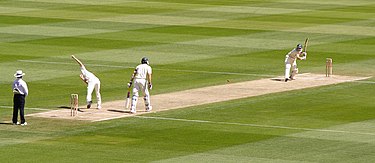
Pollock to Hussey.jpg

Cricket: Bowler to batsman (courtesy Wikipedia)

When I first uploaded this article, a person responded, “There is a lot of good done from  gambling too.”[20] How do we respond to what seems to be a valid point?

About the only “good” things I see coming from gambling in Australia are:[21]

  • Cheaper meals at the clubs and pubs (subsidised by the massive income from pokies);
  • The Community Benefit Fund, Queensland,[22] which in my view is conscience money offering up to $30,000 one-off grants to not-for-profit organisations;
  • Sports’ clubs & sporting fields linked to some clubs.

Perhaps some would say that the revenue gained by governments from gambling provides a “good” result in general revenue that provides for the government services.

But the harm far outweighs the benefits.  I have counselled problem gamblers as a professional counsellor and not one of them has gambled with money that was responsible use of his/her resources.  They have drained bank accounts, maxed out credit card limits, hocked household goods, stolen from anybody including employers, and helped to destroy families.

A response could be: “That’s only for a very small number of the Australian population, 2% of the adult population – 330,000 people.[23] For most people, gambling is fun and entertainment and they do not abuse themselves or their families.”

Why should this “good” ethic of gambling be rejected? I do not support this utilitarian approach to ethics, the end justifies the means, for these reasons:
The Christian deontological ethic means:
[24]

    • The rule determines the result;
    • The rule is the basis of every ethical act;
    • The rule is always good, no matter what the result;
    • The result is always calculated within the boundaries of the rules.

By contrast, with the teleological ethic of utilitarianism:

    • The result determines the rule;
    • The result is the basis of every ethical act;
    • The rule is always good because of the result;
    • The result is sometimes used to break the rules.

Within genuinely Christian ethics, the results are all within the rules or norms (the absolutes of Scripture).  Thus, no end result (the “good” that gambling does) can be used as a justification for breaking God’s law.
As I state in this article, God’s moral law contains rules of:

    • God’s norm of godliness;
    • God’s norm of work;
    • God’s norm of stewardship;
    • God’s norm of loving both your friends and enemies;
    • God’s norm of Christians being the light of the world & the salt of the earth;
    • God’s norm that luck and fortune are not part of kingdom values;

Conclusion

Australia has a love affair with gambling that is making millions of dollars for governments. The Queensland state government expected to earn about $578 million from gambling in the 2008-09 financial year.[25]

These figures for gambling in Australia are mind boggling for money spent, taxes received by governments, and hard done to some users of the product:

More than half of the $23 billion that local punters gambled away last year [2014-2015] was sunk into slot machines. While most countries restrict gambling to casinos and betting shops, Australia permits it in hotels, sports clubs and RSLs. Accounting for less than 0.5 per cent of the world’s population, the nation is home to a fifth of the world’s slot machines (Scott & Heath 2016).

Scott & Heath indicate that about 400 Australians a year commit suicide because of gambling-related problems.

The casting of lots has no parallel with contemporary gambling. Lots were used sovereignly by the Lord to determine some decisions, but this principle stopped with the choosing of Judas Iscariot’s replacement as an apostle.

Dr. Peel rightly states that

all forms of gambling involve gain to the few and loss to the many without the creation of any real product or benefit, save perhaps a questionable thrill. The promoters and managers have to appeal to the sinful motivation of covetousness in order to make it repay their own very often considerable investment. Gambling violates the principle of fair return for labor and investment, and the ethics of stewardship and work (Eph. 4:28; 2 Thess. 3:9-12). Gambling also can lead to neglect of family responsibilities, a grievous sin in the eyes of God (1 Tim. 5:8; 2 Cor. 12:14).[26]

There are many good reasons for not gambling. These include the Christian views of godliness, work ethic, stewardship, loving our neighbours, the manner in which we should influence others, and the Bible’s condemnation of anything to do with chance.

I know that it is possible for a person to be generous, love his or her neighbour more than himself or herself and trust the sovereignty of God in “casting of lots”. However, human beings are too easily drawn to covetousness and dishonesty when gambling is involved.

Are you committed to ripping off people or building them up?

One of the fundamental principles of biblical Christianity that gives a knockout blow to gambling is, “It is more blessed to give than to receive” (Acts 20:35).

Australia has a love affair with gambling that is making millions of dollars for governments. The Queensland state government expected to earn about $578 million from gambling in the 2008-09 financial year.[25] 

The casting of lots has no parallel with contemporary gambling. Lots were used sovereignly by the Lord to determine some decisions, but this principle stopped with the choosing of Judas Iscariot’s replacement as an apostle.

Dr. Peel rightly states that

all forms of gambling involve gain to the few and loss to the many without the creation of any real product or benefit, save perhaps a questionable thrill. The promoters and managers have to appeal to the sinful motivation of covetousness in order to make it repay their own very often considerable investment. Gambling violates the principle of fair return for labor and investment, and the ethics of stewardship and work (Eph. 4:28; 2 Thess. 3:9-12). Gambling also can lead to neglect of family responsibilities, a grievous sin in the eyes of God (1 Tim. 5:8; 2 Cor. 12:14).[26]

There are many good reasons for not gambling. These include the Christian views of godliness, work ethic, stewardship, loving our neighbours, the manner in which we should influence others, and the Bible’s condemnation of anything to do with chance.

I know that it is possible for a person to be generous, love his or her neighbour more than himself or herself and trust the sovereignty of God in “casting of lots”. However, human beings are too easily drawn to covetousness and dishonesty when gambling is involved.

Are you committed to ripping off people or building them up?

One of the fundamental principles of biblical Christianity that gives a knockout blow to gambling is, “It is more blessed to give than to receive” (Acts 20:35).

(advertisement courtesy Queensland Government)

Notes


[1] Don Tom, Christian Fellowship Forum, Contentious Brethren, “Don won’t pray – don’t ask him,” #111, available from: http://community.compuserve.com/n/pfx/forum.aspx?tsn=101&nav=messages&webtag=ws-fellowship&tid=119539 [Accessed 23 August 2009].

[2] “Russell Crowe rallies against gambling,” China Daily, 2008-01-03, available from: http://www.chinadaily.com.cn/showbiz/2008-01/03/content_6368802.htm [Accessed 15 November 2008].

[3] Ibid.

[4] Melanie Christiansen & Steve Gray, “Wayne Goss regrets bringing poker machines to Queensland,” Courier-Mail, 20 September 2008, available from: http://www.news.com.au/couriermail/story/0,,24375592-23272,00.html [Accessed 23 August 2009].

[5] Nick Bryant, “Australia in thrall of gambling mania,” BBC News, Sydney, 30 January 2007, available from: http://news.bbc.co.uk/2/hi/asia-pacific/6313083.stm [Accessed 23 August 2009].

[6] Anna Gizowska in Sydney, The Telegraph [UK], “Beware! Australia’s addict gamblers warn Britain,” 17 October 2004, available from: http://www.telegraph.co.uk/news/uknews/1474334/Beware-Australias-addict-gamblers-warn-Britain.html [Accessed 23 August 2009].

[7] Maxine McKew, 19 July 1999, 7.30 Report, ABC television Australia, “Productivity Commission exposes poker machine culture,” available from: http://www.abc.net.au/7.30/stories/s37514.htm [Accessed 15 November 2008].

[8] Wesley Mission, “Suicide in Australia, a dying shame,” Suicide Prevention Week, 6-10 November 2000, available from: http://www.wesleymission.org.au/publications/r&d/suicide.htm#problem [Accessed 23 August 2009].

[9] In ibid.

[10] The following details are based on Peter Jean , June 11, 2008, “Australians spend more on gambling than on food,” Herald Sun¾ available from: http://www.news.com.au/heraldsun/story/0,21985,23844130-662,00.html [Accessed 15 November 2008].

[11] Ibid.

[12] Betty Conn Walker, 2003, “Vilified pokies not the root of all evil,” Sydney Morning Herald, November 20, available from: http://www.smh.com.au/articles/2003/11/19/1069027188359.html?from=storyrhs [Accessed 15 November 2003].

[13] “Melbourne man wins a share of Powerball $80m jackpot,” Herald Sun, 31 July 2009, available from: http://www.news.com.au/heraldsun/story/0,21985,25859727-661,00.html [Accessed 23 August 2009].

[14] Senator Jeannie Ferris 2000, 3rd National Gambling Conference, Rex Hotel, Sydney, 12 May, available from: http://www.aic.gov.au/conferences/gambling00/ferris.pdf [Accessed 15 November 2008].

[15] F. E. Hamilton 1976, “Lots,” in Merrill C. Tenney (gen. ed.), The Zondervan Pictorial Encyclopedia of the Bible, vol. 3, Zondervan Publishing House, Grand Rapids, Michigan, p. 988.

[16] In ibid.

[17] Unless otherwise stated, all Scripture quotations are from the English Standard Version of the Bible, Crossway Bibles, Good News Publishers, Wheaton, Illinois, 2001.

[18] Henlee H. Barnette 1973, “Gambling”, in Carl. F. H. Henry (ed.), Baker’s Dictionary of Christian Ethics, Baker Book House, Grand Rapids, Michigan, p. 258.

[19] See reference to Senator Jeannie Ferris above.

[20] Don Tom, 27 August 2009, Christian Fellowship Forum, Contentious Brethren, “God and gambling,” # 2, available from: http://community.compuserve.com/n/pfx/forum.aspx?tsn=1&nav=messages&webtag=ws-fellowship&tid=119655 [Accessed 27 August 2009[.

[21] I posted this in ibid., #3.

[22] Gambling Community Benefit Fund, Queensland Government (Office of Liquor, Gaming & Racing), available from: http://www.olgr.qld.gov.au/grants/gcbf/index.shtml [Accessed 29 August 2009].

[23] As in Maxine McKew above.

[24] The following contrast of the deontological and teleological ethics is based on Table 1.1: Two Views of Ethics, in Norman L. Geisler 1989, Christian Ethics: Options and Issues, Apollos, Leicester, England, p. 24/

[25] See Melanie Christiansen & Steve Gray 2008 above.

[26] R. N. Peel, 1987, “Gambling,” in R. K. Harrison (gen. ed.), Encyclopedia of Biblical and Christian Ethics, Thomas Nelson Publishers, Nashville, p. 165.

Works consulted

Scott J & Heath, M 2016. Gambling is killing one Australian a day, but it rakes in billions in tax. The Sydney Morning Herald (online), 28 September. Available at: https://www.smh.com.au/business/consumer-affairs/gambling-is-killing-one-australian-a-day-but-it-rakes-in-billions-in-tax-20160928-grpypl.html (Accessed 7 April 2018).

Copyright © 2018 Spencer D. Gear. This document last updated at Date: 2 December 2019.

Life after Death: Current Controversies

     Tombstone

(image courtesy ChristArt)

By Spencer D Gear

There is an increasingly active presence on the Internet of those who oppose the orthodox doctrine of the intermediate state. What happens at death for believers and unbelievers? If these writers are on the www, they are possibly active in your community and may turn up in your evangelical or charismatic congregation. We need to be aware of their errant teachings so that we can refute them.

My wife and I visited a local church in Australia in 2007 to hear an international speaker. He made this statement, “Unbelievers die but believers go to sleep.”  There was no further explanation.  When he made a raw statement such as that, he was not being inaccurate (see I Cor. 15:18) but he left himself wide open to the accusation that he believes in soul sleep.

If “believers go to sleep” at death, what does that mean?  Where do they go and what is their intermediate state?  If he is against the false doctrine of soul sleep, he should not make statements like that, without further explanation and a refutation of the soul sleep false doctrine

What are the issues at stake? There are three making a strong presence on the www:

a. Opposition to immortality of the soul,

b. Promotion of soul sleep, and

c. There is no hell, but annihilation of unbelievers at death.

To give an example of how these are presenting themselves on the www, I will illustrate with a conversation that I had with Harold, a Seventh-Day Adventist.

I have been debating with him on the “Christian Fellowship Forum.” I had written on this Forum that these SDAs were “promoting false doctrine, based on the Bible.” By that I meant that in their understanding of the Bible, they were presenting false teaching. An SDA member responded:

What ‘false’ doctrine’ do we promote, based on the Bible? I didn’t
know that there could be any such thing. All of our doctrines are
based on the Bible. I am sorry to say that this is more than you
can say about all of your doctrines. I’ll name two.
The immortality of the soul
The sacredness of Sunday.
Try as you might, you can not find any support for either of those
in any Bible.
[1]

I replied: [2]

To understand the meaning of “the soul that sinneth, it shall die” [Ezek. 18:4, 20], we need to understand what happens at death.  Ecclesiastes 12:7 explains that beautifully [“and the dust returns to the earth as it was, and the spirit returns to God”]. . . You are wanting this to mean that the human breath returns to God who gave it.

You don’t want to get a handle on what the Bible is teaching very clearly about what happens to a believer’s soul/spirit that survives death (Luke 12:4; Eccl. 12:7)[3], is consciously present with the Lord (2 Cor. 5:8), [and] is in a better place (Phil. 1:23).  This is a place where other souls are speaking (Matt. 17:3).  Please don’t spin me the yarn that Moses’ and Elijah’s breaths were talking with them.

These departed souls were even praying [they cried out with a loud voice – surely that is desperate prayer] (Rev. 6:9-10). . .

For unbelievers who die, the soul is in a place of conscious torment (Matt. 25:41; Luke 16:22-26; Rev. 19:20 – 20:15).

So what is your [Harold’s] response to all of this biblical evidence for the immortality of the soul after death?  He wrote: “You keep preaching that God gave you your immortality already.  Keep preaching that your ‘soul’ is immortal.  Satan did that, already, so just keep it up.”[4]

What blasphemy to attribute to Satan what God declares! What is at stake here? Orthodox biblical teaching that has been established in Scripture and accepted by evangelicals throughout the history of the church on life after death (with a minority of exceptions), is being attacked by this SDA person.

These doctrines include: (1) Immortality of the soul, (2) Rejection of soul sleep, (3) The nature of heaven and hell, (4) What happens immediately the last breath leaves the human body?

What makes these topics challenging is that we don’t have as detailed explanations as we would like in the Bible. However, there are sketches that provide us with certainty about the broad sweep of these doctrines.

Let’s tackle just one of these teachings that is under threat.

The immortality of the soul

At first you might not consider this an important biblical teaching. In fact, many of the evangelicals I minister among, have rarely heard anything about human beings having an immortal soul.

Some regard the teaching of the New Testament that a person has an immortal soul to be a misunderstanding of Scripture and the promotion of a Greek idea rather than Christian doctrine. Others speak of “the heresy of man’s immortal soul.”[5]

Immortality

What do I mean by immortality when applied to human beings and death? “Immortality means the eternal, continuous, conscious existence of the soul after the death of the body.”[6] Can this be substantiated from Scripture?

Job asked: “If a man dies, shall he live again?” (14:14).[7] Jesus provides an answer in his response to Martha after the death of Lazarus, “I am the resurrection and the life. Whoever believes in me, though he die, yet shall he live, and everyone who lives and believes in me shall never die. Do you believe this?” (John 11:25-26).

So, are human beings immortal or not? Do they have a continuous existence even after physical death? The answer is, “Yes,” but with qualifications.

A qualification

Paul wrote to Timothy that God “is the blessed and only Sovereign, the King of kings and Lord of lords, who alone has immortality” (I Tim. 6:15-16). Yet, Paul also taught Timothy that our Saviour, Jesus Christ, “abolished death and brought life and immortality to light through the gospel” (2 Tim. 1:10).

How can God alone have immortality and yet Jesus brought immortality to light for human beings through the Gospel? It depends on our understanding of immortality. God

alone is life’s original Owner and never-failing Fountain. His immortality has been called “an original, necessary, and eternal endowment.” In God’s being there is no death and not even a possibility of death in any sense whatever. Now immortality (Greek athanasia) means deathlessness. . .

But although only God is immortal in the sense of being the original Owner and Fountain of life and blessedness, in a derived sense it is also true that believers are immortal. In II Timothy 1:8-12 it is clearly stated that our Savior Christ Jesus on the one hand utterly defeated death, and on the other hand, “brought to light life and immortality [literally incorruptibility] through the gospel.”[8]

What does this mean in a practical sense for believers and unbelievers?

Because of Christ’s atoning death on the cross, the believer no longer experiences eternal, spiritual death. Physical death, while sorrowful for the grieving relatives who are left behind, is really gain for the believer. Phil. 1:23 states, “I am hard pressed between the two. My desire is to depart and be with Christ, for that is far better.”

What can we say about immortality for the Christian? Through his death and resurrection, Christ brought to light the incorruptibility (immortality of the soul in a derived sense) of the soul of human beings. We see this is Jesus’ promise according to John 14:19, “Because I live, you shall live also.”

Immortality is not endless existence. Endless existence belongs only to God.

So, are human beings immortal? A good answer to the JWs and the SDAs would be something like this: “Yes, but only in the sense that their existence never ends; but in the Bible only those are called immortal who have everlasting life in Christ Jesus, and are destined to glorify him forever as to both soul and body.”[9]

What happens to the souls of the righteous dead at the Second Coming of Christ? I emphasise again that our knowledge from the Scriptures is brief, but this we know: “For as in Adam all die, so also in Christ shall all be made alive. But each in his own order: Christ the firstfruits, then at his coming those who belong to Christ” (I Cor. 15:22-23). At the Second Coming, it appears that the souls of believers will be reunited with their disintegrated bodies and “made alive.”

William Hendriksen explains the verse,

“It is sown a natural body; it is raised a spiritual body” (I Cor. 15:44) to help us gain an understanding of what happens to the body at the resurrection:

At present our bodies are soul­-controlled bodies; that is, they are dominated by our invisible essence, viewed as the seat of sensations, affections, desires, all of these polluted by sin. But in the future our bodies will be spirit-controlled bodies! . . . By means of these bodies we shall glorify God forevermore.[10]

Smoldering Candle

(image courtesy ChristArt)

Is immortality an idea from Greek philosophy?

Plato and others did teach on immortality for human beings in general, but it had no parallel with the biblical view that the soul is indestructible, returns to God, and then is joined to the resurrected body (e.g. Eccl. 12:7; I Cor. 15).

Also, philosophers such as Plato taught on immortality of the soul alone. The soul was delivered from the prison of the body at death.

For the believer, the body is a temple of the soul (and Holy Spirit). Immortality, in the Christian sense, applies to the whole person, body and soul/spirit. In the final consummation, the soul/spirit and the body will be reunited according to I Cor. 15:44.

What about the souls of believers at death?

For my birthday in May 1997, my Christian mother gave me as a gift a book I had suggested, Erwin Lutzer’s excellent popular-level book, One Minute After You Die.[11] Three weeks later, Mum had entered her eternal destiny described so clearly in this book. Did she have a sense that her time on earth was ending? I will never know. Where did my mother go at death? Did she experience soul sleep, purgatory, or something else?

The Scriptures, although not detailed, are clear that Mum’s spirit “returned to God who gave it” (Eccl. 12:7). According to John 11:17-26, to live and believe is followed by never dying. Jesus was crystal clear that everyone who lives and believes in Him shall never ever die ultimately. Death for the believer does not interrupt this eternal life that began at the point of commitment to Christ while on earth.

Paul stated that “we are of good courage, and we would rather be away from the body and at home with the Lord” (2 Cor. 5:8). To the thief on the cross, Jesus said, “Truly, I say to you, today you will be with me in Paradise” (Luke 23:43).

The SDAs & JWs want to remove the comma to say, “Truly, I say to you today, you will be with me in Paradise,” meaning that Jesus said it to the thief on that very day and that it had nothing to do with the thief being with Jesus in Paradise on that very day.

There were no punctuation marks, breaks between words, or clearly defined sentences (as we understand them in English) in the original Greek. Therefore, how do we interpret this statement? Greek scholars have called the SDA/JW interpretation various things, including “grammatically senseless”[12] because it was obvious that Jesus was speaking to the thief on that very day. Jesus could not have been saying it in the past or in the future. Christ was giving assurance to the thief that on that very day they would both meet in Paradise.

Why is the final destiny of the redeemed variously described in the NT as heaven (Col. 1:5), Paradise (Luke 23:43), and Abraham’s bosom/side (Luke 16:22)?

We have no difficulty referring to a house as a residence, mansion, dwelling, and perhaps a palace for some. God has no difficulty referring to heaven by these various designations that mean the same place (see also 2 Cor. 12).

There is a need in the church for clear teaching on the nature of heaven.

What about the souls of unbelievers at death?

Ladies and Gentlemen: The idea of a hell was born of revenge and brutality on the one side, and cowardice on the other. . . I have no respect for any human being who believes in it. I have no respect for any man who preaches it. . . I dislike this doctrine, I hate it, I despise it, I defy this doctrine. . . This doctrine of hell is infamous beyond all power to express.[13]

These are the words of a prominent defender of agnosticism and antagonist of Christ in 19th century USA, Colonel Robert G. Ingersoll.

Jesus stated in the story (parable) of the rich man and Lazarus in Luke 16 that the rich man, the unbeliever, went to “Hades, being in torment” (v. 23). The “wicked servant” will go to the place where “there will be weeping and gnashing of teeth” (Matt. 24:51).

Teaching on Hades, hell, and soul sleep are critical for believers in these days of doctrinal decline in the churches.

Conclusion

For believers and unbelievers, when they die, the soul and body are separated. The souls go to their respective places and are alive. For believers, they go immediately into the presence of the Lord.

Loraine Boettner’s definition at the beginning of this article, is biblical: “Immortality means the eternal, continuous, conscious existence of the soul after the death of the body.”

I understand that there is an old tombstone in a cemetery in Indiana that has this epitaph:

Pause, stranger, when you pass me by

As you are now, so once was I

As I am now, so you will be

So prepare for death and follow me.

Underneath these words, an unknown person has scratched these words:

To follow you I’m not content

Until I know which way you went.[14]

Notes:


[1] Harold, Christian Fellowship Forum, Contentious Brethren, “More about Seventh-Day Adventists,” no. 56, at: http://community.compuserve.com/n/pfx/forum.aspx?tsn=51&nav=messages&webtag=ws-fellowship&tid=117184 (Accessed 29 July 2007).

[2] Post by OzSpen (my non-deplume) to Harold (an SDA) at Christian Fellowship Forum, Contentious Brethren, “More about Seventh-Day Adventists,” no. 71, at ibid. (Accessed 29July 2007).

[3] The following two paragraphs are based on information in Norman Geisler & Thomas Howe 1992, When Critics Ask, Baker Books, Grand Rapids, Michigan, p. 195.

[4] Christian Fellowship Forum, post no. 70 (URL above).

[5] Cited in William Hendriksen 1959, The Bible on the Life Hereafter, Baker Book House, Grand Rapids, Michigan, p. 45.

[6] Loraine Boettner 1956, Immortality, The Presbyterian and Reformed Publishing Co., Philadelphia, Pennsylvania, p. 59.

[7] Unless otherwise stated, all Bible references are from The Holy Bible: English Standard Version 2001, Crossway Bibles, a division of Good news Publishers, Wheaton, Illinois.

[8] Hendriksen, p. 46.

[9] Ibid., p. 47.

[10] Hendriksen, p. 173.

[11] Erwin W. Lutzer 1997, One Minute After You Die: A Preview of Your Final Destination, Moody Press, Chicago.

[12] Lutzer, p. 49.

[13] In Hendriksen, p. 79.

[14] In Lutzer, p. 11.


Copyright © 2013 Spencer D. Gear. This document last updated at Date: 22 October 2016.

Flower21Flower21Flower21Flower21Flower21Flower21Flower21