Where do Scriptures say Christians can be lost?

(courtesy sweetclipart.com)

By Spencer D Gear

If you want to find yourself in the midst of a Christian bun fight, raise the issue of once-saved-always-saved and the Arminian vs Calvinistic views and you can guarantee a start. It may not finish.

A fellow who believes in once-saved-always-saved (eternal security) challenged a poster on a Christian forum:

Show me in scripture where God ever lost one of His own.
Now if you want, we can continue to play these games.
But it still boils down to the fact that nowhere in scripture does it show God has ever lost one of His sheep to Satan, or ever let one saint slip from His hand.
I ask that you show me, where God lost one of His saints, prove it from scripture.[1]

Was he prepared for this kind of response?

A fellow, with an excellent knowledge of NT Greek, answered the challenge with some needed but technical language, to show in Scripture where God speaks of losing his own. He wrote:

John 15:6. “If anyone does not abide in Me, he is thrown away as a branch and dries up; and they gather them, and cast them into the fire and they are burned.”

The Gospel According to John explicitly teaches that our salvation is conditional upon our abiding in Christ, and the Greek word translated ‘abide’ in English is the Greek word mene meaning to ‘abide,’ ‘remain,’ and ‘stay’ and is used in twelve of the New Testament books with these meanings. But before we go any further with this, we need to address the construction of conditional sentences in New Testament Greek.

There are the four kinds of conditional sentences found in the Greek New Testament:

1. The supposition of a fact. Example: For if the dead are not raised, not even Christ has been raised; (1 Cor. 15:16). In this kind of conditional sentence we find the conditional Greek particle ei used with the verb in the indicative mood in the protasis (the “if” clause), and either the indicative mood or the imperative mood (or the subjunctive mood in the case of a prohibition) in the apodosis (the “then” clause).

2. The supposition of a possibility. Example: If anyone is willing to do His will, he will know of the teaching, whether it is of God or whether I speak from Myself. (John 7:17). In this kind of conditional sentence we find the conditional Greek particle ean used with the verb in the subjunctive mood in the protasis, and either the indicative mood or the imperative mood (or the aorist subjunctive with ou me in the apodosis.

3 The supposition of an uncertainty. Example: who ought to have been present before you and to make accusation, if they should have anything against me. (Acts 24:19).

In this kind of conditional sentence we find the conditional Greek particle ei  used with the verb in the optative mood. There are no examples in the New Testament where this kind of conditional sentence is used having both the protasis and the apodosis.

4 The supposition of something contrary to fact. Example: If God were your Father, you would love Me. (John 8:42). In this kind of conditional sentence we find the conditional Greek particle  [ei] used with the verb in the protasis and the Greek particle an used with the verb in the apodosis with the indicative mood used in both the protasis and the apodosis.
With this information in mind, let’s look at the conditional sentences that we find in John 15:1-10:

John 15:4. “Abide in Me, and I in you. As the branch cannot bear fruit of itself unless it abides in the vine, so neither can you unless you abide in Me.” Although it is not apparent from this English translation, this verse does include a conditional clause and we find the conditional Greek particle ean  used with the verb in the subjunctive mood in the protasis. (Compare Young’s Literal Translation of the Bible, “remain in me, and I in you, as the branch is not able to bear fruit of itself, if it may not remain in the vine, so neither ye, if ye may not remain in me.”)

John 15:6. “If anyone does not abide in Me, he is thrown away as a branch and dries up; and they gather them, and cast them into the fire and they are burned.” Here we find the conditional Greek particle ean used with the verb in the subjunctive mood in the protasis and in the indicative mood in the apodosis.

John 15:7. “If you abide in Me, and My words abide in you, ask whatever you wish, and it will be done for you”. Here we find the conditional Greek particle ean used with the verb in the subjunctive mood in the protasis, and the indicative mood in the apodosis. Therefore, we have a supposition of a possibility – His disciples may or may not abide in Him. It depends upon them and their choices. If they choose to slip away – they slip away, and according Jesus, their slipping away is a possibility – and hence the warning!

John 15:10. “If you keep My commandments, you will abide in My love; just as I have kept My Father’s commandments and abide in His love.” Here we find the conditional Greek particle ean used with the verb in the subjunctive mood in the protasis and in the indicative mood in the apodosis. The significance of this is that subjunctive mood in the protasis indicates that, in the mind of the speaker (Jesus), our keeping His commandments is a supposition of a possibility. Therefore it is not a question of who keeps us from falling, but a question of whether or not we continue to obey Christ and thereby continue to abide in Him. The choice, according to these words of Jesus, is ours.

John 15:16. “You did not choose Me but I chose you, and appointed you that you would go and bear fruit, and that your fruit would remain, so that whatever you ask of the Father in My name He may give to you.” We have no conditional clauses in this verse, but the verb that we are studying (translated here “remain” rather than “abide”) is in the subjunctive mood, the mood expressing a probability rather than a certainty. It is also worth pointing out that the mood of the several other verbs in this verse, hence:

John 15:16. “You did not choose (indicative) Me but I chose (indicative) you, and appointed (indicative) you that you would go (subjunctive) and bear (subjunctive) fruit, and that your fruit would remain (subjunctive), so that whatever you ask (subjunctive) of the Father in My name He may (subjunctive) give (subjunctive) to you.”

John 15:1. “I am the true vine, and My Father is the vinedresser.
2. “Every branch in Me that does not bear fruit, He takes away; and every branch that bears fruit, He prunes it so that it may bear more fruit.
3. “You are already clean because of the word which I have spoken to you.
4. “Abide in Me, and I in you. As the branch cannot bear fruit of itself unless it abides in the vine, so neither can you unless you abide in Me.
5. “I am the vine, you are the branches; he who abides in Me and I in him, he bears much fruit, for apart from Me you can do nothing.
6. “If anyone does not abide in Me, he is thrown away as a branch and dries up; and they gather them, and cast them into the fire and they are burned.
7. “If you abide in Me, and My words abide in you, ask whatever you wish, and it will be done for you.”

The word “abide” in verse 4 is in the subjunctive mood; Jesus is telling his disciple that unless they remain in him, they cannot bear fruit.

The word “abide” in verse 5 is in the imperative mood; Jesus is commanding His disciple to abide in him.

The word “abide” in verse 6 is in the subjunctive mood; Jesus is telling his disciple that if anyone does not remain in him, they are cast into the fire and are burned. This is a very stern warning in vivid language to those individuals who are in Christ that the consequence of failing to obey His command to remain in Him is to be dried up and burned like a dried up branch of a vine.

The word “abide” in verse 7 is in the subjunctive mood in both of its occurrences in this verse; Jesus is telling his disciple that if they (the you is plural) abide in Him and His words abide in them, they are to ask (imperative mood and hence a command) for whatever they wish and it will be done for them.

In these verses, the word “if” means “if,” not “since,” and the promises found in these verse, both the good and the bad, are conditional upon the disciples, individually, continuing to abide (remain) in Christ, and His words continuing to abide (remain) in them.

How do we continue to abide in Christ? Jesus answered that question for us, “If you keep My commandments, you will abide in My love; just as I have kept My Father’s commandments and abide in His love.” (v. 10).[2]

Conclusion

This poster has nailed the issue. Christian salvation is only guaranteed for those who continue to abide in Christ. Continuing faith in Jesus is a condition of continuing salvation – and thus, eternal life.

See also my articles:

Based on the above evidence, decide for yourself whether the biblical evidence confirms or denies that some Christians can fall away from the faith. Also, see Carl Wieland’s, ‘Death of an apostate’ (i.e. Charles Templeton). Templeton in the 1940s was a colleague of Billy Graham in Youth for Christ.

clip_image001

(Courtesy Worldcat)

Michael Patton has written this sad but challenging article, ‘Billy Graham and Charles Templeton: A Sad Tale of Two Evangelists’.

I recommend the article by Roger E Olson, ‘What’s wrong with Calvinism?‘ (Patheos, March 22, 2013).

Notes


[1] Christian Forums, 16 November 2014, ‘OSASers choose to reject Jesus’ warnings about losing salvation!’, DeaconDean#152. Available at: http://www.christianforums.com/t7842244-16/#post66634768 (Accessed 16 November 2014).

[2] Ibid., PrincetonGuy#155.

Copyright © 2014 Spencer D. Gear. This document last updated at Date: 20 December 2018.

Why does God allow pain and suffering?

File:Ebola virus virion.jpg

Ebola virus virion (image courtesy commons.wikimedia)

By Spencer D Gear

If you are suffering from heart disease, cancer, epilepsy, or the beginning stages of dementia, perhaps you have questions like I have. Why is there so much suffering and evil in the world? During 2014 we have seen around the world some horrific evil and suffering. I’m thinking of:

clip_image001The Peshawar school slaughter in Pakistan

In this slaughter by the Taliban, 145 people were killed in this military-run school on 16 December 2014. NBC News in the USA reported in ‘Death “All Around Me”: Victims Relive Pakistan School Massacre’:

Pakistan was plunged into mourning Tuesday after Taliban militants in suicide vests laid siege to a school, massacring 132 children and 10 teachers during eight hours of sheer terror. In total, 145 people were killed, including three soldiers, officials said.

Peshawar government high school (photo courtesy Commons.wikimedia)

clip_image001[1] The Ebola outbreak in West Africa

BBC News Africa reported on 23 December 2014, ‘Ebola: Mapping the outbreak’:

The Ebola outbreak in West Africa was first reported in March 2014, and has rapidly become the deadliest occurrence of the disease since its discovery in 1976.

In fact, the current epidemic sweeping across the region has now killed more than all other known Ebola outbreaks combined.

Up to 21 December, 7,580 people had been reported as having died from the disease in six countries; Liberia, Guinea, Sierra Leone, Nigeria, the US and Mali.

(image courtesy commons.wikimedia)

clip_image001[2] Malaysia Airlines MH370 disappeared off the face of the earth on 8 March 2014 on a flight from Kuala Lumpur to Beijing. BBC News reported on ‘Missing Malaysia plane MH370: What we know’.

File:Malaysia Airlines MH370 origin destination atc radar water bodies.png

Malaysia Airlines MH370 original destination (image courtesy commons.wikimedia)

clip_image001[3] Then terrorism came to my home country of Australia with the siege and deaths at the Lindt Chocolatw Café, Martin Place, Sydney. See: ‘As it happened: Tributes flow for Sydney siege victims killed in Martin Place Lindt cafe shootout’ (ABC News, 16 December 2014).

File:(1)Lindt Cafe siege two days later 008a.jpg

Lindt Cafe siege two days later (photo courtesy commons.wikimedia)

But we could tell of much more evil and suffering in our world.

Does suffering have a purpose?

A Christian medical doctor wrote this on a Christian forum in the UK to which I once was contributing:

Suffering teaches us what it feels like to suffer so that we are better able to understand and help others when they are suffering (II Corinthians 1:3,4).

As a doctor, I have theoretical knowledge about many illnesses; but actually being ill gives you a completely different kind of knowledge. Instead of being a spectator, you become a patient and suddenly you can see and understand things that were previously invisible or incomprehensible to the professionals trying to help you. And so for almost every significant medical condition there exists a patient support group, through which people can share their experiences and give each other practical and emotional help.

In the UK, many charities have been started as the result of an individual going through a period of suffering, and thus becoming aware of a need. When it comes to motivation, there is nothing like personal experience!

Dr Mary Verghese (1925-1986) was training to be an obstetrician in India when a road accident left her paralysed from the waist down. As a result of this, she became acutely aware of the lack of help for the many disabled people in India, and she went on to become one of the country’s first specialists in disability and rehabilitation. (You can read her story in the book Take my hands by Dorothy Clarke Wilson).[1]

My personal encounter with pain

My response was:[2]

Sometimes the reason for pain and suffering is not always readily discernible. I suffered 3 bouts of rheumatic fever when I was aged 6, 10 and 12 – the most excruciating pain of the knees and ankle joints I have ever encountered. The memory remains today and I’m approaching older age. It was so severe that the hospital had to put a metal hoop over my legs so that not even a sheet could touch my legs as that would exacerbate the pain. I was not allowed to sit up. Now that was a challenge for a child.

As a result I have had leaking mitral and aortic valves of my heart all my life. I now have had 5 open heart surgeries since 1983 (the last in March 2013) to insert mechanical mitral and aortic valves, and repair the tricuspid valve. I’ve had to deal with multiple medications, including warfarin, and regular INR blood tests since 1983.

The primary biblical help I can get for this suffering is in James 1:2-4,

Count it all joy, my brothers [and sisters], when you meet trials of various kinds, for you know that the testing of your faith produces steadfastness. And let steadfastness have its full effect, that you may be perfect and complete, lacking in nothing (ESV).

It is designed to bring me as a Christian to maturity and faithfulness in my Christian faith. It is not designed to make me angry with God, but I sure understand the consequences of original sin. Oh, how I long for that sweet relief that ‘away from the body and at home with the Lord’ will bring.

I know the purpose is maturity. But I do have moments when the going gets so tough with breathlessness as I walk.

File:Mitral Karboniks-1 bileafter prosthetic heart valve.jpg

Mitral artificial (prosthetic) heart valve

This file is licensed under the Creative Commons Attribution-Share Alike 3.0 Unported license.

It’s a tough call

What is the origin of evil? If God is sovereign, does He cause it or allow it? You may have a loved one who suffered or is suffering. You may be suffering personally. These are important questions to you and to me. I don’t find a lot of churches addressing them as there are some tough issues here.

God did not create the world the way it is today. His original world was perfect (Gen. 1:31; Eccl. 7:29). The repulsive evil in our world came about by the fall of Adam into sin (Gen. 3). We cannot blame God for the ugly sin in our world. God gave Adam the free will to choose: ‘You must not eat from the tree of the knowledge of good and evil, for when you eat from it you will certainly die’ (Gen 2:17 NIV). He chose evil. See Genesis 3:4-7:

“You will not certainly die,” the serpent said to the woman. “For God knows that when you eat from it your eyes will be opened, and you will be like God, knowing good and evil.”

When the woman saw that the fruit of the tree was good for food and pleasing to the eye, and also desirable for gaining wisdom, she took some and ate it. She also gave some to her husband, who was with her, and he ate it. Then the eyes of both of them were opened, and they realized they were naked; so they sewed fig leaves together and made coverings for themselves (NIV).

I’ve written elsewhere on the issue of pain and suffering. Why don’t you take a read?

clip_image003 God sovereign but not author of evil

clip_image003[1] Did God create evil?

clip_image003[2] Is God responsible for all the evil in the world?

clip_image003[3] Isaiah 45:7: Who or what is the origin of evil?

clip_image003[4] September 11 & other tragedies: Why doesn’t God stop it?

clip_image003[5] Can God do anything and everything?

clip_image003[6] Turning trash into treasure (James 1:2-4)

Ukraine 1922 (image ‘Human suffering’,courtesy  commons.wikimedia)

Notes


[1] Deborah#15, September 23, 2014, UK Christian Web, ‘Reasons why Christians suffer’. Available at: http://www.christian-forum.co.uk/index.php?topic=12674.15 (Accessed 2 October 2014).

[2] Ibid., OzSpen#17, 2 October 2014.


Copyright © 2014 Spencer D. Gear. This document last updated at Date: 14 May 2016.

Women in ministry in church history


clip_image002

A female Quaker preaches at a meeting in London in the 18th century (courtesy Wikipedia)

By Spencer D Gear

Is there support for this kind of statement that I picked up on a Christian forum:

If we go by what the Scripture says, how the earliest Christians that actually read and wrote in Koine Greek interpreted, and how Christian tradition for nearly 2,000 years interpreted until people 50 years ago thought they knew better than all those people read the same Bible, then know women should not be ordained pastors.[1]

Carolyn Osiek’s research has uncovered support for silence and non-silence of women in ministry in the early church fathers. See:

Image result for clipart small arrow public domainThe Ministry and Ordination of Women According to the Early Church Fathers‘.

Image result for clipart small arrow public domain See also her assessment, ‘The Church Fathers and the Ministry of Women’.

Elizabeth Hooton (1628-1671) was the first Quaker woman preacher.

How do you think that that person would respond to the first article by Carolyn Osiek? Here goes:

Did you actually bother reading that link? It provided no evidence that within the catholic/orthodox tradition that there have ever been female preachers. There were heretical female preachers, however, as the link points out…

Quakers had heretical beliefs. Then you have Quaker offshoots called Shakers who believed that the second Jesus already came, and its a woman. If all you have are a few odd occurrences amongst the vast preponderance of Christian practice, it does not help your case.

Again, you probably don’t really care about how the vast majority of interpreters for all time have viewed the subject. You are more concerned about modern notions of egalitarianism than the view that is in simple terms presented in the Bible.[2]

My response was:[3]

Yes, I did read the link, but it seems that you have missed this part of the link that does not support your view:

In support of the second interpretation, i.e., that deaconesses did receive an actual ordination, are three additional pieces of evidence. First, they appear with other members of the clergy, for example in the distribution of leftover gifts from the offerings of the faithful; even though they are mentioned last, they are the only group of women included in a list that stops with rector or cantor.(27) Second, a later Epitome or summary of this part of the Apostolic Constitutions entitles the two sections on deaconesses (Ap. Const. 8.19-20) “About the Ordination (Cheirotonia) of a Deaconess” and “Prayer for the Ordination (Cheirotonia) of a Deaconess.”(28) Third, Canon 15 of the Council of Chalcedon (A.D. 451) directs that a woman shall not receive the ordination (cheirontonia) of a deaconess until she is at least 40 years of age, and she must remain unmarried.(29) Here in an independent source from approximately the same period the ordination of deaconesses is taken for granted.

This person provided not one example of Quaker ‘heretical’ beliefs. I don’t take generalised statements as an indicator of heresy. I need specifics. Then we can discuss them when compared with Scripture.

Extreme examples do not define the regular

As for mentioning Shakers as an offshoot from the Quakers, have you not heard of offshoots from evangelical Christianity today? I’m thinking of the Pensacola & Toronto ‘blessings’ within Pentecostalism. Do these invalidate the legitimacy of evangelical and/or Pentecostal beliefs? I think not. Extremists should not be used to redefine the norm.

Are the actions of Rick Warren and the Pope meant to contaminate evangelical Christianity? It represents one leader and his actions.
See Carolyn Osiek’s assessment: The Church Fathers and the Ministry of Women
Why did he make this kind of false allegation against me?

You probably don’t really care about how the vast majority of interpreters for all time have viewed the subject. You are more concerned about modern notions of egalitarianism than the view that is in simple terms presented in the Bible.

When tradition is allowed to dictate

I am not the slightest bit interested in ‘modern notions of egalitarianism’ – a secular approach to egalitarianism. I’m interested in the equality of all people before God (see Galatians 3:28 NLT).

I support a high view of Scripture and I’m interested in careful exegesis of the biblical text, including consideration of culture and context. When I pursue this approach, I come out with a version of women in ministry that is different from the one this person promoting on this Forum.

(Painting of Martin Luther, courtesy Wikipedia)

clip_image004I’m very concerned that God’s gifts should be allowed to function and not closed down by faulty hermeneutics. I find it interesting that you claim that I’m interested in modern notions of egalitarianism. I wonder what the interpreters of the traditional way would have thought about the history of interpretation when Martin Luther promoted justification by faith and nailed his 95 theses to the church door at Wittenberg. I wonder what had been taught in the centuries preceding Luther about justification by faith.

I’m not going to allow the traditional teaching against women in ministry in the centuries prior to my lifetime to stop me from carefully examining the biblical text to find what it states in the inerrant text (in the autographa). I’m excited about what I’m finding from the biblical text that contradicts the traditional view. It gives me insights into how Martin Luther might have felt after he discovered in Scripture, justification by faith, after centuries of a different interpretation.

This is a range of my articles on women in ministry (there may be a repeat of information in some of them):

Related image Anti-women in ministry juices flowing

Related image Women in ministry in church history

Related image Women in ministry: an overview of some biblical passages

Related image Women in ministry in I Corinthians: A brief inquiry

Related image Women wrongly closed down in ministry

Related image Amazing contemporary opposition to women in public ministry

Related image The heresy of women preachers?

Related image Women bishops – how to get the Christians up in arms!

Related image Are women supposed to be permanently silent in the church gathering?

Related image Must women never teach men in the church?

Notes


[1] Christian Forums, Baptists, Women’s pastors, abacabb3#155. Available at: http://www.christianforums.com/t7856138-17/#post66790550 (Accessed 18 December 2014).

[2] Ibid., abacabb3#169.

[3] Ibid., OzSpen#170.

Copyright © 2014 Spencer D. Gear. This document last updated at Date: 13 July 2019.

Women wrongly closed down in ministry

Fireball by dear_theophilus - A ball of fire. Burn baby!

(courtesy dear_theophilus)

By Spencer D Gear

(Catherine Booth, courtesy Wikipedia)

Speaking of 1 Corinthians 14, N T Wright wrote that ‘what the passage cannot possibly mean is that women had no part in leading public worship, speaking out loud of course as they did so. This is the positive point that is proved at once by the other relevant Corinthian passage, 1 Corinthians 11.2–11, since there Paul is giving instructions for how women are to be dressed while engaging in such activities, instructions which obviously wouldn’t be necessary if they had been silent in church all the time’ (Wright 2004).

What about 1 Timothy 2? Wright explained that 1 Tim 2:12 ‘is the main passage that people quote when they want to suggest that the New Testament forbids the ordination of women…. There is good, solid scholarship behind what I’m going to say, and I genuinely believe it may be the right interpretation’. He continued:

The key to the present passage, then, is to recognise that it is commanding that women, too, should be allowed to study and learn, and should not be restrained from doing so (verse 11). They are to be ‘in full submission’; this is often taken to mean ‘to the men’, or ‘to their husbands’, but it is equally likely that it refers to their attitude, as learners, of submission to God or to the gospel – which of course would be true for men as well. Then the crucial verse 12 need not be read as ‘I do not allow a woman to teach or hold authority over a man’ – the translation which has caused so much difficulty in recent years. It can equally mean (and in context this makes much more sense): ‘I don’t mean to imply that I’m now setting up women as the new authority over men in the same way that previously men held authority over women.’ Why might Paul need to say this?

There are some signs in the letter that it was originally sent to Timothy while he was in Ephesus. And one of the main things we know about religion in Ephesus is that the main religion – the biggest Temple, the most famous shrine – was a female-only cult. The Temple of Artemis (that’s her Greek name; the Romans called her Diana) was a massive structure which dominated the area; and, as befitted worshippers of a female deity, the priests were all women. They ruled the show and kept the men in their place.

Now if you were writing a letter to someone in a small, new religious movement with a base in Ephesus, and wanted to say that because of the gospel of Jesus the old ways of organising male and female roles had to be rethought from top to bottom, with one feature of that being that the women were to be encouraged to study and learn and take a leadership role, you might well want to avoid giving the wrong impression. Was the apostle saying, people might wonder, that women should be trained up so that Christianity would gradually become a cult like that of Artemis, where women did the leading and kept the men in line? That, it seems to me, is what verse 12 is denying. The word I’ve translated ‘try to dictate to them’ is unusual, but seems to have the overtones of ‘being bossy’ or ‘seizing control’. Paul is saying, like Jesus in Luke 10, that women must have the space and leisure to study and learn in their own way, not in order that they may muscle in and take over the leadership as in the Artemis-cult, but so that men and women alike can develop whatever gifts of learning, teaching and leadership God is giving them (Wright 2004).

NTWright071220.jpg

N T Wright (2007), courtesy Wikipedia

That is not the kind of meaning you will get in an ordinary church discussion or on the Internet. If you want to see the heat rise in Christian discussions, raise the topic of women in ministry and especially that of women pastors. I saw this on a Christian forum online. A question was asked about whether Baptist churches ordain women. Here are …

Some samples

  • ‘Women are not ordained in any truly Baptist Church. There is no such thing as a women (sic) pastor. If a “church” has a women (sic) pastor and calls itself Baptist it is deceiving itself and others’.[1]
  • ‘In some liberal Baptist churches, they are, but it’s rare, thank God. The Bible does not allow for women pastors’.[2]
  • ‘The last church I was at had a woman pastor and yes she was ordained in spite of what other (sic) say. Women are allowed to preach, those who object don’t understand what Paul wrote. Women are equal to men they can hold the same positions any one who tells you other wise does not understand God and what He said. I am also in a baptist college being trained for ministry and there are plenty of women being trained with us. upon graduation they will be ordained. So those who were saying no really don’t know what they are talking about and are out of date’.[3]
  • ‘You will not find women pastors/preachers in any Bible believing church. Simple as that. Those who claim that we are out of date don’t really believe the Bible. They, therefore, can make it mean and say whatever they want. They can claim that Paul was speaking in a cultural context all they desire but there were many cultures included during his time and he was very clear in what he said and culture wasn’t an influence’.[4]
  • ‘No true Scotsman. If a woman is being called by God to preach, who are we to stand in her way? It’s not unbiblical for a woman to preach’.[5]
  • ‘It is unbiblical to have female pastors and teachers, and it is not really “their choice”. The Scriptures are very clear about women preaching and teaching in the churches or usurping authority over men. Choosing to violate Scripture is called “disobedience”.
    Autonomy simply means that each local church must be governed from within — not from without — and under the authority of Christ and the Holy Spirit. That puts an even greater responsibility on the local church.
    Every Christian who attends a church which is in any violation of Scripture has the moral responsibility and duty to speak up. If there is no repentance, then the only other choice is to move on.[6]

Baptists in Australia

Karina Kreminski, ordained Baptist minister, lecturer in Missional Studies (from 2015), Morling College, Sydney, Australia (photo courtesy Karina Kreminski official website), Karina was formerly senior pastor at Community Life Church, Cherrybrook, NSW 2014.

Here in Australia, this is the position with Baptists and ordination of women:

As of 2009: ‘Queensland Baptists has (sic) decided that women will not be accepted as candidates for ordination'(Registration and Ordination Guidelines, Adopted by the Board of Queensland Baptists, 25 June 2009, section 5.4, Assembly 22.05.2009).

  • However, the Baptist Union of Victoria (Australia) has been ordaining women since 1978. See, ‘A history of women’s ordination in the Baptist Union of Victoria’, (Darren Cronshaw 1998).
  • The Baptist Union of NSW [New South Wales] and the ACT [Australian Capital Territory] began ordaining women in 1999 (see HERE).

Regarding ordination of women in the Dutch Reformed Church (DRC) in South Africa,[7] this is the DRC position:

In 1990 … the General Synod of the Dutch Reformed Church in South Africa restored the ordination of women as ministers, probably to divert attention from their racial position and to counteract their image as socially hyper-conservative and patriarchal. However, since this was a decision taken without women, the real struggle for women’s ordination in the DRC only began in 1990. The first woman was ordained only in 1995, namely Gretha Heymans as a youth worker in Bloemfontein. In 2000, the crisis of women being trained as ministers in the DRC and not receiving calls was so huge that a conference was held by female proponente (candidate ministers) under the title “Moeder Kerk en haar dogters” (Mother Church and her daughters) during which the situation was discussed. This led to the Dutch Reformed Church in South Africa on 17 November 2000 formally asking the women for forgiveness for having treated them for centuries as second class members. References to “feminist theology” were, however, absent from this conference (Christina Landman, ‘Remembering feminist theology in South Africa‘ pp. 208-209).

Can women prophesy in silence?

A woman provided a link to American Baptist Churches that ordain women:
Women In Ministry | American Baptist Churches USA.[8]

My response was:[9]

I noticed that this person’s link is to American Baptist Churches USA. When my wife, children and I lived in the USA and Canada for 7 years, we noted that the American Baptist Churches tended to have more churches and preachers of theological liberal persuasion – with a lower view of the Bible. I wouldn’t expect these to be too adamant about what the Bible says about women pastors. Some Baptist churches with a higher view of biblical authority object to female pastors, particularly when I Cor 12-14 and 1 Tim 2:11-15 are in the mix.

I’m not of that persuasion. I have a high view of Scripture but my exegesis of Scripture in context does not support an absolute silence of women in ministry – even mixed ministry to men and women.

Mission work around the world would be in a sad state if women missionaries were prevented from ministering publicly to women and men. I’ve seen situations where conservative Western congregations have a very strict view of women missionaries not allowed to minister publicly in a mixed congregation when they return home on furlough, but when these same women go back to the mission fields, it is straight back into mixed ministry. I find that to be hypocritical. If it is good enough for mixed ministry in Africa, it surely is good enough for mixed ministry in Australia.

The issue does get down to biblical interpretation and I’m of the view that for too long women have been silenced in ministry because of a skewed and false understanding of certain Scriptures (e.g. I Corinthians 11-14); 1 Timothy 2:11-15).

Just one example: It is claimed in some churches that women must be absolutely silent in public ministry to a mixed congregation because 1 Cor 14:33b-34 states, ‘As in all the churches of the saints, the women should keep silent in the churches. For they are not permitted to speak, but should be in submission as the Law also says’ (ESV).

How is it possible to have women to ‘keep silent in the churches’ when the very same book of 1 Corinthians 11:3-5 speaks of ‘every wife who prays or prophesies with her head uncovered dishonors her head’ (ESV). The context is wives (who are women) prophesying in the church publicly. Women can’t prophesy with their mouths shut. We either have a contradiction (which I don’t think it is) between 1 Cor 14:33b-34 and 1 Cor 11:3-5 or we have the ‘silence’ of women in 1 Cor 14 to be addressing a different issue in the Corinthian church.

What about female apostles?

I responded to a fellow who was opposing women in leadership positions in the church.[10]

I asked: What about apostles after the time of the 12 apostles? Do they have authority in the church?

Let’s examine Romans 16:7. This verse reads: “Greet Andronicus and Junia, my kinsmen and my fellow prisoners. They are well known to the apostles, and they were in Christ before me” (ESV). The NIV translates as: “Greet Andronicus and Junias, my relatives who have been in prison with me. They are outstanding among the apostles, and they were in Christ before I was.”

These two different translations show some of the dimensions of the difficulties in translating this verse. Literally, the Greek reads, word-for-word (English translation): ‘Greet Andronicus and Junia/the kinsmen of me and fellow-captives of me who are notable among/in/by the apostles who also before me have been in Christ’.

The controversy surrounds the gender of Junia, relating to the phrase, ‘among the apostles.’ If Junia is feminine and she is among the apostles, this makes her a female apostle.

So is Junia a male or female apostle? See my article: Are there apostles in the 21st century?

First Timothy 2 and the quagmire

I experienced further opposition from a person who is antagonistic to women pastors. He wrote:

I’ll be honest, I don’t know Greek (though I wish I did!) So I can’t claim any knowledge on that one way or the other. However, if you’re stating that Junia is a female apostle and held a position of authority, it would contradict Paul’s own words that state a woman should not be in a position of authority. He does not qualify the statement by saying “in your church” or “in your province”, etc, but simply “I do not allow a woman to…” So now you must ask, where was Paul correct, or incorrect. Where was he inspired, or not inspired. Is this a contradiction, or not?[11]

My response was:[12]

Could it be that there is another possibility? I’m thinking that this person’s understanding of ‘position of authority’ as applied to all churches, based on 1 Tim 2:11-15 could be incorrect. Has that thought ever come to him?

Since this person doesn’t understand Greek, could that not be a possibility? I’ll cite a contemporary Greek expert who is an evangelical, Dr Gordon Fee, from his commentary on 1 Tim 2:12:

(Photograph Dr Gordon Fee, courtesy Faithlife)

Verse 12, which begins with Paul’s own personal instruction (I do not permit; better, “I am not permitting,” implying specific instructions to this situation), picks up the three items from verse 11 and presents them with some further detail. I am not permitting a woman to teach corresponds to a woman should learn. Teaching, of course, is where much of the problem lay in the church in Ephesus [where Timothy was located]. The straying elders are teachers (1:3; 6:3); the “worthy” elders, for whom Timothy is probably to serve as something of a model (4:11-16; cf. 2 Tim. 2:2), are “those whose work is teaching” (5:17). Indeed, Paul calls himself a teacher in these letters (2:7). But he is here prohibiting women to teach in the (house-) church(es) of Ephesus, although in other churches they prophesy (1 Cor. 11:5) and probably give a teaching from time to time (1 Cor. 14:26), and in Titus 2:3-4 the older women are expected to be good teachers of the younger ones.

Part of the problem from this distance is to know what “teaching” involved. The evidence from 1 Corinthians 12-14 indicates that “teaching” may be presented as a spiritual gift (14:6, 26); at the same time, some in the community are specifically known as teachers (cf. Rom. 12:7), while more private instruction is also given (Acts 18:26; here by a woman). Given that evidence and what can be gleaned from the present Epistles, teaching most likely had to do with instruction in Scripture, that is, Scripture as pointing to salvation in Christ (cf. 2 Tim. 3:15-17). If that is what is being forbidden (and certainty eludes us here), then it is probably because some of them have been so terribly deceived by false teachers, who are specifically abusing the OT (cf. 1:7; Titus 3:9). At least that is the point Paul will pick up in verses 14 and 15′ (Fee 1988:72-73, emphasis in original).

This kind of information from a Greek exegete just might provide some possible challenges to the position this person was advocating – if he were open to this challenge.

Women excluded from ministry because of faulty interpretations

Marianne Meye Thompson, Professor of New Testament, Fuller Theological Seminary

I find that one of the saddest outcomes for women is the closing down of their ministry by a comprehensive false understanding of Scripture such as 1 Timothy 2:11-15. Is this meant to be applied to all of the churches since the time of Christ?

This fellow wrote: ‘While anything is possible, and I admit my ignorance of Greek, I cannot, in good conscience, simply take your, or this one source’s, word for it. Give me some time to prayerfully study what you’ve brought up, and seek other references’.[13]

This was my response:[14]

One of the toughest verses to interpret in the context of 1 Tim 2:11-15 is v. 15, ‘Yet she will be saved through childbearing—if they continue in faith and love and holiness, with self-control’ (ESV). What does that mean when there is the singular ‘she’ and the plural ‘they’? How can a woman be ‘saved through childbearing’ when that would be works and there is the practical issue that some women have died in child birth?
In 1 Tim 2:12, ‘I do not permit a woman to teach or to exercise authority over a man’ (ESV), there are three verbals:

  • ‘I do not permit’, epitrepw, is Greek present tense which indicates continuing or continuous action. It means, ‘I am not permitting’, so it seems to be addressed to a situation in Ephesus where Timothy is. What is Paul not permitting?
  • ‘a woman to teach’. ‘To teach’, didaskein, is a present tense infinitive, so again the present tense means, ‘a woman to continue to teach’, thus inferring a contemporary situation in the present time in Ephesus.
  • ‘to exercise authority’, authentein, is a present tense infinitive so it is talking about a woman continuing to exercise authority and she is not permitted to do this.

So the meaning is that gunaiki (a woman, not the definite, the woman) is creating an issue with her teaching and she is not being permitted to continue teaching and to continue exercising authority over andros (a man, without the definite article).

So, this verse is not making a general application to ALL women in the church but to a particular woman in the church at Ephesus – probably a house church or in house churches. What could she have been doing for Paul to close her down in teaching and exercising authority? We know from 1 Tim 1:3; 6:3 that there were certain people who were teaching false doctrine. Could this woman have been one of them and she was silenced by this instruction? It was meant for her, a singular woman, and not for all women throughout NT history.

Applied to ALL women when ALL were not intended

Therefore, I’m of the view that 1 Tim 2:11-15 has been used as a defining section of the NT to close down all women in public ministry among men when it was addressed to a specific circumstance in the Ephesian Church. It was never meant to apply to all women in ministry, but to all women who were promoting false doctrine. By application, the same should apply to men who promote false teaching. They should be silenced in the church by not being permitted to teach.

This is a range of my articles on women in ministry (there will be a repeat information in some of them):

Work consulted

Fee, G D 1988. W W Gasque (NT ed). 1 and 2 Timothy, Titus (New International Biblical Commentary). Peabody, Massachusetts: Hendrickson Publishers.

Wright, N T 2004. Women’s service in the church: The biblical basis, a conference paper for the Symposium, ‘Men, Women and the Church’ (online). St John’s College, Durham, September 4. Available at: http://ntwrightpage.com/Wright_Women_Service_Church.htm (Accessed 16 December 2014).

Notes


[1] Christian Forums, Baptists, ‘Women’s pastors, Twin1954#5, available at: http://www.christianforums.com/t7856138/ (Accessed 16 December 2014).

[2] Ibid., South Bound#6.

[3] Ibid., Bluelion#11.

[4] Ibid., Twin1954#13.

[5] Ibid., Ringo84#14.

[6] Ibid., Job8#77.

[7] The thread was started by a woman from South Africa who was inquiring about Baptists and their views of women pastors.

[8] Women’s pastors, Blue Wren#65, available at: http://www.christianforums.com/t7856138-7/ (Accessed 16 December 2014).

[9] Ibid., OzSpen#73.

[10] Ibid., OzSpen#79.

[11] Ibid., Metal Minister#80.

[12] Ibid., OzSpen#82.

[13] Ibid., Metal Minister#83.

[14] Ibid., OzSpen#94.

Copyright © 2014 Spencer D. Gear. This document last updated at Date: 13 July 2019.

Salvation by faith according to the Church Fathers

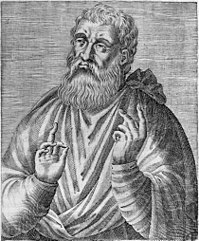
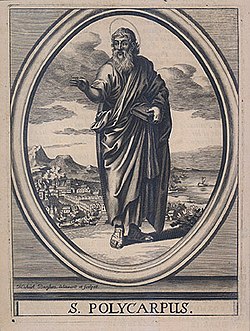
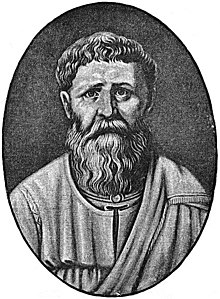
StClement1.jpg   Justin Martyr.jpg  Burghers michael saintpolycarp.jpg  Johnchrysostom.jpg  Augustinus 1.jpg

(Clement of Rome, Justin Martyr, Polycarp, Chrysostom, Augustine – courtesy Wikipedia)

By Spencer D Gear

Justification or salvation by faith is taught by these church fathers:

Clement of Rome (ca 30-100):

‘All these, therefore, have been glorified and magnified, not through themselves or through their works, or through the righteousness that they have done, but through his will.And we who through his will have been called in Christ Jesus are justified, not by ourselves, or through our wisdom or understanding or godliness, or the works that we have done in holiness of heart, but by faith, by which all men from the beginning have been justified by Almighty God, to whom be glory world without end. Amen’ (The First Epistle of Clement to the Corinthians 32:3-4).

Justin Martyr (ca 100-165):

‘For Isaiah did not send you to a bath, there to wash away murder and other sins, which not even all the water of the sea were sufficient to purge; but, as might have been expected, this was that saving bath of the olden time which followed s those who repented, and who no longer were purified by the blood of goats and of sheep, or by the ashes of an heifer, or by the offerings of fine flour, but by faith through the blood of Christ, and through His death, who died for this very reason, as Isaiah himself said’ (Dialogue with Trypho, ch 13).

Polycarp (ca 70-155):

‘Though you did not see him, you believed in unspeakable and glorified joy,” — into which joy many desire to come, knowing that “by grace ye are saved, not by works” but by the will of God through Jesus Christ. (Polycarp to the Philippians chap. 1, v. 3).

Chrysostom (ca 347-407):

‘But no one, he says, is justified by works, in order that the grace and loving-kindness of God may be shown. He did not reject us as having works, but as abandoned of works He has saved us by grace; so that no man henceforth may have whereof to boast. And then, lest when you hear that the whole work is accomplished not of works but by faith, you should become idle, observe how he continues’ (Homilies on Ephesians, Homily 4, ch 2, v 9).

Augustine (ca 354-430):

“Having now to the best of my ability, and as I think sufficiently, replied to the reasonings of this author, if I be asked what is my own opinion in this matter, I answer, after carefully pondering the question, that in the Gospels and Epistles, and the entire collection of books for our instruction called the New Testament, I see that fasting is enjoined. But I do not discover any rule definitely laid down by the Lord or by the apostles as to days on which we ought or ought not to fast. And by this I am persuaded that exemption from fasting on the seventh day is more suitable, not indeed to obtain, but to foreshadow, that eternal rest in which the true Sabbath is realized, and which is obtained only by faith, and by that righteousness whereby the daughter of the King is all glorious within” (Letter 36, ch 11, v 25).

(Courtesy Loyal Books)

Copyright © 2014 Spencer D. Gear. This document last updated at Date: 21 November 2015.

Rare marine fossil find but no Noah

clip_image002

Platypterygius (image courtesy Wikipedia)

By Spencer D Gear

There has been a rare fossil find in outback Queensland, Australia.[1]

In July 2014, the Wilson family from the state of Victoria went as tourists ‘to search the local free fossil hunting sites’ around Richmond, Queensland. It’s a long way to go for a holiday. Seven-year-old, Amber Wilson, found a fossil of ichthyosaur Platypterygius australis. Found what? It’s an extinct dolphin-like marine reptile and the fossil has a one metre long skull with teeth that are six metres long.

The fossil has been dug up and taken to Kronosaurus Korner, a palaeontological centre at Richmond. The interpretation manager and curator of the Korner, Dr Timothy Holland, considered that this is a ‘landmark’ find for the region. His comments were:

blue-satin-arrow-small ‘I have never seen tourists uncover such a beautifully preserved fossil before’.[2]

blue-satin-arrow-small  ‘It is easily the most complete ichthyosaur skull in our collection and one of the best from Australia’.[3]

blue-satin-arrow-small  ‘I was completely stunned. A professional palaeontologist might search their entire career to find a fossil of this quality. It only took the Wilson family a few hours’.[4]

The fossil has been temporarily called ‘Wilson’ after the people who found it.

Reason for ocean fossils in outback

How could a dolphin-like marine animal fossil be found 500 kilometres inland from the ocean (that’s the distance from Townsville – on the ocean – to Richmond). The Flinders Highway starts at Townsville on the Pacific Ocean coast. Here are the distances from Townsville.

clip_image004

(image courtesy Wikipedia)

The reasons given in this article for the location of this fossil in the outback were:[5]

  • ‘100-million-year-old fossilised bones’;
  • ‘An extinct dolphin-like marine reptile that once swam through Australia’s ancient inland sea’;
  • ‘Platypterygius lived 100 million years ago during the Cretaceous Period; at a time when dinosaurs still ruled on land’.
  • ‘Kronosaurus Korner is Australia’s premier marine fossil museum, showcasing more than 1000 fossils of creatures that once inhabited Australia’s ancient inland sea’.

These kinds of statements tell us something about the reasons behind some of the following statements. There is a worldview that is being displayed and promoted. The explanation from a scientific palaeontological perspective is that these fossils were from a time when Australia had an inland sea in ancient times.

The Australian government also supports such a view with this kind of statement:

Why do scientists think this big sea animal existed?

Layers of rock from the Cretaceous Period in the Great Artesian Basin contain many fossils of marine (sea) dwelling animals, proving the area was once covered by the sea. These animals included some very large reptiles such as the plesiosaurs, ichthyosaurs, and crocodiles. You may like to investigate these animal groups (Accessed 20 November 2014).


Kronosaurus queenslandicus (image courtesyWikipedia)

A piece of the puzzle is ignored

What piece is that?

The explanation for this extraordinary fossil find of an extinct, dolphin-like marine reptile 500 km from the ocean is that it once swam through Australia’s ancient inland sea. That may have been the case but how are we to know that piece of information? From some evolutionary text book that feeds us with that kind of worldview?

But there is a missing factor that palaeontologists don’t like or don’t want to discuss.

This is what happens when one’s worldview ignores other evidence. This explanation has been disregarded:

‘The waters completely inundated the earth so that even all the high mountains under the entire sky were covered’ (Genesis 7:19 NET).

A global flood is what happened to the earth in the time of Noah. Read about it in Genesis chapters 6-9 (NET Bible). This world-wide flood would have left lots of fossil evidence all over the world, in the outback and on mountains. To me, that reads like a more reasonable explanation of the origin of this dolphin-like animal fossil in the western Qld fossil find. This flood would have left a humungous amount of dead animals and people who would turn into fossils over time.

It is expected that evolutionary scientists who have been educated in and have imbibed a secular worldview will not want to understand or consider the impact of a global flood on the palaeontological remains of a marine creature in Australia’s outback.

Nevertheless, they need to be called to account in at least giving this explanation equal air-play. They don’t do that. For other examples of the impact of the universal Noahic flood, see:

Landscape with Noah’s thank offering (painting ca. 1803 by Joseph Anton Koch) [image courtesy Wikipedia]

It gets us talking

One great advantage of this kind of fossil find is that it gets interested people talking about the ‘how’ of fossil formation and the origins of the earth. This in turn may, but not necessarily, lead to discussion of Jesus’ view of the flood. You’ll find references to Jesus’ view on Noah’s flood in,

‘ For just like the days of Noah were, so the coming of the Son of Man will be. 38 For in those days before the flood, people were eating and drinking, marrying and giving in marriage, until the day Noah entered the ark. 39 And they knew nothing until the flood came and took them all away. It will be the same at the coming of the Son of Man’ (NET Bible).

Here is where the information from Lita Cosner’s article (link above) is especially helpful. Jesus believed in Noah and the flood. Why don’t you take a read of her insightful article?

For some penetrating analyses of divergent world views, see James W. Sire 2010, The universe next door (IVP). This is James Sire’s definition of a world view: ‘A world view is a set of presuppositions (assumptions which may be true, partially true or entirely false) which we hold (consciously or subconsciously, consistently or inconsistently) about the basic make-up of our world’ (Sire 1988:17).

clip_image006

(image courtesy Inter-Varsity Press)

Works consulted

Sire, J W 1988. The universe next door: A basic world view catalog, updated & expanded ed. Downers Grove, Illinois: InterVarsity Press.

Sire, J W 2010. The universe next door: A basic worldview catalog, 5th ed. Nottingham, England: Inter-Varsity Press.

Notes


[1] These details have been obtained from the Brisbane Times article, ‘Seven-year-old girl’s rare fossil find in outback Queensland’, available at: http://www.brisbanetimes.com.au/queensland/sevenyearold-girls-rare-fossil-find-in-outback-queensland-20141119-11pgpm.html#comments (accessed 20 November 2014).

[2] Ibid.

[3] Ibid.

[4] Ibid.

[5] From ibid.


Copyright © 2014 Spencer D. Gear. This document last updated at Date: 21 November 2015.

Did St Augustine say this to a prostitute?

Augustinus 1.jpg

By Spencer D Gear


Augustine of Hippo (image courtesy Wikipedia)

This is a story floating around the Internet about St. Augustine, his former sinful life and what a prostitute said to him after he became a changed man through Christ. This story has been repeated by some conservative evangelical preachers.

‘Grace to You’ cited it

John MacArthur’s organisation, Grace to You, is one such group telling this story:

Augustine, great saint of God had lived with a prostitute before his conversion.  After he was wonderfully saved, he was walking down the street and this prostitute saw him.  She shouted his name and he kept walking.  He saw her, but kept his eyes straightforward and walked. She continued crying after him and ran after him.  And finally, she said, Augustine, it is I.  To which he replied, I know, but it is no longer I (Grace to You, ‘Whose fault is our temptation?‘)

Spurgeon also used it

C H Spurgeon’s sermon quotes a view that is now espoused on the Internet in Spurgeon’s sermon, ‘The way to honor‘:

This was the teaching of our baptism. When we were baptized we were buried in the water. The teaching was that we were henceforth to be dead and buried to the world and alive alone for Jesus. It was the crossing of the Rubicon—the drawing of the sword and the flinging away of the scabbard. If the world should call us we now reply, “We are dead to thee, O world!” One of the early saints, I think it was Augustine, had indulged in great sins in his younger days. After his conversion he met with a woman who had been the sharer of his wicked follies; she approached him winningly and said to him, “Augustine,” but he ran away from her with all speed. She called after him and said, “Augustine, it is I,” mentioning her name; but he then turned round and said, “But it is not I; the old Augustine is dead and I am a new creature in Christ Jesus.” That—to Madam Bubble and to Madam Wanton, to the world, the flesh, and the devil—should be the answer of every true servant of Christ: “I live, yet not I but Christ liveth in me. Thou art the same, O fair false world— thou art the same, but not I. I have passed from death unto life, from darkness into light. Thy siren charms can fascinate me no more. A nobler music is in my ear and I am drawn forward by a more sovereign spell towards other than yours. My bark shall cut her way through all seas and waves till it reaches the fair haven and I see my Savior face to face.” ‘Tis irretrievable, then, this step which we have taken, the absolute surrender of our whole nature to the sway of the Prince of peace. We are the Lord’s. We are his for ever and for ever. We cannot draw back, and blessed be his name, his grace will not suffer us to do so. The path of the just is as the shining light, that shineth more and more unto the perfect day.”

Searching for the truth

I’ve searched quite a bit on the Internet, including an electronic search through all of the 13 chapters of Augustine’s Confessions, but couldn’t find any mention of this story. I did find this comment by Rev. Richard J. Fairchild who wrote:

Sources: Using Google I tried in 2005 to locate the St. Augustine quote (first taken from a sermon illustration journal many years ago) but could not find it. It seems that online at least, ours is the oldest citation of what may be an apocryphal reference?

It is said that St. Augustine was accosted one day on the street by a former mistress some time after he had become a Christian. When he saw her he turned and walked the other way. Surprised, the woman called out, “Augustine, it is I”. Augustine as he kept going the other way, answered her, “Yes, but it is not I.”

Did Augustine say it or not?

Seems like it was fiction

This is on a website by Timothy Kauffman, ‘Speaking the love in love‘, in which he exposes this story about Augustine as fiction:

In the process of this self-revelation, Brown[1] instead reveals how woefully uninformed he actually is about Church history. His first example is of Augustine’s encounter with his mistress in the streets of Milan. Brown tells his listeners that if they have not read Augustine’s Confessions as he has, “you’ve missed one of the great books of western civilization.” (12:05). Then he continues with the story:

“And there’s a wonderful story about the time that his mistress saw him down town and he saw her and turned and started running. And she said, ‘Augustine, Augustine, it is I.’ And Augustine looked back over his shoulder and said ‘Yes, but it is not I!’” (12:30 – 12:50).

This sort of creative historical revisionism makes for great sermon illustrations, especially when the preacher does not, as Brown does not, care about truth. What Brown relates as a key point in Augustine’s life was, as Ambrose clearly stated, a fable that had nothing to do with Augustine at all:

Let the man deny himself and be wholly changed, as in the fable they relate of a certain youth, who left his home because of his love for a harlot, and, having subdued his love, returned; then one day meeting his old favourite and not speaking to her, she, being surprised and supposing that he had not recognized her, said, when they met again, “It is I”. “But,” was his answer, “I am not the former I”. (Ambrose, Concerning Repentance, Book II, Ch 10.96)

This story floating around the Internet and in sermons has no relation to Augustine at all and certainly is not to be found anywhere in Augustine’s Confessions. It was, as Ambrose said, a ‘fable’. But Kauffman goes on with “the rest of the story”:

I’ve told that story for years. Let me tell you the rest of the story. She wasn’t looking for sex, she was looking for food. They had a son together and she wanted him to acknowledge their son and give them something to eat. What’s with that? When he did his Confessions, he confessed to stealing apples when he wasn’t hungry, but he {Brown pauses here, getting choked up} … he never mentioned his son. I love Augustine. Augustine R Us. (12:50 – 13:30)

Yet “the rest of the story” is as much a fabrication as the beginning. We believe Brown has probably read Augustine’s Confessions, but the passage of time seems to have dimmed his memory, for in his Confessions Augustine explicitly acknowledges his illegitimate son by name. He not only confesses his great sin, but also thanks God for giving the son to him, and acknowledges that he even took custody of the boy:

“Meanwhile my sins were being multiplied. My mistress was torn from my side as an impediment to my marriage, and my heart which clung to her was torn and wounded till it bled. And she went back to Africa, vowing to thee never to know any other man and leaving with me my natural son by her.” (Augustine, Confessions, Book 6, Chapter 15.25)

“When the time arrived for me to give in my name, we left the country and returned to Milan.  … We took with us the boy Adeodatus, my son after the flesh, the offspring of my sin. Thou hadst made of him a noble lad.” (Augustine, Confessions, Book 9, Chapter 6.14)

Clearly Augustine acknowledges his son in his Confessions, but Steve Brown’s point is moot because the fabled encounter with Augustine’s former mistress or prostitute never occurred in the first place. Whence, therefore, the fabrication? Surely Brown has a source for this story but it was not mentioned.

All we can conclude is that the beautiful and emotionally charged story about Augustine and the prostitute is a heart-throb of fabrication that has no relation to fact.

Notes


[1] Kauffman is referring to ‘Steve Brown [who] is a radio show host, author, seminary professor, PCA [Presbyterian Church of America] pastor and occasional “shock jock.”’. Available at: http://www.whitehorseblog.com/2014/08/10/speaking-the-love-in-love/ (Accessed 17 November 2014).


Copyright © 2014 Spencer D. Gear. This document last updated at Date: 1 May 2016.

Death by computer: An app may tell you

(courtesy public domain)

By Spencer D Gear

Would you believe that an app has been created to try to predict the date and time of your death?  What next? Take a read of this brief article in Time magazine, ‘This App Predicts When You’re Going to Die‘.

The Time magazine article explained: ‘Feed the app basic information about your medical history and lifestyle, and it spits out the date that might just appear on your tombstone, along with a countdown clock that lets you watch as the seconds evaporate into regret’. The article explained that Deadline’s ‘prediction is nothing more than a statistical estimation, and regular doctor visits are still a good idea’.

Deadline’s accuracy

(courtesy clker.com)

The app is called, ‘Deadline’, but when you go to that link it does at least admit the limitations of this app: ‘Deadline uses statistical information to attempt to determine your date of expiration, but no app can really accurately determine when you will die, so consider this a way to motivate yourself to be healthier, and consult a physician as necessary’.

A God’s-eye view

How do the Christian Scriptures regard the date and time of your expiration – your death? Let’s check out some verses:

1 Samuel 2:6, ‘The LORD brings death and makes alive; he brings down to the grave and raises up’ (NIV).[1]

Job 14:5, ‘A person’s days are determined; you have decreed the number of his months and have set limits he cannot exceed’.

Psalm 39:4, ‘”Show me, LORD, my life’s end and the number of my days; let me know how fleeting my life is’.

Psalm 104:29-30, ‘When you hide your face, they are terrified; when you take away their breath, they die and return to the dust. 30 When you send your Spirit, they are created, and you renew the face of the ground.

Psalm 139:16, ‘Your eyes saw my unformed body; all the days ordained for me were written in your book before one of them came to be’.

Ecclesiastes 3:1-2, 11, ‘There is a time for everything, and a season for every activity under the heavens:2 a time to be born and a time to die, a time to plant and a time to uproot…. 11 He has made everything beautiful in its time. He has also set eternity in the human heart; yet no one can fathom what God has done from beginning to end’.

James 4:13-15, ‘Now listen, you who say, “Today or tomorrow we will go to this or that city, spend a year there, carry on business and make money.” 14 Why, you do not even know what will happen tomorrow. What is your life? You are a mist that appears for a little while and then vanishes. 15 Instead, you ought to say, “If it is the Lord’s will, we will live and do this or that”’.

Whom will you believe?

Which one are you going to believe? Will it be the word of the computer (a Deadline view)? Or will you choose the word of the Lord (the guaranteed originator of life and the one who determines the when and how of your death)?

I know the One to whom I am committed. He also is that one who said, ‘Just as people are destined to die once, and after that to face judgment, 28 so Christ was sacrificed once to take away the sins of many; and he will appear a second time, not to bear sin, but to bring salvation to those who are waiting for him’ (Hebrews 9:27-28).

Notes


[1] All Bible quotations are from the New International Version (NIV) of the Bible.


Copyright © 2014 Spencer D. Gear. This document last updated at Date: 20 November 2015.

It’s amazing what some Calvinists will do

Reformation Wall in Geneva; from left to right: William Farel, John Calvin, Theodore Beza, and John Knox (courtesy Wikipedia)

By Spencer D Gear

This applies only to some of them – not all. I picked up the comments of one such person in a discussion on the Internet on the doctrine of salvation that related to Romans 10:9-11.

An Arminian, who has made many posts, wrote:

‘Calvinism has been shown to be untenable regarding Romans 10 – for it would not be right for Paul to tell one of those ones whom Calvinists say salvation was never intended for to believe in the resurrection (which was not intended for them) for their salvation.
Paul preached v.9 because he knew that not one person was not provided for – he knew that Christ died and rose for everyone.[1]

How would a Calvinist respond?

Nope! Verse 8 says that the word of faith is in the mouths and hearts of men PRIOR to their coming to faith. This excludes some men. Jesus said that the word had “no place” in the Jewish leadership of His day.
You have proven NOTHING. You are wasting your time and energy.[2]

I, as a convinced Classical/Reformed Arminian, could not let this kind of response go without a challenge. Well it could be ignored, but not when such important issues are at stake.[3]

James Arminius

Jacobus Arminius (courtesy Wikipedia)


My, oh my! What an example of eisegesis. This is what Rom 10:8 states:

But what does it say? “The word is near you; it is in your mouth and in your heart,” [a quote from Deut 30:14] that is, the message concerning faith that we proclaim (NIV).

To what does ‘it’ refer? It is the divine righteousness based on faith (Rom 10:6). The utterance/word Paul had in mind when he associated this righteousness with the words from Deut 30:14 was ‘concerning the faith’ which Paul and others were preaching.
Both examples of ‘word’ or ‘message’ (some translations) in Rom 10:8 use rhema and it means ‘the thing uttered’ (Lenski 1936:654). It is referring to the word/message that is uttered when it is preached, the content of which Rom. 10:9-11 demonstrates.
We know that the Jews from the earliest days of their lives as children learned the message/word of the Law by memory, so it was put into their mouths and hearts by that means. It was designed to enter the centre of their beings.
The view that you have presented to us in your interpretation of v. 8 is not based on the verse’s exegesis. A Calvinistic commentator, William Hendriksen, confirms this in his exegesis of Rom. 10:8,

The apostle continues to “quote” the righteousness that is by faith. The quotation found in Rom. 10:6, 7 ended with the words of Deut. 30:13 [Rom. 10:8]….
There is only one way, however, in which this can be appreciated. That is the way of faith; for God’s word, as revealed both in the Old Testament and in the New, is “the word of faith“; that is, it is the word which, in order to exert saving effect, must elicit the response of faith!
Paul now shows that the statement, “the word is close to you; (it is) on your lips and in your heart” is true (Hendriksen 1980:344, bold & underline emphasis added).

There is not a word in this text that says anything about ‘the word of faith is in the mouths and hearts of men PRIOR to their coming to faith’. Some Calvinists are so blatant in pushing their unbiblical agenda of regeneration prior to faith and unconditional election.

For my refutation of regeneration prior to faith, see,

clip_image002 Does regeneration precede faith?

clip_image002[1] Does regeneration precede faith in Christian salvation?

Is unconditional election biblical? You might like to read my brief articles:

clip_image004 God’s foreknowledge and predestination/election to salvation

clip_image004[1] Elected to salvation and/or damnation?

I recommend the article by Roger E Olson, ‘What’s wrong with Calvinism?‘ (Patheos, March 22, 2013).

Works consulted

Hendriksen, W 1980. New Testament commentary: Exposition of Paul’s epistle to the Romans. Grand Rapids, Michigan: Baker Academic.

Lenski, R C H 1936. Commentary on the New Testament: The interpretation of St. Paul’s epistle to the Romans. Peabody, Mass: Hendrickson Publishers (limited edition by permission of Augsburg Fortress).

Notes


[1] janxharris#119, Christian Forums, Soteriology DEBATE, ‘Acts 18:4’, 5 August 2014, available at: http://www.christianforums.com/t7827019-12/ (Accessed 5 August 2014).

[2] Ibid., The Boxer#120.

[3] My response is at ibid., OzSpen#130.


Copyright © 2014 Spencer D. Gear. This document last updated at Date: 20 November 2015.

Old wives’ tale, artificial sweeteners and cancer

clip_image002 clip_image004 clip_image005 clip_image007 clip_image008

(courtesy Wikipedia and Wikipedia)

By Spencer D Gear

I have had people visit with my wife and me and when we took a cold can of diet Coke from the refrigerator for my consumption, the person would say something like: ‘Surely you are not drinking that stuff with artificial sweeteners. It’s dangerous’. Then a discussion pursued about the link between aspartame (and other artificial sweeteners) and cancer.

Then there are online statements such as, ‘Aspartame: By Far the Most Dangerous Substance Added to Most Foods Today’.

There’s a fair amount of information sweeping around the Internet and in personal conversation about how it has been shown that if one uses artificial sweeteners there is a risk of getting cancer.

Is it fact or fiction that consumption of artificial sweeteners leads to developing cancer? Could it be classified as an old wives’ tale, which is ‘a belief, usually superstitious or erroneous, passed on by word of mouth as a piece of traditional wisdom’? (The free dictionary)

Is it true?

Risk Factor

public domain

You might be interested in this article from the National Cancer Institute, ‘Artificial sweeteners and cancer‘. One of its conclusions about research in this area is contrary to popular opinion: ‘There is no clear evidence that the artificial sweeteners available commercially in the United States are associated with cancer risk in humans’. Why don’t you read this summary of research to demonstrate this fact.
For other versions of this research, see:

Conclusion

That information should put the cat amongst the pigeons or lay some falsehoods to rest.

The National Cancer Institute in the USA concluded:

Questions about artificial sweeteners and cancer arose when early studies showed that cyclamate in combination with saccharin caused bladder cancer in laboratory animals. However, results from subsequent carcinogenicity studies (studies that examine whether a substance can cause cancer) of these sweeteners have not provided clear evidence of an association with cancer in humans. Similarly, studies of other FDA-approved sweeteners have not demonstrated clear evidence of an association with cancer in humans.

So the conclusion that consumption of artificial sweeteners is linked to cancer is a fable. It is nothing more than an old wives’ tale.

3d Cancer Cure Crossword On...

public domain

Copyright © 2014 Spencer D. Gear. This document last updated at Date: 29 October 2015.