Author Archives: spencer

God’s foreknowledge and predestination/election to salvation

Ribbon Salvation Button  Purple Salvation Button Green Salvation Button

(images courtesy ChristArt)

By Spencer D Gear

Within the evangelical Christian community, there are two prominent views on how human beings are elected by God to salvation. They are the views of Calvinism and Arminianism. See examples of these views:

checkerboard-arrow-small Arminianism: Roger Olson, ‘Election is for everyone‘;

checkerboard-arrow-small Calvinism: J I Packer, ‘Election: God chooses his own’;

In a discussion on God’s predestination/election and foreknowledge on a Christian Forum, this was stated:

It can’t be “both”, it’s either one or the other. One is the cart, the other is the horse. Either God’s grace is the driving engine behind a man’s salvation, or the man is. Either Christians in heaven will be saying “the reason I’m here is because God chose me” or they will be saving “The reason God chose me is because I decided to be here.[1]

My response was:

Chosen But Free, 3rd Edition

(image courtesy Bethany House)

Salvation that involves the omniscience of God and the free choices of human beings is God-centred. That’s how God has revealed this situation in Scripture and Geisler has attempted to demonstrate this – Chosen but Free.[2] They are understood as based on God’s omniscience. It is a very God-centred doctrine of salvation, straight from the authoritative God of Scripture.

I would not be supporting such a view if it were not what is found in Scripture. I’m committed to the inerrancy of Scripture in the autographa [the original documents of Old and New Testaments).

It seems that it is your Calvinistic interpretation that wants to place any view other than yours as the creation over the Creator. This is clearly not the case with Geisler (1999) and it is not my view.The choices of human beings are ‘free’ in the sense that God has extended to all human beings common grace (see Titus 2:11).

Your example of your son is not adequate for the discussion we are having because with your son you are dealing with how to set parameters for discipline, because you love him. With the eternal God, he is revealing how his love for the whole world makes salvation available to all. As I understand them, unconditional election and irresistible grace involve forced love. Geisler has labelled this as ‘divine rape’ – not nice terminology, but it does try to get to the essence of forced love for salvation.

I support your view of ‘the wise and immutable choices of God’, but it is the basis on which those immutable choices are made about which we disagree. Are you promoting an immutable decree in predestination? I’m promoting predestination/election, based on the foreknowledge of God and that involves freedom of individuals to voluntarily love or reject God’s offer of salvation when the Gospel is shared or preached.

Mine is a God-centred theology of salvation that incorporates the Gospel, God’s omniscience in foreknowledge, election that includes human beings freely choosing to respond favourably to the Gospel. It is genuine free will that God has given to all.[3]

How would Apologetic_Warrior, a Presbyterian and Reformed believer, respond? Before looking at his response to my post on foreknowledge, it is important to note his emphasis in a previous post,

Sorry but election by “free” choices of men is “man centered” doctrine if there ever were such a thing. Of course Geisler does not come right out and speak in those terms, he is blind to the fact, cannot see the forest for the trees. So let me rephrase, Geisler does not intentionally place the creation over the Creator, but he does so unintentionally based on his philosophical presuppositions.

If Geisler and yourself believe in original sin and total depravity, in what sense can man’s choices be said to be “free”? Free of what to what?[4]

Now to his response about foreknowledge in Romans 8:29-30 and 1 Peter 1:1-2. It was fairly predictable. It is a common response I receive from the Reformed who don’t believe that salvation and God’s foreknowledge are associated with election/predestination. He wrote:

Neither of those verses support what you would like for them to support.

If we interpret “those whom he foreknew” in the sense you suggest, let me ask you this, are we therefore to interpret that as God foreknowing some but not others? No, God foreknows everyone’s destiny in the knowledge sense of the term. Because the phrase limits the number of persons (those), I believe a more accurate rendering would be “those whom he foreLoved”, as we already know of instances in Scripture where to “know” someone (“Adam knew Eve his wife, and she conceived”) is to love intimately.

Neither of the verses give the cause or basis of election, and neither is it contradiction for the Calvinist to agree that there is a tie between election and foreknowledge….and predestination and sovereignty. What you read into foreknowledge is the “choices of men”, where we Calvinists read the free choices of God on the basis of His love and mercy, according to His will and His purpose, for His glory.[5]

Here was my response:[6]

‘For those whom he foreknew he also predestined to be conformed to the image of his Son, in order that he might be the firstborn among many brothers. 30 And those whom he predestined he also called, and those whom he called he also justified, and those whom he justified he also glorified’ (Romans 8:29-30; emphasis added).

‘He foreknew’ is the Greek proegnw, aorist, active indicative of proginwskw, which means ‘know beforehand, in advance, have foreknowledge of something… Choose beforehand someone’ (Arndt & Gingrich p. 710). Therefore, your statement, ‘I believe a more accurate rendering would be “those whom he foreLoved”‘, is your own opinion and is not based on the etymology of the word.

Proginwsko means to foreknow, to know in advance. The preposition pro that begins this verb does not change the meaning of ginwsko (I know), but simply dates it, the same preposition is associated with proorizo, I predestine in advance in Rom 8:29. This divine action reaches back to eternity.

We need to note that the verb for knowing is ginwsko and not oida, to know about someone, intellectual apprehension. Proginwsko refers to a knowing relationship that is a personal relationship between the knower and the person known. So it becomes plain that when God foreknew, in his omniscience He foreknew in personal relationship. This does not refer to what you want it to mean, ‘foreloved’, but to know personally in relationship through foreknowledge.
Therefore, when Jesus said concerning the unbelievers and judgment, ‘I never knew you’, Jesus did not know the wicked with the affection of a personal relationship.

Romans 8:29 most definitely refers to foreknowledge of God, a personal relationship of knowing by God with believers. I am not imposing my meaning on the text. I’m exegeting the text, based on etymology of foreknowledge.

So one of the fundamentals in understanding God’s election of a person to receive salvation, is God’s foreknowledge according to Romans 8:29 and 1 Peter 1:1-2.

Works consulted

Geisler, N 1999. Chosen but free. Minneapolis, Minnesota: Bethany House Publishers.

Lenski, R C H 1936. Commentary on the New Testament: The interpretation of St. Paul’s epistle to the Romans. Peabody, Massachusetts: Hendrickson Publishers. This commentary was originally published by the Lutheran Book Concern in 1936. The Hendrickson Publishers’ edition was printed in 2001.

The Interpretation of St. Paul's Epistle to…

(image courtesy LibraryThing)

Notes:


[1] Apologetic_Warrior #388, Christian Forums, Soteriology, ‘Is rejecting Christ a sin?’, available at: http://www.christianforums.com/t7755517-39/ (Accessed 8 July 2013).

[2] 1999. Minneapolis, Minnesota: Bethany House Publishers.

[3] Ibid., OzSpen #386.

[4] Ibid., Apologetic_Warrior #385.

[5] Ibid., Apologetic_Warrior #401.

[6] Ibid., OzSpen #405, with some guidance from R C H Lenski (1936:556-557).


Copyright © 2013 Spencer D. Gear. This document last updated at Date: 30 April 2016.

Conversations with a Calvinist on apostasy

Spencer D Gear

Lake of Fire

Courtesy ShareFaith

By Spencer D Gear

If you want to see some heat generated in theological discussions, just raise the issue of the possibility of apostasy with Calvinists who believe in perseverance of the saints. These folks who believe in once saved, always saved (OSAS) – which is not good terminology – do not want to come close to believing that it is possible for a genuine Christian to be lost again and to be lost eternally with no further opportunity for repentance.

What, then, is apostasy? Apostasy refers to

defection from the faith, an act of unpardonable rebellion against God and his truth. The sin of apostasy results in the abandonment of Christian doctrine and conduct. With respect to the covenant relationship established through prior profession of faith (passive profession in the case of baptized infants), apostates place themselves under the curse and wrath of God as covenant breakers, having entered into a state of final and irrevocable condemnation. Those who apostatize are thus numbered among the reprobate. Since the resurrection of Christ, there is no distinction between blasphemy against Christ and blasphemy against the Holy Spirit (cf. Matt 12:31-32; Heb 6:4-6 ; 10:26-29 ; 1 John 5:16-17) [Karlberg 1996].[1]

I made the post to a Christian forum in which I dealt with Hebrews 10:26-27, which states, ‘For if we go on sinning deliberately after receiving the knowledge of the truth, there no longer remains a sacrifice for sins, 27 but a fearful expectation of judgement, and a fury of fire that will consume the adversaries (ESV).

thumbnail

Courtesy ChristArt

In response to another person, I wrote:

They should cause us all to be concerned about our continuing to ‘go on sinning deliberately after receiving the knowledge of the truth’ (Heb. 10:26). This verse, along with Heb 6:4-8, confirm that apostasy is a genuine possibility for some who have been Christian but choose to sin deliberately and reject the Lord.

These verses and the others you quoted cannot be excluded when continuation or loss of salvation is considered.[2]

A Calvinist responded, ‘We all sin deliberately after receiving the knowledge of the truth’.[3] How should I reply?

Therefore, this is what we can expect from God if that is what we :

26 Dear friends, if we deliberately continue sinning after we have received knowledge of the truth, there is no longer any sacrifice that will cover these sins. 27 There is only the terrible expectation of God’s judgment and the raging fire that will consume his enemies (Heb 10:26-27 NLT).

The NLT has gotten the essence of the Greek present tense with ‘continue sinning’ and this is deliberately. This is deliberate sinning that continues on and on.[4]

The same Calvinist responded:

The passage isn’t talking about losing salvation. It’s sad that you think the Great Shepherd could lose His sheep.
The writer is talking to Jews. If they reject Christ, their sacrificial system will not benefit them. That’s why there remains no more sacrifice for sins.
But hey, only have conversations with those who agree with you. That way you’ll never be challenged.
(Oh, and the 1 Tim passage says nothing about them losing their salvation.)[5]

My response was:[6] The passage is doing more than talking about losing salvation. It is talking about the believer who commits apostasy (repudiates the Christian faith), for whom ‘there no longer remains a sacrifice for sins’. That’s the apostasy from which there is no return, as Heb. 6:4-8 confirms.
It’s sad that you think the Great Shepherd is not telling us the truth when he writes about committing apostasy in Heb 6:4-8 and Heb 10:26-27 for which there is no return to repentance.

Thumbnail for version as of 21:05, 2 March 2005

Bible.malmesbury.arp.jpg, Courtesy Wikipedia

The context of Hebrew 10:26-27, no matter how much you want it to refer to Jews, tells us that the writer to the Hebrews is writing to Christians. We know this from these verses in Ch. 10:

clip_image012[2] Hebrews 10:10, “By that will we have been sanctified through the offering of the body of Jesus Christ once for all.” (ESV)

clip_image012[2] Heb 10:15, “And the Holy Spirit also bears witness to us….”

clip_image012[2] Heb 10:19, “Therefore, brothers and sisters since we have confidence to enter the holy places by the blood of Jesus,”

clip_image012[2] Heb 10:22, “Let us draw near with a true heart in full assurance of faith….”

clip_image012[2] Heb 10:23, “Let us hold fast the confession of our hope without wavering….”

clip_image012[2]  Heb 10:24, “And let us consider how to stir up one another to love and good works.”

clip_image012[2] Heb 10:25, “Not neglecting to meet together as is the habit of some, but encouraging one another.…”

clip_image012[2] Heb 10:26, ‘“For if we go on sinning deliberately….”

This Calvinist did nto seem to like the challenges that I to his view on apostasy, which was that no Christian can commit apostasy as once they are saved they will persevere in the faith and not lose salvation. However, that is not a consistent view maintained in Scripture.

Mark Karlberg’s (1996) article on apostasy continued:

G. C. Berkouwer[7] comments: “We must underscore the deep seriousness of the biblical warning against apostasy after enlightenment’ and after the knowledge of the truth.’ This is the apostasy which reviles the Spirit of grace and despises the Son of God and crucifies the Man of Sorrows anew” (p. 343). Berkouwer is correct to refute the idea that this sin against the Holy Spirit is a mysterium iniquitatis (“a mystery of sin”), a sin difficult, if at all possible, to define precisely in the Bible.

Apostatizing from God’s redemptive covenant is an act of unpardonable transgression and rebellion. All other sins are forgiven on true repentance and faith. Those who fall out of fellowship with the saints are restored to full communion through confession of sin and reaffirmation of faith in Jesus Christ. Excommunication, as a final step in the process of ecclesiastical discipline, is undertaken in the hope of restoring the wayward sinner who has fallen into grievous sin ( 1 Co 5:1-5).

Israel of old repeatedly broke covenant with God. By impugning the name and works of Yahweh, Israel despised her calling and proved to be a stubborn and disobedient nation. Pentateuchal law identifies covenantal faithlessness as apostasy (see, e.g., the curses of the covenant pronounced on Mount Ebal by the Israelites in Deut 27:9-26). With respect to temporal blessing in the land of promise, restoration of Israel to divine favor after covenant breaking was always a consequence of divine grace and mercy, not because of meritorious works on Israel’s part.

In biblical prophecy apostasy is an eschatological sign of the impending day of the Lord, a precursor of the final day of judgment. Ancient Israel’s experience of divine wrath and displeasure served as typological foreshadowings of that latter day. The increase in apostasy in these last days of the church’s wilderness experience is associated with the appearance of the “man of lawlessness” ( 2 Th 2:1-3).

For a detailed examination of the possibility of a Christian committing apostasy and being lost forever with no opportunity for repentance, see my exposition of Hebrews 6:4-8, ‘Once saved, always saved or once saved, lost again’.

I recommend the article by Roger E Olson, ‘What’s wrong with Calvinism?‘ (Patheos, March 22, 2013).

Works consulted

Karlberg, M W 1996. Apostasy, in W A Elwell (ed), Baker’s evangelical dictionary of biblical theology. Available at BibleStudyTools.com, http://www.biblestudytools.com/dictionaries/bakers-evangelical-dictionary/apostasy.html (Accessed 8 July 2013).


 Notes:


[1] Karlberg (1996).

[2] Christian Forums, Congregation, Christian Communities, Baptists, Heb 6:4-6, OzSpen #13, available at: http://www.christianforums.com/t7755725-2/ (Accessed 6 July 2013).

[3] Ibid., Hammster #14.

[4] Ibid., OzSpen #15.

[5] Ibid., Hammster #30.

[6]Ibid., OzSpen #34.

[7] Karlberg stated that this referred to the book by G. C. Berkouwer, Sin.


Copyright © 2013 Spencer D. Gear. This document last updated at Date: 29 October 2015.

How were the New Testament documents transmitted in the first century AD?

Folio 41v from Codex Alexandrinus contains the Gospel of Luke with decorative tailpiece (courtesy Wikipedia)

By Spencer D Gear

It is not unusual to get this kind of theory propounded. Here it was on a large Christian forum on the Internet:

It’s blatantly obvious that there is a question to be answered: the three Synoptics have a lot of the same material – often word-for-word identical. How did that happen?
However much you bluster, any theory of authorship that fails to explain that overlap – in all its detail – is not satisfactory.[1]

The conversation continued by the same person (with interaction from others):

That would work [memorising a Rabbi or teacher’s words, word-for-word] if oral sources worked quite like that and if the overlaps between the gospels consisted of only context free words of Jesus.

But oral sources don’t work like that, and the overlaps include narration.
“Q”, if it ever existed , would appear to be a collection of sayings – which is the biggest problem with any hypothetical Q as a reconstructable stand-alone document.
but the overlaps between Matthew and mark, say, include narrative.[2]

This poster continued her scepticism towards the Gospel material:

It doesn’t matter how clearly “Matthew” and Peter remember the same events – their narration of those events won’t be word similar or remotely close to it unless one is copying the other. You can’t have “Matthew” and Peter independently writing accounts and have the similarities we have – it just would not happen. One has to have access to the other and be copying from it. Or they both have to be copying from a shared source.[3]

My response was as follows:[4]

Courtesy Wm. B. Eerdmans Publishing Co.

I suggest that you read a Swedish scholar (former professor of exegetical theology, Lund University, Sweden) who challenges your view. He is Birger Gerhardsson and has published his investigations in Memory & Manuscript: Oral Tradition and Written Transmission in Rabbinic Judaism and Early Christianity and Tradition & Transmission in Early Christianity. I have these two volumes in one publication published by William B. Eerdmans Publishing Company (Grand Rapids, Michigan). Mine is a 1998 edition but they were originally published by Gerhardsson in 1961 and 1964. I have referenced them below as 1998a and 1998b.[5]

Gerhardsson searched for a model to demonstrate how oral formulations and oral tradition could have taken place. His aim was to find knowledge of possible techniques (1998a:xxxi). He set out to answer what he considered were three crucial questions:

  1. ‘To what extent did the Pharisaic teachers apply the Rabbinic principles of pedagogics during the first century A. D.’?
  2. ‘To what extent are we justified in regarding the pedagogics we find among the Pharisaic teachers as representative of the normal practices of the Jesus milieu as a whole, i. e. even outside the bounds of Pharisaism proper?’
  3. ‘To what extent did the teaching and transmission of Jesus and the early Church follow the principles of practical pedagogics which were common in their milieu, and to what extend did they create new forms?’ (Gerhardsson 1998b:12)

One of his conclusions from a long and extensive study is:

It is one thing to state that traditions have been marked by the milieu through which they passed; another to claim that they simply were created in this secondary milieu [a hypothesis of the form critics]. The evidence suggests that memories of Jesus were so clear, and the traditions with which they were connected so firmly based that there can have been relatively little scope for alteration (Gerhardsson 1998b:43; emphasis in original).

So Gerhardsson’s extensive research comes to rather different conclusions to yours. May I suggest a careful read of Gerhardsson’s seminal material that has been radically criticised by Morton Smith and Gerhardsson (1998b) has addressed Smith’s critique.

Notes:


[1] Christian Forums, Apologetics, ‘Which gospel was first’, ebia #56, available at: http://www.christianforums.com/t7753487-6/ (Accessed 4 July 2013).

[2] Ibid., ebia #62.

[3] Ibid., ebia #65.

[4] Ibid., OzSpen #70.

[5] Some of this material is made available online by Google Books HERE. Birger Gerhardsson has also written a smaller version, The Reliability of the Gospel Tradition (2001. Peabody, Massachusetts: Hendrickson Publishers).
Copyright © 2013 Spencer D. Gear. This document last updated at Date: 29 October 2015.

Is a Calvinistic God a contradiction when compared with the God revealed in Scripture?

By Spencer D Gear

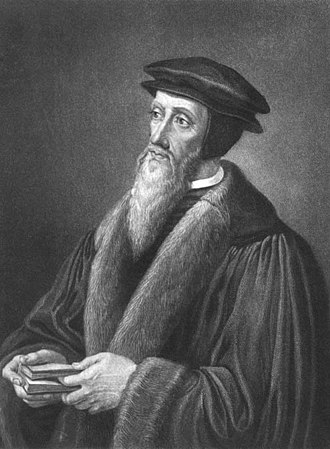
John Calvin 2.jpg

John Calvin (image courtesy Wikipedia)

By Spencer D Gear

If you want to get a sample of orthodox, unorthodox or confused theology mixed in a challenging lump, head to one of the Christian forums on the Internet. The Calvinists are making their presence felt on some of these forums with their view of God Almighty who decrees all the evil in the world.

What is meant when they speak of God’s decrees or God’s decretive will? Theologian Wayne Grudem, a Calvinist, provides this definition:

The decrees of God are the eternal plas of God whereby, before the creation of the world, he determined to bring about everything that happens. This doctrine is similar to the doctrine of providence, but here we are thinking about God’s decisions before the world was created, rather than his providential actions in time. His providential actions are the outworking of the eternal decrees that he made long ago (Grudem 1994:332, emphasis in original).

However, Grudem wants it to be clear that God does not cause sin: ‘Unlike Adam, Scripture never blames God for sin. If we ever begin to think that God is to blame for sin, we have thought wrongly about God’s providence, for it is always the creature, not God who is to be blamed…. God has ordained that our actions do have effects. God has ordained that events will come about by our causing them (Grudem 1994:333-334).

As this article unfolds, we will observe that this is not how some Calvinists, at the popular level of Christian interaction on the Internet, interpret God’s decrees.

There was this new post on Christian Forums,

Hello need answer.

How can you possibly have a logical debate with a conclusion here?

You cannot have a debate without a foundation of truth.
We have only man made often opinionated theory as one premise.

We have Gods word as the other.

When you couch a debate and say that Gods word is in error, you might as well pea on a wall.

You will get your feet wet.

So one side can quote verses instead of suppositions, then the other says ain’t so the bible is wrong.

How and why did the study of salvation, turn into a Calvinists bully pulpit?

Good luck……I am glad I don’t need luck you can have it, I live by faith.[1]

A Calvinist responded:

“How and why did the study of salvation, turn into a Calvinists bully pulpit?”
It hasn’t. Calvinists just have more thorough biblical explanations, that’s all.[2]

The original poster made this response (given in part here):

I based my post on a circular logic by Calvinist.
They assume the bible contains errors, they assume their depth of understanding is more enlightened.
Anytime a debate is joined, their premises is you have accepted my truths, now on the current subject I must be right.
A works based belief, discounts the spiritual nature of God.
If I were to pick a Bible figure that resembles a Calvinist it would be Cain.[3]

A Calvinist’s reply was: ‘Calvinists assume the bible contains error? That’s a new one on me’.[4]

But it was not a new one on this fellow:

Is this correct?
Psalm 5:4, For thou art not a God that hath pleasure in wickedness: neither shall evil dwell with thee.
God eternal decrees that which He hath no pleasure in? Does God possess a split personality?

You won’t find a clearer case of a contradiction.[5]

How would this Calvinist respond? Here was his assertion, ‘It’s not a contradiction’.[6] Janx replied, ‘That isn’t helpful Hammster. Please explain it for all those would-be Calvinists out there’.[7] Janx’s further response to Hammster was:

‘Ps 5:5, The arrogant cannot stand in your presence. You hate all who do wrong;
God eternally decrees all the wrongs that men will do whilst also hating them for doing so?[8]

I entered the debate[9], replying to the opening post: ‘500 years later, Calvinism debate still simmers among Southern Baptists‘, Associated Press (The Tennessean). This is from that article:

When Lifeway polled Southern Baptist pastors about Calvinism last year, 30 percent said their churches were Calvinist….

The conflict could continue to grow as the next generation of pastors takes over. The Lifeway poll found 8 percent of pastors overall strongly agreed that they were Calvinists, but among those pastors aged 18 to 44, 18 percent identified strongly as Calvinists. Among those 65 and older the number was just 1 percent.

The Lifeway poll also found that 61 percent of pastors were concerned about the impact of Calvinism on the SBC.

Which means that 70% of their churches are non-Calvinist?

Again he replied, ‘Good News !’[10] However, a Calvinist’s response was, ‘Yep. 70% are wrong. Still a lot of work to do’.[11]

To the Calvinistic claim (as above) that ‘it’s not a contradiction’, I wrote:[12]
Johnpiper3.jpg

John S Piper (photo courtesy Wikipedia)

Yes it is and we see it on a practical level in this articulation between a Calvinist and an Arminian. John Piper, the Calvinist, wrote, ‘What Made It OK for God to Kill Women, Children in Old Testament?

Here’s a sample from Piper’s teaching:

“If I were to drop dead right now, or a suicide bomber downstairs were to blow this building up and I were blown into smithereens, God would have done me no wrong. He does no wrong to anybody when he takes their life, whether at 2 weeks or at age 92.”

Do you understand the horrific implications of this kind of statement by a Calvinist? Planned Parenthood is justified in what it does to unborn children through abortion because God would be doing no wrong to these unborn children by taking their lives in this way.

What was John Calvin’s view in his Institutes of the Christian religion?

The same men wrongly and rashly lay the happenings of past time to the naked providence of God. For since on it depends everything that happens, therefore, say they, neither thefts, nor adulteries, nor murders take place without God’s will intervening…. For we shall not say that one who is motivated by an evil inclination, by only obeying his own wicked desire, renders service to God at His bidding….

I grant more: thieves and murderers and other evildoers are the instruments of divine providence, and the Lord himself uses these to carry out the judgments that he has determined with himself. Yet I deny that they can derive from this any excuse for their evil deeds. Why? Will they either involve God in the same iniquity with themselves, or will they cloak their own depravity with his justice? They can do neither. In their own conscience they are so convicted as to be unable to clear themselves; in themselves they so discover all evil, but in him only the lawful use of their evil intent, as to preclude laying the charge against God. Well and good, for he works through them. And whence, I ask you, comes the stench of a corpse, which is both putrefied and laid open by the heat of the sun? All men see that it is stirred up by the sun’s rays; yet no one for this reason says that the rays stink. Thus, since the matter and guilt of evil repose in a wicked man, what reason is there to think that God contracts any defilement, if he uses his service for his own purpose? Away, therefore, with this doglike impudence, which can indeed bark at God’s justice afar off but cannot touch it (Calvin 1960:1.17.5).

Therefore, Calvin did not place the blame for all the evil in the world with the decrees of God.

Here is an Arminian, Robert Anderson’s, ‘Response to Piper’s “What Made It OK for God to Kill Women, Children in Old Testament?”’

Robert Anderson (photo courtesy blogspot)

It is not only OK for God to kill women and children in the Old Testament according to the Calvinist, John Piper, but God ‘does no wrong to anybody when he takes their life, whether at 2 weeks or at age 92’ – says Piper. Calvin disagrees! Piper’s statement is in contradiction with what is affirmed in the Bible in passages such as Psalm 5:4 where it is stated that God does not delight in wickedness and evil does not dwell with him.

Is it Calvinism or Hyper-Calvinism

Phil Johnson has written, ‘A Primer on Hyper-Calvinism’. Take a read and see what you think about historic Calvinism and hyper-Calvinism.

James White is a Calvinist theologian and ardent promoter of Calvinism. He was in a debate/discussion with Hank Hanegraaff and George Bryson. Here is an excerpt from that debate on ‘The Bible Answer Man’:

George Bryson: Well, let me answer that with a question. Let me ask you this question – and this will put in perspective to show the difference. When a child is raped, is God responsible and did He decree that rape?
White: If he didn’t, then that rape is an element of meaningless evil that has no purpose. What I’m trying to point out, by going to Scripture —
Hank Hanegraaff: So what is your answer there? Because I want to understand the answer to that question.
White: I’m trying to go to Scripture to answer it. The reason —
Hanegraaff: But what is the answer to the question he just asked, so that we can understand what the answer to the question is.
James White: I mentioned to him, yes, because if not then it’s meaningless and purposeless and though God knew it was going to happen He created it without a purpose. That means God brought the evil into existence, knowing it was going to exist, but for no purpose, no redemption, nothing positive, nothing good. I say —
Hanegraaff: So, he did decree and if he decreed it, then there’s meaning to it.
White: that he – it has meaning, it has purpose, suffering (all suffering) has purpose, everything in this world has purpose. There is no basis for despair. But if we believe that God created knowing all this was going to happen, but with no decree. He just created and there is all this evil out there, and there’s no purpose, then every rape, every situation like that is nothing but purposeless evil and God is responsible for the creation of despair. And that is not what I believe.
Bryson: For years, I’ve been trying to figure out why it is that in order for rape to exist – or – unless God caused it to happen – there can’t be any purpose in it. God can use evil and he does. But to blame God, which is what a decree does, to blame God for the rape of a child is a horrible attack on the very character and love of God.
White: How about to blame God for the destruction of the heart of a father, thinking his son has been killed for many years – the weeping that he underwent. Genesis 50:20 has not been answered yet. And Acts chapter 4 tells us that the early church believed that Pontius Pilate and Herod and the Romans and the Jews in the crucifixion of the sinless son of God (which I believe we would all agree is the greatest evil that man has ever committed) that that took place on the basis of the sovereign decree of God (Acts 4:27-28). If you could tell me both what you believe Acts 4:27-28 means and —
Bryson: Let me ask you if you think that rape is a sin.
White: I believe that — Can we use a biblical example, Acts 4:27-28?
Bryson: Rape is a biblical issue, is rape a sin?
White: Just as the crucifixion was a sin, yes.
Bryson: Ok. So, does God decree, and therefore is God the cause of, sin?
White: Again, as you well know, having read all of these things, let me just read this into everyone’s hearing, so they can see it. The early church said: “For truly in this city there were gathered against your holy servant Jesus, whom you anointed, both Herod, Pontius Pilate, along with the gentiles and the peoples of Israel to do whatever your hand and your purpose predestined to occur. And so here is an example where men committed evil and they did so at the predestining purpose of God. God is glorified. His intention is positive and good. The intention of Herod – the intention of the Jews – These were not innocent people and God’s standing behind them with a big gun, pushing them down the road, going “Be evil, be evil.” In fact, how many times did God restrain them![13]

James White is very clear from this interaction about the nature of his Calvinistic God:

  • God is responsible for a child’s rape; otherwise it is meaningless and purposeless evil.
  • Everything in this world has a purpose from God, including a child’s rape.
  • God is responsible for the creation of despair if he did not decree a child’s rape with purpose.
  • Genesis 50:20 and Acts 4:27-28 support this view of God being responsible for a child’s rape, according to White.
  • Rape is a sin just as Jesus’ crucifixion was a sin.
  • The intention of Herod and Pontius Pilate was evil but men committed evil and they did so at the predestining purpose of God. God is glorified.

George Bryson’s remark hit the mark: ‘To blame God, which is what a decree does, to blame God for the rape of a child is a horrible attack on the very character and love of God’.

I cannot conclude other than the Calvinistic view of God, as articulated by James White, makes God into an evil monster!

See James White’s response to this interview and some other issues in this presentation on Youtube, ‘The Absurdity’.

The Calvinistic God decrees evil – all evil

The implications are horrific. The Calvinistic God considers it is OK for Him to endorse (by decree) the horrible evils of

We need to remember that it was John Piper who stated (above), ‘He [God] does no wrong to anybody when he takes their life, whether at 2 weeks or at age 92’.

It’s a massive contradiction when the Calvinistic God states that he does not delight in wickedness and evil does not dwell with him, but evil does dwell with him and all of the horrific things He has decreed throughout human history, according to some Calvinists – including

The God who does not delight in wickedness and evil does not dwell with him, is contradicted by the Calvinistic God who says it is OK through His decrees to agree with such slaughter and horror around the world and down through history.

This was response to, ‘Yep. 70% are wrong. Still a lot of work to do,’ was:[14]

There are 70% of Southern Baptists who do not endorse the God who engages in the kind of contradiction you are presenting for the Calvinistic God.
I praise the Lord that there are many Baptists who know the nature of their God and he is not the one who endorses evil around the world in contradiction of Psalm 5:4.

To the comment that it was ‘good news’ that 70% of Southern Baptist Churches are non-Calvinistic, I replied:[15]

It is good news because there are 70% represented by these churches at least should be getting a better understanding of the contradiction between the Calvinistic God who decrees all the evil in the world and the Lord God almighty who states: ‘to declare that the Lord is upright; he is my rock, and there is no unrighteousness in him’ (Psalm 92:15 ESV)

The God who is absolutely righteous yet decrees all of the unrighteousness in the world is a god of contradiction, in my understanding.
And 70% of Southern Baptists seem to be in agreement with Psalm 92:15.

Who is the God revealed in the Bible?

This is the kind of God revealed in the Scriptures and he is not the deterministic, decretive God who decrees all kinds of evil, even horrific evil, throughout human history. This is the God revealed in Scripture:

Genesis 18:25, ‘Far be it from you to do such a thing, to put the righteous to death with the wicked, so that the righteous fare as the wicked! Far be that from you! Shall not the Judge of all the earth do what is just?” (ESV)[16]

2 Chronicles 19:7, ‘Now then, let the fear of the Lord be upon you. Be careful what you do, for there is no injustice with the Lord our God, or partiality or taking bribes’.

Job 37:23, ‘The Almighty—we cannot find him; he is great in power; justice and abundant righteousness he will not violate’.

Psalm 5:4, ‘For you are not a God who delights in wickedness; evil may not dwell with you’.

Psalm 9:8, ‘and he judges the world with righteousness; he judges the peoples with uprightness’.

Psalm 11:5, ‘The Lord tests the righteous, but his soul hates the wicked and the one who loves violence’.

Psalm 33:5, ‘He loves righteousness and justice; the earth is full of the steadfast love of the Lord’.

Psalm 34:16, ‘The face of the Lord is against those who do evil, to cut off the memory of them from the earth’.

Psalm 92:15, ‘to declare that the Lord is upright; he is my rock, and there is no unrighteousness in him’.

What about Isaiah 45:7? ‘I form light and create darkness, I make well-being and create calamity, I am the Lord, who does all these things’ (ESV). The King James Version translates as, ‘I form the light, and create darkness: I make peace, and create evil: I the Lord do all these things’.

So does the Lord God create evil or calamity? See my article, ‘Did God create evil?’ See also, ‘Doesn’t Isaiah say God made Evil?

Jeremiah 44:11, ‘Therefore thus says the Lord of hosts, the God of Israel: Behold, I will set my face against you for harm, to cut off all Judah’.

Amos 9:4 describes how God did bring judgment on Israel with destruction, ‘And if they go into captivity before their enemies, there I will command the sword, and it shall kill them; and I will fix my eyes upon them for evil and not for good’.

Romans 2:11, ‘For God shows no partiality’.

Romans 9:14, ‘What shall we say then? Is there injustice on God’s part? By no means!’

This string of verses reveals two dimensions of the nature of God:

(1)The benevolent attributes of God, and

(2)The judgment of God.

(1) The benevolent attributes of God

What are these attributes of God that are revealed as the following verses unfold? He is this kind of God:

arrow-small Justice,

arrow-small Impartiality,

arrow-small Righteousness,

arrow-small Does not delight in wickedness;

arrow-small Evil does not dwell with Him;

arrow-small Against those who do evil;

arrow-small Upright,

(2) The judgment of God

These verses reveal God’s judgment as:

blue-satin-arrow-small Done with justice;

blue-satin-arrow-small Done with righteousness & uprightness;

blue-satin-arrow-small Creating calamity;

blue-satin-arrow-small Causing harm;

blue-satin-arrow-small Causing evil and not good;

This is not the God revealed in Calvinistic decrees where all the evil in the world is ordained by God. He approves it; he endorses it; it is achieving His purposes. This is not the God revealed in Scripture.

See my articles,

Conclusion: Which is a better solution to the problem of evil?

There is a very simple solution that those who believe in God’s free will to human beings, have been advocating throughout human history. We find it throughout the Scriptures. The Bible shows clearly that people have the ability to choose between two contrary views such as life and death. See Deuteronomy 30:15-19; Joshua 24:15; Isaiah 56:4; Ezekiel 33:11. The New Testament promotes the same view: Luke 22:32; John 3:16-17; Acts 17:30; Romans 6:16; 2 Thessalonians 2:10-11; 1 Timothy 2:3-4; 4:10; 1 John 2:2; 4:14; 2 John 1:9 and Revelation 22:17.

Of course there are verses that affirm predestination in association with salvation, but that is not contradictory to God’s giving human beings responsibility through free will. Also see ‘Church Fathers on Foreknowledge and Free will’.

When it comes to the problem of evil, there is a simple solution. When God made human beings in the beginning, he gave Adam and Eve the choice to obey or disobey Him:

And the Lord God commanded the man, “You are free to eat from any tree in the garden; but you must not eat from the tree of the knowledge of good and evil, for when you eat from it you will certainly die” (Genesis 2:16-17).

Adam and Eve chose to disobey, beginning with Eve and the serpent’s tempting (Genesis 3). This tempter is generally accepted as the devil/Satan (see John 8:44; 2 Corinthians 11:3, 14; Revelation 12:9).

Since that time, all human beings inherit original sin, which means that all people have an hereditary fallen nature and moral corruption that have been passed on from Adam and Eve to all of their descendants. Romans 5:12 gives a summary of this view from God’s perspective:

Therefore, just as sin entered the world through one man, and death through sin, and in this way death came to all people, because all sinned.

Some choose to be selfish, angry, steal or get angry (from mild to severe). Other people choose to do horrific things in their sinful actions. Human beings are responsible for horrendous, sinful deeds. It is human beings who commit the Holocaust, rape and murder. Each human being is responsible and will appear before the judgment of God to be judged.

The Judgment of the Dead (Revelation 20:11-15 NIV)

11 Then I saw a great white throne and him who was seated on it. The earth and the heavens fled from his presence, and there was no place for them. 12 And I saw the dead, great and small, standing before the throne, and books were opened. Another book was opened, which is the book of life. The dead were judged according to what they had done as recorded in the books. 13 The sea gave up the dead that were in it, and death and Hades gave up the dead that were in them, and each person was judged according to what they had done. 14 Then death and Hades were thrown into the lake of fire. The lake of fire is the second death. 15 Anyone whose name was not found written in the book of life was thrown into the lake of fire (NIV).

The problem of evil, while inherited from birth, cannot be rebuffed with the claim that God gave it to me and caused me to sin. This is one that I’ve heard from some with a former church connection. The facts are that human beings choose to sin as Adam and Eve were their representatives. Adam was our federal head. If we had been there, we would have done exactly what Adam and Eve did. We see this emphasis in verses such as:

  • Romans 5:18, ‘Just as one trespass resulted in condemnation for all people, so also one righteous act resulted in justification and life for all people’.
  • 1 Corinthians 15:22, ‘For as in Adam all die, so in Christ all will be made alive’.

That is the hope available to all people

clip_image001[4]

(image courtesy ChristArt)

‘For as in Adam all die, so in Christ all will be made alive’. If you are interested in being made alive in Christ for abundant life NOW and eternal life that can begin NOW, I encourage you to read, ‘The content of the Gospel … and some discipleship’.

So, who is responsible for all of the evil in the world?

We are!

References

Calvin, J 1960. Institutes of the Christian religion. Tr by F L Battles, J T McNeill (ed), 2 vols. Philadelphia: The Westminster Press.

Grudem, W 1994. Systematic theology: An introduction to biblical doctrine. Leicester, England: Inter-Varsity Press / Grand Rapids, Michigan: Zondervan Publishing House.

Notes:


[1] Christian Forums, General Theology, Soteriology, ‘Hello need answer’, now faith#1, available at: http://www.christianforums.com/t7751293/ (Accessed 11 June 2013).

[2] Ibid., Hammster#2.

[3] Ibid., now faith#6.

[4] Ibid., Hammster#7.

[5] Ibid., janxharris#8.

[6] Ibid., Hammster#9.

[7] Ibid., janxharris#10.

[8] Ibid., janxharris#12.

[9] Ibid., OzSpen#11.

[10] Ibid., janxharris#13.

[11] Ibid., Hammster#14.

[12] Ibid., OzSpen#15.

[13] Available from ‘Reformed Apologetics & Polemics’ at: http://turretinfan.blogspot.com.au/2011/08/why-it-is-important-to-go-back-to.html (Accessed 11 June 2013).

[14] Ibid., OzSpen#16.

[15] Ibid., OzSpen#17.

[16] Unless otherwise stated, all translations are from the English Standard Version (ESV) of the Bible.
Copyright © 2014 Spencer D. Gear. This document last updated at Date: 2 June 2016.

Kevin Rudd MP’s changed position on same-sex marriage is self-refuting[1]

Kevin Rudd DOS cropped.jpg

Kevin Rudd MP (Courtesy Wikipedia)

By Spencer D Gear

Kevin Rudd, Australian Prime Minister, is now in favour of homosexual marriage

Ribbon Homosexuality Button

I’ve been reading the article from Kevin Rudd’s homepage in which he indicates his change of mind regarding homosexual marriage, ‘Church and State are able to have different positions on same sex marriage‘ (20 May 2013). As expected, some of its content made it to today’s Courier-Mail, ‘Kevin Rudd declares his support for same sex marriage‘. My comments relate to the article on his homepage.

1. Rudd’s position refutes itself

His position is self-refuting, primarily because I expect that he wants me to engage in reading his article in its plain sense – literal interpretation – to understand what he exactly said and meant. But he disagrees with people who read the Bible literally. By the way, a literal reading of the text means that one takes into consideration all the figures of speech and symbols that are in that writing. It was Rudd who stated in his homepage article:

  • ‘If we were today to adhere to a literalist rendition of the Christian scriptures, the 21st century would be a deeply troubling place, and the list of legitimized social oppressions would be disturbingly long’.

Then he proceeded to give examples of slavery in the USA, polygamy, and capital punishment by stoning for adultery. He doesn’t seem to have an understanding of biblical hermeneutics and the difference between Old and New Covenants in the Bible. See the article, ‘What about the Bible and slavery?

See my articles:

2. My primary problems with Kevin Rudd’s conclusions

I see three core problems with Rudd’s changed approach to homosexuality:

1.  The inconsistency in his method of interpretation. Can I presume that he wants me to read the article on his homepage literally so that I understand its content? Should I read the article literally that he have written for The Australian today, ‘A matter for the state, not church‘ (21 May 2013) so that I get the common, everyday meaning of what he wants to convey to me? When I pick up my local newspaper, an historical book, a geography book, a book on politics, or my Bible, should I interpret it literally, metaphorically or as a postmodern deconstructionist? The answer should be obvious. If I want to understand the plain meaning of the text, I read it literally and don’t impose any allegorical, metaphorical or postmodern deconstructionist meaning on it.

2.  Kevin Rudd does not want us to take the same method of interpretation to the Bible. This is the hypocrisy of his position. It’s OK for Kevin Rudd to need a literal reading of his article on his homepage and in The Australian to understand his position, but it’s not OK to read the Bible literally.

3.  He stated that he is a Christian but he doesn’t know his Bible very well. This especially relates to his statement, ‘I for one have never accepted the argument from some Christians that homosexuality is an abnormality. People do not choose to be gay’.

The apostle Paul disagrees with him profoundly in the inspired Scriptures. Which Bible has Kevin been reading? It is not the one that includes 1 Corinthians 6:9-11,

9 Or do you not know that wrongdoers will not inherit the kingdom of God? Do not be deceived: neither the sexually immoral nor idolaters nor adulterers nor men who have sex with men 10 nor thieves nor the greedy nor drunkards nor slanderers nor swindlers will inherit the kingdom of God. 11 And that is what some of you were. But you were washed, you were sanctified, you were justified in the name of the Lord Jesus Christ and by the Spirit of our God (NIV).

The Scriptures put homosexual behaviour in the same category as other sinful actions: heterosexual immorality, idolatry, adultery, theft, greed, drunkenness, slander, and swindling. And have a guess what? All these homosexual behaviours can be changed. The Scriptures state clearly, ‘That is what some of you were. But you were washed, you were sanctified, you were justified in name of the Lord Jesus Christ and by the Spirit of God‘. And that applies to homosexuals, male or female. Jesus changes all kinds of sinners.

Only this week (I’m writing on 21 May 2013), I have been in email contact with a redeemed lesbian whom I have known for 21 years, who has been wonderfully changed by the living Jesus and has no desire for a homosexual relationship and that has been her situation for the last 25 years. I don’t fall for Rudd’s line that people do not choose to be gay. God’s Word is clear that homosexuality is a sinful behaviour and when a person comes to Christ as Lord and Saviour for salvation, Jesus changes these people, including male and female homosexuals, from the inside out.

Kevin, it’s too late to tell me that homosexuals ‘do not choose to be gay’. They choose to be gay in the same sinful way that people choose to be heterosexually immoral, idolaters, adulterers, thieves, greedy, drunkards, slanderers and swindlers. It’s a sinful choice. However, all human beings are born with a propensity to sin. See the article, ‘Total depravity’, meaning comprehensive depravity of all human beings from conception.
Rudd stated on his homepage, ‘We have seen a range of social reforms over the decades where traditional, literalist biblical teachings have been turned on their head ‘. That social reforms have been changed does not repudiate a literalist interpretation, whether that is of Rudd’s article in The Australian, on his homepage, or in the Courier-Mail. It exposes the ‘social reforms’ for what they may be – a violation of God’s will.

3. Why literal interpretation is necessary

omg.jpg

Rudd may accuse me of being a Bible literalist. This is what I am. I have been a committed evangelical Christian for the last 52 years and nowhere in the Bible can I read Rudd’s understanding of homosexuality. It is obvious that he is the one who is out of step with biblically accurate hermeneutics on the New Testament’s statements on the origin of homosexuality.

Rudd’s charge against literal interpretation of the Bible cannot be sustained. A literal interpretation is needed to understand what he writes. Then if he writes poetry, an allegory, a metaphor, a literal interpretation incorporates those views. This is how A Berkeley Mickelsen, expressed it in Interpreting the Bible,

“Literal” … means the customarily acknowledged meaning of an expression in its particular context. For example, when Christ declared that he was the door, the metaphorical meaning of “door” in that context would be obvious. Although metaphorical, this obvious meaning is included in the literal meaning (Mickelsen 1963:33).

4. Conclusion

I ask Kevin Rudd to reconsider these serious matters that challenge his changed position on homosexuality. His is not a biblical position. In addition, there are some serious consequences of a homosexual lifestyle. See the physical and sociological in my article, ‘Reasons to oppose homosexual marriage’. Here is an example from this article to conclude:

In Africa, ‘On average it is estimated that HIV infection rates amongst MSM (men who have sex with men) are four to five times higher than the population overall, with highs in certain areas’. [2]

The levels of promiscuity in the homosexual community also elevate the rates of sexually transmitted diseases (STDs).[3]

References

Mickelsen, A B 1963. Interpreting the Bible. Grand Rapids, Michigan: Wm. B. Eerdmans Publishing Company.

Notes


[1] Much of the content of this post I sent in an email to Kevin Rudd on 21 May 2013. I have made some additions and changed from second to third person in speaking about Kevin Rudd.

[2] Africa.gm, July 25, 2008. Available at: AFRICA: Homophobia fuelling the spread of HIV (Accessed 21 May 2013).

[3] See this summary report, ‘The health risks of gay sex, by John R. Diggs Jr. M.D.


Copyright © 2013 Spencer D. Gear. This document last updated at Date: 29 October 2015.

Challenges to evolutionary ‘factual’ evidence [1]

Evolutions wish

ChristArt

By Spencer D Gear

Earth rotating around the sun and gravity are given as examples that ‘evolution is true because of all the factual supporting evidence’ by Phil Gilbank (Pine Rivers Press, February 6, 2013).

Phillip E. Johnson, Professor of Law at the University of California at Berkeley for 20 years used his skills as a lawyer to investigate the evidence as the books defending the Darwinian theory ‘were dogmatic and unconvincing’.

What did he conclude after gathering the evidence? ‘Darwinist scientists believe that the cosmos is a closed system of material causes and effects, and they believe that science must be able to provide a naturalistic explanation for the wonders of biology that appear to have been designed for a purpose’.  He continued: ‘Without assuming these beliefs they could not deduce that common ancestors once existed for all the major groups of the biological world’.

And there’s another belief they have: ‘Random mutations and natural selection can substitute for an intelligent designer’.

But have a guess what? ‘Neither of these foundational beliefs is empirically testable [by science] and … neither belongs in the science classroom’.[2]

But Mr Gilbank wants us to believe that evolution is supported by lots of factual evidence. Not according to a leading lawyer who examined the evidence!

Notes:


[1] This is a letter-to-the editor that I sent to Pine Rivers Press on 5 May 2013 that was not published. The email address is: letters@northlakestimes.com.au.

[2] Phillip E. Johnson 1991. Darwin on Trial. Downers Grove, IL: InterVarsity Press, p. 144.


Copyright © 2013 Spencer D. Gear. This document last updated at Date: 29 October 2015.

The fake and the genuine mixed in some churches: A dangerous concoction!

Landmine Doctrine

(image courtesy ChristArt)

By Spencer D Gear

I’ve been interacting with a missionary friend in a foreign country who wrote of a person from the Bethel Church who feeds 10,000 children, has established churches, and has a humble ministry of bringing healing to the black children of Africa. A film has been made about this person raising people from the dead. This person gains no money from the actions and aches as she sits in the dust with African children, preaching Christ. But she is part of the Bethel Church, Redding, CA, USA.

The question the missionary asked of me: ‘How can this person be misguided and as far from Christ as the church leaders of Bethel church’?

What does the Bethel Church teach?

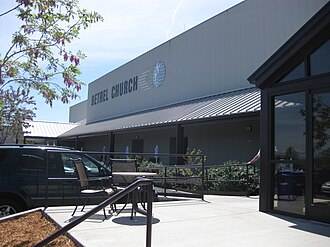
Bethel Church, Redding CA

Courtesy Wikipedia

The Bethel Church, Redding, California has this teaching on YouTube where there is alleged gold dust falling. See: ‘Gold dust rains during worship at Bethel!

See also:

blue-satin-arrow-smallBethel testimonies’;

blue-satin-arrow-smallJeremy Riddle – Our Father PART 1/2 (Gold dust in the room)’;

blue-satin-arrow-smallGlory Cloud & Gold Dust at Bethel Church’;

blue-satin-arrow-smallBethel’s ‘signs and wonders’ include angel feathers, gold dust and diamonds’.

Critiques of the Bethel Church movement

Empty Words

(image courtesy ChristArt )

What are the issues with Bethel Church, Redding, California, and its teachings? There are many links to assessment of the heresy of Bill Johnson of Bethel Church in Apostasy Watch:

blue-arrow-smallWarning – Bill Johnson and Bethel Church’;

blue-arrow-smallSound advice for Bethel Church Pastor Bill Johnson’;

blue-arrow-smallBob Dewaay: Bill Johnson, IHOP [IHOP], & Ancient Heresy Reborn’;

blue-arrow-smallThe dangers of the International House of Prayer’, CARM;

blue-arrow-smallBill Johnson and Bethel – Report from Redding Record Searchlight’;

blue-arrow-smallBill Johnson / Bethel Church, Redding, California’ (links to other criticisms built into the article);

blue-arrow-smallBirds of a Feather Flock Together: Strange Manifestations in ‘Christian’ Circles – from God or not? Feathers in Church? Bill Johnson of Bethel Church, Redding California’;

Let me say up front that we cannot discern a heart before God of any person, whether associated with a church teaching false doctrine or one teaching the truth. That discernment is in God’s hands. But the Scriptures give some strong indicators of what can happen.

What did Jesus say about the mixture of the fake with the genuine?

When I turn to Jesus, this is the truth that he proclaims:

21 “Not everyone who says to me, ‘Lord, Lord,’ will enter the kingdom of heaven, but only the one who does the will of my Father who is in heaven. 22 Many will say to me on that day, ‘Lord, Lord, did we not prophesy in your name and in your name drive out demons and in your name perform many miracles?’ 23 Then I will tell them plainly, ‘I never knew you. Away from me, you evildoers!’ (Matt 7:21-23 NIV)

Only Jesus knows the truth of the human heart and the eternal destiny of people. It is evident from these Scriptures in Matthew 7 that Jesus did not regard good deeds and supernatural miracles to be guarantees that a person is a Christian who will enter the kingdom of heaven. It is evident that people can do many good works, perform miracles, and not do the will of the heavenly Father. It sounds strange to us, but God knows this is so. In fact, God calls these kinds of people, ‘evildoers’ (NIV) or ‘workers of lawlessness’ (ESV). So, these people are false prophets, even though they perform mighty works.

Evangelical commentator, William Hendriksen, wrote of this passage:

‘Does not all of this point to the possibility that also the demon expulsions and other mighty works of which the false prophets of Matt. 7:22 boast had been nothing but sham? Have not investigations proved again and again that among false prophets illusions, trickery, sleight of hand, etc., abound, and that what is presented as genuine is very often nothing but deception?’ (Hendriksen 1973:376).

Matthew 7:23 indicates a very high Christology. Jesus decides who will enter the Kingdom on the last day and he also decides who will be banished from his presence. That he never knew these people is because they falsely claimed him as Lord.

I find it interesting how the writer of The Didache, after the close of the New Testament, puts it this way, ‘But not everyone who speaks in a spirit is a prophet, except he have the behavior of the Lord. From his behavior, then, the false prophet and the true prophet shall be known’ (Didache 11.8). This is a good summary. One can use the word, ‘Lord’, of Jesus, allege to be a prophet and perform mighty works, and still be a fraud before Christ.

Therefore, the application to the Bethel Church is that a person can perform miracles, do other good works, but engage in false teaching and still not be a Christian who will enter the Kingdom. This does not mean that there are no genuine Christians associated with this church. That discernment is in Jesus’ control. However, ‘I never knew you’ are tragic words when they think that they are doing it for Jesus. Let’s understand that who enters the kingdom will be decided by Jesus. But here in Matt 7 there are strong indicators that good works and miracles can be associated with those who claim Jesus as Lord, but he is not their Lord. These are the penetrating words of Jesus.

I understand that we would like to think that there are those who perform wonderful deeds towards the needy, are used in supernatural miracles, but proclaim false doctrine, are misled but are truly Christian. But that’s not how Jesus sees it according to Matt. 7. I have to be true to Jesus and his teaching. It will sound harsh, but I have to answer at the end of my life to the Lord for my accuracy or otherwise with my biblical teaching. I hope people understand this. There is an attack on the truth of Scripture in the contemporary world.

Mark 9:39 states, ‘But Jesus said, “Do not stop him, for no one who does a mighty work in my name will be able soon afterward to speak evil of me’ (ESV). Those who proclaim false doctrine are speaking evil of the Lord as what they proclaim is not true.

I do not believe that miracles ceased with the original 12 apostles. See my article, ‘Can cessationism be supported by Scripture and church history?

Worm and Lace

(image courtesy ChristArt)

Which Jesus?

There is the problem we face in the twenty-first century that was also there in the first century: Which Jesus are they/we serving? Is He the one who mixes falsehood with truth, or is he the one who is ‘the way, the truth and the life’ ALWAYS?

Consider these sources of falsehood and truth. We have warnings and affirmations in Scripture:

matte-red-arrow-small ‘But test everything; hold fast what is good. Abstain from every form of evil’ (1 Thess 5:21-22 ESV).

matte-red-arrow-small‘Beloved, do not believe every spirit, but test the spirits to see whether they are from God, for many false prophets have gone out into the world’ (1 John 4:1 ESV).

They were there in the first century. They are here n the twenty-first century. There will be the fake performed alongside the genuine. To the human eye they may look similar, but to Jesus he is the one who discerns those who knew him and those who didn’t. This we know from his teaching: Genuine good works, genuine miracles, and false teaching do not go together. They are often mixed and Christians are to be people of biblical and spiritual discernment. Too often we are not!

Therefore, the Lord calls all true believers to be people committed to the ministry of discernment:

matte-red-arrow-small ‘But test everything; hold fast what is good. Abstain from every form of evil’ (1 Thess 5:21-22 ESV).

matte-red-arrow-small‘Beloved, do not believe every spirit, but test the spirits to see whether they are from God, for many false prophets have gone out into the world’ (1 John 4:1 ESV).

The challenge

Here is the challenge that you and I face, whether in an overseas country or here in my country of Australia. We are to be these kinds of Christians: ‘So that we may no longer be children, tossed to and fro by the waves and carried about by every wind of doctrine, by human cunning, by craftiness in deceitful schemes’ (Eph 4:14 ESV). It is tempting to see those who are doing massive good deeds mixed with fake miracles, to be seen as genuine. But the false and the truth cannot be mixed and come out as genuine. That’s according to Jesus and the Scriptures.

Why don’t you take a read of this article about the teaching of Bill Johnson and the Bethel Church, ‘An Invasion of Error: A Review of Bill Johnson—When Heaven Invades Earth

Part of the problem we face in the contemporary church is that teaching the truth through sound doctrine from the pulpit and in small groups is on such a low level in many evangelical churches. Many are too interested in their contemporary worship, topical sermons, and Gospel light, to be pursuing the need to teach true doctrine and refute false doctrine.

My wife and I had an experience of that in the last 18 months when we moved to a new suburb in northern Brisbane and sought an evangelical church that proclaimed sound theology in both teaching and song. We visited 8 different churches before we found one that came close to sound teaching (expository preaching from books of the Bible) and solid lyrics in the songs they sang. Most were into rock ‘n roll Christianity in their music and songs, and light sermon content.

I emailed one pastor whom I had never met as he wasn’t there and preaching when my wife and I visited his church on one occasion. I had enquired about going to one of his cell groups locally. His response was that a cell group at his church would not be suitable for me as it was ‘more contemporary than the church service’. I had not mentioned a word to him about ‘contemporary’ anything. Obviously the one person we spoke to after the service conveyed to the pastor some of the comments we made about the service. As for solid teaching in the evangelical churches, we did not find it – except for one. But the problem with this one, which we currently attend, is that it is super-traditional in all that happens in the services. However, the pastor is a sound expositor of Scripture who is not afraid to exegete the Scriptures and provide careful interpretations of the meaning.

See my articles:

silver-arrow-smallFive ingredients of a healthy church: Colossians 4:7-18‘;

silver-arrow-smallDouble faults and no aces: Margaret Court’;

silver-arrow-smallAre the dead raised today?

silver-arrow-smallSeventh Day Adventist atonement doctrine’.

T

(image courtesy ChristArt)

References

Hendriksen, W 1973. New Testament Commentary: Exposition of the Gospel according to Matthew. Grand Rapids, Michigan: Baker Academic.


Copyright © 2013 Spencer D. Gear. This document last updated at Date: 15 April 2016.

Isaiah 45:7: Who or what is the origin of evil?

Humans Evil

(image courtesy ChristArt)

By Spencer D Gear

A Calvinist asked, ‘Would you agree that God decrees some evil?’[1]

To this came a response:

Along that line of thought, may I interject some passages which may shed light on the discussion. It seems that we tend to elevate God’s love, from a human perspective, above God’s holiness and an imbalance develops. Consider these passages in the discussion.

“Who can command and have it done if the Lord has forbidden it? Do not both bad and good proceed from the mouth of the Most High? Why should any man living complain, any mortal who has sinned?” (Lam 3:37-39, REB)

“I make the light, I create the darkness; author alike of wellbeing and woe, I, the Lord, do all these things.” (Isa 45:7 REB)
(Notice, NOT author of sin, but of woes, disasters, plagues, etc.)

“If a trumpet sounds in the city, are not the people alarmed? If disaster strikes a city, is it not the work of the Lord?” (Amos 3:6, REB)

“When the Adversary left the Lord’s presence, he afflicted Job with running sores from the soles of his feet to the crown of his head, and Job took a piece of a broken pot to scratch himself as he sat among the ashes. His wife said to him, ‘Why do you still hold fast to your integrity? Curse God, and die!’ He answered, ‘You talk as any impious woman might talk. If we accept good from God, shall we not accept evil?’ Throughout all this, Job did not utter one sinful word.” (Job 2:7-10, REB) (Good grammar indicates it was the Adversary who did the afflicting, not God; yet, it was in God’s plan.)

“The Lord said, “Who will entice King Ahab of Israel to go up and attack Ramoth-gilead?” One said one thing and one said another, until a spirit came forward and, standing before the Lord, said, “I shall entice him.” “How?” said the Lord. “I shall go out”, he answered, “and be a lying spirit in the mouths of all his prophets.” “Entice him; you will succeed,” said the Lord. “Go and do it.” You see, then, how the Lord has put a lying spirit in the mouths of all these prophets of yours, because he has decreed disaster for you.’” (2Chr 18:19-22, REB)
(This is indeed a startling statement we must be cautious with indeed.)

“For the Son of Man is going his appointed way; but alas for that man by whom he is betrayed!’” (Luke 22:22, REB)
and from the ASV

“For the Son of man indeed goeth, as it hath been determined: but woe unto that man through whom he is betrayed!” (Luke 22:21-22, ASV)

Then history’s greatest sin, as has been mentioned, is the ultimate decree of God involving man’s sin: Acts 2:23; 3:18; 4:27,28.

“I speak God’s hidden wisdom, his secret purpose framed from the very beginning to bring us to our destined glory. None of the powers that rule the world has known that wisdom; if they had, they would not have crucified the Lord of glory.” (1Cor 2:7-8, REB)

(Ponder that statement… Satan and his demons were ignorant!)

The REB I quote is the Revised English Bible, 1989 of the U.K.[2]

I asked the person in footnote #1, ‘Does your God decree the rape of children, the Sandy Hook massacre and the Holocaust?’[3] His blunt response was, ‘Yes’[4], to which my response was, ‘What an horrific God you serve who preordains pedophilia against children and the Sandy Hook massacre!’[5] What do you think his reply could be? Here it is: ‘It’s the same God you serve. You just think He’s impotent’.[6]

What evil does God decree?

My response to Chasewind (footnote #2) was as follows:[7]

Isaiah 45:7 reads: ‘I form the light and create darkness, I make well-being and create calamity. I am the LORD who does all these things’ (ESV).

I have found Norman Geisler & Thomas Howe’s response to this verse to be most helpful (Geisler & Howe 1992:271-272):

ISAIAH 45:7 – Is God the author of evil?
PROBLEM: According to this verse (Is. 45:7), God “creates good and evil” (kjv, cf. Jer. 18:11 and Lam. 3:38; Amos 3:6). But many other Scriptures inform us that God is not evil (1 John 1:5), cannot even look approvingly on evil (Hab. 1:13), and cannot even be tempted by evil (James 1:13).
SOLUTION: The Bible is clear that God is morally perfect (cf. Deut. 32:4; Matt. 5:48), and it is impossible for Him to sin (Heb. 6:18). At the same time, His absolute justice demands that He punish sin. This judgment takes both temporal and eternal forms (Matt. 25:41; Rev. 20:11–15). In its temporal form, the execution of God’s justice is sometimes called “evil” because it seems to be evil to those undergoing it (cf. Heb. 12:11). However, the Hebrew word for evil (ra) used here does not always mean moral evil. Indeed, the context indicates that it should be translated, as the nkjv and other modern translations do, as “calamity.” Thus, God is properly said to be the author of “evil” in this sense, but not in the moral sense—at least not directly.

Further, there is an indirect sense in which God is the author of moral evil. God created moral beings with free choice, and free choice is the origin of moral evil in the universe. So, ultimately God is responsible for making moral creatures who are responsible for moral evil. God made evil possible by creating free creatures, but the free creatures made evil actual. Of course, the possibility of evil (i.e., free choice) is itself a good thing. So, God created only good things, one of which was the power of free choice, and moral creatures produced the evil. However, God is the author of a moral universe and in this indirect and ultimate sense is the author of the possibility of evil. Of course, God only permitted evil, but does not promote it, and He will ultimately produce a greater good through it (cf. Gen. 50:20; Rev. 21–22).[8]

GOD IS NOT THE AUTHOR OF EVIL GOD IS THE AUTHOR OF EVIL
In the sense of sin: Moral evil, Perversity, Directly, Actuality of evil In the sense of calamity,  Non-moral, evil Plagues, Indirectly, Possibility of evil

As indicated above and below, there is quite a controversy in Calvinistic vs Arminian circles as to whether or not God is the cause of all the evil in the world. As a Reformed Arminian, my responses are those of such an understanding of Scripture, some of which are articulated in this brief article.

What Calvin & some Calvinists teach on God’s decree of all evil

John Calvin 2.jpg

John Calvin (courtesy Wikipedia)

What do some Calvinists teach on this critical subject of God creating all evil. Take a read of the statements of leading Calvinists, including Calvin, in ‘A Theology in Tension‘.

Here are a few of the quotes of Calvinists from that site:[9]

John Calvin:

‘Hence we maintain that, by his providence, not heaven and earth and inanimate creatures only, but also the counsels and wills of men are so governed as to move exactly in the course which he has destined’.

James White:

Calvinist theologian James White, in a debate with Hank Hannegraaf and George Bryson, was asked, “When a child is raped, is God responsible and did He decree that rape?” To which Mr. White replied… “Yes, because if not then it’s meaningless and purposeless and though God knew it was going to happen he created it without a purpose … and God is responsible for the creation of despair…. If He didn’t [decree child rape] then that rape is an element of meaningless evil that has no purpose” (Bible Answer Man interview, ‘Why it is important to go back to the sources, illustrated’, Friday, August 19, 2011).

W.G.T. Shedd:

“Sin is one of the ‘whatsoevers’ that have ‘come to pass’, all of which are ‘ordained’…. Nothing comes to pass contrary to His decree. Nothing happens by chance. Even moral evil, which He abhors and forbids, occurs by the determinate counsel and foreknowledge of God… man’s inability to explain how God can make things certain, but not compulsory… is no reason to deny that [God] can do it or that he has done it.”

Gordan H. Clark:

‘I wish very frankly and pointedly to assert that if a man gets drunk and shoots his family, it was the will of God that he should do it…” He goes on to assert, “Let it be unequivocally said that this view certainly makes God the cause of sin. God is the sole ultimate cause of everything. There is absolutely nothing independent of him. He alone is the eternal being. He alone is omnipotent. He alone is sovereign.[ Some people who do not wish to extend God’s power over evil things, and particularly over moral evils…The Bible therefore explicitly teaches that God creates sin.

John Frame:

“The Reformed [Calvinists] agree that God knows what would happen under all conditions, but they reject the notion that this knowledge is ever ultimately based on man’s autonomous decisions. Human decisions, they argue, are themselves the effects of God’s eternal decrees.

Jews on selection ramp at Auschwitz, May 1944

The Holocaust (image courtesy Wikipedia)

Conclusions

So these Calvinists agree that God has decreed all sin and the ultimate cause of everything, including moral evil, is God. It started with Calvin’s teaching that ‘the counsels and wills of men are so governed as to move exactly in the course which he has destined’ (cited above).

I find this to be an obnoxious view of God, the evil one. It is so contrary to the God of light who is also the God of judgment (through disaster and at the Last Judgment). The explanation above by Geisler & Howe (1992:271-272) is much more compatible with the whole tenor of Scripture – God is not the cause of moral evil, but does bring disaster/calamity. There are secondary causes of evil in association with the devil, human beings and other agents.

See also my article, Does God create all of the evil in the world?

References

Geisler, N. L., & Howe, T. A. 1992. When critics ask:A popular handbook on Bible difficulties. Wheaton, Ill.: Victor Books.

Notes:


[1] Christian Forums, Baptists, ‘The foreknowledge of God’, Hammster #103. Available at: http://www.christianforums.com/t7741951-11/#post63052072 (Accessed 13 May 2013).

[2] Ibid., Chasewind #104.

[3] Ibid., OzSpen #110.

[4] Ibid., Hammster #111.

[5] Ibid., OzSpen #112.

[6] Ibid., Hammster #113.

[7] Ibid., OzSpen #107.

[8] Although I have a copy of Geisler & Howe (1992), I copied the above information of Geisler and Howe from Frank Turek’s post of August 23, 2009, available at: http://crossexamined.org/turek-vs-hitchens-ii-debate-video/ (Accessed 13 May 2013). I have added the information in the table below (which is a summary of their position), that is in the Geisler & Howe publication (1992:272).

[9] All of these citations from this article are referenced from the writings or debates of these Calvinistic promoters. Check out the website for documentation. Emphases in bold are original to the article, ‘’A Theology in Tension‘.


Copyright © 2013 Spencer D. Gear. This document last updated at Date: 14 May 2016.

What kind of faith did the demons have?

Faith Fearful Demon

ChristArt

By Spencer D Gear

James 2:19 states, ‘You believe that God is one; you do well. Even the demons believe—and shudder!’ (ESV). If the demons have the same kind of faith as Christian believers, who do they believe and shudder, but remain demons who are estranged from God.

There was an interesting discussion on line in which a person stated:

Look up the word faith in the greek theta (sic) used throughout the NT, its a word that literally means to trust with certainty.

Please reason with your own logic. By your logic, our faith is unsustainable because then we wouldn’t know anything. And if we don’t know with certainty, as scripture says we can as Christ says we can, then the faith means nothing. For its relative and flimsy like all other world religions. Please, think critically and study scripture. For it’s the word of God Himself. May He guide you.[1]

My response was, ‘The noun, faith, in the Greek is pistis. The verbal form (I have faith, I believe), pisteuw, is found in James 2:19. How then do you understand this verse in relation to faith being trust with certainty?’[2] His reply was:

Let’s clarify using that verse. the word James uses in v. 19 is, pisteueis. this is derived from Pistis, it does mean and imply a belief/giving credit towards something. but not used in the same way as its derivative. For example, James earlier uses Pistis, from peitho, which literally means to persuade/ in general it implies such a KNOWLEDGE, assent to, and confidence in CERTAIN divine truths, especially those of the gospel, as produce of GOOD WORKS. ( Acts 3:16;17:31; Matt. 17:20 i.e. James 2:14.

Though related, those words are used in complete different contexts.[3]

What should be the response to this kind of challenge, based on the etymology of the Greek pistis (faith)? My reply was: ‘In James 2:19, pisteueis, is a verb, 2nd person, singular, present indicative, active. It is from the base verb pisteuw (I believe). While pisteuw and pistis (a noun) have a common root, we must not confuse the use of a verb with the use of a noun’.[4]

He came back with, ‘I agree. But that only strengthens the fact that our faith is based on trusting in what we’ve come to KNOW as CERTAIN. (refer to my post before with scripture and the greek definition)’.[5]

[6]If I am to accept this person’s understanding of pisteuw in James 2:19, that ‘our faith is based on trusting in what we’ve come to KNOW as CERTAIN’, then I need to understand that this is the kind of faith that the demons have and shudder, based on that faith.
Surely that is not what he was intending to mean! If not, then pisteuw does not always mean what he has stated it to mean. The demons certainly don’t have saving faith that knows and is certain. Therefore, relying on the etymology of the word does not solve the nature of faith for demons in James 2:19.
In his commentary on James, D. Edmond Hiebert, helps me in my understanding of the nature of the demons’ faith:

James -<br /><br /> By: D. Edmond Hiebert</p><br /> <p>

Courtesy Christianbook.com

With one stunning remark James shatters the value of such an orthodox faith if it is inoperative: “the demons also believe, and shudder.” “Also” (kai), perhaps “even,” places such an inoperative faith on the level of the demonic. They also believe in one transcendent God. No atheists or skeptics are among them…. In the story of the Gerasene demoniac (Mark 5:1-10; Luke 8:26-33; cf. also Mark 1:23-24) we have a clear illustration of such a faith on the part of the demons. These malicious supernatural spirits, engaged in seeking to possess and torment men, readily confessed God’s existence and omnipotence; but their “faith” did not transform their character and conduct or change their prospects for the future. They establish the sad truth that “belief may be orthodox, while the character is evil.” [quoting W. Boyd Carpenter]
The only effect that their faith has upon the demons is that they “shudder” (phrissousin). The verb, occurring only here in the New Testament, means “to bristle,” conveying the picture of a horror that causes the hair to stand on end. The present tense pictures this as their characteristic reaction whenever they face the reality of the eternal God. While this term is not strictly applicable to spirits, yet it effectively conveys the intensity of the horror that seizes the demons when confronting God. They have an intense unquestioned belief in God’s existence and power, but their faith brings them no peace or salvation. They are fully aware that doom awaits them at the hands of the infinitely perfect God (Matt. 8:29; 25:41; Luke 8:31) (Hiebert 1979:187-188).

What, then, is the nature of faith for the demons? It cannot be that of the committed Christian who has faith which is commitment to Christ and that leads to salvation that is demonstrated by good works for God. ‘Faith without works is dead’

Reference

Hiebert, D E 1979. The epistle of James: Tests of a living faith. Chicago: Moody Press.

Notes:


[1] Christian Forums, Christian Apologetics, ‘We don’t know’, ChristianLife08#22, available at: http://www.christianforums.com/t7741434-3/ (Accessed 9 May 2013).

[2] Ibid., OzSpen#24.

[3] Ibid., ChristianLife08#25.

[4] Ibid., OzSpen#26.

[5] Ibid., ChristianLife08#27.

[6] This was my reply at ibid., OzSpen#31.
Copyright © 2013 Spencer D. Gear. This document last updated at Date: 29 October 2015.

What’s happening to music in evangelical churches?

Tuba

(image courtesy ChristArt)

by Spencer D Gear

There was a discussion on the use of instruments in church music on Christian Forums. One writer wrote:

[My] argument is in reference to those churches which have music bands with drummers and guitarists…. it doesn’t’ attract youths but certainly make them comfortable, the music is the same with the world’s music. Furthermore did anyone researched on the origins of drum beats? it originated from voodoo practice whereby they would beat a rhythm during their witchcraft worship. How many churches still practice old fashion hymns with just an organ or piano?[1]

[2]How does this view of drums fit with the use of cymbals? They are pretty loud instruments.

Here are some cross references dealing with loud percussion instruments:

Drum Praise

(image courtesy ChristArt)

1 Corinthians 13:1 If I speak in the tongues of men or of angels, but do not have love, I am only a resounding gong or a clanging cymbal.

2 Samuel 6:5 David and all Israel were celebrating with all their might before the LORD, with castanets[3], harps, lyres, timbrels, sistrums[4] and cymbals.[5]

1 Chronicles 13:8 David and all the Israelites were celebrating with all their might before God, with songs and with harps, lyres, timbrels, cymbals and trumpets.

1 Chronicles 15:16 David told the leaders of the Levites to appoint their fellow Levites as musicians to make a joyful sound with musical instruments: lyres, harps and cymbals.

Ezra 3:10 When the builders laid the foundation of the temple of the LORD, the priests in their vestments and with trumpets, and the Levites (the sons of Asaph) with cymbals, took their places to praise the LORD, as prescribed by David king of Israel.

Nehemiah 12:27 At the dedication of the wall of Jerusalem, the Levites were sought out from where they lived and were brought to Jerusalem to celebrate joyfully the dedication with songs of thanksgiving and with the music of cymbals, harps and lyres.

New International Version ©2011 by Biblica

As for churches that sing hymns accompanied by piano and/or organ, there are not many around my region. However, the last 2 churches my wife and I have attended, including the current one, sing hymns from hymn books (now on digital projectors). One was Baptist and was packed to the rafters with people, including considerable numbers of teens and young adults. There was no need to do thrash music to attract the youth at that Baptist church.

The other, the one we currently attend, is Presbyterian. The congregation is elderly with a few young families – but not too many – and the numbers are dwindling. That has more to do with the lack of outreach than the nature of the music. I know of another Presbyterian church in Brisbane that has thrash music with expository preaching. A friend I know attends that church and puts up with the music so that he can be edified by the preaching.

Some of the issues for us

Listen to iPod

(image courtesy ChristArt)

These are some of the musical issues in churches for my wife and me:

  1. Does the service focus on worship of the trinitarian Lord God Almighty or is it human-centred? We seek the former.
  2. Is the content of the lyrics of the songs, hymns and spiritual songs Christ-centred and promoting sound doctrine? I’m finding many contemporary songs to have too many trite, subjective lyrics. There are a few with these characteristics in the older songs as well.
  3. Does the music drown out the lyrics or is the music meant to be an accompaniment to help with the adequate singing of the hymns/songs?
  4. Are the melodies singable for the average person who attends a church service? I’m a very average singer and I find many of the contemporary songs to be not meant for congregational singing, but are meant for performance by a group and band.
  5. Does the music support or detract from the message of the preacher/teacher?
  6. How much of the music is influenced by the nature of music in the contemporary culture?

To be honest, I am concerned at the direction in which many evangelical churches are going with music and preaching content in my part of the world. Contemporary music, light lyrics and topical sermons are the order of the day in evangelical churches.

Here are but two examples of the light lyrics, in my understanding:

Air I Breathe[6]

This is the Air I Breathe
Your holy presence living in me

This is my daily bread
Your very word spoken to me

Chorus

And I
I’m desperate for you
And I
I’m lost without you

Never let me go[7]

In the shadows; My spirit weak
Love broke through the darkness and lifted me
And I know you’ll never let me go

In the storm in the raging sea
Love conquered the fear and delivered me
And I know you’ll never let me go

Oh love in the shadows
Be the light who leads me on
You’re love I will follow
Be my guide, You’re will be done
Oh Lord

In the arms of the One unseen
Love carried the cross that was meant for me
And I know you’ll never let me go

Oh love in the shadows
Be the light who leads me on
You’re love I will follow
Be my guide, You’re will be done

Oh Lord I surrender, now forever I’ll be loved
In the love of the Father, You are faithful You are strong
So hold me now, hold me now, hold me now

Nothing in this life has walked these streets
Love opened my eyes show me what You see
And I know I’ll never let You go

Now compare

There is power in the blood

Would you be free from the burden of sin?
There’s power in the blood, power in the blood;
Would you o’er evil a victory win?
There’s wonderful power in the blood.

Refrain

There is power, power, wonder working power
In the blood of the Lamb;
There is power, power, wonder working power
In the precious blood of the Lamb.

Would you be free from your passion and pride?
There’s power in the blood, power in the blood;
Come for a cleansing to Calvary’s tide;
There’s wonderful power in the blood.

Refrain

Would you be whiter, much whiter than snow?
There’s power in the blood, power in the blood;
Sin stains are lost in its life giving flow.
There’s wonderful power in the blood.

Refrain

Would you do service for Jesus your King?
There’s power in the blood, power in the blood;
Would you live daily His praises to sing?
There’s wonderful power in the blood.

Refrain

How great Thou art

Lord my God! When I in awesome wonder
Consider all the works thy hand hath made,
I see the stars, I hear the mighty thunder,
Thy power throughout the universe displayed;

Refrain:

Then sings my soul, my Saviour God, to Thee,
How great Thou art, how great Thou art!
Then sings my soul, my Saviour God, to Thee,
How great Thou art, how great Thou art!

When through the woods and forest glades I wander
and hear the birds sing sweetly in the trees;
when I look down from lofty mountain grandeur,
and hear the brook, and feel he gentle breeze;

Refrain

And when I think that God his son not sparing,
Sent him to die – I scarce can take it in,
That on the cross my burden gladly bearing,
He bled and died to take away my sin:

Refrain

When Christ shall come with shout of acclamation
And take me home- what joy shall fill my heart!
Then I shall bow in humble adoration
And there proclaim, my God, how great thou art!
Then sings my soul, my Saviour God, to Thee,
How great Thou art, how great Thou art!
Then sings my soul, my Saviour God, to Thee,
How great Thou art, how great Thou art!

Do you see the picture of what is happening to music in the evangelical church?

References

Youngblood, R F 1992, 1, 2 Samuel, in F E Gaebelein (gen ed), The expositor’s Bible commentary, vol 3, 553-1104. Youngblood, R F 1992, 1, 2 Samuel, in F E Gaebelein (gen ed), The expositor’s Bible commentary, vol 3, 553-1104. Grand Rapids, Michigan: Zondervan Publishing House.

Notes:


[1] Christian Forums, Baptists, ‘Music: If it feels good, do it!’ zanness#171, available at: http://www.christianforums.com/t7739696-18/ (Accessed 2 May 2013).

[2] The following is my response as OzSpen#181, ibid.

[3] The 1978 edition of the NIV translated this word as ‘songs’. Youngblood explains: ‘”Songs” (perhaps of victory….), the singular of Hebrew for which is sometimes equivalent to “music” (cf. 1 Chron 25:6-7) introduces the list of accompanying musical instruments that follows’ (Youngblood 1992:870). It does not make sense to me that the 2011 NIV translated with ‘castanets’, which is not common English here in Australia, when ‘songs’ would be much clearer to the contemporary reader. The ESV translates as ‘songs’ but notes that this is from the ‘Septuagint, 1 Chronicles 13:8, Hebrew fir trees’.

[4] ‘The systrum, mentioned only here in the OT, was used widely throughout the ancient Near East, especially in Egypt. It consisted of a handle fitted to “a metal loop with holes through which pieces of wire were inserted and bent at the ends. Since the holes were larger than the wire, the instrument produced a jingling sound when shaken. The Hebrew word comes from a verb which means ‘shake;’ so it is reasonable to suppose that the mea’an’im were sistra (Sellers, “Musical Instruments of Israel,” pp. 44-45)’ (Youngblood 1992:870).

[5] ‘”Cymbals” were of two kinds, one set of which were struck vertically (harsh/noisy cymbals) and the other horizontally (clear cymbals). The former may be reflected in the “clash of cymbals” and the latter in the “resounding cymbals” of Psalm 150:5. The cymbals here were probably clear cymbals (similar to but smaller than their modern descendants, bronze examples of which (cf. 1 Chron. 15:19) archaeologists have found at several cites in Israel (e.g. Beth Shemesh …; Hazor. While not mentioning sistrums, the parallel passage in 1 Chronicles 13:8 concludes the list with “trumpets,” resulting in a total of six different musical instruments used to accompany the first attempt to bring the ark from Kiriath Jearim to Jerusalem’ (Youngblood 1992:870).

[6] Available at AlltheLyrics: http://www.allthelyrics.com/lyrics/hillsong/air_i_breathe-lyrics-829435.html (Accessed 2 May 2013).

[7] Available at AlltheLyrics: http://www.allthelyrics.com/lyrics/hillsong/never_let_me_go-lyrics-1037607.html (Accessed 2 May 2013).


Copyright © 2013 Spencer D. Gear. This document last updated at Date: 16 April 2016.