Author Archives: spencer

Are Miracles Valuable?

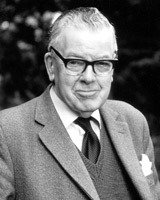
 Jack Deere (photo courtesy Holy Spirit Activism)image

By Spencer D Gear

Please note: I preached on this topic at West Bundaberg Baptist Church (Bundaberg, Qld., Australia) on 3 July, 2005 as a topic assigned to me by the pastor.  I commend to you this article, ‘Were Miracles Meant to Be Temporary?’ by Jack Deere, as I am convinced that this chapter from his book, Surprised by the Power of the Spirit (1993), very adequately states and refutes most of the main points of cessationism. 

Who, do you think, could have said this? “When we declare the miracles which God has wrought, or will yet work, and which we cannot bring under the very eyes of men, sceptics keep demanding that we shall explain these marvels to reason. And because we cannot do so, inasmuch as they are above human comprehension, they suppose we are speaking falsely.”   Could that be Billy Graham, John MacArthur, Jr. or Benny Hinn?

It was written by St. Augustine who lived in the fourth & fifth centuries [ca. AD 354-430], and was one of the most prominent church leaders in his era (Augustine 2004, City of God, 21.5).
Have you seen a miracle lately?  Do we pray in this church for miracles to happen?  Is it the will of God for miracles to be happening around the world in answer to believing prayer?  What was the last miracle you saw happen to people in this church?

The subject of this article is: “Are miracles valuable?”  We will examine four themes:

1. Can we expect miracles among ordinary Christians today?  (I will contend that miracles are a available for all people of the New Covenant age after Pentecost.)
2. What’s the purpose of miracles?
3. How do we respond to counterfeit miracles?
4. What’s the key to more miracles happening in this church?

Before we expound our subject, we should define the term, “miracle.”

A.  What is a miracle?

Does this definition by J. D. Spiceland make sense?  “The biblical concept of a miracle is that of an event which runs counter to the observed processes of nature” (Spiceland 1984, p. 723).  Thomas Aquinas (AD 1225-1274) stated, “Things that are done occasionally by divine power outside of the usual established order of events are commonly called miracles (wonders)” (1905, 3.100). Sounds reasonable to me.

Evangelical theologian, Wayne Grudem, defines it this way: “A miracle is a less common kind of God’s activity in which he arouses people’s awe and wonder and bears witness to himself” (1994, p. 355).  I like this one even better and will adopt it here as a guiding definition: “A miracle is a less common kind of God’s activity in which he arouses people’s awe and wonder and bears witness to himself”.

“The biblical terminology for miracles frequently points to this idea of God’s power at work to arouse people’s wonder and amazement” (Grudem 1994, p. 356).

Three Greek words are used in the Bible relating to miracles:

1. “Sign” (Greek: semeion)

This “means something that points to or indicates something else, especially (with reference to miracles) God’s activity and power” (Grudem 1994, p. 356).

2. “Wonder” (Greek: teras)

This is “an event that  causes people to be amazed or astonished” (Grudem 1994, p. 356).

3. “Miracle” or “mighty work” (Greek: dunamis)

This is “an act displaying great power, especially (with reference to miracles) divine power” (Grudem 1994, p. 356).

a.  Signs & wonders

You will see the combination of “signs and wonders” used to refer to miracles in places like:

Ex. 7:3, But I will harden Pharaoh’s heart, and though I multiply my miraculous signs and wonders in Egypt (NIV);
Deut. 6:22, Before our eyes the LORD sent miraculous signs and wonders—great and terrible—upon Egypt and Pharaoh and his whole household (NIV)
Acts 4:30, Peter and John, after being released from prison, prayed,”Stretch out your hand to heal and perform miraculous signs and wonders through the name of your holy servant Jesus.” (NIV)
Rom. 15:19, “by the power of signs and wonders, by the power of the Spirit of God–so that from Jerusalem and all the way around to Illyricum I have fulfilled the ministry of the gospel of Christ” (ESV).


There are many other verses that indicate “signs and wonders.”

b. Signs, wonders and mighty works

In other verses, the three words are used together: mighty works, signs & wonders.

  • Acts 2:22, “Men of Israel, listen to this: Jesus of Nazareth was a man accredited by God to you by miracles, wonders and signs, which God did among you through him, as you yourselves know.”
  • Second Cor. 12:12, “The things that mark an apostle—signs, wonders and miracles—were done among you with great perseverance.”
  • Heb. 2:3-4, “How shall we escape if we neglect such a great salvation? It was declared at first by the Lord, and it was attested to us by those who heard, while God also bore witness by signs and wonders and various miracles and by gifts of the Holy Spirit distributed according to his will.”

But, these kinds of signs, wonders and miracles were performed by God and his prophets in the Old Testament, by Jesus and the apostles in the New Testament, but …

B. Can we expect miracles among ordinary Christians today?

Many people object to miracles for today.  Some are

1.  Secularists

British agnostic philosopher, Bertrand Russell, wrote:

Agnostics do not think that there is any evidence of ‘miracles’ in the sense of happenings contrary to natural law. . .  As for the records of other miracles, such as Joshua commanding the sun to stand still, the agnostic dismisses them as legends and points to the fact that all religions are plentifully supplied with such legends. There is just as much miraculous evidence for the Greek gods in Homer as for the Christian God in the Bible” (1953).

2.  Liberal theologians and some philosophers

David Strauss, famous German theologian and philosopher, in the 19th century, claimed that in the Bible, an event is unhistorical “when the narration is irreconcileable with the known and universal laws which govern the course of events.”  Miracles and prophecies are “considered as not historical” (1860, Introduction 16.I)

John Dominic Crossan, a current Roman Catholic liberal biblical scholar and member of the Jesus Seminar, states, “A miracle is a marvel that someone interprets as a transcendental action or manifestation.” (1998, p. 303).  Then he goes on to say that “Jesus was both healer and exorcist, and his followers considered those actions miracles.  But no single healing or exorcism is securely or fully historical in its present narrative form” (1998, p. 302).  He declares what he really means is: “To claim a miracle is to make an interpretation of faith, not just a statement of fact. . .  I cannot see how miracle status can ever be proved or disproved” (1998, p. 304).

But even among evangelical Christians there are doubters as to the need for miracles today.

3. Some Evangelical Christians

These are people who love the Lord but they have considerable opposition to the idea that God continues to perform miracle. These are only 2 examples

Wayne Jackson, writing in the Christian Courier, states that:

“According to the teaching of the Bible, miracles are not being utilized by God today. They formed a special function in the divine scheme of things, and when their purpose was realized, the Lord suspended his operations via these supernatural phenomena” (2000).

John MacArthur Jr., a leading evangelical Bible teacher today, states:

I am not going to say that God can’t do miracles. God can, and does, whatever He wants to do. If He wants to do something that is against the normal natural law, He will do it. . . Please don’t say that I don’t believe God does miracles — I believe He does. In fact, He does them hour by hour. And the greatest miracle of all is the miracle of the new birth — people created as new creatures in Christ. We are not denying God the power, the desire, or the will to do miracles (n.d.)

But he goes on to say,

People don’t need miracles today, they just need to understand the Word of God. If they won’t believe the Word of God, they won’t believe miracles either. . . miracles had a limited time, only for the early era; limited persons, only the Apostles and prophets and early New Testament preachers; and a limited purpose, only for the confirmation of revelation. They were signposts pointing to God’s revelation, first in the living Word and then in the written Word. Now that the reality is here, we don’t need the sign anymore (n.d.).

4.  I am not convinced by these views.

I do not consider this to be a biblical perspective because the Scriptures convince me that miracles are a characteristic of the entire New Covenant age after the Day of Pentecost.  That includes today.  These are my reasons, briefly:

a. In Mark 9:38-40 we read:

“Teacher,” said John, “we saw a man driving out demons in your name and we told him to stop, because he was not one of us.”  “Do not stop him,” Jesus said. “No one who does a miracle in my name can in the next moment say anything bad about me, for whoever is not against us is for us.” 

Jesus is here affirming to John the apostle, that ordinary people can perform a miracle in the Name of Jesus because it is God who is performing the miracles.

b. Let’s go to Jesus again in John 14:12-14 (ESV).

He said:

Truly, truly, I say to you, whoever believes in me will also do the works that I do; and greater works than these will he do, because I am going to the Father. Whatever you ask in my name, this I will do, that the Father may be glorified in the Son. If you ask me anything in my name, I will do it.

Who is it who will do “the works” that Jesus does and “even greater works than these”?  From the mouth of Jesus: “Anyone who has faith in me.”  He does not say, “Only the apostles and early church leaders until the canon of New Testament Scripture is established.”

But, you may ask, this does not say that “whoever believes in me will also do the miracles, and even greater miracles than I, Jesus, do.”  That is true.  We must understand that the Greek word for “works” (erga) has a broad meaning in John’s Gospel.  Australian New Testament scholar, Leon Morris, states:

Of the 27 times [John] uses the word 18 times he applies it to what Jesus has done.  He uses the term in a variety of ways.  Clearly it applies to the miracles on some occasions, e.g. ‘I did one work and [you] all marvel because thereof’ (John 7:21).  On other occasions it refers to the whole of Jesus’ earthly work, as when He refers in prayer to ‘having accomplished the work which [you have] given me to do’ (John 15:24) (Morris 1971, p. 689). 

Another New Testament expositor, D. A. Carson, confirms the fact that “works” refers to miracles in John 14:12.  He states, “Jesus’ ‘works’ may include more than his miracles; they never exclude them” (1991, p. 495).

What are the “greater works” that those who believe will be available to do?  It can mean greater in nature because what could be greater than resurrection from the dead, walking on water, feeding the 5,000.  The clue is found in John 14: 12, “Because I am going to the Father.”  Jesus was only one supernatural person in one place at a time in the Middle East.  After he died, was resurrected, and ascended to the Father, God’s people of the New Covenant are spread throughout the world.  Greater works of all kinds will be done among the Christian community because the Holy Spirit is now among us and we are spread throughout the world.  When God’s new day dawned at Pentecost, the Holy Spirit was set loose among God’s people to do the comprehensive works that Jesus did while on earth – including miracles.

Leon Morris confirms this: “What Jesus means we may see in the narratives of the Acts.  There there are a few miracles of healing, but the emphasis is on the mighty works of conversion” (1971, p. 646).

Because of these direct words of Jesus, I am convinced that anybody who had faith in Jesus Christ is available to be used by Jesus in all his “works”, including signs, wonders, miracles and proclamation of the Gospel that leads to supernatural conversions to Christ.

c. Some of you might wonder why I don’t use Mark 16: 17-18 as the most obvious support for miracles today.

These verses read:

And these signs will accompany those who believe: In my name they will drive out demons; they will speak in new tongues; they will pick up snakes with their hands; and when they drink deadly poison, it will not hurt them at all; they will place their hands on sick people, and they will get well.

I don’t use these verses because Mark 16:9-20 is not in the oldest manuscripts of the NT.  You’ll find them in the KJV because it is based on Byzantine manuscripts that are much later than that for modern translations, which follow the Alexandrian text of the NT.  For example, my edition of the NIV states before Mark 16:9, “The two most reliable early manuscripts do not have Mark 16:9-20.”  I am convinced by the manuscript evidence that Mark 16:9-20 was not in the earliest and best manuscripts of Mark’s Gospel.

However, these verses of Mark 16 were a teaching of the early church after Mark’s Gospel was written and were somehow inserted by later copyists.  This suggests it was included in the teaching of the later church. This we do know: John 14:12-14 is most certainly in the earliest Alexandrian manuscripts and it teaches essentially the same as Mark 16:17-18.

Let’s go to other reasons for being convinced that God performs miracles today.

d. In John 3:2,

Nicodemus recognised this about Jesus that “no one could perform the miraculous signs you are doing if God were not with him.”

e. In Acts 2:22,

Peter proclaims that “Jesus of Nazareth was a man accredited by God to you by miracles, wonders and signs, which God did among you through him, as you yourselves know.”

f. Acts 2:43 states:

“Everyone was filled with awe, and many wonders and miraculous signs were done by the apostles.”  So are miracles only available to be performed by the apostles?  Not so, according to Jesus in John 14.

g. Gal. 3:5 reads,

“Does God give you his Spirit and work miracles among you because you observe the law, or because you believe what you heard?”  Paul, the apostle, is here assuming that the church of Galatia, where there was no apostle, were seeing evidence of miracles among them.

h. I Cor. 12:7 teaches,

“Now to each one the manifestation of the Spirit is given for the common good.”  Then go on to I Cor. 12:9-10 and we read that “to another faith by the same Spirit, to another gifts of healing by that one Spirit, to another miraculous powers. . .”  Here we see the the manifestation of the Holy Spirit given to all churches since the Day of Pentecost has included “gifts of healing by that one Spirit” and the gift of “miraculous powers.”

i. I Cor. 12:28,

“in the church God has appointed first of all apostles, second prophets, third teachers, then workers of miracles . . .”  Those who were gifts to the church included “workers of miracles.”   While these verses are directed to the Church at Corintha, we know from 12:7 that “the manifestation of the Spirit is given for the common good” where?  In all churches throughout the ages, and miracles are included.

A characteristic of the New Testament church is that healings, miracles and other gifts of the Holy Spirit are available today.  Miracles are available for people of the New Covenant age after Pentecost.  That includes us today.

C. Is there any evidence of God performing miracles after the close of  the New Testament Scriptures?

Recently I have been reading on the www a book from which I have only read bits and pieces over the years.  I’m speaking of St. Augustine’s, The City of God.  He completed it in AD 426, towards the end of his life (Kelsey 1973, p. 185).  Augustine has been called, “not only the greatest theologian of the early Middle Ages but [also] one of the greatest of all time” (Geisler 2002, p. 290).  He was certainly the most prominent church leader of his era, based in Hippo Regius, Northern Africa on the Mediterranean Sea.  Today it is called, Annaba, in Algeria.

In one of his earlier writings, about AD 390, On the True Religion, he wrote that when the church had been “established through the whole world, these miracles [like those of Christ and the apostles] were no longer permitted to continue in our time, lest the mind should always seek visible things” (25.47, in 1918/1972, p. 41).

But he changed his mind later in life to become an enthusiastic believer in miracles in his day.

The City of God consists of 22 Books.  In books 21 and 22, he tells of the miracles that had been happening where he was ministering around Hippo and Carthage.

Augustine does speak of “all the miracles of the magicians, who he thinks are justly deserving of condemnation, are performed according to the teaching and by the power of demons” (2004, 8.19).

He then stated his change of mind that “even now miracles are wrought in the name of Christ, whether by His sacraments or by the prayers or relics of His saints; but they are not so brilliant and conspicuous as to cause them to be published with such glory as accompanied the former miracles” (2004, 22.8).

Here are a few examples of miracles, performed by the power of God, described in The City of God.

1. In Milan, when Augustine was there,

a blind man was restored to sight
  the emperor was there at the time, and the occurrence was witnessed by an immense concourse of people that had gathered to the bodies of the martyrs Protasius and Gervasius
.  By virtue of these remains the darkness of that blind man was scattered, and he saw the light of day” (2004, 22.8).

This miracle involved the use of relics associated with the bodies of martyrs.  I will address this issue of relics shortly.

2. Innocentius at Carthage had a bowel condition, was “treated by medical men” with surgery but it was not successful.  Second surgery was threatened with the surgeons saying “he could onle be cured by the knife.  Agitated with excessive fear, he was terrified.”  There was such “wailing” in the house.  It seemed “like the mourning at a funeral” because of “the terror” the “pains had produced.”  He was exhorted “to put his trust in God.”  Then they “went to prayer ” with “earnestness and emotion, with what a flood of tears, with what groans and sobs.”  When it came time for the proposed surgery, the surgeon searched and searched but there was no disease found.  Augustine writes: “No words of mine can describe the joy, and praise, and thanksgiving to the merciful and almighty God which was poured from the lips of all, with tears of gladness. Let the scene be imagined rather than described!” (Augustine 2004, 22.8)

3.  A woman had breast cancer and her breast was to be removed because the “physicians” said it was “incurable.”  This godly woman went to “God alone by prayer.  [At] Easter, she was instructed in a dream to wait for the first woman that came out from the baptistery after being baptized, and to ask her to make the sign of Christ upon her sore. She did so, and was immediately cured.”  When the physician examined her and now found no cancer, he asked her what “remedy” she had used.  When she told him, he spoke “with a contemptuous tone” and she fearded that “he would utter some blasphemy against Christ.”

He said that he thought that she would tell him of “some great [medical] discovery.”  “She, shuddering at his indifference, quickly replied, ‘What great thing was it for Christ to heal a cancer, who raised one who had been four days dead’” (Augustine 2004, 22.8).

4.  A Spanish priest, Eucharius, died and “by the relics of the . . . martyr [Stephen]” was “raised to life” (Augustine 2004, 22.8).

A doctor with gout was cured when he was baptised.

blue-satin-arrow-small “An old comedian” was cured of paralysis and a hernia when he was baptised.

blue-satin-arrow-small Hesperius, his family, cattle and servants were “suffering from the malice of evil spirits.”  Through the prayers of the

elders this demon possession ceased “through God’s mercy” (Augustine 2004, 22.8).

blue-satin-arrow-smallA man with “his eye, falling out on his cheek, hung by a slender vein as by a root” was cured by the power of God.

blue-satin-arrow-smallA tax-collector, the son of a man named, Irenaeus, “his body was lying lifeless” and there was much “weeping and mourning of all.”   The body was “anointed with the oil of the same martyr [Stephen]. It was done, and he revived” (Augustine 2004, 22.8).

blue-satin-arrow-small Eleusinus’s infant son “had died” and he was placed “on the shrine fo the martyr [Stephen]” and “after prayer, which [the father poured out there with many tears, he took up his child alive” (Augustine 2004, 22.8).

Augustine wrote,

I cannot record all the miracles I know. . .  For were I to be silent of all others, and to record exclusively the miracles of healing which were wrought in the district of Calama and of Hippo by means of this martyr–I mean the most glorious Stephen–they would fill many volumes. . .  For when I saw, in our own times, frequent signs of the presence of divine powers similar to those which had been given of old, I desired that narratives might be written, judging that the multitude should not remain ignorant of these things (Augustine 2004, 22.8).

Read the last book of Augustine’s City of God and you’ll know that God still miraculously heals and delivers the demon possessed.

I must pause to make brief comments about . . .

Faith in the healer, relics, or in God?

I must say that I am not troubled by miraculous healings (I am a convinced supernaturalist who believes that God can perform miracles today).  However, the paraphernalia associated with the healings, relics, graves of the martyrs, during Augustine’s time did trouble me.  By the time of the 5th century, the church was moving towards a Roman Catholic view of relics, but then I checked the Scriptures.

Do you remember?  Are these miracles cited by St. Augustine in association with the relics of St. Stephen, later examples of the type that happened when Peter’s shadow fell on sick people and they were healed (Acts 5:15)? We know from Acts 19:12 that handkerchiefs or aprons were brought to the apostle Paul from people who were sick. We are told that when the handkerchiefs and aprons that had touched Paul’s skin “were carried away to the sick, and their diseases left them and the evil spirits came out of them.”

Go back to the Old Testament.  Remember . . .

blue-satin-arrow-smallThe serpent lifted up on the pole by Moses, Lev. 21:5-9 reads:

[The Israelites] spoke against God and against Moses, and said, “Why have you brought us up out of Egypt to die in the desert? There is no bread! There is no water! And we detest this miserable food!”

Then the LORD sent venomous snakes among them; they bit the people and many Israelites died. The people came to Moses and said, “We sinned when we spoke against the LORD and against you. Pray that the LORD will take the snakes away from us.” So Moses prayed for the people.

The LORD said to Moses, “Make a snake and put it up on a pole; anyone who is bitten can look at it and live.” 9 So Moses made a bronze snake and put it up on a pole. Then when anyone was bitten by a snake and looked at the bronze snake, he lived.

But in 2 Kings 18:4 we read, “He removed the high places, smashed the sacred stones and cut down the Asherah poles. He broke into pieces the bronze snake Moses had made, for up to that time the Israelites had been burning incense to it.”  When people began to worship the relic, the bronze snake, that angered God and he smashed it.  It is not the relic that brings healing, but the Almighty God of whom the relic reminds us.

When we worship a physical object, a relic, instead of the living God, we violate the first of the 10 commandments, ”

blue-satin-arrow-smallRemember the bones of Elisha in 2 Kings 13:20-21,

Elisha died and was buried.
      Now Moabite raiders used to enter the country every spring. Once while some Israelites were burying a man, suddenly they saw a band of raiders; so they threw the man’s body into Elisha’s tomb. When the body touched Elisha’s bones, the man came to life and stood up on his feet.

blue-satin-arrow-smallIn 2 Kings 5:14, we read of Naaman’s dealing of leprosy,


“So he went down and dipped himself in the Jordan seven times, as the man of God had told him, and his flesh was restored and became clean like that of a young boy.”

cubed-iron-sm Also remember that Jesus used natural elements along with healing (saliva and washing).

cubed-iron-sm James 5:14-15 asks:

“Is any one of you sick? He should call the elders of the church to pray over him and anoint him with oil in the name of the Lord. 15And the prayer offered in faith will make the sick person well; the Lord will raise him up. If he has sinned, he will be forgiven.”

What do all of these verses point to?  There are clear examples of miracles associated with physical objects in the Bible.  It seems that sometimes the Lord knows that we need a physical point of contact and he provides it.  But we call upon the Lord Almighty for the healing.

Remember the first of the ten commandments (Ex. 20:3-5):

You shall have no other gods before me. You shall not make for yourself an idol in the form of anything in heaven above or on the earth beneath or in the waters below.  You shall not bow down to them or worship them; for I, the LORD your God, am a jealous God . . .

The moment we seek the relic and not the Redeemer, we are doomed and committing idolatry.

D. What are the purposes of miracles?

1. One purpose of miracles is “to authenticate the message of the gospel” (Grudem 1994, p. 359). 

Remember the words of Nicodemus from John 3:2, “Rabbi, we know you are a teacher who has come from God. For no one could perform the miraculous signs you are doing if God were not with him.”  Heb. 2:4 confirms this: “God also testified to it by signs, wonders and various miracles, and gifts of the Holy Spirit distributed according to his will.”  “God testified to IT with signs, wonders and various miracles.  What is the IT?  Heb. 2:3 tells us that it is  this “great salvation.”

Miracles are given throughout the church age “to confirm the truthfulness of the gospel” wherever it is preached.  Not just by the original apostles, but by anyone who believes and is a Christian.

Concerning Jesus, Augustine wrote:

“He did many miracles that He might commend God in himself. . . the gospel of Christ was preached in the whole world, not only by those who had seen and heard Him both before His passion and after His resurrection, but also after their death by their successors, amid the horrible persecutions, diverse torments and deaths of the martyrs, God also bearing them witness, both with signs and wonders, and divers miracles and gifts of the Holy Ghost” (2004, 18.46, 50)

2.  It is to confirm “the fact that the kingdom of God has come and has begun to expand its beneficial results into people’s lives” (Grudem 1994, p. 360). 

Jesus said in Matt. 12:28, “But if I drive out demons by the Spirit of God, then the kingdom of God has come upon you.  According to Luke 9:1-2, Jesus gave his disciples “power and authority to drive out all demons and to cure diseases, and he sent them out to preach the kingdom of God and to heal the sick.”  When God performs miracles in our midst, it lets people know that God’s kingdom is alive and well among us with exceptional results.

3.  A third purpose of miracles is declared by Jesus when he healed the two blind men near Jericho. 

Matt. 20:30 and 34 state, “Two blind men were sitting by the roadside, and when they heard that Jesus was going by, they shouted, ‘Lord, Son of David, have mercy on us!’ . . .  Jesus had compassion on them and touched their eyes. Immediately they received their sight and followed him.”  Miracles are to help those in need.

In Phil. 2:27, Paul says of Epaphroditus, “Indeed he was ill, and almost died. But God had mercy on him, and not on him only but also on me, to spare me sorrow upon sorrow.” God’s compassion and mercy towards the needy are demonstrated by signs, wonders and miracles.

4.  A fourth purpose of miracles is to bring glory to God. 

When Jesus healed a paralytic, Matt. 9:8 records, “When the crowd saw this, they were filled with awe; and they praised God, who had given such authority to men.”  In Luke 7:16 after Jesus raised the widow of Nain’s son, it says, “They were all filled with awe and praised God. ‘A great prophet has appeared among us,’ they said. ‘God has come to help his people.’”
St. Augustine wrote in The City of God:

These miracles, and many others of the same nature, which it were tedious to mention, were wrought for the purpose of commending the worship of the one true God, and prohibiting the worship of a multitude of false gods. Moreover, they were wrought by simple faith and godly confidence, not by the incantations and charms. . . (2004, 10.9).

In the 21st Book of Augustine’s City of God, the 7th chapter is titled, “That the Ultimate Reason for Believing Miracles is the Omnipotence of the Creator” (2004, 21.7).  In the 22nd Book of City of God, ch. 8 is titled, “Of miracles which were wrought that the world might believe in Crhist, and which have not ceased since the world believed” (2004, 22.8).

Jesus’ miracles were meant to point to God Himself.  Any miracles that God allows to happen among us today are designed to point to the glory of God.

So many alleged miracles today are meant to point to the human healer, whether that person be Benny Hinn, Kathryn Kuhlman, Oral Roberts, or Reinhard Bonnke.  That was not Jesus’ emphasis and it must not be ours.  All signs, wonders and miracles are meant to point to the miracle worker, God Himself, and to give him praise and glory.

E. How do we respond to counterfeit miracles?

I am not dealing in any depth with this aspect, except to say that we must be very careful in making sure these miracles have taken place. For example, in an issue of my local newspaper, the Bundaberg News-Mail (June 29, 2005, p. 23) there was an advertisement: “A Church on the Move: Salvation – healing – miracles Spirit filled Worship.” [2] It is advertised that right here in Bundaberg, healing and miracles are taking place.  I don’t know whether that is true or not.  I’m wary because of this combination: salvation, healing and miracles.

blue-satin-arrow-small If I go along to that church can I receive salvation?  Yes, absolutely, if there is true repentance and faith in Christ;

blue-satin-arrow-small If I go along to that church, can I receive healing?  Only if the sovereign Lord chooses to give it.

blue-satin-arrow-small If I go along to that church, can I receive a miracle?  Only if the sovereign Lord chooses to give it.

Advertising that a church that is “on the move” offers salvation, healing and miracles in the same breath is sending a mixed message in my view.  Placing this kind of message in advertising sends the wrong message as I see it.  What would happen if our church advertised something like: “Come to our church and meet the living Christ.”  At our church where we proclaim and encounter the living Christ, we pray for the sick, earnestly seek God’s spiritual gifts, and we leave the results to Him.  We seek to bring God glory in all that we do.  If healing and miracles happen, God will be glorified.  But we will not be calling upon people to come to our church with the expectation that they will be healed or that definite miracles will happen in our church services. 

I’d want to check the evidence for healing and other miracles before the alleged healing or miracle and the evidence now.  Why?

Because of this:

blue-satin-arrow-small Down through the years, godly believers have exposed counterfeit miracles, as with this book by B. B. Warfield, Counterfeit Miracles (1918);

blue-satin-arrow-small Peter Masters, The Healing Epidemic (1988);

blue-satin-arrow-small John F. MacArthur Jr., Charismatic Chaos (1992).

There’s a report going around about the resurrection of Pastor Ekechukwu in Nigeria in November/December 2001.

I’m talking about the … sensational story coming from Reinhard Bonnke who was a guest on Benny Hinn’s program on Feb.28 2002 (and Kenneth Copeland’s program through the week of Aug.19, 2002). On Hinn’s program he showed a video produced by Cfan (Bonnke’s ministry- Christ for all nations) and gave testimony to a man being raised from the dead at a church he was preaching at in Nigeria, Africa. This video is now making the rounds . . . as a [supposed] fulfillment of many people’s prophecies of the great miracles that are supposed to occur in our time. Stories are supposedly pouring in from around the globe of thousands being saved. This is becoming a big story, but is it a fish story that keeps on growing as it’s told? (Come Let Us Reason 2002; for my assessment, see here)

We need to be discerning.  There are a number of conflicting elements in this story that I am not able to get to the bottom of.  However, we need to remember that one faulty Falcon doesn’t make every Ford a bomb.  If there are fake miracles, it doesn’t discount the real.  It just means that we need to be ever more vigilant and discerning. I agree with Wayne Grudem,

Christians should be very cautious and take extreme care to be accurate in their reporting of miracles if they do occur.  Much harm can be done to the gospel if Christians exaggerate or distort. . . The power of the Holy Spirit is great enough to work however he wills (1994, n31, p. 368).

I am not convinced that we should be advertising: “Come to West Bundaberg Baptist Church for salvation, healing and other miracles.”

F.  What’s the key to more miracles happening in this church?

Miracles were continuing in the 5th century when St. Augustine wrote, but what about today?  What about in this church?

We have seen some miracles in Christian conversions lately for which we praise the Lord.  Have the seriously ill been healed supernaturally?  Have the dead been raised?  Honest now!  If miracles are for today, and I am convinced they are, why are they not happening regularly in association with our church?

I want to make some suggestions and not accusations:

1.  First, should Christians ask God to perform miracles?  I Cor. 14:1 states, “Follow the way of love and eagerly desire spiritual gifts, especially the gift of prophecy.”  Note what it says: “Eagerly desire spiritual gifts.”  Can we honestly say that this church encourages all believers to “eagerly desire spiritual gifts.”  Are you desiring he supernatural abilities that the Holy Spirit gives, and especially the gift of prophecy?  Until we earnestly desire the Holy Spirit’s gifts, which include “the working of miracles” and “gifts of healings”, I don’t expect that many miracles will be demonstrated.

Please understand that we do not manufacture miracles or healings.  They only come as sovereign gifts of God, but we must “earnestly desire spiritual gifts.”  Don’t you think that would be a good starting point if we are to see miracles?  Are we open to the supernatural spiritual gifts in this church?  (I Cor. 12-14)

2.  Second, miracles are not for entertainment.  Miracles are not intended to give limelight to somebody’s ministry. As I mentioned about Luke 7:16 after Jesus raised the widow of Nain’s son, it says, “They were all filled with awe and praised God.”  If we don’t intend to give praise and glory to God and God alone through the miracles, forget about it.  God’s glory is primary.  Can God trust us with miracles?  Will we draw attention to ourselves, to this church, or to God?
3.  Third, James 5:14 says, “Is any one of you sick? He should call the elders of the church to pray over him and anoint him with oil in the name of the Lord. And the prayer offered in faith will make the sick person well; the Lord will raise him up. If he has sinned, he will be forgiven.”

We need to make prayer for the sick and anointing with oil a regular part of our worship, calling for the elders and anointing with oil.  Calling for whom?  The elders.  But we don’t acknowledge elders by name in this church.  Could that be one reason why miracles are not happening?  I am not accusing, but simply making a suggestion.

Wayne Grudem has stated, “Miracles are God’s work, and he works them to bring glory to himself and to strengthen our faith (Grudem 1994, p. 371).

4.  Fourth, I John 5:14-15: “This is the confidence we have in approaching God: that if we ask anything according to his will, he hears us. And if we know that he hears us—whatever we ask—we know that we have what we asked of him.”  Are we are people who are asking, and even pleading earnestly, of our God to give us the best gifts?  It is His sovereign will whether he chooses to give us miracles.  Are we asking?

G. Conclusion

I conclude with Augustine’s thought: “Even now, therefore, many miracles are wrought, the same God who wrought those we read of [is] still performing them, by whom He will and as He will” (2004, 22.8).
So, are miracles valuable?  They most certainly are,

3d-gold-star-small if we are open to such Holy Spirit ministry;

3d-gold-star-small if we eagerly desire spiritual gifts,

3d-gold-star-smalland most especially, if we give glory to God, are filled with awe of God, and we praise the one and only true and living God.

Notes:

2.  This is Sims Road Churches of Christ, a charismatic church, in Bundaberg, Qld., Australia.

Works consulted:

Aquinas, T.  1905 (transl. Rickaby, J.), Summa Contra Gentiles [Online], Available from: http://www.nd.edu/Departments/Maritain/etext/gc.htm [26 June 2005].

Augustine, St. 2004, The City of God, New Advent, Church Fathers, by K. Knight, [Online], Available from: http://www.newadvent.org/fathers/120122.htm [25 June 2005].

Carson, D. A. 1991, The Gospel According to John, Inter-Varsity Press, Leicester, England/William B. Eerdmans Publishing Company, Grand Rapids, Michigan.

Come Let Us Reason 2002, ‘The Rich mans prayer  is answered!  Reinhard Bonnke raises the dead,’ available from: http://www.letusreason.org/popteac13.htm [28 June 2005].

Crossan, J. D. 1998, The Birth of Christianity: Discovering What Happen ed in the Years Immediately after the Execution of Jesus, HarperSanFrancisco, San Francisco.

Deere, J. 1993, Surprised by the Power of the Spirit: A Former Dallas Seminary Professor Discovers That God Speaks and Heals Today, Zondervan Publishing House, Grand Rapids, Michigan.

Geisler, N. 2002, Systematic Theology (vol. 1), BethanyHouse, Minneapolis, Minnesota.

Grudem, W. 1994, Systematic Theology: An Introduction to Biblical Doctrine, Inter-Varsity Press, Leicester, England.

Jackson, W. 2000, ‘Science and Miracles’, Christian Courier: Penpoints [Online], January 24, 2000, Available from: http://www.christiancourier.com/penpoints/scienceMiracles.htm [26 June 2005].

MacArthur, J. n.d., ‘Spiritual Gifts: The Temporary Sign Gifts – Miracles’: 1 Corinthians 12:10, Tape GC1856 [Online], T. Capoccia,Bible Bulletin Board, Available from: http://www.biblebb.com/files/MAC/sg1856.htm [26 June 2005].

Morris, L. 1971, The Gospel According to John (The New International Commentary on the New Testament, F. F. Bruce, gen. ed.), Wm. B. Eerdmans Publishing Co., Grand Rapids, Michigan.

Russell, B. 1953, ‘What is an agnostic?’, Available from: http://humanum.arts.cuhk.edu.hk/humftp/E-text/Russell/agnostic.htm [6 May 2007]

Spiceland, J. D. 1984, ‘Miracles’, in Evangelical Dictionary of Theology, ed. W. A. Elwell, Baker Book House, Grand Rapids, Michigan, pp. 723-724.

Strauss, D. F. 1860 (transl. Evans, M.), The Life of Jesus Critically Examined [Online], Calvin Blanchard, New York, Available from: http://www.earlychristianwritings.com/strauss/ [26 June 2005].

Warfield, B. B. 1918, 1972, Counterfeit Miracles, The Banner of Truth Trust, London.


Copyright © 2007 Spencer D. Gear.  This document last updated at Date: 9 October 2015.

Belief in fate is false doctrine

Related image

(image courtesy living under high voltage)

By Spencer D Gear

I was flabbergasted to see the language of ‘fate’ being used by a Christian on an Internet Christian forum when he started a topic, ‘Fate vs Free Will’. For any Christian to use such language, he or she is making a statement about a lack of knowledge of biblical doctrine. Let’s investigate to examine if my statement is true.

This person wrote:

The seed has been planted in my heart! I believe that we have free will which in turn is our fate.

Do you believe one way or the other?

I believe in Fate so much so that it comes down to the very moment you wake up everyday to the very moment you go to bed. I believe our whole lives are predestined and everything that happens to us, the good the bad and the ugly, is all a package God wrote in his Book long ago.

“Is there anything of which can be said this is new? It has already been here in ancient times before us.”
TELL US WHAT YOU THINK.
Can you come up with bible verses?[1]

He clarified further:

‘To clarify why I believe in our free will becoming our fate, I give you this example:

You wake up in the morning and you sit in front of the stove and you are deciding whether or not to eat a banana. Should I eat the banana or not? I believe that God knows the “outcome”; this word is key! God knows the outcome!.. of either and both choices. Thus our free will becoming our fate’.[2]

A. Fate equated with predestination

The original poster clarified: ‘Very briefly, I believe that our every action (free will) is known and predestined by God 
 even though it is our free will’.[3]

B. Other Christian responses

This is a sample of responses to this post:

clip_image002 ‘I am interested how you can reconcile free will, with being fate? I never heard it quit (sic) mentioned like that before’.[4]

clip_image002[1] ‘Calvinists believe God creates those to be roasted in hell and God makes those who won’t have to roast in hell. Man has no free will. If they get sick, God already planned that. I am not so sure they go as far as to what color tooth brush you picked in 1984.

Arminianism believes man has a free will, but the Sovereignty of God is kept by God knowing what choices that man will make. Man has free will, but God knows what those choices will be.

Molinism believes God gives man free will, unless man is about to do something to alter a time line God does not want. God then intervenes so that the time line is the way he planned it, otherwise man is free to do what he wants as long as it does not cross over into God’s plan for the man and change the time lines. God knows the outcome of all alternate realities, and gets involved only if a reality is not what God wanted.

If you have come up with a new one, we should at least name it after you, right? Might as well get the credit and create that Wiki page with your name’.[5]

clip_image002[2] ‘People seem to make the word fate more then it really is. Some say it takes away will but, that couldn’t be any more wrong. Fate is just the predermination (sic) if our will, choices, ect (sic)’.[6]

clip_image002[3] Take a read of this kind of content from a Christian: ‘Most [of] the scriptures you posted are not related to fate, and God just knowing something is not fate. Fate would be more Election, Predestination. Foreknowledge or knowing opposes that doctrine.

How does God know what choice we are about to make? Would God know what choice we might make say 10 years from now?’[7]

clip_image002[4] ‘Keep in mind, God is not tracking everything. Lots of things happen, that the Lord is not aware of, or even cares to know. Things that get his attention, he check it out.
‘And the LORD said, Because the cry of Sodom and Gomorrah is great, and because their sin is very grievous; I will go down now, and see whether they have done altogether according to the cry of it, which is come unto me; and if not, I will know’. (Gen 18:20-21).[8]

clip_image002[5] ‘How is it free will if it’s already predetermined, the two are mutually exclusive’.[9]

clip_image002[6] ‘God doesn’t plan everything, indeed Scripture even states such. ‘And have built the high places of Baal to burn their sons in the fire as burnt offerings to Baal, which I did not command or decree, nor did it come into my mind’ — Jeremiah 19:5 (ESV)
God states that the sacrificing of children by Baal worshipers did not even enter his mind, which seems to me a clear indication that God was not casually responsible for planning that it come to pass’.[10]

C. The challenge of Jeremiah 19:5

This verse is a particular challenge to the teaching on God’s sovereignty if it is true that the burning of children as offerings to Baal did not come into his mind, thus inferring that it was outside of God’s sovereign will.

Let’s check a few English translations of this verse:

checkmark fat 32 clip art ESV: ‘and have built the high places of Baal to burn their sons in the fire as burnt offerings to Baal, which I did not command or decree, nor did it come into my mind’.

checkmark fat 32 clip art NASB: ‘and have built the high places of Baal to burn their sons in the fire as burnt offerings to Baal, a thing which I never commanded or spoke of, nor did it ever enter My [11]mind’.

checkmark fat 32 clip art NIV: ‘They have built the high places of Baal to burn their children in the fire as offerings to Baal – something I did not command or mention, nor did it enter my mind’.

checkmark fat 32 clip art NLT: ‘They have built pagan shrines to Baal, and there they burn their sons as sacrifices to Baal. I have never commanded such a horrible deed; it never even crossed my mind to command such a thing!’

checkmark fat 32 clip art NRSV: ‘and gone on building the high places of Baal to burn their children in the fire as burnt-offerings to Baal, which I did not command or decree, nor did it enter my mind’.

checkmark fat 32 clip art HCSB: ‘They have built high places to Baal on which to burn their children in the fire as burnt offerings to Baal, something I have never commanded or mentioned; I never entertained the thought[12]’.

checkmark fat 32 clip artNET: ‘They have built places here[13] for worship of the god Baal so that they could sacrifice their children as burnt offerings to him in the fire. Such sacrifices[14] are something I never commanded them to make! They are something I never told them to do! Indeed, such a thing never even entered my mind!’

This verse raises a potential dispute. If God is absolutely sovereign over everything in the universe (see below), then how can something not ‘come into my [the Lord’s] mind’? What’s the meaning of this statement in relation to what the Lord says, ‘I did not command or decree, nor did it come into my mind’?

This same content is in Jeremiah 7:31 (ESV) and Jeremiah 32:35 (ESV).

The NET Bible translation of Jer 7:31 is, ‘They have also built places of worship in a place called Topheth in the Valley of Ben Hinnom so that they can sacrifice their sons and daughters by fire. That is something I never commanded them to do! Indeed, it never even entered my mind to command such a thing!’[15]

The footnote in the HCSB (Holman Christian Standard Bible) gives us a clue. The statement in the text is, ‘I never entertained the thought’. The footnote at this point is, ‘‘Lit mentioned, and it did not arise on My heart’. So, the meaning of that sentence is that the Lord never mentioned it and it did not arise on his heart – his inner being.

Wayne Grudem’s explanation seems reasonable and consistent with the remainder of biblical revelation:

Another objection to the biblical teaching about God’s omniscience has been brought from Jeremiah 7:31; 19:5; and 31:35, where God refers to the horrible practices of parents who burn to death their own children in the sacrificial fires of the pagan god Baal, and says, “which I did not command, nor did it come into my mind” (Jer. 7:31). Does this mean that before the time of Jeremiah God had never thought of the possibility that parents would sacrifice their own children? Certainly not, for that very practice had occurred a century earlier in the reigns of Ahaz (2 Kings 16:3) and Hoshea (2 Kings 17:17), and God himself had forbidden the practice eight hundred years earlier under Moses (Lev. 18:21). The verses in Jeremiah are probably better translated quite literally, “nor did it enter into my heart “ (so KJV at Jer. 7:31, and the literal translation in the NASB mg.—the Hebrew word is l?b, most frequently translated “heart”), giving the sense, “nor did I wish for it, desire it, think of it in a positive way” (Grudem 1994:192, emphasis in original).[16]

Grudem explained further about the relationship of God’s sovereignty, omniscience and providence to a human beings ‘freedom’:

Another difficulty that arises in this connection is the question of the relationship between God’s knowledge of everything that will happen in the future and the reality and degree of freedom we have in our actions. If God knows everything that will happen, how can our choices be at all “free”? In fact, this difficulty has loomed so large that some theologians have concluded that God does not know all of the future. They have said that God does not know things that cannot (in their opinion) be known, such as the free acts of people that have not yet occurred (sometimes the phrase used is the “contingent acts of free moral agents,” where “contingent” means “possible but not certain”). But such a position is unsatisfactory because it essentially denies God’s knowledge of the future of human history at any point in time and thus is inconsistent with the passages cited above about God’s knowledge of the future and with dozens of other Old Testament prophetic passages where God predicts the future far in advance and in great detail.[17]

How then are we to resolve this difficulty?… Note the suggestion of Augustine, who said that God has given us “reasonable self- determination.”[18] His statement does not involve the terms free or freedom for these terms are exceptionally difficult to define in any way that satisfactorily accounts for God’s complete knowledge of future events. But this statement does affirm what is important to us and what we sense to be true in our own experience, that our choices and decisions are “reasonable.” That is, we think about what to do, consciously decide what we will do, and then we follow the course of action that we have chosen.

Augustine’s statement also says that we have “self-determination.” This is simply affirming that our choices really do determine what will happen. It is not as if events occur regardless of what we decide or do, but rather that they occur because of what we decide and do. No attempt is made in this statement to define the sense in which we are “free” or “not free,” but that is not the really important issue: for us, it is important that we think, choose, and act, and that these thoughts, choices, and actions are real and actually have eternal significance. If God knows all our thoughts, words, and actions long before they occur, then there must be some sense in which our choices are not absolutely free (Grudem 1994:192-194).

D. Fate is not biblical teaching

I do not find ‘fate’ to be a biblical doctrine. Nowhere in Scripture do I find such language as God’s doctrine of fate. So, my response was:[19]

The idea of ‘fate’ is not a biblical doctrine. However, the teaching on God’s sovereignty of the universe is core Christian teaching as the following verses demonstrate:

  • In the parable of the labourers in the vineyard, Jesus said: ‘Am I not allowed to do what I choose with what belongs to me? Or do you begrudge my generosity?’ (Matt 20:15 ESV).
  • To the Romans, Paul wrote: ‘But who are you, O man, to answer back to God? Will what is molded say to its molder, “Why have you made me like this?” Has the potter no right over the clay, to make out of the same lump one vessel for honorable use and another for dishonorable use?’ (Rom 9:20-21 ESV)
  • Could anything be clearer than Eph 1:11 (ESV)? ‘In him we have obtained an inheritance, having been predestined according to the purpose of him who works all things according to the counsel of his will’.
  • This verse from the OT makes it clear that not fate, but God’s sovereignty, rules the universe: ‘Yours, O Lord, is the greatness and the power and the glory and the victory and the majesty, for all that is in the heavens and in the earth is yours. Yours is the kingdom, O Lord, and you are exalted as head above all’ (1 Chronicles 29:11).

E. Conclusion

I conclude that the biblical teaching is that God, as Creator of the visible and invisible world, is the owner of all there is and he has an absolute right to rule the universe according to his holy and wise counsel. This includes God’s designated use and affirmation of government. Romans 13:1 (ESV) states of government: ‘Let every person be subject to the governing authorities. For there is no authority except from God, and those that exist have been instituted by God’.

And that includes the evil governments of the Roman emperors in the early Christian centuries AD, Hitler, Eichmann, Stalin, Pol Pot , Idi Amin, and corrupt governments around the world. God has not told us why he has allowed this evil to reign in world governments. But this we know:

(1) God is sovereign. He ‘works all things according to the counsel of his will (Eph 1:11),

(2) God will be glorified in all that happens in our world. ‘To him belong glory and dominion forever and ever’ (1 Peter 4:11), and

(3) All nations of the world will stand before God’s judgment (Matthew 25:31-46). All evil will be judged by the absolutely pure and holy God.

Works consulted

Augustine 1887. On grace and free will (online). Tr by P Holmes & R E Wallis, rev B B Warfield. From Nicene and Post-Nicene Fathers, First Series, Vol. 5. P Schaff (ed). Buffalo, NY: Christian Literature Publishing Co. Rev & ed for New Advent by K Knight. Available at: http://www.newadvent.org/fathers/1510.htm (Accessed 8 July 2015).

Grudem, W 1994. Systematic Theology: An Introduction to Biblical Doctrine. Grand Rapids, Michigan: Zondervan Publishing House. An online copy is available at: http://storage.cloversites.com/firstbaptistchurchoffairburn/documents/Systematic_Theology_-_Wayne_Grudem.pdf (Accessed 9 July 2015).

Notes


[1] JesusBoy86#1, Christian Forums.net, ‘Fate vs Free Will’, June 20, 2015. Available at: http://christianforums.net/Fellowship/index.php?threads/fate-vs-free-will.60076/ (Accessed 8 July 2015).

[2] Ibid., JesusBoy86#18.

[3] Ibid., JesusBoy#3.

[4] Ibid., Brother Mike#2.

[5] Ibid., Brother Mike#4.

[6] Ibid., JoJoe#11.

[7] Ibid., Brother Mike#12.

[8] Ibid., Brother Mike#14. This poster had lots of other Scripture with which he interacted briefly. I recommend a read of his post online.

[9] Ibid., Butch5#22.

[10] Ibid., Doulos Iesou#25.

[11] A footnote stated, ‘Lit heart’.

[12] The footnote here was, ‘Lit mentioned, and it did not arise on My heart’.

[13] The footnote was: ‘The word “here” is not in the text. However, it is implicit from the rest of the context. It is supplied in the translation for clarity’.

[14] The footnote here stated: ‘The words “such sacrifices” are not in the text. The text merely says “to burn their children in the fire as burnt offerings to Baal which I did not command.” The command obviously refers not to the qualification “to Baal” but to burning the children in the fire as burnt offerings. The words are supplied in the translation to avoid a possible confusion that the reference is to sacrifices to Baal. Likewise the words should not be translated so literally that they leave the impression that God never said anything about sacrificing their children to other gods. The fact is he did. See Lev 18:21; Deut 12:30; 18:10’.

[15] The footnote at this point was, ‘Heb “It never entered my heart.” The words “to command such a thing” do not appear in the Hebrew but are added for the sake of clarity’.

[16] Grudem’s footnote at this point was: ‘The same phrase (“to have a thought enter into the heart”) seems to have the sense “desire, wish for, long for” in all five of its occurrences in the Hebrew Old Testament: Isa. 65:17; Jer. 3:16 (where it cannot mean simply “have a factual knowledge of” ); 7:31; 19:5; 32:35; as well as in the equivalent Greek phrase  in Acts 7:23.

[17] Grudem discusses this question further in his chapter on God’s providence (chapter 16, in Grudem 1994:347–349).

[18] Grudem did not at this point provide a bibliographic reference for this citation (Grudem 1994;192). However, Augustine does use the language of human beings having ‘free choice’ with this statement: ‘Now He has revealed to us, through His Holy Scriptures, that there is in a man a free choice of will. But how He has revealed this I do not recount in human language, but in divine. There is, to begin with, the fact that God’s precepts themselves would be of no use to a man unless he had free choice of will, so that by performing them he might obtain the promised rewards’ (Augustine 1887:2)

[19] Christian Forums.net, OzSpen#35.

Copyright © 2015 Spencer D. Gear. This document last updated at Date:  8 January 2019.

Josephus: Women unacceptable witnesses

ancienthistory.about.com (Josephus – From William Whiston’s translation of Josephus’ Antiquities of the Jews. Public Domain)

By Spencer D Gear

When someone makes this assessment of an historian, his writings are worthy of further pursuit: ‘In spite of his limitations, Josephus conducts us through that strange time and world which was home to Jesus and the Evangelists and so enables us better to hear and see the Word in the world in which it appeared’ (Scott 1992:394).

Who is this Josephus?

Josephus (ca. AD 37-100), a wealthy Jew, attempted to justify Judaism to cultured Romans through his writings (Cairns 1981:46) but he was called ‘a Jewish historian’ who ‘when measured against his own canons of objectivity and truthfulness, often failed to be a good historian’ (Herrick 2015 n. 16). He was ‘a historian writing principally about the Jewish people’ (Herrick 2015).

He also provided the earliest reference to Jesus outside of the New Testament and he also wrote of ‘the brother of Jesus, who was called Christ, whose name was James’ (Antiquities of the Jews, 20.9.1).

In the foreword to one edition of Antiquities of the Jews, William Sanford LaSor wrote:

Josephus, or more accurately Joseph ben Matthias, was born the year Gaius acceded to the throne of the Roman Empire, A.D. 37, and died sometime after A.D. 100. He was born of a priestly family and through his Hasmonean mother could boast of royal blood….

In brief we can divide his life into two parts, each about thirty-three years in length: the first half could be described as the life of Joseph ben Matthias, Jewish priest, General, and prisoner; the second half, with some reservations, as the life of Flavius Josephus the Roman citizen and author….

After the destruction of Jerusalem, Josephus was given a tract of land near Jerusalem, a number of books, and a chance to retire to a life off quiet contemplation. He chose, to return to Rome with Titus, where he became a client of the Flavian family, received Roman citizenship, and was commissioned to write a history of the Jewish people….

Josephus’ first literary work was the Wars of the Jews, published in the closing years of the reign of Vespasian. Since at that time Josephus was not confident of his ability to write in good Greek style, he composed the work first in Aramaic
. The Wars of the Jews was written under the commission of the Emperor, and can be looked upon as a bit of propaganda, designed to deter others who might have been tempted to revolt (Wars of the Jews III, v, 8). The title, on the analogy of Caesar’s Gallic War, is probably to be understood from the Roman viewpoint: the war against the Jews, rather than the Jewish War against Rome. It is Josephus’ most carefully written work.

His Antiquities of the Jews was published about fifteen years later (A.D. 93 or 94)….

The Life was written … shortly after the year A.D. 100, principally as an apology for his own life, to defend himself against charges made by Justus of Tiberias concerning Josephus’ conduct during the war in Galilee.

Against Apion is an apology for Judaism in which Josephus evaluates the ideals of Hellenism and shows its deficiencies while at the same time showing the excellencies of the Jewish religion (LaSor 1960:VII-IX).

Josephus and Jesus

Of Jesus he wrote:

Now there was about this time Jesus, a wise man, if it be lawful to call him a man; for he was a doer of wonderful works, a teacher of such men as receive the truth with pleasure. He drew over to him both many of the Jews and many of the Gentiles. He was [the] Christ. And when Pilate, at the suggestion of the principal men amongst us, had condemned him to the cross,[1] those that loved him at the first did not forsake him; for he appeared to them alive again the third day;[2] as the divine prophets had foretold these and ten thousand other wonderful things concerning him. And the tribe of Christians, so named from him, are not extinct at this day (Antiquities of the Jews 18.3.3).

This passage is often regarded as containing Christian interpolations, but ‘most scholars agree that this basic information 
 is most likely a part of the original text. Josephus was not a friend of Christianity, and thus his mention of Christ has more historic value’ (Cairns 1981:46). However, this statement is found in all of the Greek manuscripts from the 11th century and is in Eusebius in a couple of places (Ecclesiastical History 1.11.7 and Demonstratio Evangelica 3.5.124).[3]

I have found Greg Herrick’s article helpful in coming to a better understanding of ‘Josephus’ Writings and Their Relation to the New Testament’ (Herrick 2015).

His view of female witnesses

loyalbooks.com

There is an unusual emphasis in Josephus for the 21st century. He has a major problem with women as witnesses. Josephus, in his major work, Antiquities of the Jews, stated: ‘But let not a single witness be credited, but three, or two at the least, and those such whose testimony is confirmed by their good lives. But let not the testimony of women be admitted, on account of the levity and boldness of their sex‘ (4.8.15, emphasis added).

The editor of this edition of Josephus stated after the citation about women, ‘I have never observed elsewhere, that in the Jewish government women were not admitted as legal witnesses in courts of justice. None of our copies of the Pentateuch say a word of it. It is very probable, however, that this was the exposition of the scribes and Pharisees, and the practice of the Jews in the days of Josephus’ (4.8.15, n. 21).

Even though he seems to have stated that Jesus ‘appeared to them alive again the third day’ (Antiquities of the Jews 18.3.3), with his attitude towards women as witnesses, he would encounter major difficulties with the NT emphasis of the first witnesses of Jesus after his resurrection being women. Matthew 28:1-10 (NIV) gives this description:

After the Sabbath, at dawn on the first day of the week, Mary Magdalene and the other Mary went to look at the tomb.

2 There was a violent earthquake, for an angel of the Lord came down from heaven and, going to the tomb, rolled back the stone and sat on it. 3 His appearance was like lightning, and his clothes were white as snow. 4 The guards were so afraid of him that they shook and became like dead men.

5 The angel said to the women, “Do not be afraid, for I know that you are looking for Jesus, who was crucified. 6 He is not here; he has risen, just as he said. Come and see the place where he lay. 7 Then go quickly and tell his disciples: ‘He has risen from the dead and is going ahead of you into Galilee. There you will see him.’ Now I have told you.”

8 So the women hurried away from the tomb, afraid yet filled with joy, and ran to tell his disciples. 9 Suddenly Jesus met them. “Greetings,” he said. They came to him, clasped his feet and worshiped him. 10 Then Jesus said to them, “Do not be afraid. Go and tell my brothers to go to Galilee; there they will see me”.

Imagine it! The greatest event in world history, the physical resurrection of the crucified Jesus from the dead, was found by two women, Mary Magdalene and the other Mary. These women met the risen Jesus, clasped his feet, worshipped him and went to tell the brothers to go to Galilee where they will see Jesus. That kind of information should blow Josephus’ mind as he was a contemporary with Jesus.

See the article by Ben Witherington, Why Arguments against Women in Ministry Aren’t Biblical.

The reliability of Josephus

The accuracy of Josephus as a Jewish historian has been questioned because ‘he is self-serving in his accounts, overly gracious and generous in his presentation of the Romans, and molds the facts of Jewish history to suit his own ends. He is notorious for his exaggeration of numbers’. This is seen when his works are examined in parallel and they ‘have unreconcilable variants’ (Scott 1992:393).

However, new data were found in the 1960s with the excavations of Masada and these ‘add credibility to Josephus’ handling of at least the major features of his subjects’ (Scott 1992:393).

Herrick essentially agrees with this assessment:

It is no mystery that many scholars hold that Josephus is woefully inaccurate at times. And, it would appear from the work of Schurer, Broshi, Mason, Mosley and Yamauchi that such a conclusion is fairly warranted.[4] Yet this skepticism does not need to be thorough-going, for there are many places where it appears that he has left for us a solid record of people and events—especially as regards the broad movements in history at this time. These might include facts about the Herodian dynasty, the nature of the Jewish religious sects, Roman rule over Palestine and the fall of Jerusalem. Boshi agrees that in many places Josephus errs, regarding numbers and names, but this is no grounds for dismissing all that he said as without foundation. Once again, the historical trustworthiness of Josephus, is perhaps not a flat declaration, “he is” or “he is not” but rather it proceeds on a case by case basis[5] (Herrick 2015).

Works consulted

Broshi, M 1982. The Credibility of Josephus, Journal of Jewish Studies 33, 379-384 Spring / Autumn. Now available at: http://www.centuryone.com/josephus.html (Accessed 26 September 2015).

Cairns, E E 1981. Christianity through the centuries: A history of the Christian church. Grand Rapids, MI: Zondervan Publishing House.

Herrick, G 2015. Josephus’ Writings and Their Relation to the New Testament. Bible.org (online). Available at: https://bible.org/article/josephus%E2%80%99-writings-and-their-relation-new-testament (Accessed 26 September 2015).

LaSor, W S 1960. Foreword to Josephus: Complete Works 1867, VII-XII. Works tr W Whiston. Grand Rapids, Michigan: Kregel Publications.

Mason, S 1992. Josephus and the New Testament. Peabody, MA: Hendrickson.

Mosley, A W 1965. Historical Reporting and the Ancient World, New Testament Studies, October, 10-26.

SchĂŒrer E 1973. The History of the Jewish People in the Age of Jesus Christ (175 B.D. – A.D. 135), 3 vols, rev & ed G Vermes & F Millar. Edinburgh: T & T Clark.

Scott, J J 1992. Josephus, in J B Green & S McKnight (eds) & I H Marshall (cons ed), Dictionary of Jesus and the Gospels, 391-394. Downers Grove, Illinois / Leicester, England: InterVarsity Press.

Yamauchi, E M 1980. Josephus and Scripture, Fides et Historia 13, Fall, 42-63.

Notes


[1] The footnote here stated, ‘A.D. 33, April 3’.

[2] The footnote at this point was, ‘April 5’.

[3] The 124 is in the text as (124).

[4] Here the footnote was: ‘Cf. Scott (1992:393); Schurer, 57, 58. He says, that the War is superior in accuracy to the Antiquities in the recording of details and therefore of greater [historical] value; Broshi (1982:383, 84); Mason (1992: 81, 82); Mosley (1965: 24-26) and Yamauchi (1980:58). [Note: Schurer is possibly referring to SchĂŒrer (1973) as in the bibliography on the article about Josephus by Scott (1992:394)].

[5] The footnote was: Broshi (1982:383, 84). It should be Broshi (1982:383, 384).


Copyright © 2015 Spencer D. Gear. This document last updated at Date: 21 November 2015.

Should churches have female deacons?

Image result for clipart women deacons public domain

(image courtesy cliparthut)

By Spencer D Gear

We can be in personal discussion among Christians or in an Internet interaction, but raise the issue of women in ministry among evangelical Christians and you can expect to get some strong views both ways. Mostly I’ve heard the anti-women in ministry view defended most vigorously. Certainly, conservatives are opposed to women pastors.

Two prominent Christian leaders disagree

Leading California pastor, John MacArthur, uses 1 Tim 2:8-15 as his foundation for this conclusion:

Women may be highly gifted teachers and leaders, but those gifts are not to be exercised over men in the context of the church. That is true not because women are spiritually inferior to men but because God’s law commands it. He has ordained order in His creation—an order that reflects His own nature and therefore should be reflected in His church. Anyone ignoring or rejecting God’s order, then, weakens the church and dishonors Him (MacArthur 2013).

N T Wright, who teaches at St. Andrews University, Scotland, takes a different perspective. He concludes with this understanding of 1 Tim  2:8-15, after an examination of this passage:

How then would I translate the passage to bring all this out? As follows:

8So this is what I want: the men should pray in every place, lifting up holy hands, with no anger or disputing. 9In the same way the women, too, should clothe themselves in an appropriate manner, modestly and sensibly. They should not go in for elaborate hair-styles, or gold, or pearls, or expensive clothes; 10instead, as is appropriate for women who profess to be godly, they should adorn themselves with good works. 11They must be allowed to study undisturbed, in full submission to God. 12I’m not saying that women should teach men, or try to dictate to them; they should be left undisturbed. 13Adam was created first, you see, and then Eve; 14and Adam was not deceived, but the woman was deceived, and fell into trespass. 15She will, however, be kept safe through the process of childbirth, if she continues in faith, love and holiness with prudence (N T Wright, ‘Women’s Service in the Church: The Biblical Basis’, 2004).

I visited a Christian forum on the Internet where there was a thread on ‘female deacons.’[1] Some argy-bargy was there to read between traditionalists who oppose female deacons and those who are open to another view from Scripture. The latter are sometimes called progressives. I would prefer to use the terminology, ‘They let the plain meaning of Scripture speak for itself’ when interpreted in context.

The topic began with a comment about the 1963 Baptist Faith and Message (BFM) convention adding to paragraph VI that stated that ‘the office of pastor is limited to men as qualified by Scripture’. The person could only speculate why this change was necessary but said it was now ‘time to add [that] the office of deacons is limited to men as qualified by Scripture. I base this on 1Timothy 3:10-12’. The person brought this up because a local Southern Baptist Church (SBC) has female deacons and he considered this to be wrong. He said he was interested in any Scripture that would cancel this anti-female deacon Scripture and what we know about these verses.[2]

Others chimed in with these kinds of messages:

bronze-arrow-small It was a common thing for women to be teaching women and children. The person attended a ‘very traditional Baptist church’ where women sang, had exclusive Bible studies among women and were engaged in activities that pertained to children. ‘But when it comes to the main sanctuary, it is only men at the pulpit’. Why? ‘Everyone knows’ that is what the Bible teaches, or more specifically, ‘it is what Paul teaches’.[3]

bronze-arrow-small They can be in leadership roles according to Romans 16:1-2, but they cannot teach over the assembly, based on 1 Tim 2:13-14, 1 Cor 14:40 [Is this meant to be 14:34?] Women can be in leadership because Scripture allows them to be equal in worth to men (Gen 2:23). But this person insisted that women cannot be pastors according to 1 Tim 2:9-12. The view was that this maintained the divine order of accountability as articulated in Eph 5:21-33. The role of ultimate headship has been assigned to men (1 Cor 11:3). Women [cannot] be pastors, but they can have words of instruction in the church (1 Cor 14:26). This was a similar kind of ministry to that of Miriam, Deborah, and Huldah in the OT and Anna in the NT as well as the four daughters of Phillip who prophesied. However, it’s important to note that they didn’t teach in an official capacity over the assembly.[4]

bronze-arrow-small ‘Paul said women cannot preach in the church, but they can serve in other ways’. If you want to be upset with anyone, get upset with Paul. He is the one who wrote those letters and was influenced by God to do it.[5]

bronze-arrow-small Women can be elders in the Baptist church I attend, but it’s usually with their husbands. However, ‘the men teach the men and the women teach the women. This is how it ought to be’. It is not that women can’t teach men and men can’t teach women because we can learn together. When it comes to being authoritative over each other in certain aspects of gender, this is the way it is because men and women are not alike.[6]

bronze-arrow-small ‘We should take the Bible for what it says. If it says women are not to do certain things then they should not’.[7]

Then came 


Archaeology, tombstones & women presbyters

(image courtesy Catacombs of Priscilla, Rome)

It was pointed out that in the first four centuries of the NT era, archaeology has found grave sites that confirmed there were women presbyters. ‘One tombstone reads, (don’t remember the names in order) ___ the daughter of Lois the presbyter’.[8] He stated that in many areas around the Mediterranean Sea, there have been discovered paintings of women in leadership positions and inscriptions in churches and on tombstones. These women are named and their positions are that of bishops and deacons. His view was that ‘archaeology demands that we reconcile what we have from Paul with the evidence’.[9]

What is the evidence from archaeology? ‘As far as the statement that there is no tradition of women priests, there’s good evidence from archaeology and iconography, in areas of what is now the former Yugoslavia, and southern Italy, that there were women presbyters, leaders of Christian communities in those places, in the early centuries. And a presbyter is what we would call a priest today’ (Johnson 2010:98).

Aisha Taylor, a Roman Catholic, researched the archaeological evidence for women’s leadership in the early centuries of the church. She found that

there are iconography pieces all throughout the Mediterranean region 
 and they are not only mosaics[10] and frescos.[11] They are also inscriptions on tombs and artwork. They are on catacomb walls and on church walls, in very holy places. One of these is in the Catacombs of Priscilla.[12] It’s a second century fresco and it pictures a woman presiding at Eucharist, which is a role reserved specifically for priests, and only for priests. Another example is the fourth-century inscription on a tombstone in Jerusalem where it says in Greek, “Here lies the minister and bride of Christ, Sophia the Deacon, a second Phoebe.” This is also important in that it relates to the biblical person of Phoebe, a New Testament woman, who Paul references as a deacon. And the other important thing about that is the word for deacon, diakonos, is the word that’s used for Paul’s ministry as well. So it really shows an egalitarian form of ministry in the early church. These women had the same ministry as Paul
.

I think the evidence is very convincing and one of the reasons is because of the large number of archaeological finds around the Mediterranean. In almost every major Christian community in the early church, you’ll find images of women as priests, bishops or deacons. And that’s convincing evidence. The other pieces that are important are the inscriptions on tombstones. People wanted future generations to remember these women as leaders in the church. They put them in the holiest places they could: in churches and on tombstones
.

We know that in the first nine centuries in many places in the church, women were serving in ordained deacon roles. The scholarly evidence shows that there are sixty-one inscriptions and forty-one literary references to women deacons in the church.

One of the foremost scholars on women’s ordination is John Wijngaards. He was a former Roman Catholic priest and he actually left the priesthood over women’s ordination. In 2006, he published his book, Women Deacons in the Early Church,[13] so evidence is getting out there’ (Aisha Taylor 2010:92, 93). The claim: No women deacons in NT

What about this line of reasoning?

There were no women deacons. Scripture does not show us any. It of course speaks of the qualifications for being a male deacon and we know of Stephen’s being chosen to be a deacon, etc., but nothing about women as deacons. Unfortunately, and as has been noted, the root word (diaconos), meaning a “servant,” can be translated either as deacon or deaconess. But we know from history what deacons did and what they were considered to be …. and we also know what deaconesses were and what they did. When Pheobe (sic) is called a diakonos, therefore, we know that it means a deaconess, not a deacon, because we know that there was a difference, both from scripture and from history.[14]

I will be challenging that judgment below.

Another became quite aggressive with what I regard as an incoherent argument. He asked if another believed it was suitable for women to hold authority in the world and not in the church. Are there two sets of standards? If so, that’s hypocrisy![15]

Then there was one who pointed to Gal 3:26-28 and the egalitarian nature of the body of Christ,

‘In Galatians 3 
 Paul says:

26 So in Christ Jesus you are all children of God through faith, 27 for all of you who were baptized into Christ have clothed yourselves with Christ. 28 There is neither Jew nor Gentile, neither slave nor free, nor is there male and female, for you are all one in Christ Jesus. 29 If you belong to Christ, then you are Abraham’s seed, and heirs according to the promise.

If there is no “male or female”… how can we then decide that what Paul says in 2 Timothy 2 [this refers to 1 Tim 2] is a rule for women specifically to be silent in church and for authority to be held over to men? And what authority? Is Christ not the Head? Either Paul contradicts himself, or he is speaking to [a] specific incident.

If we are all “one in Christ” where is the distinction?[16]

What kind of response would that elicit? The rejoinder came that there are three persons with three absolute roles in the Godhead. The Father’s role is not the Son’s and the Holy Spirit doesn’t complain about the Helper role or not being the commander in chief. That role is the Father’s. This person pointed out that the issue was context, context, context. His complaint was with Christians who practise eisegesis and don’t care about the context. He blamed this on the influence of a modern/postmodern world that affects the minds of Christians so they are afraid to affirm the importance of context. He also blamed ‘extreme eisegetical (sic) conservative Christians’ for hindering sound exegesis.[17]

The reply to this emphasis was: ‘I’m glad you mentioned context, because in the original context 1 Timothy 2:11-12,’ ‘woman’ can be translated as ‘wife’ and ‘man’ for ‘husband’. He was prodding: ‘Just some food for thought’.[18] This back and forth continued:

If God gives a woman the ability and blessing to speak His Word through her, via the Holy Spirit, which we all are told we are to possess once born again, should we not listen?
Does the Holy Spirit silence a woman simply because she is a woman?[19]

Biblical evidence: A woman as deacon


(image courtesy Catacombs of Priscilla, Rome)

Is there no evidence of any female in Scripture being designated as having the ministry of a deacon? My investigations of Scripture lead me to the following understanding:[20]

Talking of what Paul wrote, I do not know why we are arguing over whether a woman can be a deacon in the church when there is a clear example of a female deacon in the early church in Romans 16:1 (NIV), ‘I commend to you our sister Phoebe, a deacon of the church in Cenchreae.’ What was Phoebe’s ministry (Rom 16:1)? Paul states, ‘She has been helpful to many, and especially to me ‘ (Rom 16:2 NLT). So Phoebe, a female deacon, was ‘helpful to many’ and especially to a male – Paul. What that ‘helpful’ meant, we are not told directly in this text. K Hess points out that in Rom 16:1, the role of a female deacon is ‘left undefined’ (Hess 1978:549). Hess is careful to point out the difference between doulos (slave) and the feminine, diakonia (serving at table). This

is important for our understanding of diakonos. doulos stresses almost exclusively the Christian’s complete subjection to the Lord; diakonos is concerned with his service for the church, his brothers and fellow-men, for the fellowship, whether this is done by serving at the table, with the word, or in some other way. The diakonos is always one who serves on Christ’s behalf and continues Christ’s service for the outer and inner man; he is concerned with the salvation of men. Hence, Paul can see himself as a servant of the gospel (Eph. 3:7; Col. 1:23), a servant through whom the Christians in Corinth had come to faith (1 Cor. 3:5), a servant of the new covenant (2 Cor. 3:6), a servant of Christ (2 Cor. 11:23), a servant of God (2 Cor. 6:4), a servant of the church (Col. 1:2 5)
.

The work of a deacon finally developed into a special office, whose beginnings can be traced already in the NT (Phil. 1:1; 1 Tim. 3:8-13). In the course of the church’s history the office developed a standardized form, though its precise form is not clear from the NT. Nor was it evidently universal in the church. Originally all the manifold functions exercised in the church could be called “services” or ministries (1 Cor. 12:5). Hence, the various office-bearers (apostle, prophet, etc., cf. Eph. 4:11 f.) were “servants”, diakonoi, of the church (cf. 1 Cor. 3:5; Col 1:25). But in the more specialized sense the concept was narrowed down to the material care of the church, which was closely linked with the office of the bishop (e.g. 1 Tim. 3:1-7, 8-13; 1 Clem. 42:1 f.; Ignatius, Mag. 2:1; 6:1; Trall 2:1). This means that for the “servant” there was always a task for spirit and body expressed by his role in public worship, care of the poor and administration. The service of God and of the poor were, after all, a unity, as the agape, the common meal implied. Originally it was obvious that all the “servants” stood in a brotherhood of service, but the concept was increasingly eroded by the growth of a hierarchy with its different grades
.

The NT knows also the work of the female deacon, but her role is left undefined (Rom. 16:1; perhaps also 1 Tim. 3:11. The position is still recognized in some churches today. It was closely connected with that of the widow (Hess 1978: 548-549).

However, according to a leading Greek lexicon, the ministry of being a deacon is that of a ‘servant of someone’ or ‘helper’ and may include women (Arndt & Gingrich 1957:183-184). Thayer’s lexicon gives that meaning as ‘one who executes the commands of another, esp. of a master; a servant, attendant, minister’. When used of a deaconess, it refers to ‘a woman to whom the care of either poor or sick women was entrusted’ (Thayer 1962:138).

In Romans 16:3 (NIV), Paul discusses the ministry of ‘Priscilla (female) and Aquila (male), my co-workers in Christ Jesus’- possibly a wife and husband duo. In 5 mentions of Priscilla/Prisca and Aquila in the NT (Acts 18:2-3, 18, 26; Rom 16:3 and 1 Cor 16:19), we know that this female and male couple (perhaps a missionary husband-wife team) ministered with Paul at Corinth (Acts 18:18) and then he left them at Ephesus (Acts 18:19).

Then Apollos was speaking boldly in the synagogue at Ephesus and needed some further instruction. Priscilla and Aquila heard him and ‘invited him to their home and explained to him the way of God more adequately’ (Ac 18:26 NIV). This woman Priscilla was involved in ministry to a man. She was not ministering to women as indicated here; a man was included.

In some of these examples in the Greek text, Priscilla precedes Aquila in the naming of them (see Ac 18:18, 26; Rom 16:3). It is uncertain why Priscilla, a female, is mentioned before Aquila, a male, in a male-dominated culture. Donald Moo indicated that ‘scholars have suggested that she may have been the more dominant of the two, the more gifted, the one who brought most money into the marriage, or the one who was most significant in their “home-based” ministry’ (Moo 1996:919, n. 11).

To the church at Corinth, Paul in his first letter was able to say, ‘The churches in the province of Asia send you greetings. Aquila and Priscilla greet you warmly in the Lord and so does the church that meets at their house’ (1 Cor 16:19 NIV). The inference is obvious: The husband-wife team was engaged in ministry in a house church – in their own house. There is no indication that Priscilla was involved only in ministry to the women and children in that house church.

I commend to you the article, ‘The Neglected History of Women in the Early Church‘ (Christian History Institute), by Catherine Kroeger. One of the points she makes is:

Paul also mentions Phoebe in Romans 16, “a deacon of the church at Cenchreae” [Rom 16:1 Interlinear]. He calls her a prostatis or overseer [Rom 16:2 Interlinear]. This term in its masculine form, prostates, was used later by the Apostolic Fathers to designate the one presiding over the Eucharist. And Paul uses the same verb, the passive of ginomai (to be or become), as he uses in Colossians 1:23 [Interlinear]: “I was made a minister.” In the passive, the verb sometimes indicated ordination or appointment to an office. Thus one might legitimately translate Paul’s statement about Phoebe: “For she has been appointed, actually by my own action, an officer presiding over many.” The church in Rome is asked to welcome her and assist her in the church’s business.

Becoming impatient

One fellow became rather intolerant towards those who close down women in ministry: ‘See what i mean OZ. Oh women can teach the word of God just not in church, ahh what? the church is God’s children, no its not, ahh what?’[21]

I urged him[22] to be more tolerant towards those who maintain the conservative line with silence of women in ministry. We need to provide the counter evidence.

In Brown’s Greek word studies from the NT, Hess did an extensive investigation on the meaning of diakonos (deacon, servant) that I’ve quoted at length below.

What was Phoebe’s ministry (Rom 16:1)? Paul states, ‘She has been helpful to many, and especially to me ‘ (Rom 16:2 NLT). So Phoebe, a female deacon, was ‘helpful to many’ and especially to a male – Paul. What that ‘helpful’ meant, we are not told directly in this text. K Hess points out that in Rom 16:1, the role of a female deacon is ‘left undefined’ (Hess 1978:549). Hess is careful to point out the difference between doulos (slave) and the feminine, diakonia (serving at table). This

is important for our understanding of diakonos. doulos stresses almost exclusively the Christian’s complete subjection to the Lord; diakonos is concerned with his service for the church, his brothers and fellow-men, for the fellowship, whether this is done by serving at the table, with the word, or in some other way. The diakonos is always one who serves on Christ’s behalf and continues Christ’s service for the outer and inner man; he is concerned with the salvation of men. Hence, Paul can see himself as a servant of the gospel (Eph. 3:7; Col. 1:23), a servant through whom the Christians in Corinth had come to faith (1 Cor. 3:5), a servant of the new covenant (2 Cor. 3:6), a servant of Christ (2 Cor. 11:23), a servant of God (2 Cor. 6:4), a servant of the church (Col. 1:2 5)
.

The work of a deacon finally developed into a special office, whose beginnings can be traced already in the NT (Phil. 1:1; 1 Tim. 3:8-13). In the course of the church’s history the office developed a standardized form, though its precise form is not clear from the NT. Nor was it evidently universal in the church. Originally all the manifold functions exercised in the church could be called “services” or ministries (1 Cor. 12:5). Hence, the various office-bearers (apostle, prophet, etc., cf. Eph. 4:11 f.) were “servants”, diakonoi, of the church (cf. 1 Cor. 3:5; Col 1:25). But in the more specialized sense the concept was narrowed down to the material care of the church, which was closely linked with the office of the bishop (e.g. 1 Tim. 3:1-7, 8-13; 1 Clem. 42:1 f.; Ignatius, Mag. 2:1; 6:1; Trall 2:1). This means that for the “servant” there was always a task for spirit and body expressed by his role in public worship, care of the poor and administration. The service of God and of the poor were, after all, a unity, as the agape, the common meal implied. Originally it was obvious that all the “servants” stood in a brotherhood of service, but the concept was increasingly eroded by the growth of a hierarchy with its different grades
.

The NT knows also the work of the female deacon, but her role is left undefined (Rom. 16:1; perhaps also 1 Tim. 3:11. The position is still recognized in some churches today. It was closely connected with that of the widow (Hess 1978: 548-549).?

According to a leading Greek lexicon, the ministry of being a deacon is that of a ‘servant of someone’ or ‘helper’ and may include women (Arndt & Gingrich 1957:183-184). Thayer’s lexicon gives that meaning as ‘one who executes the commands of another, esp. of a master; a servant, attendant, minister’. When used of a deaconess, it refers to ‘a woman to whom the care of either poor or sick women was entrusted’ (Thayer 1962:138).

Here are the two links I was thinking about.[23] I recommend that you listen to the interview with N T Wright. However, the first article is an excellent overview.

  1. Women’s Service in the Church: The Biblical Basis. Note his explanation of 1 Tim 2.
  2. Why I support women in ministry‘ (an interview with Wright).

As Wright points out, 1 Corinthians cannot be referring to the absolute silence of women when the church gathers (as traditionalists want to interpret 1 Cor 14:33-34). How do we know this? First Corinthians 11:3 teaches that ‘every wife who prays or prophesies with her head uncovered dishonors her head’. These women were not praying and prophesying with their mouths closed.
In addition, 1 Cor 14:26 (NIV) tells us what should happen when the church gathers (which is a long way from most churches today): ‘What then shall we say, brothers and sisters? When you come together, each of you has a hymn, or a word of instruction, a revelation, a tongue or an interpretation. Everything must be done so that the church may be built up’. It does not say, ‘each of you, except women.’
We need consistent exegesis and interpretations.
There is some interesting information about women in ministry in ‘Women teachers in the early church‘ (Rev Kathryn Riss).

What about women’s ministry in the Old Testament?

A person asked about Deborah and I raised the person of Huldah, Old Testament ministries by women.[24]

(image courtesy datab.us)


I have had anti-women in ministry, males and females, use Deborah as an example of someone who was not in a leadership position in the church. I have a fairly standard answer:

I must be reading a different Bible to yours. Judges 4:4-6 (ESV) states,

‘Now Deborah, a prophetess, the wife of Lappidoth, was judging Israel at that time. 5 She used to sit under the palm of Deborah between Ramah and Bethel in the hill country of Ephraim, and the people of Israel came up to her for judgement. 6 She sent and summoned Barak the son of Abinoam from Kedesh-naphtali and said to him, “Has not the Lord, the God of Israel, commanded you, ‘Go, gather your men at Mount Tabor, taking 10,000 from the people of Naphtali and the people of Zebulun’.?

Therefore, Deborah, the prophetess, most certainly had a leadership role in judging Israel.

Second Kings 22:15 says of Huldah, the prophetess, that ‘she said to them, “Thus says the Lord, the God of Israel: Tell the man who sent you to me, Thus says the Lord. . .”’

The OT prophetess was a public person who heard the voice of God and delivered it publicly to God’s people, Israel, and to individuals. She was a ‘thus says the Lord’ person in ministry.

My conclusion is that there were definitely prominent women in active ministry to men in the Old Testament.

Ambiguity of office of deacon

A person gave a detailed and engaging comeback:

Where I may quibble is in the ambiguity of the office of deacon. In Acts 6:1-6, the deacons were appointed for a very specific reason. Allow me to dwell in the land of literary analogy here, but I see the deacon / deaconess role as one of physical service, the hands of the church whereas elders were the mouth of the church. The Apostles were pretty clear in their pronouncement that they were to preach and / or teach over addressing the physical needs of the widows in this Acts passage.

From what we later read in qualifications (1 Timothy 3:8-13), there isn’t really a way to glean that there was any teaching or preaching requirement placed on them. So yes, in that sense, there is a bit of ambiguity. However, implicit in the aspect of being hands is that there would be some “teachable moments” in their service, the most obvious lesson being taught through love and selfless sacrifice of comfort in their service.

For the record, I find that the “wives” of translations like the ESV should probably be translated “women” based on various commentaries I have come across. This makes sense from a contextual viewpoint and would be a clear Scriptural approbation of the deaconess role.

So, if we then take the preceding passage about elders and the Titus passage about eldership into view, it really begins to clear up.

Elders are required, in both cases, to be able to teach. This requirement is not covered with deacons because they’re not teaching in a more formalized position of overseeing a local church. I would draw a line between what the Apostles did in preaching or even my pastor does now in preaching, for instance, versus what I do when I sit down to talk to someone about the gospel. Even though both are technically teaching / preaching, there is a difference in the office of what’s being done. This is consistent with Paul’s orderly instructions for prophesying and speaking in tongues, because something being done in church requires some structure.

That said, women teaching and / or preaching is a different discussion than this discussion of female deacons. I actually hesitate to lump the two together because I find the case to be much murkier for female preaching and teaching.

The only way I see to “circumvent” the above would be in finding things too ambivalent to make a decision upon; which would make the roles of elder and deacon essentially one in the same. That seems problematic from the standpoint of the clear juxtaposition of Acts 6:1-6 to the Apostles, and the fairly reasonable resemblance of the apostolic role to the elder role. Many Baptists seem to have confused the two, as most Baptist churches I know appoint deacons who oversee. I find this to be in error.[25]

That was a thoughtful piece of input. My response was:[26]

You have given the example of the practical ministry to those in need, according to Acts 6:1-6 as being that of deacons. I hope you noticed that the noun, ‘deacon’ (feminine form) is in Acts 6:4 (Interlinear), ‘But we to prayer and the diakonia of the word’. However, in Acts 6:2 (Interlinear), the verb is used for ‘serve (deaconize) tables’. So one can be a ‘deacon’ of the word of God and a ‘deacon’ in serving those in need. How about that?

It seems to me that this person has defined ‘deacon’ in a much narrower view than that of the NT. If he considered the word study of diakonos above that I quoted by K Hess, he would note that Paul was a deacon and this is the specific language:

Paul can see himself as a servant (diakonos) of the gospel (Eph. 3:7; Col. 1:23), a servant through whom the Christians in Corinth had come to faith (1 Cor. 3:5), a servant of the new covenant (2 Cor. 3:6), a servant of Christ (2 Cor. 11:23), a servant of God (2 Cor. 6:4), a servant of the church (Col. 1:25)’.?

In Col. 1:23,[27] Paul states, ‘of which I became a diakonos’ (minister, servant, deacon). First Cor 3:5 asks, ‘What, therefore is Apollos and what is Paul? Diakonoi (plural), i.e. servants/deacons/ministers, through whom you believed’. Second Cor 3:6, ‘Who also made us competent diakonoi (plural) of a new covenant’. In the context at 2 Cor 3:3, Paul uses the verbal form diakoneo, ‘Having manifested that you (Corinthians) are an epistle deaconized (ministered to) by us….’ Then we have the verses that affirm that they are diakonoi (plural) of Christ (2 Cor 11:23); in 2 Cor 6:1, Paul describes his colleagues and himself as ‘working together’ and then in 2 Cor 6:4 he states, ‘in everything commending ourselves as diakonoi (plural) of God’. Paul states in Col 1:24 that he rejoices in what he has suffered for the Colossians, but in the next verse, Col 1:25, he states, ‘of which I became a diakonos‘.

So, a deacon (diakonos) has a much broader understanding in the NT than that of serving with practicalities to those in need as in Acts 6:1-6 (Interlinear).

Therefore, your statement needs to be questioned: ‘In qualifications (1 Timothy 3:8-13), there isn’t really a way to glean that there was any teaching or preaching requirement placed on them’. Yes there is, when we understand the broad use of diakonos in the NT that I have described above. Paul and Apollos were deacons through whom the Corinthians came to believe (1 Cor 3:5 Interlinear). Are you suggesting the Corinthians believed without any preaching / teaching by Apollos and Paul?

To both the Ephesian and Colossian Christians, Paul declares he is a servant (diakonos) of the gospel (Eph. 3:7; Col. 1:23). Surely there is a speaking, teaching, preaching role in being such a deacon of the gospel? That is what is affirmed in 1 Cor 3:5.

I quibble with the narrow definition of deacon that does not involve a speaking, teaching function as that is not what I find in the breadth of illustrations of its use in the NT. However, ‘to deaconize / serve’ is the Greek infinitive used in Acts 6:2 (Interlinear), ‘to serve tables’. Yes, this Acts 6 passage does speak about gathering the disciples and not neglecting the word to serve at tables (Acts 6:2), but that is addressing a local issue and does not deal with the breadth of meaning of ‘serve’ (diakonos – noun or verbal forms). However, Acts 6:4 (Interlinear) affirms they were diakonos of the Word. So the breadth of meaning here indicates serving at tables and serving with the Word.

I want to note that our understanding of the role of pastor today seems to have evolved to a role that does not seem to be evident in the NT church. The pastoral ‘position’ today seems to be closer to that of a formalised teaching elder. But I have no problem with that gifted person being male or female. I especially recommend to you the interview with N T Wright on women in ministry (above). See also my articles:

cubed-iron-sm Must women never teach men in the church?

cubed-iron-sm The heresy of women preachers?

I want to say that my position is in no way influenced by feminism in Australian society. My understanding is based on exegesis of the biblical text in context. I find there are biblical inconsistencies when we close down women in teaching ministry to all people.

(image courtesy cliparthut.com)


I speak from personal experience as one who was a die-hard traditionalist in women-only as teachers in the evangelical church. I was a difficult nut to crack as my Baptist church was rigid in its adherence to men-only in the teaching ministry – except for teaching other women and children. And have a guess where else? On the mission field! The mission field would be in sad shape if it were not for women who were in teaching ministry on the field – teaching of men and women. Some of my family is from the Christian Brethren (Plymouth Brethren) denomination which is staunchly anti-women in public ministry in a mixed group. I have known outstanding Brethren women teachers on the mission field who come home on furlough and were not allowed to do in the local church in Australia what they could do overseas. It’s called hypocrisy!

Strange emphasis

This one came from out of left field:

A deacon is a servant of a priest. They do not preach or assume authority in any traditional Christian church unless they are men working in place of the vicar. This is presumably the case with the early Christians.

Every traditionally secure church has rejected female leadership under explicit canon law- the Scriptures simply do not allow it.[28]

That is not my understanding of Scripture.[29]

That is not what I have gleaned from exegesis and exposition of the NT. I’ve attempted to expound a biblical view in this article. Paul was a deacon who preached and assumed authority but his ministry was also designated as that of a diakonos (deacon/servant).
I think this person introduced some personal presuppositions that intruded into his response here, especially in his view of ‘servant of a priest’ and ‘men working in the place of the vicar’. He wants to associate the vicar with early Christians. Where is such a concept in the NT?

What is ‘every traditionally secure church’? Is that meant to exclude Pentecostal charismatics? Is that meant to exclude traditional evangelical churches and women in active teaching ministry to men on the mission field where there are not enough ‘men in ministry’ to cover the need?

In addition, take a read of Romans 16, where we have these women in ministry:

  • ‘Phoebe, a deacon/servant of the church in Cenchreae’ (Rom 16:1);
  • ‘Greet Priscilla and Aquila, fellow-workers (sunergoi) of me (Paul) in Christ Jesus’ (Rom 16:3). Priscilla is the woman and she is named before the male (possibly her husband), Aquila, indicating she might have had the more prominent ministry. She and her husband were ‘fellow-workers’ with Paul. She was not relegated to teaching only women and children as nothing of that kind of restriction is mentioned here.
  • Rom 16:3 states that Priscilla and Aquila had a church that met in their house. Imagine that – a woman and a man leading a house church!
  • Rom 16:7, ‘Andronicus and Junias, my relatives … outstanding among the apostles’. Junias is a female and is an apostle among the larger group of apostles (beyond the 12).
  • Rom 16:12, ‘Tryphaena and Tryphosa, the ones labouring in (the) Lord’. We are not told exactly what this ‘labouring’ was, but it does not say, ‘labouring, except for labour among a group that includes men and women’. In Douglas Moo’s commentary, he notes that these two ‘were probably slaves or freedwomen and may have been sisters’. He noted that both names, as Lightfoot noted, are found at about Paul’s time for servants in the imperial household’ (Moo 1996:925, 925 n. 53).

Husband of one wife

Image result for husband and wife clipart public domain

(image courtesy acclaimimages.com)


This kind of emphasis often comes up in a discussion of men and women in ministry: ‘1 Timothy 3 gives a list of requirements for being in the leadership of a church. One of them was being a man of one wife. That should automatically rule out female preachers and deacons’.[30]

This was another view by one who abandoned the traditional line. His claim was that only males were legally permitted to commit adultery in the first century through an addition to marriage. Therefore, Paul had no reason to affirm “a woman of only one husband” as that is all that could have existed at that time in the NT world. The person stated that sexism has no place in the body of Christ. He would list Bible verses, do the exegesis, and discuss history, but he has found men are more interested in telling women what not to do that the men have little interest in the truth. These men are interested in power.[31]

One response was: ‘How would you explain Paul’s clear reference to Phoebe as a deaconess? What about women speaking instructions to the church in 1 Cor. 11:5?’[32] He continued:

I know extra-biblical writings aren’t inspired, but it does suggest accepted practice in the early church. Pliny wrote there were female deacons in the church at Bithynia. (G. H. R. Horsley, ed., New Documents Illustrating Early Christianity: A Review of the Greek Inscriptions and Papyri Published in 1979 (North Hyde, N.S.W.: The Ancient History Documentary Research Centre, Macquarie University, 1987), 122.)

That would have been just after John’s death, timewise. If they’d been there even a few years they’d have been operating in that office while John the Apostle was living. [33]

Another chimed in,

Yes, the husband of one wife, not two or three wives. There were Jewish men in the assembly who may have had more than one wife because they were coming from Judaism, where polygamy was allowed. It would not be necessary to make this rule for women seeing that women were never allowed, even in Judaism, to have more than one husband.[34]

Should this rule out women preachers? I wrote:[35]

The 1978 edition of the NIV for 1 Tim 3:12 is translated, ‘A deacon must be the husband of but one wife and must manage his children and household well’. The latest edition of the NIV renders this verse as, ‘A deacon must be faithful to his wife and must manage his children and his household well’. Why the change? It is because the Greek word translated ‘wife’ is gune and it can mean either wife or woman. Arndt & Gingrich’s Greek lexicon gives the meaning as ‘woman … of any adult female’ or ‘wife’ (Arndt & Gingrich 1957:167). A&G support 1 Tim 2:11ff as referring to a ‘woman … of any adult female’. So the meaning is that ‘a deacon must also “be faithful” to his own wife [1 Tim 3:2] and must manage his children and his household well [1 Tim 3:4]’ (Fee 1988:89).
This letter was written to Timothy who was in an Ephesian culture (see 1 Tim 1:3) where there were false teachers. Ephesus was a provincial capital in Asia Minor where the Temple of Artemis (Diana) was located. This cult of Artemis was a syncretism of various religions but was a cult of ‘Oriental fertility rite, with sensuous and orgiastic practices’. We don’t know the fuller details of how this cult influenced the false teachers in Ephesus but Paul was concerned to root out the error that was infiltrating this new church (Fee 1988:40).

Therefore, it is not surprising that in 1 Tim 3 Paul is addressing the need to deal with faithfulness of a man to his woman/wife in a sexually promiscuous culture. We must not impose our understanding of ‘husband of one wife’ on this text (are bachelors prohibited from being church leaders?) when ‘man of one woman’ or ‘faithful to his wife’ could be better translations.

It is sometimes difficult for us to get to the core of what was happening in the culture of the first century and not to impose our understanding of marital fidelity onto the text, based on our 21st century perspective.

It’s time for a logical fallacy

The Nizkor Project: Remembering the Holocaust (Shoah)Fallacies index

I’ve encountered it over and over where Christians can’t deal with the heat of discussion so they use logical fallacies to divert attention from the hot topic under discussion. That’s exactly what Mike did with this reply to me:

I did deal with Deborah. By dealing with all Judges spoken of. They were sent to fight. They have nothing about them to translate to preacher. Maybe we should take from them to put fleeces in our yard to determine what God wants us to do. Gideon did it. As far as we know, no blacks were Judges. Should we then conclude only whites can be preachers?

The leaps progressives make to fight for women ordination into the priesthood is absurd. Were priests in the temple women? No. Does NT clearly and prescriptively say in 1 Tim 3 the. I overseer is to be a husband of one wife?[36]

My reply was: ‘That’s a red herring logical fallacy. This kind of fallacious reasoning leads to a breakdown in logical conversation. That’s what you have done with this kind of response’.[37] A fellow challenged me on this. His view was that I didn’t deal with the arguments on this Christian forum. It isn’t a university and discussions are ‘pretty fluid’ and his claim was that I ‘come across as pompous and conceited. Plus, like I said, it looks like you cannot deal with his argument and that you are trying to deflect from that’. His view was that in the time it took to respond to his two posts I could have responded to the one promoting a logical fallacy. He was trying to be helpful in how I ‘come across’ and the need to be ‘gentle and helpful’, both ways, and that I ‘appear disrespectful to those on the outside looking in’.[38]

Off topic for the sake of communication

I, therefore, decided to take a lot of time to respond to Mike, who promoted the logical fallacy,[39] and to take up the challenge that I did not answer Mike’s questions. Now to his points:

1. Deborah was a prophetess (Judges 4:4) who judged Israel. You say that judges in the OT were sent to fight, inferring that Deborah was one such fighter. However, that is not what Judges 4:5 states. She sat under the palm of Deborah between Ramah and Bethel and the people of Israel came up to her for judgment. She questioned Barak, ‘Has not the Lord, the God of Israel, commanded you…’ Then in Judges 4:14, Deborah said to Barak, ‘Up! For this is the day in which the Lord has given Sisera into your hand. Does not the Lord go out before you?’

Without a doubt, Deborah, the prophetess, had a speaking and leadership role in Israel. It is true that Deborah was not a preacher but she had a public speaking role as a prophetess. We cannot claim silence for Deborah. She was eminently a public person and with a vocal dimension to her ministry.

2. Your statement, ‘Maybe we should take from them to put fleeces in our yard to determine what God wants us to do. Gideon did it’, is unrelated and irrelevant to our discussion. This is one example of a red herring fallacy. We are not discussing a public speaking role. If you want to use Gideon, perhaps you should go to Judges 6:22-24 for Gideon’s public speaking example where the angel of the Lord ministered to him and Gideon said, ‘”Alas, O Lord God! For now I have seen the angel of the Lord face to face.” But the Lord said to him, “Peace be to you. Do not fear; you shall not die”. Then Gideon built an altar there to the Lord and called it, “The Lord is Peace”‘. We are dealing with public speaking issues. Here Gideon is speaking to the Lord God.

We are not discussing what God wants us to do, so the ‘fleeces’ episode (Judges 6:36-40) is a red herring.

3. You say ‘no blacks were judges’. How do you know and what has that to do with eminent public speakers in the OT? Zilch! Hence it is a red herring fallacy.

4. Should only whites be preachers? That’s a horribly racist suggestion and an irrelevant spin off from our discussion. It’s another red herring.

5. Your claim is, ‘The leaps progressives make to fight for women (sic) ordination into the priesthood is absurd’. Firstly, I’m not a ‘progressive’; I’m an exegete of Scripture. I have no other thoughts in mind but to determine what the Scriptures state. I’m finding that the leaps traditionalists make to ignore the archaeological evidence from the early centuries (that I’ve documented above) that female deacons were presbyters, bishops and deacons, is amazing. To skip over this evidence causes me to ask, who are the ones being ‘absurd’?

6. ‘Were priests in the temple women?’ Not to my knowledge! But are there ‘priests’ in the Protestant church today? Just because there are examples of male-only ministries in the OT, does not exclude the eminent females in ministry in the OT such as Miriam,[40] Deborah and Huldah. Let’s not overlook Anna, the pre-crucifixion prophet (Luke 2:36), an eminent female in ministry.

7. You perceptively ask: ‘Does NT clearly and prescriptively say in 1 Tim 3 the overseer is to be a husband of one wife?’ Some translations use ‘the husband of one wife’ (1 Tim 3:2 ESV) but the ESV has a footnote at this point, ‘Or a man of one woman; also verse 12’. The latest edition of the NIV translates as, ‘faithful to his wife’ (1 Tim 3:2 NIV). The NRSV translates as, ‘married only once’ (1 Tim 3:2 NRSV).

Commentator and Greek exegete, Gordon Fee, notes that there are at least 4 options in the meaning of this phrase, which the CF.com poster only wanted to interpret one way. Fee states that the options are:

a. Require that overseers be married as the false teachers were forbidding marriage and that Paul urges marriage for wayward widows (1 Tim 5:15; cf 2:15).

b. It could prohibit polygamy with its emphasis on ‘one wife’, but polygamy was rare in pagan society.

c. It could be prohibiting second marriages. This is supported by much data including ‘all kinds of inscriptional evidence’ that praises women who were married.

d. It could refer to marital fidelity. The New English Bible translates the phrase, ‘faithful to his one wife’ (1 Tim 3:2 NEB). So it refers to living an exemplary married life in a culture where marital infidelity was common. It was assumed it would happen in that culture.
Fee concludes that the fourth option, ‘the concern that the church’s leaders live exemplary married lives seems to fit the context best – given the apparently low view of marriage and family held by the false teachers (1 Tim 4:3; cf. 3:4-5)’ (Fee 1988:81).

Therefore, the meaning of ‘husband of one wife’ is not as straight forward as it seems at first glance. There is the additional factor that ‘until the reforms of Justinian[41] [for Hebrew women], a Jewish man might legally have more than one wife at a time, a practice that may be in view in the stipulation that an elder should be “the husband of one wife” (1 Tim 3:12). Polyandry [a woman having more than one husband], however, was not possible for a woman, and adultery was punished harshly’. As for Greek women, the extant Greek literature defines Greek women according to their sexual function: courtesans,[42] concubines[43] for the daily pleasure of the master, wives to bear legitimate children and keep house. Wives were neglected socially and sexually (Kroeger 2000:1278-1280).

Conclusion

On the Internet, the topic of female deacons led to a negative conclusion. Although most supported the service ministries of women to practical needs as deacons, but not in the teaching role. There were a few, including myself, who tried to show that the nature of the ‘deacon’ ministry – without a preaching / teaching dimension – cannot be supported by exegesis of the biblical text.

I showed this in relation to Paul’s ministry where diakonos was used also to apply to more than ministry to practical needs. There is also a post-NT period when women were engaged in ministries of elder, deacon and bishop. The archaeology of the first few centuries AD demonstrates this through paintings in catacombs and on inscriptions on tombstones.

Works consulted

Arndt, W F & Gingrich, F W 1957. A Greek-English lexicon of the New Testament and other early Christian literature.[44] Chicago: The University of Chicago Press (limited edition licensed to Zondervan Publishing House).

Fee, G 1988. 1 and 2 Timothy, Titus (New International Biblical Commentary). W W Gasque (NT ed). Peabody, Massachusetts: Hendrickson Publishers.

Hess, K 1978. Serve, Deacon, Worship, in C Brown (ed), The New International Dictionary of New Testament Theology, vol 3, 544-549. Grand Rapids, Michigan: Zondervan Publishing House.

Johnson, A 2010. Roman Catholic Woman Bishop, in M E Fiedler (ed), Breaking through the Stained Glass Ceiling: Women Religious Leaders in Their Own Words, 96-99. New York, NY: Seabury Books.

Kroeger, C C 2000 Women in Greco-Roman world and Judaism, in C A Evans & S E Porter (eds), Dictionary of New Testament Background, 1276-1280. Downers Grove, Illinois / Leicester, England: InterVarsity Press.

MacArthur, J 2013. Can Women Exercise Authority in the Church? Grace to You (online), August 29. Available at: http://www.gty.org/blog/B130829/can-women-exercise-authority-in-the-church (Accessed 24 September 2014).

Moo, D J 1996. The Epistle to the Romans (The New International Commentary on the New Testament). Grand Rapids, Michigan: Grand Rapids, Michigan / Cambridge, U.K: William B. Eerdmans Publishing Company.

Taylor, A 2010. Former executive director, Women’s Ordination Conference on the archaeological evidence for women’s leadership, in M E Fiedler (ed), Breaking through the Stained Glass Ceiling: Women Religious Leaders in Their Own Words, 91-96. New York, NY: Seabury Books.

Thayer, J H 1962.Greek-English Lexicon of the New Testament being Grimm’s Wilke’s Clavis Novi Testamenti, tr, rev, enl. Grand Rapids, Michigan: Zondervan Publishing House.

Notes


[1] Christian Forums.com, Christian Communities, Baptists, ‘Female deacons’, August 26, 2015. Available at: http://www.christianforums.com/threads/female-deacons.7904366/ (Accessed 23 September 2015).

[2] Ibid., Larry Smart#1.

[3] Ibid., Crowns&Laurels#9.

[4] Ibid., Poor Beggar#3.

[5] Ibid., Mr.Stepanov#7.

[6] Ibid., Goodbook#13.

[7] Ibid., mizzkittenzz#88.

[8] I have not located this statement in an online search.

[9] Christian Forums, ibid., Hank77#23.

[10] A mosaic is ‘a picture or pattern produced by arranging together small pieces of stone, tile, glass, etc.’ (Oxford Dictionaries 2015. S v mosaic).

[11] A fresco is ‘a painting done rapidly in watercolour on wet plaster on a wall or ceiling, so that the colours penetrate the plaster and become fixed as it dries’ (Oxford Dictionaries 2015. S v fresco).

[12] They are in Rome. ‘The Catacombs of Priscilla sit on the Via Salaria, with its entrance in the convent of the Benedictine Sisters of Priscilla. It is mentioned in all of the most ancient documents on Christian topography and liturgy in Rome; because of the great number of martyrs buried within it, it was called “regina catacumbarum – the queen of the catacombs.” Originally dug out from the second to fifth centuries, it began as a series of underground burial chambers, of which the most important are the “arenarium” or sand-quarry, the cryptoporticus, (an underground area to get away from the summer heat), and the hypogeum with the tombs of the Acilius Glabrio family)’ (Catacombs of Priscilla, available at: http://www.catacombepriscilla.com/index_en.html, accessed 25 September 2015).

[13] The full details for author and book are, J N M Wijngaards 2006. Women Deacons in the Early Church: Historical Texts and Contemporary Debates. New York: Crossroad Publishing Company (Herder & Herder).

[14] Christian Forums.com. ibid., Albion#33.

[15] Ibid., Bluelion#6.

[16] Ibid., 98cwitr#74.

[17] Ibid., mikedsjr#76.

[18] Ibid., mikecwitr#77.

[19] Ibid., 98cwitr#80.

[20] Ibid., OzSpen#107.

[21] Ibid., Bluelion#114.

[22] Ibid., OzSpen#116.

[23] Ibid., OzSpen#118.

[24] Ibid., OzSpen#119.

[25] Ibid., Striver#122.

[26] Ibid., OzSpen#125.

[27] All verses in this paragraph are from an Interlinear version of the Bible.

[28] Christian Forums.com, ibid., Crowns&Laurels#123.

[29] Ibid., OzSpen#126.

[30] Ibid., classicalhero#26.

[31] Ibid., LaSorcia#48.

[32] Ibid., Poor Beggar#27.

[33] Ibid., Poor Beggar#28.

[34] Ibid., Hank77#37.

[35] Ibid., OzSpen#129.

[36] Ibid., mikedsjr#136.

[37] Ibid., OzSpen#138.

[38] Ibid., John Robie#148.

[39] Ibid., OzSpen#152.

[40] See Ex 15:20-21 (ESV).

[41] Justinian was an important late Roman and Byzantine emperor who reigned from AD 527 – 565 (The Ancient History Encyclopedia 2009-2015. S v Justinian I).

[42] A courtesan was ‘a prostitute, especially one with wealthy or upper-class clients’ (Oxford Dictionaries 2015. S v courtesan).

[43] A concubine was ‘chiefly historical (in polygamous societies) a woman who lives with a man but has lower status than his wife or wives’ (Oxford Dictionaries 2015. S v concubine). In contemporary society she would function like a mistress.

[44] This is ‘a translation and adaptation of Walter Bauer’s Griechisch-Deutsches Wörtbuch zu den Schriften des Neuen Testaments und der ĂŒbrigen urchristlichen Literatur’, 4th rev and aug ed, 1952 (Arndt & Gingrich 1957:iii).


Copyright © 2015 Spencer D. Gear. This document last updated at Date: 21 November 2015.

Does God have a physical body?

Hands by inky2010

inky2010 (courtesy openclipart)

By Spencer D Gear

It is unusual to find a person on a Christian forum online who is promoting the view that God has a physical body. I found such a person on a smallish Christian forum. He wrote:

To be made in God’s image is to be formed in a body like God’s. It is not related to being spiritually or morally like God
. God the Father and God the Son have physical bodies according to multiple scripture. The only part of the Trinity that is bodiless spirit is the Holy Spirit.[1]

A. Responding to God having a body

My initial response was, ‘This is an error of fact because ‘God is spirit, and those who worship him must worship in spirit and truth’ (John 4:24 ESV)’.[2]

In reply to his second post,[3] I wrote the following:[4]

You have committed the question begging logical fallacy. You have started with your own belief, ‘God the Father and God the Son have physical bodies’ and then you set out to prove your presupposition by providing a list of Scriptures. That’s what a question begging fallacy does. Your conclusion is in your premise and that is what you have created here.

I notice that you conveniently left out John 4:24 (NIV), ‘God is spirit, and his worshipers must worship in the Spirit and in truth’. This verse DOES NOT say, ‘The Holy Spirit is spirit’. It says God (the Trinitarian God revealed in the NT) is spirit.

The verses you use to try to prove that God has a body do not prove that at all. Let us look at the first two verses you gave to try to support your view:

Gen 1:26-27 (ESV) and man being made in God’s image. There is little in that text to tell us exactly what it means for the first man to be made in God’s image. There is nothing here to demonstrate that it means that human beings have a body, just like God has a body. That is not stated here. It can’t be, because ‘God is spirit’ (John 4:24). Note the beginning of Gen 1:26, ‘And God said, “Let US make….”‘ Since God is a plurality here with the use of ‘us’, it must refer to the Trinity. It is simply stated. It is not fully explained. That happens further in the Bible.

File:Hermaphrodite.png

Hermaphrodite.png (Wikimedia Commons)

In Gen 1:26-27 we have the double description that the man will be made by God ‘in our image, after our likeness’. These terms ‘image’ and ‘likeness’ of God do state that human beings are patterned after God, but that does not state that God is a physical being, just as a human being is physical. HOWEVER, verse 27 affirms that ‘man’ made in the image of God included ‘male and female’. To require that human features  be attributed to God, which will they be, male or female? Is God a hermaphrodite, having both male and female sex organs (Oxford dictionaries)? This is a ridiculous and blasphemous conclusion.

We get some further insight into what they mean in Eph 4:24 (ESV): ‘Put on the new self, created after the likeness of God in true righteousness and holiness’. Ah, there we have a glimpse of what the ‘likeness of God’ means. It refers to righteousness and holiness. Col 3:10 (ESV) explains further: ‘And have put on the new self, which is being renewed in knowledge after the image of its creator’. So the image of the Creator includes knowledge, renewed knowledge.

Martin Luther  wrote, ‘I understand this image of God to be … that Adam not only knew God and believed in Him that He was gracious; but that he also led an entirely godly life’ (in Leupold 1942:89). Don Stewart has refuted your view that God has a body in ‘Does God have a body?

So, your interpretation of God having a physical body is NOT supported by your use of Gen 1:26-27.

In other verses, you seem to be confused by the use of anthropomorphisms in Scripture. What are they?

‘Anthropomorphisms [from Greek (anthrwpos) = man/human + (morph?) = form] are figures of speech which represent God as having human characteristics, form or personality. They are symbolic descriptions, which help to make God’s attributes, powers and activities real to us’ (‘Does God have body parts?‘).

They are figures of speech used in Scripture and are not descriptions of God having physical attributes.

I encountered ewq1938 in another thread where I said to him, ‘Your view of God having a body does not come from the Scriptures, no matter how much you protest’.[5] His reply was:

Yes it does. You simply misinterpret it through the dark glass of the doctrines of your denomination.

God had a face that Moses could not see, but he could see God’s hand and back. That cannot be disputed. Claiming they are figurative contradicts the obvious and plain context of the event that transpired. If God has no actual face then Moses could not have seen it and not died but the truth is God has a literal face and if Moses saw it he would have literally died. Not a figurative face, not a figurative death.[6]

How do we know this language uses anthropomorphisms and not literal language? John 1:18 (NIV) states: ‘No one has ever seen God, but the one and only Son, who is himself God and is in closest relationship with the Father, has made him known’.

My response at that time was:[7]

When will you ever get it that John 1:18 (ESV) is true: ‘No one has ever seen God…’, and your interpretation is wrong. The fact of the matter is that when it speaks of God’s face, hand and back in relation to Moses, it is a theophany, using anthropomorphic language, i.e. ‘The attribution of human characteristics or behaviour to a god, animal, or object’ (Oxford dictionaries).

When will you ever admit you are wrong? ‘No one has ever seen God’, full stop, period, end of story, but ewq1938 wants to go on and on about God being ‘seen’ and having a body. Your failure to understand the hermeneutics of Scripture is causing you to come to a false understanding of the essence of who God is. He DOES NOT have a body with face, hands and back. Yes, he is described as having face, hands and back, but that is the use of an anthropomorphism (figure of speech). Or is that too big of a word for you to understand?

I presented more details to refute the view that God has a body:[8]

In Walter Kaiser Jr’s commentary on Exodus 24:9-10, he wrote:

That Moses and his company see “the God of Israel” at first appears to contradict 33:20; John 1:18; and 1 Timothy 6:16; but what they see is a “form [‘similitude’] of the Lord” (Nu 12:8), just as Ezekiel (Eze 1:26) and Isaiah (Isa 6:1) saw an approximation, a faint resemblance and a sensible adumbration [foreshadowing] of the incarnate Christ who was to come. There is a deliberate obscurity in the form and details of the one who produced such a splendid, dazzling effect on these observers (Kaiser 1990:449).

In Scripture, we will meet passages that speak of God being ‘seen’ by people such as Abraham, Moses, one of the prophets, or others. We are to understand this as these people seeing either a theophany (a visible manifestation of God), or that they did see God but it was not and could not be the full glory of God. We know that Moses asked for this according to Exodus 33:18 (ESV), ‘Please show me your glory’.  What was God’s reply? ‘You cannot see my face, for man shall not see me and live’ (Ex 33:20 ESV). So, nobody can see the full glory of God. God denied this to Moses and he denies it to everyone else.

We have examples in Scripture of how God made himself known to people in various forms:

(1) For Abraham and Lot it was from passing visitors;

(2) For Moses it was through a burning bush;

(3) The people of Israel encountered a pillar of fire and a cloud.

However, God has made it clear in Scripture that NOBODY can see the pure essence of God and live. God made this blatantly clear to Timothy: ‘… he who is the blessed and only Sovereign, the King of kings and Lord of lords, 16 who alone has immortality, who dwells in unapproachable light, whom no one has ever seen or can see. To him be honor and eternal dominion. Amen’ (1 Tim 6:15-16 ESV).

This agrees with John 1:18 (ESV), ‘No one has ever seen God’. That is, nobody has ever see the pure essence, the full glory of God – ever!

Tim Challies explained that to see God in his pure essence or radiant holiness, is ‘like trying to stare at the sun—it cannot be done without destroying your eyes’.

B. His view is unorthodox – heretical

Image result for heresy public domain

(image courtesy public domain) Answers to the question are at this link.

I told him[9] that his position is outside that of orthodox Christianity. What is your theological persuasion? From where do you gain these unorthodox views of the nature of God?

You are promoting a Mormon view of God having a body of flesh and bones. See HERE.

Your doctrine of God conforms with that of Mormonism. Here they defend your view of God in, ‘The Nature of God / Corporeality of God‘. This is a Mormon source and it aligns with what you have been stating in this thread about the corporeality of God – God having a body. Thus, your view of God harmonises with that of the cult of Mormonism.

To refute the idea that God has a physical body, see, ‘Does God have a physical body?

I asked sincerely: Are you a Mormon or Mormon sympathiser? His reply was:

It doesn’t matter if it’s non-orthodox as being orthodox is completely meaningless. The fact that the Father has a physical body comes directly from scripture. I don’t make lame excuses to explain the verses away
.

No, I am promoting a biblical view of God having a body. I am not Mormon and do not agree with a great deal of their beliefs because they aren’t biblically based. They simply happen to be correct about him having a body
.

[In answer to whether he was a Mormon or Mormon sympathiser] Not in the slightest. I am a person whose beliefs come solely from scripture, regardless of what orthodoxy says about those scriptural things and regardless of what various cults agree with or not agree with.

This is a typical used fallacy when you can’t dispute the scriptural facts you try to claim it must be false if a cult promotes it. It just happens this is one of the rare things a cult happens to get right which is amazing given the same people think they will become God’s and live on other planets lol.   It reminds of the old saying that even a broken clock is right twice a day.[10]

That could not go unchallenged so I responded:[11]

If being orthodox in theology is meaningless to you, then you are promoting unorthodox theology, which you are with your requirement for God having a physical body. That is a Mormon view of God. I’ve demonstrated that to you. No matter how much you try to demonstrate that God has a body, you happen to be dead wrong. How do I know? Scripture tells us so in John 4:24: ‘God is spirit, and those who worship him must worship in spirit and truth’.

No matter how much you try to mount a case for God having a body, you fail because the Scriptures are adamant: ‘God is spirit’. End of story!

You are promoting a Mormon God whose theology of God comes straight from Joseph Smith and not from the Bible. Your view, ‘It just happens this is one of the rare things a cult happens to get right which is amazing given the same people think they will become God’s and live on other planets lol’, demonstrates how wrong you are when I’ve already given you the link to where Joseph Smith taught your view of God in Doctrine and Covenants 130:22. The Bible teaches ‘God is spirit’, therefore, he cannot have a body. We are not talking about the incarnation of Jesus here.

So what is the fallacy I’m using? You didn’t name it. I am not using a fallacy because what you are doing is twisting Scripture to make it agree with your presuppositional view of God. I’ve already demonstrated to you that you have used a question begging fallacy. It is you who is engaged in a circular reasoning fallacy.

Is Joseph Smith, founder of Mormonism, telling the truth when he wrote: ‘The Father has a body of flesh and bones as tangible as man’s; the Son also; but the Holy Ghost has not a body of flesh and bones, but is a personage of Spirit. Were it not so, the Holy Ghost could not dwell in us’ (Doctrine and Covenants 130:22).

Is Scripture telling the truth when it says, ‘God is spirit’ (Jn 4:24)?

C. What does John 4:24 mean?

Concerning John 4:24, he wrote: ‘You don’t understand what that verse is saying. It doesn’t say “God the Father is spirit” does it?’[12]

How should I respond? Here goes:

1. I DO understand what John 4:24 states: ‘God is spirit’. It is speaking about God’s essence. He is completely spiritual – spirit! Ho theos (the God) is not a deity of stone, tree, or mountain where he has to be worshipped on a mountain like Mt Gerizim. Ho theos is the one and only true God and the context of John 4:23 tells us John is talking of the Father. The Father God is the God of spirit – not the God of flesh that you are trying to make of him.

2. God CANNOT be the God with a body when John 4:24 clearly states the essence is: ‘The God is spirit’.

3. I’m not lying about your view. The view that God has a body is a Mormon view of God (and of Audianism). You have already acknowledged to me in a post that this is one area when the Mormon cult got it right. Do you remember your saying that? I asked you if you were a Mormon or Mormon sympathiser and you said you were not. I accept that. However, your view of God having a body coincides with the Mormon doctrine of God and you’ve already stated to me that this is one area where the cult got it correct.

4. I’m not in any way suggesting that all of your theology agrees with Mormonism. I never said that, so to go into the Mormon view of Messiah is irrelevant. I was simply comparing your view of God with that of Mormonism. They synchronise.

5. I do NOT insert my own belief into ‘God is spirit’. I try to exegete the text.

6. You say, ‘in Genesis when Adam could hear God walking. That alone proves God had a physical form because walking requires a body’. No it doesn’t! Gen 3:8 (ESV) states that Adam and his wife ‘heard the sound of the LORD God walking in the garden in the cool of the day, and the man and his wife hid themselves from the presence of the LORD God among the trees of the garden’. Since we know that ‘God is spirit’ and here Scripture states that they heard the sound/voice of Yahweh God walking about in the garden, ‘there is extreme likelihood that the Almighty assumed some form analogous to the human form which was made in His image. Nor is there anything farfetched about the further supposition that previously our first parents had freely met with and conversed with their heavenly Father’ (Leupold 1942:155). This could have been a theophany – a manifestation or appearance of Yahweh to a human being. However, it does not demonstrate that God has a permanent physical body since ‘God is spirit’ by essence.

7. God appearing to Adam & Eve in a theophany must not be confused with anthropomorphism, which is ascribing human attributes in describing God and his activities – by use of figures of speech.

D. It’s a heresy from the early church

The view promoted by ewq1938 on this Christian forum that God has a physical body is not new. This is a heresy from the fourth century known as Audianism, popularised by Audius (or Audaeus). You can read the nature of this heresy in ‘Audianism Explained‘.
See an explanation of the heresy in Ecclesiastical History (Theodoret), Book IV, Chapter 9, ‘Of the heresy of the Audiani‘. It explains that

AudĂŠus, a Syrian alike in race and in speech, appeared at that time as an inventor of new decrees. He had long ago begun to incubate iniquities and now appeared in his true character. At first he understood in an absurd sense the passage Let us make man in our image, after our likeness. From want of apprehension of the meaning of the divine Scripture he understood the Divine Being to have a human form, and conjectured it to be enveloped in bodily parts; for Holy Scripture frequently describes the divine operations under the names of human parts, since by these means the providence of God is made more easily intelligible to minds incapable of perceiving any immaterial ideas. To this impiety AudĂŠus added others of a similar kind. By an eclectic process he adopted some of the doctrines of Manes and denied that the God of the universe is creator of either fire or darkness. But these and all similar errors are concealed by the adherents of his faction.

Audaeus used Genesis 1:26-27 to support his view. These are two verses used as the first to support this view by the person on this forum.

E. It’s a heresy endorsed by Mormonism

The Mormon’s believe ‘God has a body’ (Mormon Handbook). It’s a false doctrine of Mormonism. This article states that Joseph Smith, the founder of Mormonism, taught, ‘The Father has a body of flesh and bones as tangible as man’s; the Son also; but the Holy Ghost has not a body of flesh and bones, but is a personage of Spirit. Were it not so, the Holy Ghost could not dwell in us’ (Doctrine and Covenants 130:22). The Mormons claim that ‘’his unique Mormon doctrine is an extension of the belief that God was formerly a mortal man’ (Mormon Handbook).

F. Examples of Anthropomorphisms

The Creation of Man, Sistine Chapel ceiling, Michelangelo (‘Gender of God’, Wikipedia)

There is biblical language where God’s actions are associated with his feet, hands, arms, ears, eyes, and face. Are these to be understood literally or in some other way?

1. Feet

There are passages that refer to God’s feet. Examples include Isaiah 66:1 (NIV), ‘This is what the Lord says, “Heaven is my throne, and the earth is my footstool”’; 1 Cor 15:25 (ESV), ‘For he must reign until he has put all his enemies under his feet’; I Cor 15:27 (ESV), ‘For “God has put all things in subjection under his feet”’.

2. Hands

God is said to have ‘hands on occasions: ‘And the Egyptians will know that I am the LORD when I stretch out my hand against Egypt’ (Ex 7:5 NIV). Psalm 110:1 (ESV) states, ‘The Lord says to my Lord: “Sit at my right hand, until I make your enemies your footstool”. There is this statement in Isa 23:11 (NIV), ‘The LORD has stretched out his hand over the sea and made its kingdoms tremble’. Similar statements can be found in the New Testament: ‘Who has gone into heaven and is at the right hand of God, with angels, authorities, and powers having been subjected to him ‘ (1 Peter 3:22 ESV); ‘Humble yourselves, therefore, under the mighty hand of God’ (1 Peter 5:6 ESV); ‘My Father, who has given them to me, is greater than all, and no one is able to snatch them out of the Father’s hand’ (John 10:29 ESV).

This website lists 61 verses that refer to the ‘hand of God’ in both Old and New Testaments.

3. Arms

Both Old and New Testaments speak of some dimension of ‘arms’ in association with God. These are but a few samples, firstly from the Old Testament: ‘By a mighty hand and an outstretched arm, or by great and awesome deeds, like all the things the LORD your God did for you in Egypt before your very eyes’ (Deut 4:34 NIV); ‘Remember that you were slaves in Egypt and that the LORD your God brought you out of there with a mighty hand and an outstretched arm’ (Deut 5:15 NIV); ‘You crushed the great sea monster. You scattered your enemies with your mighty arm.’ (Ps 89:10 NLT).

The New Testament gives these examples: ‘He has performed mighty deeds with his arm’ (Lk 1:51 NIV); ‘To whom has the LORD revealed his powerful arm?’ (John 12:28 NLT); ‘The God of this people Israel chose our fathers and made the people great during their stay in the land of Egypt, and with uplifted arm he led them out of it’ (Ac 13:17 ESV).

4. Ears / he hears

When speaking of prayer, Scripture can refer to God’s ears and God hearing. ‘Give ear, LORD, and hear; open your eyes, LORD, and see; listen to the words Sennacherib has sent to ridicule the living God’ (2 Kings 19:16 NIV); ‘let your ear be attentive and your eyes open to hear the prayer your servant is praying before you day and night for your servants, the people of Israel’ (Neh 1:6 NIV); ‘God heard the boy crying, and the angel of God called to Hagar from heaven and said to her, “What is the matter, Hagar? Do not be afraid; God has heard the boy crying as he lies there”’ (Gen 21:17 NIV); ‘Therefore, say to the Israelites: “I am the LORD, and I will bring you out from under the yoke of the Egyptians. I will free you from being slaves to them, and I will redeem you with an outstretched arm and with mighty acts of judgment”’ (Ex 6:6 NIV). See also Exodus 24:10-11 (NIV).

Does the New Testament give this emphasis as well? This is one of the most profound verses to encourage Christians to pray: ‘This is the confidence we have in approaching God: that if we ask anything according to his will, he hears us. And if we know that he hears us—whatever we ask—we know that we have what we asked of him’ (1 John 5:14-15 NIV). Other NT verses include: John 9:31 (ESV), ‘We know that God does not listen to sinners, but if anyone is a worshiper of God and does his will, God listens to him’. James 5:4 (NIV), ‘The cries of the harvesters have reached the ears of the Lord Almighty’; and, ‘For the eyes of the Lord are on the righteous and his ears are attentive to their prayer, but the face of the Lord is against those who do evil’ (1 Pet 3:12 NIV).

5. Eyes

The Old Testament affirms: Deut 11:12 (NIV), ‘It is a land the LORD your God cares for; the eyes of the LORD your God are continually on it from the beginning of the year to its end’; Job 34:21 ‘His eyes are on the ways of mortals; he sees their every step’ (NIV); Psalm 33:18, ‘But the eyes of the LORD are on those who fear him, on those whose hope is in his unfailing love,’ (NIV), and Prov 15:3, ‘The LORD is watching everywhere, keeping his eye on both the evil and the good’ (NLT).

The New Testament is also as clear with its anthropomorphisms: 2 Cor 8:21, ‘For we are taking pains to do what is right, not only in the eyes of the Lord but also in the eyes of man’ (NIV); Heb 4:13 (NASB), ‘And there is no creature hidden from His sight, but all things are open and laid bare to the eyes of Him with whom we have to do’; 1 Pet 3:12 (ESV), ‘For the eyes of the Lord are on the righteous, and his ears are open to their prayer. But the face of the Lord is against those who do evil’, and Rev 1:14 (NIV), ‘The hair on his head was white like wool, as white as snow, and his eyes were like blazing fire’.

See the article on bible.org, The Pupil Of Your Eye”: God’s Eye And Our Perception’ (bible.org).

6. Mouth / he speaks

At the start of the Bible we have God speaking, according to Genesis 1:3 (NIV): ‘And God said, “Let there be light,” and there was light’; Psalm 33:6 (ESV), ‘By the word of the LORD the heavens were made, and by the breath of his mouth all their host’; Heb 11:3 (NASB), ‘By faith we understand that the worlds were prepared by the word of God, so that what is seen was not made out of things which are visible’; 2 Pet 3:5 (ESV), ‘For they deliberately overlook this fact, that the heavens existed long ago, and the earth was formed out of water and through water by the word of God’;

7. Face

What about the concept/theology of God having a ‘face’? Leviticus 20:6 (NIV) states, ‘I will set my face against anyone who turns to mediums and spiritists to prostitute themselves by following them’; Numbers 6:25 (NIV) confirms that God has a ‘face’: ‘The LORD make his face shine on you and be gracious to you’. Psalm 31:16, ‘Let your face shine on your servant; save me in your unfailing love’ (NIV); Ps 67:1, ‘May God be merciful and bless us. May his face smile with favor on us.’ (NLT); Jer 18:17 describes God as showing ‘them’ his back and not his face, ‘Like a wind from the east, I will scatter them before their enemies; I will show them my back and not my face in the day of their disaster’ (NIV). Ezek 39:29, ‘I will no longer hide my face from them, for I will pour out my Spirit on the people of Israel, declares the Sovereign LORD’ (NIV).

In the New Testament, we have these details: Matt 18:10 (NIV) refers to children, ‘See that you do not despise one of these little ones. For I tell you that their angels in heaven always see the face of my Father in heaven’. When will the believer see God face to face? First Cor 13:12 reveals that: ‘For now we see only a reflection as in a mirror; then we shall see face to face. Now I know in part; then I shall know fully, even as I am fully known.’ (NIV); 1 Pet 3:12, ‘The eyes of the Lord watch over those who do right, and his ears are open to their prayers. But the Lord turns his face against those who do evil’ (NLT); See also Rev 6:16, ‘And they cried to the mountains and the rocks, “Fall on us and hide us from the face of the one who sits on the throne and from the wrath of the Lamb’ (NLT), and Rev 22:3-4, ‘There will no longer be any curse; and the throne of God and of the Lamb will be in it, and His bond-servants will serve Him; they will see His face, and His name will be on their foreheads’ (NIV).

The Dictionary of Bible Themes records this information about the face of God:

The face of God as a sign of blessing

Nu 6:25-26 See also 2Sa 21:1; 1Ch 16:11; Ps 4:6; Ps 31:16; Ps 67:1; Ps 80:19; Ps 105:4; Ps 119:135; Eze 39:29
.

His face cannot be seen Ex 33:20-23 “The face of God” may mean here God’s real and true self, the inference being that no-one can look on God as he is in his total purity and majesty.

Apparent exceptions where God is seen face to face Ge 32:30 After Jacob’s wrestling with a figure whose exact identity is not explicit in the preceding verses. Jacob did experience a real encounter with God but God was in a real and approachable form, not in his transcendent and visible glory. See also Ex 33:11; Nu 12:8; Dt 5:4; Dt 34:10; Eze 20:35

The angels in heaven look upon the face of God Mt 18:10

God must reveal himself if people are to see his face Job 34:29 The Greek word for “revelation” literally means “removing a veil from one’s face”.

The righteous will see God’s face in the life to come 1Co 13:12; Rev 22:4

When God hides his face, blessing is withheld

Complaints at God hiding his face Ps 44:24 See also Ps 13:1; Ps 88:14

Cries for help Ps 27:9 See also Ps 69:17; Ps 102:2; Ps 143:7

Statements concerning God’s anger and judgment Isa 54:8 See also Dt 31:17-18; Ps 22:24; Ps 30:7; Ps 51:9; Ps 104:29; Isa 8:17; Isa 64:7; Jer 33:5; Eze 39:23-24; Mic 3:4; Rev 6:16

Other phrases synonymous with God hiding his face 2Ch 30:9; Jer 18:17; Eze 7:22

God sets his face against sinners Lev 17:10; Lev 20:3; Lev 26:17; Ps 34:16; Eze 14:8; 1Pe 3:12; Eze 15:7

God’s face as a symbol of his favour

Seeking the face of God in prayer 2Ch 7:14 See also 2Sa 21:1; 1Ch 16:11; Ps 24:6; Ps 105:4; Ps 119:58; Hos 5:15

Seeking the favour of God Ex 32:11 See also 1Sa 13:12; 2Ki 13:4; 2Ch 33:12; Jer 26:19; Da 9:13; Zec 7:2; Zec 8:21; Mal 1:9

Appearing before God in worship Ex 23:15 The phrase seems to recall the fact that in ancient religions worshippers came before carved faces of their idols. In Israel such physical representations of God were forbidden but the phrase was still used underlining the belief that Israel’s God was present in his sanctuary. See also Ex 23:17; Ex 34:20; Dt 16:16; Dt 31:11; Ps 42:2; Isa 1:12

The shining of God’s face upon his people indicates his blessing Nu 6:25-26 See also Ps 4:6; Ps 31:16; Ps 44:3; Ps 67:1; Ps 80:3,19; Ps 119:135

God’s face accompanies Israel as a symbol of his presence

Ex 33:14 Literally “my face will go …” Here this phrase may allude not only to God’s presence but also to the manifestations of his presence (e.g., the cloud in verse 9). See also Dt 4:37; Isa 63:9.[13]

8. Smells

‘The LORD smelled the pleasing aroma and said in his heart: “Never again will I curse the ground because of man, even though every inclination of his heart is evil from childhood. And never again will I destroy all living creatures, as I have done’ (Gen 8:21 NIV). See also Lev 1:9; Ezek 16:19 (ESV); 2 Cor 2:15; Eph 5:2, and Phil 4:18.

9. Wings

Here is an unusual anthromorphism, ‘Have mercy on me, O God, have mercy! I look to you for protection. I will hide beneath the shadow of your wings until the danger passes by’ (Psalm 57:1 NLT). The psalmist continues this theme, ‘He will cover you with his feathers, and under his wings you will find refuge; his faithfulness will be your shield and rampart’ (Ps 91:4 NIV).

10. Anthropopathisms – God’s emotions in human terms

Image result for mercy public domain

In addition to anthropomorphisms that use physical traits, God is often described as having emotions that sound like human emotions. These are known as anthropopathisms, which the dictionary describes as ‘the ascription of human feelings to something not human’ (Merriam-Webster 2015. s.v. anthropopathism).

Among these are included God’s regret or sorrow (Genesis 6:6), jealousy (Exodus 20:5), grief (Isaiah 54:6), anger/wrath (Psalm 7:11; Jer 7:20); he hates (Prov 6:16; Amos 5:21; Rom 9:13); rich in mercy (Eph 2:4); loves (Ex 20:6; Ps 86:15; Jn 3:16; Rom 5:8; 8:37-39) and God’s favour or blessings (Ex 23:25; Num 6:24-26; Prov 10:22; Matt 25:34; Mark 10:16; Eph 1:3; Heb 6:13-14; 1 Pet 2:19).

G. Conclusion

The Audian heresy of the fourth century and the Mormon, cultic false doctrine of God having a body are alive and well on an evangelical forum on the Internet.

Does God have a physical body? No, because he is spirit (John 4:24) and whenever language of hands, feet, and other aspects of the body are used to describe God in Scripture, the writers are using figures of speech known as anthropomorphisms and anthropopathisms, which include ‘the attribution of human characteristics or behaviour to a god, animal, or object (Oxford dictionaries 2015. S v anthropomorphism).

I don’t expect the person on the Christian forum to be changing his mind too soon as he is resistant to the idea that God is spirit and that does not mean God has a body.

See the excellent brief article, ‘Does God have a body?’ (Paul Kroll, Grace Communion International) that refutes the idea that God has a physical body.

Works consulted

Kaiser, Jr., W C 1990. Exodus. In The Expositor’s Bible Commentary, vol 2, 285-498. Grand Rapids, Michigan: Regency Reference Library (Zondervan Publishing House).

Leupold, H C 1942. Exposition of Genesis, vol 1. London: Evangelical Press.

Notes


[1] ewq1938#2, #8, 20 September 2015, Christianity Board, ‘God’s likeness’, available at: http://www.christianityboard.com/topic/21930-gods-likeness/#entry261628 (Accessed 21 September 201).

[2] Ibid., OzSpen#3.

[3] Ibid., ewq1938#8.

[4] Ibid., OzSpen#15.

[5] ewq1938#554, 1 September 2015, Christianity Board, ‘The Nicene Creed is not Christian’. Available at: http://www.christianityboard.com/topic/21727-the-nicene-creed-is-not-christian/page-19 (Accessed 21 September 2015).

[6] Ibid.,

[7] Ibid., OzSpen#559.

[8] Ibid., OzSpen#563.

[9] Ibid., OzSpen#528.

[10] Ibid., ewq1938#541.

[11] Ibid., OzSpen#543.

[12] Ibid., ewq1938#544.

[13] This is available at BibleGateway, ‘1255 Face of God’, at: https://www.biblegateway.com/resources/dictionary-of-bible-themes/1255-face-God (Accessed 22 September 2015).

Copyright © 2015 Spencer D. Gear. This document last updated at Date: 07 March 2020.

Logical fallacies hijack debate and discussion[1]

By Spencer D Gear

Image result for logical fallacies public domain

(courtesy Google public domain)

It is so easy for people to be engaged in a topic in person, in a lecture, or online and use illogical reasoning. I encountered this in two locations recently, one was in an online newspaper and the other was in a Christian forum. Before examining how this happened, I need to define the nature of logical fallacies.

A. Definition of logical fallacies

What is a logical fallacy? 20WL Online Writing Lab (Purdue University) provides this definition:

Fallacies are common errors in reasoning that will undermine the logic of your argument. Fallacies can be either illegitimate arguments or irrelevant points, and are often identified because they lack evidence that supports their claim. Avoid these common fallacies in your own arguments and watch for them in the arguments of others (‘Logical Fallacies‘).

This Purdue University link gives examples of these logical fallacies, naming of them and how they are used.

B. Examples of fallacies

clip_image002

(By Openclipart)

One of the most helpful lists and explanations of fallacies I’ve found has been The Nizkor Project Fallacies. One of the most common fallacies I hear or read Christians and others use is the red herring fallacy. This is explained:

A Red Herring is a fallacy in which an irrelevant topic is presented in order to divert attention from the original issue. The basic idea is to “win” an argument by leading attention away from the argument and to another topic. This sort of “reasoning” has the following form:

1. Topic A is under discussion.

2. Topic B is introduced under the guise of being relevant to topic A (when topic B is actually not relevant to topic A).

3. Topic A is abandoned.

This sort of “reasoning” is fallacious [i.e. deceptive] because merely changing the topic of discussion hardly counts as an argument against a claim (The Nizkor Project – Red Herring).

This is an example of how I have heard Christians use this deceptive reasoning (it happened to me recently at a meeting for a Member of Parliament who is an evangelical Christian).

1. Topic A: That Christian MP supports traditional marriage and not homosexual marriage; he’s convinced God invented marriage and heterosexual marriage is God’s order for humanity.
2. Topic B: That makes him a lousy Christian with such intolerance.
3. Topic A was abandoned.

C. An example from an online newspaper

clip_image003

(courtesy Click2Houston)

There was an article in the Brisbane Times,[2] 13 September 2015, ‘Campaign to legalise nude beaches in Queensland’.[3] In the ‘Comments’ section at the end of this article, I responded as Dougie:[4]

In this story, one person from Poona stated: ‘You would think that perverts and blokes like that would probably come along as well and we don’t want them in Poona that’s for sure’. That’s exactly what happened at Maslin Beach SA.

On 15 February 1975, Maslin Beach, 40km from Adelaide’s CBD, became Australia’s first legal nudist beach.[1] In 2004, a 36-year-old male paedophile abducted three boys, aged 8, 9 and 10 at an Adelaide park, and took them for a naked swim at Maslin Beach. The boys were not found until the next day. The paedophile “pleaded guilty to abducting the boys and was found guilty of causing them to expose their bodies for his prurient interest” and was jailed for three years.[2]

One nudist went public in Qld., stating that “legal nude beaches have been a part of life in several Australian states and territories for many years without any problems.” [3] The Maslin Beach conviction refutes that idea. We can discover many other problems worldwide associated with nudist beaches.

Notes

[1] CNN Travel, 21 Nov 2011, ‘Naked, wet, free: 15 sexy skinny dips’. Available at: http://travel.cnn.com/explorations/escape/worlds-15-greatest-places-skinny-dip-520132 (Accessed 13 September 2015).
[2] ABC News, 8 July 2005, ‘Man jailed for three years for triple abduction’. Available at: http://www.abc.net.au/news/2005-07-08/man-jailed-for-three-years-for-triple-abduction/2054254 (Accessed 13 September 2015).
[3] Paul McCarragher, ABC News Wide-Bay, 21 December 2005, ‘Clothing-optional beaches: A nudist’s perspective’. Available at: https://groups.google.com/forum/#!topic/rec.nude/DWhiDufMnMg (Accessed 13 September 2015).

Commenter Dougie, Location Brisbane, Date and time: September 13, 2015, 6:30AM

What kinds of further responses do you think my comment would elicit? Here are four samples of how those with comments about my post avoided dealing with my content by their use of logical fallacies (you can read several other comments to see further examples):

1. One response:

So on the basis that 30 years after a nudist beach was approved a pervert- who abducted 3 boys somewhere else took them there. we should ban nudist beaches. so. by your logic (and I use the word loosely) if he had taken them to a park we should close all parks – good job he didn’t take them to coles and woollies.[5]

2. Another: Go nude south of the border

Just want to mention that for Brisbane / Gold Coast residents that there is a perfectly legal nudist beach south of the border. It’s called Tyagarah Nature Reserve . As this is a National Park an entry fee of $7 applies.. There is (sic) eco toilets available there as well.[6]

3. Clothes-free everywhere in Europe

Seriously, what is all the fuss about. Clothes free beaches are everywhere in Europe and there doesn’t seem to be any moral decline there. The notion of these areas attracting the wrong type of people is ridiculous. If anything, these beaches should be closer to major centres where the Police can react if required rather than choosing a remote beach that is difficult to access and is unpatrolled by lifesavers. We are supposed to be all about jobs, jobs, jobs and increasing our tourist numbers. Perhaps this could actually help.[7]

These are classic examples of a red herring fallacy. They deal with the content of my post, but present a different view to divert attention from the information I presented. It’s a misleading response and is used to avoid the specifics of the issues I raised. There are also aspects of an appeal to mockery fallacy in bluebird’s response as mockery/ridicule is used as a substitute for evidence to deal with what I had presented as an example for not supporting nudist beaches.

I did respond to Andrew and the claim about free beaches in Europe and no moral decline. I wrote:

So you think, ‘Seriously, what is all the fuss about. Clothes free beaches are everywhere in Europe and there doesn’t seem to be any moral decline there. The notion of these areas attracting the wrong type of people is ridiculous’. There is other evidence.

Are there any reports from Europe of the negative consequences associated with nudist beaches? Let’s check 2 examples:

a. At an ‘open beach’ at Huk, Oslo, Norway, nudists ‘are being increasingly harassed by photographers, flashers and vulgar requests and police have had to respond several times’ in the summer of 2005. ‘I don’t go to Huk any more,’ according to a 52-year-old woman who wanted to remain anonymous. Why? She asked the police to intervene ‘after feeling threatened by a man on the beach’. [1]

b. So, Andrew, is there any other evidence of moral decline? Nudists want more than just nudist beaches for sun baking and swimming. In Holland, a beach for public sex is wanted: ‘The Dutch Naturists Federation (NFN) has called on the government to set aside certain beaches for people who like to have sex in public. Naturists feel that displays of public sex do not belong on regular nudist beaches, a spokesperson for the NFN said in a radio interview…. Public sex involving couples and orgies in the open air are also said to [be] a growing phenomenon.’ [2]

And you want to convince readers and me of no moral decline? Could you have a blind spot or is your reading selective?

Notes

[1] ‘Flashers pester nudists’, Aftenposten: News from Norway (Online), 12 August 2005. Available at: http://vikings.invisionzone.com/index.php?showtopic=537 (Accessed 14 September 2015).

[2] Amsterdam, The Netherlands, 10 August 2005, ‘Not under our boardwalk, we’re naturists’ (Dutch naturists want beach for sex in public). Available at: http://www.expatica.com/nl/news/country-news/Not-under-our-boardwalk-were-naturists_131516.html (Accessed 14 September 2015).[8]

4. How do you think another would respond to my comments about what is happening in Europe and the moral decline?

This person stated:

Dougie the nudists in Holland are merely saying they want people who want to have sex on a beach to go elsewhere. Get their own beach. Because Nudists don’t want that on our beaches.[9]

This person again:

So how many paedophiles have there been in churches? Perhaps we should consider closing churches since they obviously attract perverts. The perverts are textiles not nudists. That paedophile in South Australia also bought the boy smokes and alcohol so perhaps we should ban any shop selling cigaretts or any pub in Australia as well?[10]

My reply to this person was, ‘Marskete, your response, like many others in this thread, is a red herring logical fallacy. It does not address the details that I addressed in my post of 14 Sept.’[11] When posters are off and running with their own agendas and not dealing with the specific content of my posts, they have committed red herring fallacies. Logical discussion is, therefore, hijacked in this situation.

D. An example from a Christian forum

I started a discussion on Christianity Board (CyB) about this same issue of logical fallacies being used by posters. I started a thread, ‘Logical fallacies hijack discussion’:[12] In the thread, ‘The doctrine of OSAS‘, a couple of us have been discussing the serious repercussions of Christians using logical fallacies in discussions on CyB. We have noticed some Christians violating the laws of logic in that particular thread.

I provided some of the above information in the CyB thread. Here are some of the responses that demonstrate that people either don’t know what they are doing or deliberately hijack the discussion.

1. One hijacker: Man’s reason instead of Holy Spirit

This fellow wrote:

Whatever happened to the Holy Spirit, or is He just a figment of mans (sic) imagination?

Oh but we have the bible. books, cds, dvds colleges who need Him any more, lust just trust mans reasoning (sic).

oh_14:26  But the Comforter, which is the Holy Ghost, whom the Father will send in my name, he shall teach you all things, and bring all things to your remembrance, whatsoever I have said unto you.

Oh how it would be that man could just trust God.[13]

My reply was as follows: ‘Here you are giving us a red herring logical fallacy. You have demonstrated my very point. Don’t you understand what you have done with your kind of response as a red herring? I’m not sure you know what a logical fallacy is when you violate the logical rules of discussion like you have done with this post’.[14]

This fellow continued with a clanger:

never seeing a red heering (sic)…what do they looklike (sic), do they taste nice.

Logical reasoning, trying to fit God into teh (sic) image of man… bible speaks of that somewhere.

There is no logic to God, His ways are not our ways His thoughts not ours.. No matter how big a box you create you will not fit Him in it.

In all His Love[15]

designRed-small The howler is, ‘There is no logic to God’. I couldn’t let him get away with that one. Here is my retort:[16]

You seem to be living in another world where you claim that there is no logic to God. Come on, mate! What kind of a Bible do you read? Is it a Bible with words, grammar, sentences, paragraphs (semantics)? If it is, these are examples of God demonstrating his logical results in the universe.

The mere fact that you are attempting to converse on this forum with a logical discussion demonstrates that God has given you the ability to attempt to be logical.

However, you have built a straw man fallacy here with your view that ‘there is no logic to God’. That is an irrational, straw man fallacy. God has built logic into his universe, but because of the fall of human beings into sin, we botch up logic like you have done with your response to me.

We cannot have a logical conversation when you want to deny the very logic that God has built into the universe to be able to communicate on this forum.

I call you to be a reasonable man who learns the nature of logical fallacies and quits using them.

designRed-small His comeback was:

Remember Saul, Pharisee of Pharisses (sic),

considered all his learning as dung compared to knowing the risen Lord…after his eyes where (sic) opened and when He became Paul.

God is spirit, and the time is when we must worship Him in Spirit and in Truth.

In all His Love.[17]

This super spiritual perspective needed a rejoinder. I wrote:[18]

You have given another demonstration of what the OP shows. You have responded with a red herring logical fallacy.

Why is your response here a red herring fallacy? It is because you have presented an irrelevant topic when the topic of the thread is ‘Logical fallacies hijack discussion’. You have tried to divert attention from this topic to try to convince others and me that, like Saul the Pharisee, learning is as dung when compared with knowing the risen Lord. It is deceptive (fallacious) reasoning for these reasons:

(1) The topic under discussion is logical fallacies and how they hijack discussion.

(2)  You have introduced a totally different topic – like Saul, the Pharisee, learning is as dung.

(3) Therefore, you have abandoned the topic of this thread. This exposes your diversionary tactic (the red herring fallacy).

Your kind of reasoning sounds spiritual but it really promotes falsehood because your changing the topic of discussion to what you want to talk about does not engage with the arguments presented in the OP (original post), ‘Logical fallacies hijack discussion’. It’s an example of a dishonest approach to the topic. Your dishonesty is in hijacking the discussion. You have given a perfect example of the topic of the OP.

I urge you to get back to the promotion of truth by dealing with the topic of the OP and not intruding with your own self-generated topic of diversion.

2. Another response

clip_image004(Socrates, Wikipedia)

These are four points from another’s reply:

I don’t want to debate the use of this system or philosophy or rules of engagement (for lack of a better term), but I do want to bring up a few questions.

(1) What would this system do with one who uses the Socratic Method of reasoning? That is, one who asks a series of questions in order to find a better and concrete conclusion.

(2) What of Ecc 12:13 which tells us to hear the conclusion of the whole matter?
I ask these first two questions because it seems to me that one could dismiss an arguement (sic) too early. In other words, someone can make a statement which to you may not be relevant when if you’d hold your peace, the relevance will appear.

(3) What shall we do with the apostles, servants and even Jesus himself who appear (at least on the surface) to violate such rules?
I have 4 examples in mind, but let me expound on one: In Matthew 12 we find the Pharisees criticizing Jesus and his disciples for picking corn and preparing it on the Sabbath. Jesus starts his reply by talking about David eating the shewbread. Now, he (Jesus) quickly offers a second point and then a third to make his entire response valid. But initially, he was talking about David and the shewbread while the Pharisees were talking about working on the Sabbath. That alone seems tp (sic) be a red herring argument (sic). Like I said, Jesus quickly brought it into relevance, but my point is that Jesus did point to sonething (sic) else outside the initial complaint. Which of course, brings us back to tge (sic) importance of hearing the conclusion.

(4) Is it possible that this system could self destruct? Again, lack of a better term. But I have seen questions posted which are baiting in nature. That is, the question is so carefully asked that theree (sic) is only one answer which is logical, yet the question itself is flawed? All objections to the question can be dismissed by waving the red herring flag or any other of these fallacy flags. No, I don’t have an example to present, but I’m sure that veterans of this board have seen it before.[19]

My answer to him was:[20]

I want to acknowledge that you have some excellent points here that must be considered in any discussion on this topic. However, the OP deals with mistakes in reasoning, which many Christians seem to be ignorant of or deliberately use to divert attention away from a certain topic.

I briefly answer your 4 questions:

(1)  There would be no problem with my engagement with someone using the Socratic method of reasoning with a series of questions. The problem of logical fallacies would arise with, say, a red herring fallacy if those questions were not directed to the topic being discussed.

(2)  I do not disagree with your understanding of Eccl. 12:13 (the KJV gives the better understanding, ‘Let us hear the conclusion of the whole matter’, which seems to be a more accurate understanding than the ESV: ‘The end of the matter; all has been heard’. I’m not a KJV-only). Logical fallacies deal with errors of reasoning and not with failure to reach conclusions. It is not rejecting the conclusion or rejecting the notion of waiting until all is heard. They are fallacies of engagement in discussion or debate – in reaching that conclusion.

(3)  I’m not opposed to hearing the conclusion. It is the kind of reasoning that is included. If I were to jump in and say something like, ‘That is not dealing with the topic I raised so it sounds like a red herring to me’, Jesus would legitimately respond: ‘I’m getting to a conclusion that is directly related to your topic and so is this example I’m giving’.

(4)  Could the system self destruct? Possibly, but we are talking about errors of logic/reasoning. Those errors could be challenged to be truthful instead of errors, but evidence would need to be presented for me to understand better what is being claimed. Since God has built logic into the universe, logical errors are subject to being influenced by sinful human beings. Of course there is the possibility that errors regarding logical fallacies could be made.

I don’t regard logical fallacies as a philosophy but as exposing flaws of reasoning. Could someone hide behind exposing logical fallacies? Perhaps. However, it is more likely (as seen in CyB) that people hide behind their use of logical fallacies in derailing a thread and highjacking (or hijacking) a topic.

3. That hijacker again

designRed-small Another usurper gave his two bits on the Christian forum:

I ask God so I can get a better understanding of the bible. He isnt (sic) dead you know,

God is teh (sic) God of the living not the dead.

I would rather know God and Jesus than teh (sic) bible. Knowing the bible cant (sic) save you.

Php_3:8  Yea doubtless, and I count all things but loss for the excellency of the knowledge of Christ Jesus my Lord: for whom I have suffered the loss of all things, and do count them but dung, that I may win Christ,

And he was a very learned man, Pharisee of pharisees he called himself.[21]

What has he done here? This is how I replied: You have erected the straw man logical fallacy.

So you would rather know Jesus than the Bible?? You can’t know Jesus apart from the revelation of Jesus IN the Bible. That’s the false view you have created with your straw man fallacy.[22]

E. Logical fallacies trip up Christians

clip_image005How do you think Christians could use the following logical fallacies? Let’s use the topic of this article as an example.

6pointColored-small Ad hominem;

‘Only stupid people like you would dare to blaspheme the Holy Spirit by forcing us to examine logical fallacies. What idiotic stuff!’

6pointColored-small Begging the question (circular reasoning);

‘Logical fallacies are corrections of logical errors. Of course I believe in them, including ad hominem, hasty generalisation, red herring and straw man’.

6pointColored-small Genetic fallacy;

‘You only believe in these stupid fallacies because they were taught to you by that philosopher of logic in Uni. If it weren’t for him, you wouldn’t believe this unspiritual stuff’.

6pointColored-small Poisoning the well;

‘You shouldn’t take any notice of this fellow’s teaching about logical fallacies because he’s an Open Theist who doesn’t believe that God is absolutely sovereign in the universe. Don’t believe a word he says about logical fallacies. He’s a Open Theist bad egg’.

6pointColored-small Straw man.

‘John exposes logical fallacies, has a position at University X in the theology department, and teaches that God is absolutely sovereign in the universe. But Bill, one of his fellow faculty members, presents Open Theism in that department and claims that John is really an advocate for modified Open Theism. Therefore, it is false to claim that John supports God’s absolute sovereignty’.

F. Be specific when identifying fallacies

In identifying logical fallacies that a person uses, it is important to state the exact fallacy that is being used. Why should that be?

Firstly, it labels the specifics so that any person with a knowledge of logical fallacies can check the accuracy of the nature of the logical fallacy used so that the person can be challenged. Secondly, it demonstrates that the accuser also has an exact knowledge of the content of the fallacy about which he/she is accusing the presenter.

Logical fallacies are serious impediments to logical discussions in any sphere of debate or conversation. I missed one of these recently at a small political gathering. I was engaged in a discussion with three other people where a former councillor at a local council was part of the conversation. I talked about a former leading politician whom I labelled as arrogant. The councillor chimed in, ‘But he was such a friendly person. Whenever he came to a group, he would be moving among people and greeting them, shaking hands and speaking openly with them’. I realised later that I should have said, ‘That’s a red herring’. How come? My topic was talking about the politician’s cockiness. I was not dealing with his friendliness. I should have said nicely, but firmly, ‘That’s a red herring’. If the councillor objected, I’d say, ‘I was discussing how the politician presented himself on the media as an egotistical individual. I was not talking about his sociability. Now, let’s talk about his narcissistic bent’. However, I missed out on that conversation. I was wise after the fact.

G. Conclusion: What to do about fallacies

It is a common contemporary trend in both the secular and Christian worlds to highjack debates and discussions through the use of logical fallacies. These fallacies need to be exposed in gentle and specific ways. It doesn’t matter whether it is in private conversation or in a public meeting or debate. Know the major logical fallacies that people use and call them out when they use them.

Do not simply accuse a person of using a logical fallacy. Name the fallacy and be capable of explaining its nature.

Notes


[1] Some of this material is based on a thread I started as OzSpen at Christianity Board, ‘Logical fallacies hijack discussion’, 19 September 2015. Available at: http://www.christianityboard.com/topic/21931-logical-fallacies-hijack-discussion/ (Accessed 19 September 2015).

[2] I live in Brisbane, Qld., Australia.

[3] Available at: http://www.brisbanetimes.com.au/queensland/campaign-to-legalise-nude-beaches-in-queensland-20150912-gjl98l.html (Accessed 13 September 2015).

[4] Part of my statement is a grab from my article of 2011, Nudist beaches not smart idea for the Smart State.

[5] Ibid., Brisbane Times, bluebird of Brisbane, September 13, 2015, 3:40PM.

[6] Ibid., dodgeymech, Wellington Point, September 14, 2015, 9:13AM.

[7] Ibid., Andrew, South Brisbane, September 13, 2015, 10:45AM.

[8] Ibid., Dougie, Brisbane, September 14, 2015, 12:34PM.

[9] Ibid., Marsketa, Coolum Beach, September 17, 2015, 6:28PM.

[10] Ibid., Marsketa, Coolum, September 14, 2015, 10:33PM.

[11] Ibid., Dougie, Brisbane, September 16, 2015, 5:45PM

[12] OzSpen#1, 19 September 2015, available at: http://www.christianityboard.com/topic/21931-logical-fallacies-hijack-discussion/ (Accessed 20 September 2015).

[13] Ibid., mjrhealth#5.

[14] Ibid., OzSpen#7.

[15] Ibid., mjrhealth#9.

[16] Ibid., OzSpen#12.

[17] Ibid., mjrhealth#13.

[18] Ibid., OzSpen#17.

[19] Ibid., FHill#15.

[20] Ibid., OzSpen#34.

[21] Ibid., mjrhealth#39.

[22] Ibid., OzSpen#40.

Copyright © 2015 Spencer D. Gear. This document last updated at Date: 05 October 2021.

Secular assaults on the Bible: The inerrant Bible battles

Image result for inerrancy clip art

By Spencer D Gear

Why would other religionists and secularists want to start this kind of topic: ‘Why do some believers of Christ feel the bible is without error?’[1] A Mormon got the topic rolling with this statement:

Since spending a few years in researching the origins of the bible and trying to make sense of the intent of the writers of the bible I have discovered to (sic) much evidence that the bible is far from perfect. Why do people believe it is perfect?[2]

Even though he used the language of ‘perfect’ to refer to the Bible, he did not provide a definition of what he meant by the title of his thread, ‘the bible is without error’. Did he mean it is without error in everything it says, including what the devil said, only spiritual matters, or to include some other limitations? Is it without error when it reports the lies of liars? Is every historical detail in the Bible inerrant? Any fair discussion needs a definition of the meaning of ‘the bible is without error’ and the ‘bible is far from perfect’.[3]

A. Samples of responses

It was nor surprising that this kind of topic had the lemmings[4] coming out of their forum’s ethereal Internet captivity. Here are a few grabs of comments:

clip_image002 ‘Because to see any error in it, to them, would mean it isn’t from a perfect deity’ (Judaism).[5]

clip_image002[1] ‘It was very liberating for me when I finally realized it wasn’t perfect. It allowed me the freedom to explore beyond the small box I had created for myself and truly seek God’ (Taoist).[6]

clip_image002[2] ‘These Christians hold that if one word or verse in the Bible cannot be accepted as true, than nothing in it can be depended on to be true, and that Christianity then becomes a total lie. They paint themselves into a theological corner of their own making’ (Christian).[7]

clip_image002[3] ‘Just as the Catholics must accept Papal infallibility, the Protestants must accept Biblical infallibility. As soon as people begin to question portions of the Bible like Noah’s flood, then it creates an avalanche’ (atheist).[8]

clip_image002[4] ‘It is a method of elevating one’s self to the level of divinity. If Bible is infallible and I can read it (and interpret it to my liking) I am on par with God!’ (Buddhist)[9]

clip_image002[5] ‘Since God is perfect, His written Word is perfect. It is also sufficient for every spiritual need’ (2 Tim 3:16,17) [non-denominational].[10]

clip_image002[6] ‘Please let us know which version, with which verses, with which words, is perfect. I am not sure how one can find perfection amongst hundreds of manuscripts (none of which are close to being originals) and with thousands of variations between them. Which combination is perfect? I am eager to learn’ (Christian).[11]

Are you getting the drift? Non-Christians dislike, even detest, the very idea of Scriptures being perfect, without error. Non-evangelical Christians dislike the very idea of perfection in regard to the Bible.

This last comment is getting a little closer. However, there is still no definition of the exact meaning of an errorless Bible. Does it extend right down to every alphabet letter in every word or only to spiritual matters? What about translations versus original manuscripts?

B. Definition needed

A Christian was seeing the need to define further so he wrote:

For the purposes of this discussion, Scripture is GOD-BREATHED (Gk theopneustos) (2 Tim 3:16). In practical terms it means that every word in the 66 canonical books of the Bible’s original manuscripts (Hebrew and Greek) is a word of God, and a word from God. That ensures perfection. God not only inspired His Word, but He also preserved it in the multitude (and majority) of manuscripts. The thousands of variations come from a handful of corrupted manuscripts.[12]

I responded:[13]

That’s not my understanding of inerrancy. Evangelical theologian, Wayne Grudem, gave this definition: ‘The inerrancy of Scripture means that Scripture in the original manuscritps does not affirm anything that is contrary to fact’ (Grudem 1994:90).

Grudem’s chapter 6 on ‘The Inerrancy of Scripture: Are there any errors in the Bible?’ (pp 90-104) is covered in 15pp. What is important is that the inerrancy of Scripture states that it is without error/contrary to fact in the autographa (original MSS). It does not refer to the accuracy of any translation such as the Latin Vulgate, Geneva Bible, KJV, NKJV, RSV, NRSV, NIV, ESV, NLT, etc.
My own view is summarised in this article, ‘The Bible’s support for inerrancy of the originals‘.

This fellow’s reply was that:

A better definition is given by Stewart Custer in Does Inspiration Demand Inerrancy?[14] Inerrancy is that characteristic of Scripture which renders it without mistake AND THEREFORE INFALLIBLE, not just in religious matters, but also in matters of historic and scientific fact
. The fact of the matter is that a large number of so-called Evangelicals have rejected inerrancy, therefore infallibility. For proof study The Battle for the Bible and The Bible in the Balance, both written by evangelical writer Harold Lindsell many years ago[15]

He conceptualised it as INSPIRED clip_image004 INERRANTclip_image004[1]INFALLIBLE. My rejoinder was[16] that according to dictionary definitions, inerrancy means infallibility:

9780310392811(image courtesy Zondervan)

Harold Lindsell, one of my previous professors, raised the issue that was happening with the downgrade of inerrancy, particularly in Southern Baptist circles, in his 1976 book, The Battle for the Bible. Perhaps the most helpful exposition I have read is by Norman L Geisler’s edited book from 1979. Inerrancy. See also, ‘Does the Bible have errors?’ by Dr Norman Geisler.

My own understanding in affirming inerrancy is that the Bible is without error in all that it affirms in the original manuscripts (autographa). It naturally flows from an understanding of the Greek theopneustos (breathed out by God), 2 Tim 3:16 (ESV), and the perfection of God. How is it possible for a God-breathed book to include error when he is Perfect?

The only Bible books that are NOT God-breathed are the translations. They are imperfect because of the transcribing and translation processes.

People commonly say to me: But we don’t have the originals so it is pointless to talk about the inerrancy of original documents we do not have. Do you think so? I have found R. Laird Harris’s explanation helpful in explaining the need to have authoritative original documents behind the copies, even though we currently do not have access to the originals (autographa). He wrote:

‘Reflection will show that the doctrine of verbal inspiration is worthwhile even though the originals have perished. An illustration may be helpful. Suppose we wish to measure the length of a certain pencil. With a tape measure we measure it as 6 1/2 inches. A more carefully made office ruler indicates 6 9/16 inches. Checking with an engineer’s scale, we find it to be slightly more than 6.58 inches. Careful measurement with a steel scale under laboratory conditions reveals it to be 6.577 inches. Not satisfied still, we send the pencil to Washington, where master gauges indicate a length of 6.5774 inches. The master gauges themselves are checked against the standard United States yard marked on platinum bar preserved in Washington. Now, suppose that we should read in the newspapers that a clever criminal had run off with the platinum bar and melted it down for the precious metal. As a matter of fact, this once happened to Britain’s standard yard! What difference would this make to us? Very little. None of us has ever seen the platinum bar. Many of us perhaps never realized it existed. Yet we blithely use tape measures, rulers, scales, and similar measuring devices. These approximate measures derive their value from their being dependent on more accurate gauges. But even the approximate has tremendous value—if it has had a true standard behind it (Harris 1969:88-89).

C. Paul Feinberg defines inerrancy

Paul D. FeinbergPaul D Feinberg (image courtesy Crossway)

In an outstanding, provocative and comprehensive article on ‘the meaning of inerrancy’ (Feinberg 1979)[17], Feinberg provides this definition of inerrancy:


‘Inerrancy means that when all facts are known, the Scriptures in their original autographs and properly interpreted will be shown to be wholly true in everything that they affirm, whether that has to do with doctrine or morality or with the social, physical, or life sciences’ (Feinberg 1979:294, emphasis in original).

Feinberg added two observations (Feinberg 1979:295, emphases in original):

1. No doctrine of inerrancy can determine in advance the solution to individual or specific problem passages.

By this, he meant that this teaching on inerrancy can only give parameters or guidelines to dealing with various passages. It will not guarantee the proper treatment of every problem passage as that involves hermeneutical issues.

2. Inerrancy is a doctrine that must be asserted, but which may not be demonstrated with respect to all the phenomena of Scripture.

In this definition, Feinberg admitted to ‘the explicit recognition of both the fallibility and the finiteness of the present state of human knowledge’, leaving only two choices: (a) ‘Either the theologian will trust the word of an omnipotent, omniscient God, who says that He controlled human agents, making it necessary for the theologian to admit his fallibility as critic’, or (b) ‘in some sense he will declare that the aforementioned control is restricted and will affirm at least his own relative and finite omniscience as critic. Since Christ exhibited total trust in the Scriptures, can we do less? All that is claimed is that there is no final conflict with truth’ (Feinberg 1979:295).

Feinberg provided three qualifications (1979:296-298, emphasis in original):

1. Inerrancy applies equally to all parts of Scripture as originally written (autographa).

2. Inerrancy is intimately tied up with hermeneutics, i.e. the science of biblical interpretation.

3. Inerrancy is related to Scripture’s intention.

These misunderstandings were stated by Feinberg (1979:298-302, emphasis in original:

1. Inerrancy does not demand strict adherence to the rules of grammar.

2. Inerrancy does not exclude the use either of figures of speech or of a given literary genre.

3. Inerrancy does not demand historical or semantic precision.

4. Inerrancy does not demand the technical language of modern science.

5. Inerrancy does not require verbal exactness in the citation of the Old Testament by the New.

6. Inerrancy does not demand that the Logia Jesu (the sayings of Jesus) contain the ipsissima verba (the exact words) of Jesus, only the ipsissima vox (the exact voice).

7. Inerrancy does not guarantee the exhaustive comprehensiveness of any single account or of combined accounts where those are involved.

8. Inerrancy does not demand the infallibility or inerrancy of the noninspired sources used by biblical writers.

Feinberg reached this conclusion at the end of his chapter (1979:304):

Concerning the doctrine of inerrancy may be summarized as follows: (1) the term inerrancy, like other words, is subject to misunderstanding and must be clearly defined; (2) inerrancy should be defined in terms of truth, making a number of the usual problems mute; (3) while inerrancy is not the only word that could express the concept here associated with it, it is a good word; and (4) inerrancy is not the only quality of the Bible that needs to be affirmed
. One cannot do better than to close with the words of Isaiah:

The grass withers and the flowers fall,

Because the breath of the LORD blows on them.

Surely the people are grass.

The grass withers and the flowers fall,

But the word of our God stands forever.

(Isa. 40:7, 8)

D. Pressing on: Still no definition

Now back to the Christian Forum. Posters continued their examination of each other’s views but without defining inerrancy. A neopagan wrote: ‘In my opinion the Bible is probably MORE valid if its perceived as inspired but not inerrant simply because focusing on the central message of the text seems to be more compelling than fighting over how old the Earth is and if that is an essential belief’.[18] My response was:[19] How can we focus on your emphasis, ‘the central message of the text’, if the text cannot be understood as being reliable?

‘Fighting over how old the earth is’ relates to interpretation (hermeneutics) and not to the quality of the original documents.
Don’t you also have another worldview[20] from which you are trying to judge the Bible? Which Scriptures have you used to teach and/or reject the infallibility of Scripture?

It was not surprising that he did not want to deal with the specifics I raised. He came back with (part of his reply),

I use the scientific knowledge and experience provided to me over the course of my life. I’ve been in a variety of churches who require an infallible, literal acceptance of the Bible and then others that are in more of an inspired, less literal camp. The less literal camp appeared to make more sense if one is evaluating the Bible as a description of everything in the world. The more literal interpretation loses me on it’s (sic) history and scientific aspects.[21]

Some concerning emphases come out of some Christian thinking on this topic. Here’s one example:

I believe them to be perfect in every way.

That said, I don’t believe it matters. Why? Subjection to opinion of the reader causes various errant interpretation (sic) of even that which is perfect.

Inerrancy of the scriptures then simply becomes a tool to divide rather than edify.

I NEVER discuss inerrancy when ministering to someone in need.[22]

There are some loose ends here to which I responded.[23] Neither do I discuss inerrancy when ministering to a needy person. That’s not the environment for such theological discussion.

However, I do deal with inerrancy of the original documents when teaching or preaching on a core Christian doctrine, the authority or otherwise of Scripture.

I’m not of the view that inerrancy does not matter. I’m interested in what the Scriptures teach. That’s where I begin and finish, remembering that there are established principles for interpreting any document, whether that be Scripture or the local newspaper.

E. We don’t have the originals

When antagonists attack the Bible, it’s not uncommon to get this kind of response: ‘We don’t have the originals, only many copies of copies of copies. And, the vast majority of scholars agree, there are errors in the copies’.[24] The following is my reply:[25]

clip_image005Dr Bruce Metzger died in 2007 at the age of 93 (photo courtesy Wikipedia).

He was one of the world’s most eminent examiners/critics of the Greek text of the NT in the 20th century. His book, last revised in 1992, The Text of the New Testament, has a chapter and many other details on ‘The practice of New Testament textual criticism’ (Metzger 1992:207ff).
One of his conclusions was:

Let it be emphasized again that no single manuscript and no none group of manuscripts exists which the textual critic may follow mechanically. All known witnesses of the New Testament are to a greater or less extent mixed texts, and even the earliest manuscripts are not free from egregious errors. Although in very many cases the textual critic is able to ascertain without residual dou8bt which reading must have stood in the original, there are not a few other cases where he can come only to a tentative decision based on an equivocal balancing of probabilities. Occasionally none of the variant readings will commend itself as original, and he will be compelled either to choose the reading which he judges to be the least unsatisfactory or to indulge in conjectural emendation. In textual criticism, as in other areas of historical research, one must seek not only to learn what can be known, but also to become aware of what, because of conflicting witnesses, cannot be known (Metzger 1992:246). ?

However, there is another part of the story. One of the editors of the RSV of 1946, F C Grant, wrote,’It will be obvious to the careful reader that still in 1946 [when the RSV was published], as in 1881 [ASV publication] and 1901 [RV publication], no doctrine of the Christian faith has been affected by the revision, for the simple reason that, out of the thousands of variant readings in the manuscripts, none has turned up thus far that requires a revision of Christian doctrine’ (Grant 1946:42).

FF Bruce.jpg

(F F Bruce, photo courtesy Wikipedia)

F F Bruce’s comment on this statement was:

If the variant readings are so numerous, it is because the witnesses are so numerous. But all the witnesses, and all the types which they represent, agree on every article of Christian belief and practice. [The 20th century] has seen no greater authority in this field of New Testament textual criticism than Sir Frederick Kenyon, who died in August 1952, and we may take his words to heart in confidence: “It is reassuring at the end to find that the general result of all these discoveries and all this study is to strengthen the proof of the authenticity of the Scriptures, and our conviction that we have in our hands, in substantial integrity, the veritable word of God” [Kenyon 1936:144]. And again: “The interval then between the dates of original composition and the earliest extant evidence becomes so small as to be in fact negligible, and the last foundation for any doubt that the Scriptures have come down to us substantially as they were written has now been removed. Both the authenticity and the general integrity of the books of the New Testament may be regarded as finally established [Kenyon 1940:228ff] (Bruce 1963:189-190).

You have stated that we don’t have the originals and that is a true statement. If we don’t have the originals, is it pointless to talk about the inerrancy of documents we do not have? I do not think so. I have found R. Laird Harris’s explanation helpful in explaining the need to have authoritative original documents behind the copies, even though we currently do not have access to the originals (autographa). He wrote the statement given above (Harris 1969:88-89).

F. Limited intention of Bible

It was not long before another kind of emphasis would arise from a Christian:

The Bible is accurate for what it is. It is not accurate for what it is not.

It is (in my opinion) the set of spiritual instructions from God to mankind. Even within this narrow scope there is still many variations as to what the instructions say. We should not try to focus on the parts we disagree on but instead focus on the parts we agree on.[26]

So the Bible is only accurate in its ‘spiritual instructions from God’ to human beings, but even that allows for some variations. Don’t focus on disagreement but on things with which we agree. Wow! Who invented that one? He provided not one piece of supporting biblical evidence to arrive at such a view.

What an opportunity to rebut such a view.[27]

Wayne Grudem Photo 2014.jpg

(Wayne Grudem, photograph courtesy Wikipedia)

I’m pleased that you stated that this was your opinion because it does not match the facts. Here’s some evidence to confute what you stated:

Evangelical theologian, Dr Wayne Grudem, knows the Scriptures well and he refutes your perspective with this evidence:

In this section we examine the major objections that are commonly made against the concept of inerrancy.

1. The Bible Is Only Authoritative for “Faith and Practice.” One of the most frequent objections is raised by those who say that the purpose of Scripture is to teach us in areas that concern “faith and practice” only; that is, in areas that directly relate to our religious faith or to our ethical conduct. This position would allow for the possibility of false statements in Scripture, for example, in other areas such as in minor historical details or scientific facts—these areas, it is said, do not concern the purpose of the Bible, which is to instruct us in what we should believe and how we are to live. Its advocates often prefer to say that the Bible is “infallible” but they hesitate to use the word inerrant.

The response to this objection can be stated as follows: the Bible repeatedly affirms that all of Scripture is profitable for us (2 Tim. 3:16) and that all of it is “God- breathed.” Thus it is completely pure (Ps. 12:6), perfect (Ps. 119:96), and true (Prov. 30:5). The Bible itself does not make any restriction on the kinds of subjects to which it speaks truthfully.

The New Testament contains further affirmations of the reliability of all parts of Scripture: in Acts 24:14, Paul says that he worships God, “believing everything laid down by the law or written in the prophets.” In Luke 24:25, Jesus says that the disciples are “foolish men” because they are “slow of heart to believe all that the prophets have spoken.” In Romans 15:4, Paul says that “whatever was written” in the Old Testament was “written for our instruction.” These texts give no indication that there is any part of Scripture that is not to be trusted or relied on completely. Similarly, in 1 Corinthians 10:11, Paul can refer even to minor historical details in the Old Testament (sitting down to eat and drink, rising up to dance) and can say both that they “happened” (thus implying historical reliability) and “were written down for our instruction.”

If we begin to examine the way in which the New Testament authors trust the smallest historical details of the Old Testament narrative, we see no intention to separate out matters of “faith and practice,” or to say that this is somehow a recognizable category of affirmations, or to imply that statements not in that category need not be trusted or thought to be inerrant. Rather, it seems that the New Testament authors are willing to cite and affirm as true every detail of the Old Testament (Grudem1994:93).?

Therefore, the Bible confirms that not only matters of Judeo-Christian faith and practice are affirmed as inerrant in Scripture, but this perfection in the original documents extends to all details in Scripture. Even the citing of error and unrighteousness is truthful in its accuracy.

G. False view: Teachings come through

It’s natural in this kind of public discussion that some far out views will arise. This one came from a Mormon:

This does not mean there are not errors. It means that many of the teachings came through. It does not mean that they came through unscathed. Every word translated is not “God breathed”. Believers can take what they want to believe and leave out what they don’t like or do not understand.[28]

How does one reply? Here is what I observed?[29] You have not demonstrated your premises. You have given us your presuppositions that need to be tested (and a short thread like this is hardly the place to do it). Your presuppositions emerge from this statement:

  • The Bible contains errors;
  • Many Bible teachings came through in spite of errors;
  • These teachings have been affected (i.e. not unscathed) by the errors in the text;
  • ‘God breathed’ does not apply to every word of the Bible;
  • Believers can pick and choose what they want to believe from the Bible.

These presuppositions need to be tested for verification or falsification from the biblical text because you are talking about ‘the Bible’.
However, your presuppositions do seem to have some dimensions of a doubting, skeptical worldview.

Here’s a perspective that is not so distorted, but it has problems:

Then you have thrown out a majority of the Christian churches. Because most don’t teach inerrant also many of the church fathers didn’t teach inerrancy. I’m not saying the Bible isn’t inerrant I’m saying that it doesn’t have to be inerrant to be true. Furthermore providing a quote/source of a theologians opinion doesn’t equate to facts. I could also go to my bookshelf and provide an example of the other opinion. Finally, it is presumptive to assume that the person you quoted knows the scripture better than someone of this site. People that publish books aren’t the only ones with degrees in Biblical/Theological studies.[30]

These problems include:[31] His statement affirms the ‘appeal to common practice‘ logical fallacy.

If the ‘majority of Christian churches’ do not agree with this position, it does not deny the accuracy of such a position. In addition, you presented not one example to support your case for the ‘majority’.

To say that ‘it doesn’t have to be inerrant to be true’ is asking me to affirm the accuracy of Scripture without its being prefect/inerrant.

I also can go to the 2,500 volumes in my personal library and choose books that do not affirm inerrancy. That proves nothing. Our issues are: (1) What’s the biblical evidence? (2) Can the God of perfection make available a document for everyday consumption that is not perfect?
So are you suggesting that Harold Lindsell, John W Montgomery, Wayne Grudem, Norman Geisler, and others who accumulate evidence in support of inerrancy, are presumptive and don’t know what they are talking about? You stated, ‘many of the church fathers didn’t teach inerrancy’, but you provided not a shred of evidence to support your claim. Derek J Brown (n d) in his article, ‘Inerrancy and church history: The early fathers’, demonstrated that ‘the early church fathers through explicit statements and in their theological practice affirmed the error-free nature of Scripture’.

H. Church fathers on inerrancy

1. Clement of Rome (ca. AD 30-100) wrote ‘Look carefully into the Scriptures, which are the true utterances of the Holy Spirit. Observe that nothing of an unjust or counterfeit character is written in them’ (Letter of Clement to the Corinthians, ch 24, emphasis in original).

2. Justin Martyr (100-165), an apologist with Platonic leanings, wrote in his Dialogue with Trypho:

But if [you have done so] because you imagined that you could throw doubt on the passage, in order that I might say the Scriptures contradicted each other, you have erred. But I shall not venture to suppose or to say such a thing; and if a Scripture which appears to be of such a kind be brought forward, and if there be a pretext [for saying] that it is contrary [to some other], since I am entirely convinced that no Scripture contradicts another, I shall admit rather that I do not understand what is recorded, and shall strive to persuade those who imagine that the Scriptures are contradictory, to be rather of the same opinion as myself (ch 65).

3. Clement of Alexandria (ca. 150-215), speaking of the Scripture, stated: ‘For truly holy are those letters that sanctify and deify; and the writings or volumes that consist of those holy letters and syllables, the same apostle consequently calls “inspired of God, being profitable for doctrine, for reproof, for correction, for instruction in righteousness, that the man of God may be perfect, thoroughly furnished to every good work” [ 2 Tim 3:16]’ (Exhortation to the heathen, ch 9).

4. Irenaeus (ca. 120/140-200/203),[32] in his seminal publication, Against Heresies, wrote: ‘We should leave things of that nature to God who created us, being most properly assured that the Scriptures are indeed perfect, since they were spoken by the Word of God and His Spirit’ (Against Heresies 2.28.2).

Johnchrysostom.jpg

(A Byzantine mosaic of John Chrysostom, image courtesy Wikipedia)

5. Chrysostom (ca. 347-407) discussed incidents in the Gospels to help people understand ‘the difference between statements that are diverse and contradictory’, an example being Christ carrying the cross and Simon, the Cyrene, carrying it. He showed how ‘there is no contradiction’ as both took place. His conclusion is that ‘it is possible to collect many other instances of this kind from the Gospels, which seem to have a suspicion of contradiction, where there is no real contradiction’ (Works of St. Chrysostom, The paralytic let down through the roof, p. 214)

It has been cited on the Internet that Chrysostom wrote that ‘there is divergence in the historical narratives of the Gospel – a fact which disarms the suggestion of collusion which might be made by the enemy, if the agreement between the Four Evangelists were too minute – but there is no contradiction’.[33]

In Homily 1 on Matthew, Chrysostom wrote concerning the four Gospels:

What then? Was not one evangelist sufficient to tell all? One indeed was sufficient; but if there be four that write, not at the same times, nor in the same places, neither after having met together, and conversed one with another, and then they speak all things as it were out of one mouth, this becomes a very great demonstration of the truth
.

“But the contrary,” it may be said, “has come to pass, for in many places they are convicted of discordance.” Nay, this very thing is a very great evidence of their truth. For if they had agreed in all things exactly even to time, and place, and to the very words, none of our enemies would have believed but that they had met together, and had written what they wrote by some human compact; because such entire agreement as this comes not of simplicity. But now even that discordance which seems to exist in little matters delivers them from all suspicion, and speaks clearly in behalf of the character of the writers.

But if there be anything touching times or places, which they have related differently, this nothing injures the truth of what they have said
. In the chief heads, those which constitute our life and furnish out our doctrine, nowhere is any of them found to have disagreed, no not ever so little
.

The harmony between them [the four Gospels] we will establish, both by the whole world, which has received their statements, and by the very enemies of the truth
. With regard to the Scriptures, in each portion of what is there stated, one may see the connection with the whole clearly appearing
. But that they are not opposed to each other, this we will endeavor to prove, throughout the whole work. And thou, in accusing them of disagreement, art doing just the same as if you were to insist upon their using the same words and forms of speech (Matthew, Homily 1:5, 6, 8, emphasis in original.

He wrote that ‘the Scriptures were all written and sent, not by servants, but by God the Lord of all’ (Commentary on the Epistle to the Galatians, Gal 1:8, 9).

Speaking of the paralytic man in the Gospels who was let down to Jesus through the roof (see Mark 2:1-12; Matt 9:2-8; Lk 5:17-26), Chrysostom explained:

It is possible to collect many other instances of this kind from the Gospels, which seem to have a suspicion of contradiction, where there is no real contradiction, the truth being that some incidents have been related by this writer, others by that; or if not occurring at the same hour one author has related the earlier event, another the later; but in the present case there is nothing of this kind, but the multitude of the evidences which I have mentioned proves to those who pay any attention whatever to the matter, that the paralytic was not the same man in both instances. And this would be no slight proof to demonstrate that the evangelists were in harmony with each other and not at variance. For if it were the same man the discord is great between the two accounts: but if it be a different one all material for dispute has been destroyed (Homily on the Paralytic Let Down Through the Roof, section 4).

Elsewhere he wrote in his commentary on Galatians 1:7, ‘For the oneness of a work depends not on the number of its authors, but on the agreement or contradictoriness of its contents. Whence it is clear that the four Gospels are one Gospel; for, as the four say the same thing, its oneness is preserved by the harmony of the contents, and not impaired by the difference of persons’ (Homily 1 on Galatians).

6. St. Augustine (ca. 354-430) wrote to Jerome,

On such terms we might amuse ourselves without fear of offending each other in the field of Scripture, but I might well wonder if the amusement was not at my expense. For I confess to your Charity that I have learned to yield this respect and honour only to the canonical books of Scripture: of these alone do I most firmly believe that the authors were completely free from error. And if in these writings I am perplexed by anything which appears to me opposed to truth, I do not hesitate to suppose that either the Ms. is faulty, or the translator has not caught the meaning of what was said, or I myself have failed to understand it. As to all other writings, in reading them, however great the superiority of the authors to myself in sanctity and learning, I do not accept their teaching as true on the mere ground of the opinion being held by them; but only because they have succeeded in convincing my judgment of its truth either by means of these canonical writings themselves, or by arguments addressed to my reason (Letter 83.3, Nicene and Post-Nicene Church Fathers, First Series, vol 1, p. 350, emphasis added).

In Letter 28 to Jerome, Augustine presented his further understanding of the nature of Scripture:

It seems to me that most disastrous consequences must follow upon our believing that anything false is found in the sacred books: that is to say, that the men by whom the Scripture has been given to us, and committed to writing, did put down in these books anything false. It is one question whether it may be at any time the duty of a good man to deceive; but it is another question whether it can have been the duty of a writer of Holy Scripture to deceive: nay, it is not another question— it is no question at all
.

To speak well of a falsehood uttered on behalf of God, was a crime not less, perhaps even greater, than to speak ill of the truth concerning Him? We must therefore be careful to secure, in order to our knowledge of the divine Scriptures, the guidance only of such a man as is imbued with a high reverence for the sacred books, and a profound persuasion of their truth (28.3.3, 4).

Augustine’s Reply to Faustus, the Manichaean (11.2) was:[34]

When these men are beset by clear testimonies of Scripture, and cannot escape from their grasp, they declare that the passage is spurious. The declaration only shows their aversion to the truth, and their obstinacy in error. Unable to answer these statements of Scripture, they deny their genuineness
.

Should there be a question about the text of some passage, as there are a few passages with various readings well known to students of the sacred Scriptures, we should first consult the manuscripts of the country where the religion was first taught; and if these still varied, we should take the text of the greater number, or of the more ancient. And if any uncertainty remained, we should consult the original text. This is the method employed by those who, in any question about the Scriptures, do not lose sight of the regard due to their authority, and inquire with the view of gaining information, not of raising disputes.

I. Conclusion of church fathers on Scripture

From the above sample of evidence from the church fathers, we can conclude that they had a very high regard of the authority and trustworthiness of Scripture. Of Scripture it is stated:

blue-corrosion-arrow-small Trustworthy and from the Holy Spirit;

blue-corrosion-arrow-small Inspired by God;

blue-corrosion-arrow-small No Scripture contradicts another;

blue-corrosion-arrow-small Scriptures are perfect, spoken from God and His Spirit;

blue-corrosion-arrow-small A very great demonstration of truth; evidence of their truth;

blue-corrosion-arrow-small Written and sent by God, the Lord;

blue-corrosion-arrow-small No real contradiction but harmony in the Gospels;

blue-corrosion-arrow-small The four Gospels are one Gospel;

blue-corrosion-arrow-small Authors are completely free from error;

blue-corrosion-arrow-small Apparent opposition to truth indicates the MSS is faulty, the translator has not translated correctly, or the reader has failed to understand.

blue-corrosion-arrow-small A writer of Scripture cannot deceive or promote falsehood on behalf of God;

blue-corrosion-arrow-small Those opposed to the clear testimonies of Scripture declare a passage is spurious and are being obstinate in error.

blue-corrosion-arrow-small The Scriptures have authority.

Robert Preus, after examining the evidence of the views on the inerrancy of Scripture in the early church, concluded that ‘whether the Fathers speak of the inspiration of the writers of Scripture or of the inspiration of the Bible itself, they are affirming one fundamental truth, that Scripture is really and truly God’s Word, all of it, even its minute details. Scripture is therefore divinely authoritative – and infallibly true’ (Preus 1979:364-365).

In my article, ‘the Bible’s support for inerrancy of the originals‘, I have provided scriptural evidence to demonstrate the Bible’s own support for its infallible authority.

J. Along comes a skeptical philologist[35]

This woman later identified herself as a philologist. She said:

In sharp contrast to the Qur’an (which claims to present the direct, verbatim words of Abraham’s deity, unadulterated by the fallible mortal who merely repeated these revelations), the Bible never masks its status as a vast anthology of heterogeneous texts written by human authors over an extended period of time. How fundamentalists could possibly end up believing that it’s all basically “GOD’S WORD” mystifies me. (And yes, I am familiar with the Pauline epistle that answers the question of whether Christians ought to read Jewish scriptures in spite of having discarded Mosaic law. It does not pertain to the “New Testament”, and it does not claim infallibility, either.)[36]

That’s inviting me, a supporter of inerrancy, to offer a counter argument.[37] So I wrote: These are your assertions. You have provided no defence of your position. It’s expected that that short response would get her pulses increased:

Well, what exactly do you want me to refute and/or prove?

That the Bible is a heterogeneous anthology instead of a single text written (or dictated verbatim) by a single, divine author? A single glance at the table of contents suffices for that.

That the books of the Bible do not claim to represent God’s words (except for passages that explicitly state: “Thus says the LORD”)? Again, the text itself suffices.

Or maybe that the Pauline epistle in question does not make the claim that the whole anthology is inerrant? For that, you only need to do one thing: read the epistle in its historical context. For starters, the New Testament did not exist at that point. Zilch. Zip. Nada. Secondly, the letter addresses a specific question, as I pointed out before: should Christians read the Septuagint, or shouldn’t they? Paul’s answer: yes, read them, they’re all inspired and good for instruction. It doesn’t even claim inerrancy, let alone direct verbal inspiration.[38]

K. More fuel for the debate

(image courtesy dreamstime.com)Holy Bible

How should I respond?[39] Would you have any difficulty with a Shakespearean anthology in determining that Shakespeare was the author. Simply because the Bible is – in your understanding – ‘a heterogeneous anthology’ should not deter you from determining the nature of inerrancy from WITHIN the contents of this ‘anthology’. That’s not such a difficult task. What’s the barrier to wanting to determine the nature of the authority of Scripture in relation to inerrancy?

You state: ‘That the books of the Bible do not claim to represent God’s words (except for passages that explicitly state: “Thus says the LORD”)? Again, the text itself suffices’. Do Shakespeare’s works have written through them, ‘thus says Shakespeare’, to affirm that Shakespeare is the author? I think not.

You state: ‘Or maybe that the Pauline epistle in question does not make the claim that the whole anthology is inerrant? For that, you only need to do one thing: read the epistle in its historical context. For starters, the New Testament did not exist at that point. Zilch. Zip. Nada’.[40] I presume you are referring to 2 Tim 3:16, ‘All Scripture’. If you did your homework on this text, you would discover that this verse is referring primarily, but not exclusively, to the OT Scriptures. Here are a couple examples:

  1. William Hendriksen: ‘All scripture, in distinction from “(the) sacred writings” (for which see on verse 15) means everything which, through the testimony of the Holy Spirit in the church, is recognized by the church as canonical, that is, authoritative. When Paul wrote these words, the direct reference was to a body of sacred literature which even then comprised more than the Old Testament (see 1 Tim 5:18)…. Later, at the close of the first century A. D., “all scripture” had been completed. Though the history of recognition, review, and ratification of the canon was somewhat complicated, and virtually universal acceptance of all the sixty-six books did not occur immediately in every region where the church was represented – one of the reasons being that for a long time certain of the smaller books had not even reached every corner of the church’ (Hendriksen & Kistemaker 1957:301).
  2. Edwin Blum: ‘These sacred writings are what we know as the Old Testament books and are so valuable because they have the ability to give the “wisdom that leads to salvation through faith which is in Christ Jesus”‘ (Blum 1979:45)

There is teaching on inerrancy in this passage, based on the nature of God, but you don’t seem to want to acknowledge that.

The reply came with vengeance:

Well, I am a philologist, so the first task would be to analyze the separate texts for telltale signs of authorship: if they’ve all been written by the same person, it’ll show – and indeed, it does. There are some scholarly debates as to whether Bill Shakespeare wasn’t just a cover for somebody else (Philipp Marlowe, Edward de Vere, Francis Bacon, etc.), but one thing’s for certain: these texts *were* written by a single author.

The same cannot be said about the Bible – and the Bible never disguises that fact. Its separate books bear the names of those people who (in some cases only supposedly) wrote them – both in the New and in the Old Testament. It doesn’t claim that God wrote the psalms – David did. It doesn’t claim that God wrote the gospel of Luke – the greek physician of that name did, etc.

It does not collect the texts of a single author – it collects texts written by very different people with very different perspectives and theologies, composed over a period of a thousand years. And it shows. No philologist would ever conclude that, say, the Song of Songs was written by the same person as Ecclesiastes
.

That must be the WORST rationalization I’ve ever seen, ignoring historical context, authorial intent and even the very text in question. The scripture Paul’s talking about here is the Septuagint – nothing more, nothing less. He’s simply addressing the question of whether Christians ought to read Jewish scriptures or not. [41]

She thinks she has the high water mark. This was my reply:[42] You state:

  1. ‘It doesn’t claim that God wrote the psalms – David did’. That is not true. Many of the Psalms are attributed to David but many are not, e.g. Ps 1, 2, 10, 42 (sons of Korah), etc.
  2. ‘It doesn’t claim that God wrote the gospel of Luke – the greek physician of that name did’. No early MSS tells who wrote the Gospel of Luke. The inference is the Greek physician who was Paul’s accomplice.
  3. ‘No philologist would ever conclude that, say, the Song of Songs [SoS] was written by the same person as Ecclesiastes’. SoS is attributed to Solomon (SoS 1:1) and Eccl to ‘the Preacher, the son of David, king in Jerusalem’ (Eccl 1:1). Many scholars identify ‘the Preacher’ as the son of king David, Solomon, and that of an old man. Your philologist friends don’t like the same author, but the Hebrew scholars Keil & Delitzsch state of SoS, ‘we believe we have proved that it distinctly bears evidences of its Solomonic origin’ (n d:6.11). In the same volume, their commentary on Ecclesiastes concludes very differently from your position: ‘It is written as from the very soul of Solomon; it issues from the same fountain of wisdom’ and they give their reasons for that conclusion (ibid., The Book of Ecclesiastes, p. 188). I’m sticking with Hebrew scholars and their conclusions.
  4. You don’t like my explanation of 2 Tim 3:16 (ESV), but that’s OK with me. There is not a word in that verse that says it was referring to the ‘Scripture’ of the LXX (although it could have been by inference) but it was referring primarily to the OT Scripture. Your view is that in this verse, ‘he’s simply addressing the question of whether Christians ought to read Jewish scriptures or not’. No he’s not! He’s telling the nature of the authority of Scripture. It is theopneustos, God-breathed. I do note that you forgot to mention how this happens and 2 Peter 1:20-21 (ESV) articulates the particulars: ‘knowing this first of all, that no prophecy of Scripture comes from someone’s own interpretation. For no prophecy was ever produced by the will of man, but men spoke from God as they were carried along by the Holy Spirit’.

Your discipline of philology seems to want to deny how God can take many human authors, to whom God spoke by his Spirit, and carried them along in writing 66 books of OT + NT. I have a high regard for the meaning of theopneustos.

L. Exact word ‘inerrant’ not necessary

Scripture states:

Psalm 12:6 (NIV), ‘And the words of the LORD are flawless, like silver purified in a crucible, like gold refined seven times’.
Psalm 18:30 (NIV), ‘As for God, his way is perfect: The LORD’s word is flawless; he shields all who take refuge in him’
Proverbs 30:5 (NIV), ‘Every word of God is flawless; he is a shield to those who take refuge in him’.

What do these 3 verses teach about the nature of Scripture/the Word of God? It is as clear as crystal that the words of the Lord/God are ‘flawless’. That means without flaw, without error, having no fault. How else do you want me to put it? There is no need to state that the Scripture is inerrant when it states that it is ‘flawless’, which is a synonymous term. That should be the end of the story, but it is not for those who want to stir the theological pot as non-believers.

Now the discussion took another turn.

M. To avoid dealing with issues

Notice what people do to avoid dealing with matters with which they do not agree. Here’s but one example:

“Liberty University”? Ah, yes, a private Christian fundamentalist college that teaches creationism as “science”. Yyyyeah, that sure is a reliable academic source.[43]

What could provoke such a reactionary response? I was the culprit. I had quoted Brandon Carter’s (2007) thesis in support of the Pauline authorship of the Pastoral Epistles.[44] This was from Brandon’s bachelor’s degree honors’ programme at Liberty University. What was this promoter of Gaia doing with the above negative statements about Liberty University?

N. Genetic logical fallacy to divert attention

The Nizkor Project: Remembering the Holocaust (Shoah)(logical fallacies)

My reply to Jane was: ‘Why must you commit a genetic logical fallacy with this statement? It’s a typical tactic to avoid dealing with the subject at hand’.[45]

How do you think she might reply? She began with:

It’s a fundamentalist argument provided by a fundamentalist author from a fundamentalist university whose academic credentials can be summarily dismissed because they favour biblical literalism above the scientific method.[46]

I replied:[47] You give me another logical fallacy, a red herring fallacy this time. You did not address the issue I raised that you used a genetic logical fallacy when you denigrated the origin of the argument and did not deal with the issue itself.
We cannot have a logical conversation when you continue with these fallacies because you are using fallacious reasoning.

O. Eminent scholar supports Pauline authorship of Pastorals

I wrote that Donald Guthrie, New Testament Introduction (1971:584-624),[48] an eminent NT scholar, had no difficulty and complications in demonstrating the Pauline authorship of the pastoral epistles.[49]

A Bahai religionist was quick to jump on this one: ‘You are relying on one guy from 44 years ago, to latch onto? Clearly, you have been quite selective in reviewing the works of well credentialed NT scholars and historians’.[50]

P. Support for Pauline authorship of Pastoral Epistles

File:P46.jpg

Papyrus 46, one of the oldest New Testament papyri, showing 2 Cor 11:33-12:9 (image courtesy Wikimedia Commons)

I replied:[51] Neither do I support just one researcher who defends Pauline authorship, but I gave one outstanding example of a scholar of international repute who demonstrated the Pauline authorship of the Pastoral Epistles. Here I provide much more additional information in support of Pauline authorship, as well as some who oppose it.

Read this thread and you’ll see where I supplied support from the Church Fathers who also accepted Pauline authorship, including Clement of Alexandria, Irenaeus and Tertullian.

It is false of you to state that I rely on only one opinion. Please quit your false accusations against me. Nevertheless, Donald Guthrie has summarised: ‘The unbroken tradition of the church until the nineteenth century was to regard the pastorals as the work of Paul and therefore authentic’.[52] [53]That changed with Schleiermacher (1807) and he became the leader of a school of modern criticism to reject them as the work of Paul, based on stylistic and linguistic grounds.

For an Internet accessible assessment of the objections to Pauline authorship of the Pastoral Epistles, see Donald Guthrie’s, ‘The Pastoral Epistles and the Mind of Paul’ (1956:3-44). Guthrie’s conclusion is: ‘It seems more reasonable to regard the Pastorals as true products of the mind of Paul’.

Those who have followed Schleiermacher in rejecting Pauline authorship have included Eichhorn (1812), F C Baur (1835), de Wette (1844), Holtzmann (1880), Moffatt (1901), Bultmann (1930), and Dibelius (1931). There have been a few deniers of Pauline authorship but they want to maintain there are fragments of Paul in the Pastorals. These include Von Soden (1893), Harrison (1921), Scott (1936), Falconer (1937) and Easton (1948).

HOWEVER, for the last couple of centuries there have been careful scholars who supported the Pastorals as authentically Pauline in authorship. These scholars have included: Ellicott (1864), Bertrand (1887), Plummer (1888), Godet (1893), Hort (1894), Bernard (1902), B. Weiss (1902), Zahn (1906), J. D. James (1906), Ramsay (1909-11), White (1910), Bartlet (1913), Parry (1920), Wohlenberg (1923), Lock (1924), Menertz (1931), Schlatter (1936), R C H Lenski (1937), Spicq (1947), Jeremias (1953), Simpson (1954), Hendriksen (1955), Guthrie (1957; 1971), J N D Kelly (1963), Earle (1978), and Fee (1988).
Eusebius (ca. AD 265-339) wrote:

Thus after he [Paul] had made his defense it is said that the apostle was sent again upon the ministry of preaching, and that upon coming to the same city a second time he suffered martyrdom. In this imprisonment he wrote his second epistle to Timothy, in which he mentions his first defense and his impending death. (Ecclesiastical History 2.22.2, emphasis added).

Guthrie noted: ‘The fact that so impressive a list of scholars can be cited in favour of Pauline authorship serves as a warning against the tacit assumption of some scholars that no scientific grounds remain for the traditional position, and that all who maintain it are obliged to resort to special pleading’.[54] However, he also acknowledged in an earlier publication that ‘No-one can seriously entertain a study of this problem without being acutely aware that the many differing opinions which have been advanced during the last century and a half make it difficult, if not impossible, to arrive at any solution which would convince every school of thought’.[55]

Church fathers support Pauline authorship of Pastorals

[56]Let’s keep on topic and why 2 Tim 3:16 is reliable and Pauline (and hence inerrant as God’s theopneustos). There is ample evidence to affirm the Pastoral Epistles as Pauline. Here is some further evidence:

Irenaeus (ca. AD 125-202) and one of Polycarp’s disciples stated this of the Pauline authorship of the pastorals in Against Heresies (3.3.3), ‘Of this Linus, Paul makes mention in the Epistles to Timothy…. Such was the horror which the apostles and their disciples had against holding even verbal communication with any corrupters of the truth; as Paul also says, A man that is an heretic, after the first and second admonition, reject; knowing that he that is such is subverted, and sins, being condemned of himself [a citation from Titus 3:10]’ (emphasis added).

Tertullian (ca. AD 160-220) wrote, ‘It is the same Paul who, in his Epistle to the Galatians, counts “heresies” among the sins of the flesh [Galatians 5:20] who also intimates to Titus, that a man who is a heretic must be rejected after the first admonition, on the ground that he that is such is perverted, and commits sin, as a self-condemned man [Titus 3:10-11] (Tertullian, Prescription Against Heretics, ch 6).

Clement of Alexandria (b. ca. 150) wrote, ‘You, therefore, be strong, says Paul, in the grace that is in Christ Jesus. And the things which you have heard of me among many witnesses, commit to faithful men, who shall be able to teach others also [2 Timothy 2:1-2, emphasis added]’. And again: Study to show yourself approved unto God, a workman that needs not to be ashamed, rightly dividing the word of truth [2 Tim 2:15]’ (The Stromata, Bk 1, Ch 1)
Brandon Carter’s (2007) thesis investigated the Pauline authorship or otherwise of the Pastoral Epistles and concluded:

Having investigated the arguments for and against Pauline authorship of the Pastoral Epistles, several conclusions can be made. First, theories of pseudonymity create more problems than they solve and are not viable solutions for the problem of authorship. A pseudonymous writing is inherently deceptive and cannot be considered authoritative. Second, in regard to the historical evidence, the information within the epistles does not have to be forced into the timeline of the book of Acts. Paul’s release from his first Roman imprisonment and then a second arrest is entirely plausible. Furthermore, the numerous internal references to various historical circumstances only strengthen the case for authenticity while the external witness of the church fathers is overwhelmingly in favor of Pauline authorship. Third, the conclusion that Paul wrote the letters is not undermined by their theological content. The ecclesiology found in the letters does not conflict with church structure evident in Acts and the other epistles of the New Testament. Also, the heresy addressed in the letters is Jewish in nature and contemporaneous to the time of Paul. Finally, the differing vocabulary and literary style of the Pastoral Epistles and the undisputed Pauline corpus can be accounted for by the various circumstances and purposes surrounding the Pastorals’ composition. The use of hapax legomena [i.e. a term occurring only once] is dictated by the content of the letters, and statistical studies have demonstrated that the percentage of hapax legomena in the Pastoral Epistles is comparable to that of other Pauline writings. Moreover, the literary style of the Pastorals exhibits many similarities to the undisputed writings of the apostle. Thus, while the view of Pauline authorship is not without difficulties, readers have every reason to believe that the epistles to Timothy and Titus are, in fact, genuine writings of the apostle Paul and authoritative for the church today (Carter 2007:34-35).

Marcion and Tatian, two heretics of the 2nd century, rejected the Pauline authorship of the pastoral apostles (see Carter 2007).
Thus, it is reasonable to conclude:

‘If such situations and contacts with people were fabricated by a pseudepigrapher pretending to be Paul, surely the fraud could have been easily exposed. However, none of the church fathers doubted the letters’ authenticity. Thus, Knight argues that the self-testimony of the Pastoral Epistles makes clear in each introduction that the author was in fact Paul the apostle, and the extensive personal allusions that permeate each letter substantiate that claim’ (Knight in Carter 2007:14).

For an excellent chapter in support of inerrancy of the original documents, see: ‘The Inerrancy of the Autographa’, by Greg L. Bahnsen.

Q. Conclusion

There is sound biblical evidence to support the inerrancy of Scripture in the original manuscripts. Inerrancy means that the Bible is without error in all that it affirms. Even though the exact word, inerrancy, is not found in Scripture, the teaching is. When the Word of God is affirmed as ‘flawless’ and all Scripture is breathed out by God, there is strong support for inerrancy as the biblical doctrine at the heart of inspiration of Scripture.

The Pauline authorship of the Pastorals was supported by the church fathers and church teachers until the early nineteenth century when Schleiermacher instigated skeptical criticism, promoting non-Pauline authorship. However, since that time there has been a strong representation until the present time of support for Pauline authorship of the Pastorals.

It has been demonstrated here that a person’s worldview determines his/her approach to the Bible. Only evangelical Christians with a solid understanding of the God-breathed nature of the Bible – from the perfect God – will ever arrive at an inerrant doctrine of biblical authority.

Works consulted

Barry, G D 1919/2013. The inspiration and authority of Holy Scripture. London: Forgotten Books.

Blum, E A 1979. The apostles’ view of Scripture, in N L Geisler (ed), Inerrancy, 39-56. Grand Rapids, Michigan: Zondervan Publishing House.

Bruce, F F 1963. The books and the parchments: Some chapters on the transmission of the Bible, rev ed. Old Tappan, New Jersey: Fleming H. Revell Company.

Cairns, E E 1981. Christianity through the Centuries. Grand Rapids, Michigan: Zondervan Publishing House.

Carter, B 2007. The Authorship of the Pastoral Epistles (online). A Senior Thesis submitted in partial fulfillment of the requirements for graduation in the Honors Program, Liberty University, Fall. Available at: http://digitalcommons.liberty.edu/cgi/viewcontent.cgi?article=1023&context=honors (Accessed 17 August 2015).

Feinberg P D 1979. The meaning of inerrancy, in N L Geisler (ed), Inerrancy, 265-304. Grand Rapids, Michigan: Zondervan Publishing House.

Geisler, N L (ed) 1979. Inerrancy. Grand Rapids, Michigan: Zondervan Publishing House.

Grant, F C 1946. The Greek text of the New Testament, in An introduction to the Revised Standard Version of the New Testament, 37-42. New York: International Council of Religious Education.

Grudem, W 1994. Systematic theology: An introduction to biblical doctrine. Grand Rapids, Michigan: Zondervan Publishing House.

Guthrie, D 1956. The Pastoral Epistles and the Mind of Paul (online). The Tyndale New Testament Lecture. London: The Tyndale Press. Available at: http://biblicalstudies.org.uk/pdf/pastorals_guthrie.pdf (Accessed 30 August 2015).[57]

Guthrie, D 1957. The Tyndale New Testament Commentaries: The Pastoral Epistles. R V G Tasker gen ed. London: The Tyndale Press.

Harris, R. L. 1957, 1969. Inspiration and Canonicity of the Bible. Grand Rapids, Michigan: Zondervan Publishing House.

Hendriksen, W & Kistemaker, S J 1955, 1957, 1984. New Testament Commentary: Exposition of Thessalonians, the Pastorals, and Hebrews. Grand Rapids, Michigan: Baker Academic.

Keil, C F & Delitzsch, F n d. Commentary on the Old Testament: Proverbs, Ecclesiastes, Song of Solomon, vol 6 (3 vols in 1). Grand Rapids, Michigan: William B. Eerdmans Publishing Company.
Knight, G W 1992. The Pastoral Epistles: A Commentary on the Greek Text (New International Greek Testament Commentary). Grand Rapids: Wm. B. Eerdmans Publishing Company.

Metzger, B M 1992. The text of the New Testament: Its transmission, corruption, and restoration, 3rd ed. New York/Oxford: Oxford University Press.

Oxford Dictionaries: English 2015. Oxford University Press. Available at: http://www.oxforddictionaries.com/definition/english/ (Accessed 18 August 2015).

Preus, R D 1979. The view of the Bible held by the church: The early church through Luther. In N L Geisler (ed), Inerrancy, 357-384. Grand Rapids, Michigan: Zondervan Publishing House.

Notes


[1] Christian Forums, Christianity and World Religions, Why do some believers of Christ feel the bible is without error? (online) 6 August 2015. Available at:

http://www.christianforums.com/threads/why-do-some-believers-of-christ-feel-the-bible-is-withou-error.7901181/ (Accessed 18 August 2015).

[2] Ibid., fatboys#1.

[3] Ibid.

[4] The word is used here to refer to ‘a person who unthinkingly joins a mass movement’ (oxforddictionaries 2015. S v lemming, available at: http://www.oxforddictionaries.com/definition/english/lemming).

[5] Christian Forums, op cit, Loammi#2.

[6] Ibid., gordRedeemed#4.

[7] Ibid., Martinius#5.

[8] Ibid., Cloudyday2#6.

[9] Ibid., kit#7.

[10] Ibid., Job8#13.

[11] Ibid., Martinius#17.

[12] Ibid., Job8#18.

[13] Ibid., OzSpen#80.

[14] This book was published in 1968 in Nutley, NJ: The Craig Press.

[15] Christian Forums, op cit., Job8#81, emphasis in original.

[16] Ibid., OzSpen#82.

[17] Part of this article/chapter is available as a Google book HERE (this means that some pages are missing).

[18] Christian Forums, op cit, Zoness#79.

[19] Ibid., OzSpen#83.

[20] He had labelled himself as ‘Neopagan Cryptoanarchist’.

[21] Ibid., Zoness#85.

[22] Ibid., Gdemoss#90.

[23] Ibid., OzSpen#91.

[24] Ibid., bhsmte#98.

[25] Ibid., OzSpen#101.

[26] Ibid., Americanvet#102.

[27] Ibid., OzSpen#103.

[28] Ibid., fatboys#104.

[29] Ibid., OzSpen#108.

[30] Ibid., americanvet#111.

[31] Ibid., OzSpen#114.

[32] Lifespan details from Encyclopaedia Britannica, Irenaeus 2015. Available at: http://www.britannica.com/biography/Saint-Irenaeus (Accessed 25 August 2015).

[33] This citation was located at Barry (2013:121). However, I have been unable to locate this quotation in Chrysostom’s works which can be located at: http://www.ccel.org/ccel/chrysostom (Accessed 25 August 2015).

[34] ‘Manicheanism, which was somewhat similar to Gnosticism, was founded by a man named Mani or Manichaeus (216-76) of Mesopotamia, who developed his peculiar philosophical system about the middle of the third century. Mani worked a curious combination of Christian thought, Zoroastrianism, and other oriental religious ideas into a thoroughgoing dualistic philosophy’. In AD 373, Augustine pursued Manichean teaching ‘in his search for truth’ but found it to be insufficient for him and he turned to Cicero’s philosophy and Neoplatonic teachings before his crisis conversion to Christ in 386 (Cairns 1981:100, 146).

[35] Philology is ‘the branch of knowledge that deals with the structure, historical development, and relationships of a language or languages’ (oxforddictionaries 2015. S v philology).

[36] Ibid., Jane_the_Bane#115.

[37] Ibid., OzSpen#116.

[38] Ibid., Jane_the_Bane#119.

[39] Ibid., OzSpen#126.

[40] Ibid., Jane_the_Bane#119.

[41] Ibid., Jane_the_Bane#182.

[42] Ibid., OzSpen#183.

[43] Ibid., Jane_the_Bane#194.

[44] Ibid., OzSpen#192.

[45] Ibid., OzSpen#197.

[46] Ibid., Jane_the_Bane#201.

[47] Ibid., OzSpen#230.

[48] It is now in its 4th ed (2009, IVP Academic).

[49] Op. cit., OzSpen#190.

[50] Ibid., bhsmte#200.

[51] Ibid., OzSpen#220.

[52] Guthrie 1957:15.

[53] The following information is from Guthrie (1957:15).

[54] Guthrie (1957:15-16). Here Guthrie referred to A M Hunter’s comment in Interpreting the New Testament (1951:64).

[55] Guthrie 1955:3.

[56] This was based on my post, Christian Forums, Christianity and World Religion, Why do some believers in Christ feel the Bible is without[t] error (online), OzSpen#192, available at: http://www.christianforums.com/threads/why-do-some-believers-of-christ-feel-the-bible-is-withou-error.7901181/page-10 (Accessed 18 August 2015).

[57] This was the Tyndale New Testament Lecture, 1955, delivered in Cambridge onJuly 8th, 1955, at a meeting arranged by the Tyndale Fellowship for Biblical Research’ (Guthrie 1956).


Copyright © 2015 Spencer D. Gear. This document last updated at Date: 10 April 2016.

False Christian teaching on Internet forums

Net Neutrality by openclipart

(courtesy openclipart)

By Spencer D Gear

‘Walking away from forums’ is the title of a thread started on an Internet forum.[1] One replied with this provocative comment:

3d-red-star-small ‘That’s the whole problem, its (sic) the bible that is argued about, not necessarily scripture’.[2] My reply to this was: ‘That’s part of the issue that drives me away from forums, your quibbling over Bible being different from Scripture. They are one and the same. It’s only your invented difference’.[3]

3d-red-star-small Another response was: ‘Seems you folks are a bit arrogant…. the forums should be considered a learning experience, getting another persons’ (sic) opinion, and quotes from the Bible, and conveying your own opinion. It is not about winning or losing, it is about sharing knowledge and information, especially about the Bible’.[4] My response was: ‘I think you have a point. I don’t think it’s a matter of arrogance but of seeing little being achieved. Perhaps we should look at Christian forums this way: ‘As iron sharpens iron, so one person sharpens another.’ (Prov 27:17 NIV). But it too often turns into a battlefield of one wanting to defeat the other’.[5]

A. Mature comment by the owner

The owner of Christianity Board forum had some perceptive observations to make. He didn’t see any ‘real’ disconnect between the forum and the world though on forums, there could be more overt in rudeness mixed with being more open than in face-to-face interaction.

He admitted to getting frustrated with people regularly and has thought of walking away from forums as he did with Facebook, but he regretted that decision because of memory of great discussions he has had with people. He tried to use the medium to point people to Christ but he admits to being too political and wanting to score points at times. The better view, he claimed, was that of Andy Stanley who thought for the long-term and the desire to make a difference.

He pointed to the need for maturity in forums to realize people needed a Damascus Road experience like Paul and there are so many who can be reached through forums that, like Jesus’ use of the parable of the seeds, germination may come later, in God’s time.

He wanted to develop the wisdom to know that beyond disagreement, people are made in God’s image and are fallen human beings just as we are. That’s the hard part in dealing with people. He admitted that too often his opinion of the Bible is used to trump anyone else’s and that leads to squabbling and name-calling, just as it does in real life where Christians have been known to shoot their wounded.[6]

I commended him for such a mature response:

That’s an exceedingly mature observation and I commend you for such penetrating observations.

I find the forum to be a place where considered views can be expressed that are not possible with instant conversation. Research is possible for the forum but not in person-to-person. Many are not able to give off the cuff comments about: (1) Why there are objections to Pauline authorship of the Pastoral Epistles; (2) Why didn’t Jesus say more about homosexuality? (3) What kind of national health scheme is best for the country? etc.[7]

B. A bit arrogant

To the earlier comment that some folks in this thread were a bit arrogant, someone replied: ‘That’s what I thought, too
. Very few people seem to be here to discuss.  Almost everyone fancies him/herself to be a teacher…the “Ultimate Authority” on all things Christian. That idea that what we are doing here is “arguing about Scripture” seems pretty prevalent here’.[8]

C. A bigger issue

#

openclipart


My response to this perspective was:[9]

In any forum, we are dealing with several issues that Paul addressed in his letter of 2 Timothy:

1.    ‘Do your best to present yourself to God as one approved, a worker who does not need to be ashamed and who correctly handles the word of truth’ (2 Tim 2:15 NIV).

This is a challenge to all workers (Christians?) to be people who ’cut straight’ (i.e. rightly handles), a metaphor that probably means doing something correctly (but there has been considerable discussion over its exact meaning). The call is for those who deal with the Word of truth to do it in a correct manner.

2.    ‘Don’t have anything to do with foolish and stupid arguments, because you know they produce quarrels. 24 And the Lord’s servant must not be quarrelsome but must be kind to everyone, able to teach, not resentful. 25 Opponents must be gently instructed, in the hope that God will grant them repentance leading them to a knowledge of the truth, 26 and that they will come to their senses and escape from the trap of the devil, who has taken them captive to do his will’ (2 Tim 2:23-26 NIV).

Gently dealing with arguments and controversy is critical for any discussion on the ‘Word of truth’ but opponents of the truth, nevertheless, need teaching, and to be ‘gently instructed’ so that they come ‘to a knowledge of the truth’ and not slip into ‘the trap of the devil’. It is serious business in teaching God’s people ‘the word of truth’ whether in a church or here on Christianity Board.

3.    ‘Preach the word; be prepared in season and out of season; correct, rebuke and encourage—with great patience and careful instruction. 3 For the time will come when people will not put up with sound doctrine. Instead, to suit their own desires, they will gather around them a great number of teachers to say what their itching ears want to hear. 4 They will turn their ears away from the truth and turn aside to myths’ (2 Tim 4:2-4 NIV).

These are ominous verses for the Internet gives unlimited opportunities to ‘preach the word’ but such preaching requires people who will ‘correct, rebuke and encourage’ but ‘with great patience and careful instruction’. This is a difficult calling. Many on the Internet do not like this kind of correction.

In fact, the time is coming when ‘sound doctrine’ may be prevented from being aired on the Internet. Could a time be coming when some Christian leaders may have to establish orthodox Christian forums because of the lack of sound doctrine being perpetrated on other forums? I’m not suggesting that is happening here.

There is an awesome responsibility for forum owners and moderators to maintain vigilance in upholding biblical orthodoxy in doctrines on forums.

D.  Conclusion

Honestly, I’ve encountered some trite and heretical responses on 6 different Christian forums over the last 10 years. I think that these forums are places for interacting over biblical issues and may be used as outreach. However, it is hard to see how that can happen with so much ‘fighting’ over doctrines.

I see my place in forums as to present the case for evangelical Christianity while correcting some false doctrine. Even today, I’ve been interacting on another forum on the topic, ‘Why do some believers of Christ feel the bible is without error?’[10] The topic I’ve been dealing with has been the denial of the authorship of the pastoral epistles by Paul.[11] The view presented was that of theological liberalism and its denial of Pauline authorship. Another view needed to be presented and nobody seemed to be doing it so I put up my hand.

Notes:


[1] ATP started the thread, ‘Walking away from forums’, on 15 August 2015 at: http://www.christianityboard.com/topic/21806-walking-away-from-forums/#entry257399. However, his original post is no longer on the thread, except as answered at #2. He is no longer participating in the thread (Accessed 17 August 2015).

[2] Ibid., mjrhealth#4.

[3] Ibid., OzSpen#10.

[4] Ibid., heretoeternity#7.

[5] Ibid., OzSpen#11.

[6] Ibid., Hammerstone#17.

[7] Ibid., OzSpen#18.

[8] Ibid., The Barrd#19.

[9] Ibid., OzSpen#22.

[10] Christian Forums.com, fatboys#1, 6 August 2015, available at: http://www.christianforums.com/threads/why-do-some-believers-of-christ-feel-the-bible-is-withou-error.7901181/ (Accessed 17 August 2015). Fatboys stated that he is a Mormon.

[11] See ibid., OzSpen#183, OzSpen#185, OzSpen#189, OzSpen#192, OzSpen#197.


Copyright © 2015 Spencer D. Gear. This document last updated at Date: 21 November 2015.

Traditional marriage = anti-marriage equality

Wedding Rings

(courtesy ChristArt)

By Spencer D Gear

I was alerted to what SBS television had done with censoring heterosexual marriage by an item on news.com.au. The heading of the article was, ‘Anti-marriage equality ad pulled from SBS TV’ (March 09, 2015).

AN ADVERTISEMENT critical of same-sex marriage was pulled by SBS management ahead of their telecast of the Sydney Gay and Lesbian Mardi Gras on Sunday night, the ad’s sponsors say.

The Australian Marriage Forum said in a statement that the ad was booked and scheduled for broadcast during a Sunday night Mardi Gras special.

Dr van Gend says the ad was booked and paid for before he received an email on Friday to inform him it had been pulled from the Sunday night schedule. “I’ve unfortunately been instructed to advise you that we choose not to run this TVC for the Marriage Forum during the Mardi Gras telecast,” the email from SBS sales manager for Queensland, Nick Belof, said
.

Dr van Gend said: “It is outrageous for a taxpayer funded broadcaster like SBS to apply censorship to one side of the debate on same-sex marriage.”

“SBS is funded by taxpayers on both sides of the same-sex ‘marriage’ debate”, Dr van Gend said.

Dr van Gend called the cancellation of the ad a “suppression of free speech on a matter of public importance”.

An SBS spokesperson told Fairfax Media that it reserved the right “to determine what advertisements it broadcasts” (emphasis in original).

My complaint about this censorship

Image result for clip art marriage public domain

(courtesy clker)

SBS TV is an Australian public broadcaster. It receives government funds to the tune of approximately $275,000 a year (see below) from the Australian taxpayer. So, on 11 March 2015, I sent this email:

The manager,
SBS television comments@sbs.com.au

Dear manager,
I object strongly to what SBS, a publicly funded broadcaster, did to an advertisement by the Australian Marriage Forum (AMF) on SBS on Saturday evening, 7 March, when SBS was telecasting the Gay Mardi Gras.

Here is a link to the advertisement that your network censored: youtu.be/s80wL5al5NA.

The AMF advertisement was booked and paid for to be shown on Saturday night, 7 March, during the SBS delayed broadcast of the Parade – but only on Friday 6 March did the AMF agent receive this message from SBS management: ‘We choose not to run this TVC for the Marriage Forum during the Mardi Gras telecast’.[1]

No explanation was given. This is disgusting discrimination against the heterosexual community and traditional marriage. It is censorship to be condemned.

Please advise me why your publicly funded network engaged in this kind of discriminatory censorship of an advt that had been paid for and scheduled to be telecast?

Yours sincerely,
Mr S Gear

SBS reply

On 11 March 2015, SBS replied:

Dear Spencer,

Thank you for contacting SBS.

SBS reserves the right to determine what advertisements it broadcasts.

Regardless, I have passed on your comments to our relevant departments as viewer feedback.

Regards,

SBS Audience Relations

In other words, SBS continues to promote its censorship with ‘SBS reserves the right to determine what advertisements it broadcasts’. That’s not how Sam McLean of The Drum saw it.

‘SBS should have run this offensive ad’

Sam McLean of ABC’s, The Drum, even though he objected to the content of the advertisement, complained that SBS should have telecast the ad:

I was offended by the Australian Marriage Forum’s new anti marriage equality TV ad, but we shouldn’t censor any one side of a political debate, writes Sam McLean.

A lot of people have been in uproar over the Australian Marriage Forum’s new anti marriage equality TV advertisement – chief among them, my fellow progressives.

The ad, which the AMF pitched for a provocative first run on the night of Sydney Mardi Gras, implies same-sex marriage poses a danger to children. I was offended by the ad, but frankly, so too by SBS refusing to run it.

Yes, the ad is incendiary. Yes, it is wrong. But yes, the AMF has absolutely every right to run it – and no broadcaster should be able to deny them that. An email from SBS sales manager for Queensland, Nick Belof, reads:

Our review board has instructed that SBS has the right to choose what ads we run, and I’ve unfortunately been instructed to advise you that we choose not to run this TVC for the Marriage Forum during the Mardi Gras telecast (Mclean 2015, emphasis in original).

The following represents a summary of the ABC and SBS funding from the Australian government over the next 5 years (Turnbull 2014):

clip_image001

Therefore, for the 2014-2015 financial year, $287,023 was funded from government proceeds to run this operation. The conclusion is that ‘80 per cent of funding for the SBS Corporation is derived from the Australian Government through triennial funding arrangements. Funding is legislated annually through the Budget Appropriation Bills
. The remainder of SBS revenue is derived from independent sources. These include advertising and sponsorship, production services and sale of programs and merchandise’ (Jolly 2007).

Conclusion

Image result for clip art marriage public domain

ringsview.com

Several issues are playing out in our Australian culture and the promotion of homosexual marriage:

6pointblue-small The promotion of heterosexual marriage in the language of anti-marriage equality, is deconstructing language to make heterosexual marriage mean something else.

6pointblue-small SBS has censored one side of the debate, the discussion that supports traditional marriage. That is abhorrent for a public broadcaster that receives 80% of its funding from the Australian government. It is supposed to represent ALL Australians and not just the homosexual community and its supporters.

6pointblue-small Those who support ‘marriage equality’ are ‘fellow progressives’ (Sam McLean). This again is deconstructing language. In an era of political correctness, to be conservative and supporting traditional marriage is to be radical in a mass media environment that wants to silence the traditional marriage voice.

6pointblue-small Sam McLean rightly concluded, ‘The anti marriage equality lobbyists said it was unfair for SBS to apply censorship to one side of the debate on same-sex marriage, and I agree’ (McLean 2015). I would have stated it this way: Those promoting traditional marriage consider the censorship of their advertisement was unfair for SBS to withdraw the advertising.

6pointblue-small It’s impossible or extremely difficult to get through to public mass media with an alternate message to their allegedly progressive, anti-conservative views. Penetrating the barrier is like pounding a brick wall with a foam hammer.

Image result for hammer brick wall public domain

hanglogic

Works consulted

Jolly, R 2007. Special Broadcasting Service (SBS): Operations and funding. Parliament of Australia: House of Representatives, 28 March. Available at: http://www.aph.gov.au/About_Parliament/Parliamentary_Departments/Parliamentary_Library/Publications_Archive/archive/SBS (Accessed 10 August 2015).

McLean, S 2015. SBS should have run this offensive ad. The Drum (ABC), 13 March. Available at: http://www.abc.net.au/news/2015-03-13/mclean-sbs-shouldnt-censor-anti-gay-marriage-ad/6314748 (Accessed 10 August 2015).

Turnbull, M 2014. Communications and Broadband: FAQs on the ABC and SBS, How much do the national broadcasters receive from taxpayers in the budget each year? (online) Malcolm Turnbull MP, Minister for Communications, 19 December. Available at: http://www.malcolmturnbull.com.au/communications-broadband/faqs-on-the-abc-and-sbs#budget (Accessed 10 August 2015).

Notes:


[1] Included in McLean (2015).


Copyright © 2015 Spencer D. Gear. This document last updated at Date: 21 November 2015.

When should a person be baptized?

water baptism

(courtesy HD Wallpaper)

By Spencer D Gear

I’m convinced that baptism is for those who believe. Therefore, believer’s baptism is the biblical mandate according to Scripture and it relates to making disciples:

‘And Jesus came and said to them, “All authority in heaven and on earth has been given to me. 19 Go therefore and make disciples of all nations, baptizing them in the name of the Father and of the Son and of the Holy Spirit, 20 teaching them to observe all that I have commanded you. And behold, I am with you always, to the end of the age” (Matt 28:18-20 ESV).

Does a pastor have a right to reject a person’s baptism?

I met a person on a Christian forum who asked a sensible and practical question: ‘Does a pastor have a right to say when you can get baptized?’[1]

There were some provocative and hostile responses:

  • ‘No unless he is God, is he??’[2]
  • ‘No a pastor does not. If he will not, leave him and find a priest that IS ordained by the Holy Spirit, for that one is NOT’.[3]
  • ‘A pastor has an obligation to teach those who attend his church what the Bible says about baptism and who should be baptized.  He has the right and the duty to say when you can be baptized as long as he is passing along the teachings of the Bible and not just acting on his own authority’.[4]

Remember Paul, Silas and Philippian jailer?

I wrote:[5]

I’m reminded of what happened with Paul, Silas and the Philippian jailer’s conversion:

29 The jailer called for lights, rushed in and fell trembling before Paul and Silas. 30 He then brought them out and asked, “Sirs, what must I do to be saved?”

31 They replied, “Believe in the Lord Jesus, and you will be saved—you and your household.” 32 Then they spoke the word of the Lord to him and to all the others in his house. 33 At that hour of the night the jailer took them and washed their wounds; then immediately he and all his household were baptized (Acts 16:29-33 NIV).

There are some fundamental biblical principles taught in this passage:

  1. A person must be saved (v 29);
  2. Salvation comes through continuing to believe in the Lord Jesus – it’s the Greek present tense of ‘believe’ (v. 31);
  3. There was teaching/speaking of the word of the Lord to those who believed (v. 32);
  4. That foundation means there is adequate belief and teaching to be baptized (v. 33).

Therefore, this should be all that is necessary for believer’s baptism to occur.

However, I speak as a former pastor who is ordained with a Christian denomination. I’ve seen some people who confess faith in Jesus and are baptized but within months or years they have fallen away from the faith and are no longer serving Jesus. Therefore, some pastors take a cautious approach to allow for people to be established in their faith and to continue to ‘bear fruit in keeping with repentance’ (Matt 3:8 ESV) before they baptize them.

I was baptized by immersion at age 16, but I can tell you that that was too early for me. I was not mature enough to demonstrate fruit of repentance. My wife was baptized at the same age, but both of us agree that for some youth at age 16, it can be too young as lack of knowledge of the faith and immaturity can influence this decision.

I’m not suggesting that this is the case with you because I don’t know you. For how long have you been a Christian and are you growing in your faith? If I were to speak with someone in your congregation who knows you and ask the question, ‘How strong is David in his faith?’ what would he/she say? Sometimes a pastor is demonstrating wisdom when he asks for baptism to be delayed.

Remember the truth of Hebrews 13:17 (ESV), as a demonstration of fruit of repentance, ‘Obey your leaders and submit to them, for they are keeping watch over your souls, as those who will have to give an account. Let them do this with joy and not with groaning, for that would be no advantage to you’.

I think it would be unwise to leave a congregation because the pastor (one of your leaders) does not think you are ready for baptism. Obey and submit will demonstrate that you understand Scripture and are growing in your faith.

Some oppose delaying baptism

Mack Tomlinson considers ‘reasons why withholding baptism from younger believers is wrong’ (August 29, 2013). M Wayne Benson writes of ‘The urgency of water baptism’ (2015. Enrichment Journal).

Others support delaying baptism

Early church father, Tertullian, wrote:

‘And so, according to the circumstances and disposition, and even age, of each individual, the delay of baptism is preferable; principally, however, in the case of little children
. If any understand the weighty import of baptism, they will fear its reception more than its delay: sound faith is secure of salvation. (New Advent, ‘On Baptism’, ch 18).

Is baptismal regeneration biblical?

Image result for immersion baptism clip art public domain

(courtesy christianholisticcenter)

Paul recounts his conversion experience in Jerusalem:

‘For you will be a witness for him to everyone of what you have seen and heard. 16 And now why do you wait? Rise and be baptized and wash away your sins, calling on his name’ (Acts 22:15-16 ESV).

However, the original explanation of what happened on the Damascus Road in Saul’s-Paul’s conversion was, ‘And immediately something like scales fell from his eyes, and he regained his sight. Then he rose and was baptized’ (Acts 9:18 ESV). There is no mention of baptismal regeneration here, but there seems to be when he recounts the conversion in Acts 22:15-16. That is not Greek grammarian, A T Robertson’s, interpretation. His Greek reasons are:

22:16 By baptized (baptisai). First aorist middle (causative), not passive, Get thyself baptized (Robertson, Grammar, p. 808). Cf. I Cor. 10:2. Submit yourself to baptism. So as to apolousai, Get washed off as in I Cor. 6:11. It is possible, as in 2:38, to take these words as teaching baptismal remission or salvation by means of baptism, but to do so is in my opinion a complete subversion of Paul’s vivid and picturesque language. As in Rom. 6:4-6 where baptism is the picture of death, burial and resurrection, so here baptism pictures the change that had already taken place when Paul surrendered to Jesus on the way (verse 10). Baptism here pictures the washing away of sins by the blood of Christ (Robertson 1930:391-392).

For examples of church fathers who accepted the doctrine of baptismal regeneration, see this article by Bryan Cross, ‘The Church Fathers on Baptismal Regeneration’ (June 15, 2010).

Is Jesus the sole leader?

What kind of response do you think my above comment would receive on a Christian forum? One person wrote, ‘One should have only one leader and that is Christ’. He then gave references to Luke 22:24-26 (KJV 2000) and Isaiah 8:4-7 (KJV), but affirmed the helpfulness of my posts on this forum.[6]

However, this person did not address the specifics of what I wrote.

Violation of Hebrews 13:17

Therefore, I wrote:

‘What you have stated here violates Hebrews 13:17 (ESV) as this verse speaks about “Obey your leaders and submit to them, for they are keeping watch over your souls”. “Leaders” is plural. And there are multiple Christian leaders around the world.

Thanks for your encouragement, brother. Or, are you sister?’[7]

Conclusion

(courtesy hopnews.com)

When should a person be baptized? I leave that with the leaders of the church and the need for believers to submit to that leadership (this is not submission to abusive elders but submission to caring, pastoral leaders in the church). Has a person bearing fruit in his/her life that is in keeping with repentance (Matt 3:8 ESV)?

This will be demonstrated over a period of possibly years of Christian growth. As for me, I’d rather wait some months – even years – to be sure a person’s faith in Jesus is real and he/she is growing in the faith before baptising in water.

For the Philippian jailer, baptism was soon after his salvation. For others it may be years later. I pray that church leaders will be given wisdom in making these kinds of decisions and that they will engage in open communication – with feedback – with the person seeking baptism. This will include giving wisdom if there is a delay in baptism.

See also my other articles on this topic:

Works consulted

Robertson, A T 1930. Word Pictures in the New Testament: The Acts of the Apostles, vol 3. Nashville, Tennessee: Broadman Press. Also available HERE.

Notes


[1] Christianity Board, Christian Forums (Christians only), Christian Debate Forum, ‘Regarding baptism’, June 21, 2015, davidnelson#1. Available at: http://www.christianityboard.com/topic/21615-regarding-baptism/#entry256758 (Accessed 9 August 2015).

[2] Ibid., mjrhealth#2.

[3] Ibid.,pom2014.

[4] Ibid., theophilus#8.

[5] Ibid., OzSpen#13.

[6] Ibid., mjrhealth#14.

[7] Ibid., OzSpen#15.


Copyright © 2015 Spencer D. Gear. This document last updated at Date: 21 November 2015.