Author Archives: spencer

Abraham’s bosom and heaven

Image result for clipart heaven public domain

By Spencer D Gear PhD

What happens at death for Christian believers?

I was in discussion online with a few people on the meaning of paradise, the third heaven, heaven, and Abraham’s bosom. To one person I said:

There is enough evidence that at death the body returns to dust (whether in the grave or cremated) and the spirit returns to God. I’m indeed pleased about that as I get older and move towards the time of my elevation to Paradise, heaven, Abraham’s bosom, my Father’s house – whatever one wants to call it. All of these words are in Scripture and they apply to where believers went at death.[1]

This is confirmed in Ecclesiastes 12:7 (ESV), ā€˜And the dust returns to the earth as it was, and the spirit returns to God who gave it’.

No reconciliation with God in Old Testament?

A fellow replied to me:

I am wondering how Abraham’s bosom can be the third heaven if it existed at a time before Jesus died?

I can agree that all there were en route to being with God. But only after Jesus died could any man be reconciled with God. That is why it was called Abraham’s bosom and not heaven. A place on the other side of a divide in Hades.[2]

I cannot agree[3] with his statement that ‘only after Jesus died could any man be reconciled with God’. We know that Abraham was justified by faith. This is confirmed in several NT places. Rom 4:1-3 (NASB) states:

What then shall we say that Abraham, our forefather according to the flesh, has found? 2 For if Abraham was justified by works, he has something to boast about, but not before God. 3 For what does the Scripture say? ā€œAbraham believed God, and it was credited to him as righteousness.ā€

This last statement is found in Gen 15:6 (ESV), ‘And he [Abram] believed the LORD, and he [the Lord] counted it to him as righteousness’. See also Zechariah 4:6ff and Melchizadek (Gen 14; Heb 7). In addition:[4]

clip_image002 Abraham was called ā€˜the friend of God’ (2 Chron 20:7; Isa 41:8; James 2:23);

clip_image002[1] Moses, Aaron, Nadab, Abihu, and seventy of the elders of Israel ā€˜saw the God of Israel’ (Ex 24:9-11).

What could be a more powerful example of the relationship Moses had with God than in the details of what is written of Moses in the closing verses of Deut 34:9-12 (ESV)?

And Joshua the son of Nun was full of the spirit of wisdom, for Moses had laid his hands on him. So the people of Israel obeyed him and did as the Lord had commanded Moses. 10 And there has not arisen a prophet since in Israel like Moses, whom the Lord knew face to face, 11 none like him for all the signs and the wonders that the Lord sent him to do in the land of Egypt, to Pharaoh and to all his servants and to all his land, 12 and for all the mighty power and all the great deeds of terror that Moses did in the sight of all Israel.

So, there was not a prophet like Moses in Israel, ā€˜whom the Lord knew face to face’. Now that’s a powerful example of a relationship, knowing someone face to face! The Lord worked signs and wonders through Moses and there was mighty power and great deeds of terror demonstrated by Moses in the sight of all Israel. Why was he able to do these miraculous deeds? The Lord worked through him in his relationship with God.

clip_image002[2] David, in spite of his many failings, was a ā€˜man after God’s own heart’ (see the David and Goliath episode, 1 Sam 17:1-58; David’s relationship with God is seen especially in Psalm 119:47-48; Acts 13:22). Since the Lord was David’s shepherd – Psalm 23 – that speaks of a solid relationship of the sheep with the shepherd.

Jim George pursues this theme in A Man After God’s Own Heart (Harvest House 2008).

Abraham’s bosom and the third heaven

Image result for public domain clipart on heaven

This person responding to me asked a penetrating and good question. How can ‘Abraham’s bosom’ refer to the third heaven if it existed before Jesus’ death? That is a presumption he made. The story is recorded before Jesus’ death in Luke 16, but was the story told by Jesus before his death? Was it historical narrative or parable? That has been the discussion by Bible scholars and teachers for many years.

What is the third heaven? Three heavens are identified in Scripture:

clip_image003 The first heaven is associated with the firmament, which refers to the sky and is called ā€˜the heavens’ – the earth’s atmosphere (examples are in Genesis 2:19; 7:3, 23; Psalm 8:8).

clip_image003[1] The second heaven is a reference to outer space, the starry heavens (Deuteronomy 17:3; Jeremiah 8:2; Matthew 24:29).

clip_image003[2] The third heaven is the language Paul used in 2 Corinthians 12:2 (ESV), ā€˜I know a man in Christ who fourteen years ago was caught up to the third heaven—whether in the body or out of the body I do not know, God knows’. Then in the next verse (2 Cor 12:3 ESV), this ā€˜third heaven’ was associated with paradise: ā€˜And I know that this man was caught up into paradise – whether in the body or out of the body I do not know, God knows’. So, paradise seems to a part of the third heaven.

Therefore, the third heaven is the place where God and the angels (and human beings) live. In the Old Testament it is called ā€˜the heaven of heavens’ (see Deut 10:14) and ā€˜the highest heaven(s)’ (1 Kings 8:27; Psalm 148:4). The language of Psalm 2:4 explains another dimension of the third heaven, ā€˜He who sits in the heavens laughs; the Lord holds them in derision’. Here location of God is called ā€˜the heavens’. The context of Psalm 2:4 in Psalm 2:1-3 is the nations raging, the people plotting and the kings and rulers opposing the Anointed God.

There is an excellent article explaining these three uses of heaven on the Let Us Reason Ministries website, ā€˜How many heavens are there and what is the third heaven Paul speaks of in 2 Corinthians 12?’

The ESV translates Luke 16:22 for ‘Abraham’s bosom’ as meaning ‘the poor man died and was carried by the angels to Abraham’s side’.

There is a long-standing debate over whether this is an actual incident from Jesus or a parable told by Jesus. I accept it as a parable (some contest that a real name, Lazarus, cannot mean a parable and makes it an incident) which means there was only one primary point to be made. I accept it as an illustration of what happens at death for the believer and the unbeliever. I will not discuss further the parable, non-parable views as they are detailed and not easy to resolve. The place to resolve that is to go to commentaries for detailed discussions on such.

In the Talmud, ‘Abraham’s bosom’ was used as a synonym for heaven. See the explanation of ‘Abraham’s bosom’ in the Jewish Encyclopedia. In Judaism, the Talmud includes discussions and commentary on various aspects of Jewish history, law, customs and culture. It has two parts, the Gemara and the Mishnah. The Talmud moved from oral to written form, starting about the second century AD and was completed about the fifth century AD.

There are actually two works known as ā€œGemaraā€ā€“the Babylonian Gemara (referred to as ā€œBavliā€ in Hebrew) and the Palestinian (or Jerusalem) Gemara (referred to as ā€œYerushalmiā€œ). The term ā€œGemaraā€ itself comes from the Aramaic root g.m.r (equivalent to l.m.d, in Hebrew), giving it the meaning ā€œteachingā€ (Gemara: The essence of the Talmud).

This article in GotQuestions? gives a helpful summary of the meaning of Abraham’s bosom:

Abraham’s bosom is referred to only once in the Bible—in the story of Lazarus and the rich man (Luke 16:19-31). It was used in the Talmud as a synonym for heaven. The image in the story is of Lazarus reclining at a table leaning on Abraham’s breast—as John leaned on Jesus’ breast at the Last Supper—at the heavenly banquet. There are differences of opinion about what exactly Abraham’s bosom represents. Those who believe the setting of the story is a period after the Messiah’s death and resurrection see Abraham’s bosom as synonymous with heaven. Those who believe the setting to be prior to the crucifixion see Abraham’s bosom as another term for paradise. The setting is really irrelevant to the point of the story, which is that wicked men will see the righteous in happiness, and themselves in torment, and that a ā€œgreat gulfā€ exists between them (Luke 16:26) which will never be spanned.[5]

Therefore, the expression ‘Abraham’s bosom’ could refer to something similar to the OT, ‘As for you, you shall go to your fathers in peace’ (Gen 15:15 NASB), i.e. gathered to his people. It could refer to the expectation to be received by Abraham (Apocrypha 4 Macc 13:17 NRSV; Talmud and Hebraica, ch 16.20). Some have even suggested it is a picture of the messianic banquet (Lk 13:28-30) [suggestions by Earle Ellis (1981:206)].

Conclusion

I consider the story about the rich man and Lazarus (Luke 16:19-31) relates to what happens at death and whether it is an actual story or parable, it tells us about it. It is not a story designed to explain Abraham’s bosom versus third heaven, paradise or heaven. It deals with what happens at death and where believer and unbeliever go and what they experience. I accept that this story is a parable, as do Earle Ellis (1981:201, 205); Norval Geldenhuys (1979:424); A T Robertson (1930:224); William Hendriksen (1978:782), and Walter Liefeld (1984:991). However, I do not consider that any damage is done to the teaching on life after death if the story is historical or parable.

In spite of an online person’s objections, I find biblical evidence that there were prominent OT people who had a relationship with God. These included Abraham, Moses, and David.

The issue in the parable of the rich man and Lazarus is to differentiate between the nature of the place where the righteous person was – in paradise and experiencing comfort, compared with where the wicked person was at death – in torment in Hades. Between these two places a ā€˜great gulf’ is fixed that cannot be bridged (Luke 16:26).

Works consulted

Ellis, E E 1981. New Century Bible Commentary: The Gospel of Luke. Grand Rapids, Michigan: Wm. B. Eerdmans Publ. Co./London: Marshall, Morgan & Scott Publ. Ltd.[6]

Geldenhuys, N 1979. Commentary on the Gospel of Luke. Grand Rapids, Michigan: Wm. B. Eerdmans Publishing Company.

Hendriksen, W 1978. New Testament Commentary: Exposition of the Gospel According to Luke. Grand Rapids, Michigan: Baker Academic.

Liefeld, W L 1984. The Expositor’s Bible Commentary: Luke, vol 8, 795-1059. F E Gaebelein (gen ed). Grand Rapids, Michigan: Regency Reference Library (Zondervan Publishing House).

Robertson, A T 1930. Word Pictures in the New Testament: The Gospel According to Luke, vol 2. Nashville, Tennessee: Broadman Press.

Notes


[1] Christianity Board, ā€˜When we all get to heaven, what a day of rejoicing that will be’, 15 February 2016, OzSpen#57. Available at: www.christianityboard.com/topic/22356-when-we-all-get-to-heaven-what-a-day-of-rejoicing-that-will-be/page-3 (Accessed 2 March 2021).

[2] Ibid., KingJ#99.

[3] The following is my response at ibid., OzSpen#101.

[4] I have added these extra examples of OT persons with a relationship with God after I made the online response. My wife brought these to my attention.

[5] GotQuestions? 2002-2016. What is the difference between Sheol, Hades, Hell, the lake of fire, Paradise, and Abraham’s bosom? (Accessed 23 February 2016).

[6] The original edition was published in 1966 by Thomas Nelson & Sons Ltd. This copy is based on the 1981 softback edition.

Copyright Ā© 2016 Spencer D. Gear. This document last updated at Date: 2 March 2021.

Do Christians go to heaven immediately when they die?

Heaven or Hell

(image courtesy ChristArt)

By Spencer D Gear PhD

What do you think Christians believe about this critical topic? I found a sampling on a Christian forum on the Internet that may give some insights into what the evangelical Christian community believes. There are a few grabs from that thread. A person started the thread with:

cubed-iron-sm ā€˜Many old hymns of the church, and some new ones, talk about going to heaven when we die. Crossing over. Pearly gates etc…. Why is that, when clearly heaven is NOT the Christian’s destination? Jesus said no one has seen the father, so why do a lot of Christians espouse this?’[1]

cubed-iron-sm ā€˜I would say that since heaven is “My Father’s house”, and since Jesus Himself said “I will come back and take you to be with that you also may be where I am”, that pretty much tells me that the saved will indeed one day cross over and see the pearly gates. That is… heaven.Ā  So clearly heaven is our destination’[2]

cubed-iron-sm ā€˜People don’t go to heaven when they die.Ā  They must already be there before they die’.[3]

cubed-iron-sm ā€˜The Father’s house [John 14:1-10] is the NEW Jerusalem, not heaven’.[4]

cubed-iron-sm ā€˜Just because no one accended (sic) to Heaven except Jesus doesn’t mean no one ever will’.[5]

A. What about Stephen at death?

I’m not convinced by that last statement.[6]

Stephen was proclaiming the Gospel and was being stoned to death. What did he see as he was dying? This is what we read in Acts 7:55-60 (ESV):

But he, full of the Holy Spirit, gazed into heaven and saw the glory of God, and Jesus standing at the right hand of God. 56 And he said, ā€œBehold, I see the heavens opened, and the Son of Man standing at the right hand of God.ā€ 57 But they cried out with a loud voice and stopped their ears and rushed together at him. 58 Then they cast him out of the city and stoned him. And the witnesses laid down their garments at the feet of a young man named Saul. 59 And as they were stoning Stephen, he called out, ā€œLord Jesus, receive my spirit.ā€ 60 And falling to his knees he cried out with a loud voice, ā€œLord, do not hold this sin against them.ā€ And when he had said this, he fell asleep.

Stephen saw the Lord – the Son of Man – in the heavens, at the right hand of God. This is where Stephen was going at death. There is no soul sleep here or Abraham’s bosom (rich man and Lazarus) or Paradise (thief on the cross). When Stephen was dying, he ‘gazed into heaven and saw the glory of God and Jesus standing at the right hand of God’ (Acts 7:55). Stephen saw ‘the heavens opened’ and the Son of Man was there with God himself.

Concerning death and heaven, here we have Stephen dying and he knew he was going into the presence of the Lord and Stephen said, ‘Lord Jesus, receive my spirit’. Stephen saw Jesus in heaven and asked Him to receive Stephen’s spirit.
This sounds very much like what Paul wrote in 2 Cor 5:6-8 (ESV):

‘So we are always of good courage. We know that while we are at home in the body we are away from the Lord, 7 for we walk by faith, not by sight. 8 Yes, we are of good courage, and we would rather be away from the body and at home with the Lord‘.

There seems to be evidence here that Stephen went to heaven, where Jesus was, at death. Therefore, we should not be adamant about no heaven at death for Christian believers.

The person who started this thread challenged what I wrote here:

Jesus received Stephen’s spirit in the same place that He did the thief’s spirit, in paradise. I’d be careful to not take literally the wording used in Acts 7, otherwise you will have a tough time dealing with v 60 where it says Stephen “fell asleep”.

As far as what Paul writes in 2 Cor 5, this is often taken out of context, as Paul states he would “prefer” to be with the Lord, it does not indicate ones death accomplishes that, otherwise who is Jesus coming back for?
The best indication we have of where believers go when they die, is in Luke 16, formerly called Paradise.[7]

B. What happens at death?

Image result for coffin public domain(courtesy www.publicdomainpictures.net)

I replied to this person’s objection:[8]

Jesus received Stephen’s spirit into heaven as Acts 7:55-56 indicates.

I have covered the meaning of ‘sleep’ at death in my article, ‘Soul sleep – a refutation‘. ‘Sleep’ is a metaphor for death. It does not refer to sleeping after death, instead of going into the Lord’s presence, as seen in my exposition. There is no ‘tough time’ as an exegete in dealing with Stephen who ‘fell asleep’ at death (Acts 7:60) when one knows the meaning of why OT and NT used ‘sleep’ for death.

I have not taken 2 Cor 5:8 out of context as 2 Cor 5:1-10 is dealing with the heavenly dwelling. Some of Paul’s emphases here are that ‘we know that while we are at home in the body we are away from the Lord’ (2 Cor 5:6:ESV). AND, ‘we would rather be away from the body and at home with the Lord‘ (2 Cor 5:8 ESV). When will we be away from the body and at home with the Lord? That happens at the Christian’s death. The topic is leaving this body to be home with the Lord. When does that happen? At death. That is what verse 6 states, which I’ve quoted.

This objector stated, ‘Jesus received Stephen’s spirit in the same place that He did the thief’s spirit, in paradise’. He was imposing ‘paradise’ on the text in Acts as that word is never mentioned in Acts 7:55-60.

Who is Jesus coming back for at his second coming? The body that is turned to dust after death is not at home with the Lord. It will be the time of union of spirit and body. The resurrection body is described in 1 Cor 15:35-49 (ESV).

Ecclesiastes 12:7 (NLT) tells us what happens at death, ‘For then the dust will return to the earth, and the spirit will return to God who gave it’. So, at death our spirit returns to God and the body becomes dust in the grave.

What, then, is the meaning of 1 Thess 4:16-17 when it states that ‘the dead in Christ shall rise first’?

As indicated with Stephen, when he died from stoning (Acts 7:55-60) and looked into heaven, he saw Jesus standing at the right hand of God in heaven and Stephen’s spirit was received there (Acts 7:59). Whether one calls it paradise, heaven, ‘my father’s house’, at death, the spirit of Christians goes to that place and the body goes to the grave to become dust. At the last day when Christ returns, the body as dust will be raised and there will be a union of the resurrected body and the glorified spirit. Then we will be with the Lord forever.

C. Heaven and eisegesis

What is eisegesis? See Exegesis v. Eisegesis. Here is a quote from Dr. James White’s forth-coming book ā€œPulpit Crimesā€ on eisegesis, which indicates that it means:

The reading into a text, in this case, an ancient text of the Bible, of a meaning that is not supported by the grammar, syntax, lexical meanings, and over-all context, of the original. It is the opposite of exegesis, where you read out of the text its original meaning by careful attention to the same things, grammar, syntax, the lexical meanings of the words used by the author (as they were used in his day and in his area), and the over-all context of the document. As common as it is, it should be something the Christian minister finds abhorrent, for when you stop and think about it, eisegesis muffles the voice of God. If the text of Scripture is in fact God-breathed (2 Tim. 3:16) and if God speaks in the entirety of the Bible (Matt. 22:31) then eisegesis would involve silencing that divine voice and replacing it with the thoughts, intents, and most often, traditions, of the one doing the interpretation. In fact, in my experience, eisegetical mishandling of the inspired text is the single most common source of heresy, division, disunity, and a lack of clarity in the proclamation of the gospel. The man of God is commended when he handles God’s truth aright (2 Tim. 2:15), and it should be his highest honor to be privileged to do so. Exegesis, then, apart from being a skill honed over years of practice, is an absolutely necessary means of honoring the Lord a minister claims to serve. For some today, exegesis and all the attendant study that goes into it robs one of the Spirit. The fact is, there is no greater spiritual service the minister can render to the Lord and to the flock entrusted to his care than to allow God’s voice to speak with the clarity that only sound exegetical practice can provide (in Reformation Theology, emphasis added).

The person who started the thread did not like what I wrote above so he interjected:

It doesn’t say that, you’re inferring it.

Jesus had already established the pattern, which was consistent with the thief on the cross. Nothing changed between those two events. Paradise is NOT the same as heaven, otherwise Jesus lied. Stephen had a vision, he did not actually SEE God.

My point is the whole thing needs to be interpreted from within scripture, NOT on it’s (sic) own. Heaven has NEVER been the believers destination, Eternal Life is.[9]

This is a false accusation against what I wrote. He has invented here my views. He is an expert in building a straw man logical fallacy, which is a false view of a person’s position.

From that person’s statements, this is the false information:

blue-satin-arrow-small His view was that nothing changed after the thief on the cross. This is false because the thief on the cross died under the Old Covenant and before Jesus’ resurrection.

blue-satin-arrow-small I never said Paradise was the same as heaven. The fact remains that Paradise was the term Jesus’ used under the Old Covenant with the thief on the cross. Heaven is the term used of Stephen when he was dying and he ā€˜gazed into heaven and saw the glory of God, and Jesus standing at the right hand of God’ (Acts 7:55 ESV). Jesus didn’t lie. Paradise was an Old Covenant term while heaven is that used under the New Covenant.

blue-satin-arrow-small This person’s claim that Stephen had a vision is false as Act 7:54-60 doesn’t describe it as a vision. Stan invented what I did not say in his response to me.

blue-satin-arrow-small Stan’s claim is that Stephen ā€˜did not actually SEE God’. What does Acts 7:55 (ESV) state, ā€˜ But he [Stephen], full of the Holy Spirit, gazed into heaven and saw the glory of God, and Jesus standing at the right hand of God’? How can one see the glory of God if God is not there? Acts 7:56 (ESV) states, ā€˜I see the heavens opened and the Son of Man standing at he right hand of God’. So he saw the Son of Man and God. Otherwise how could he know that the Son of Man was at God’s right hand?

blue-satin-arrow-small I agree with this person that it needs to be interpreted ā€˜within Scripture’ if that means comparing Scriptures, but his claim is false that ā€˜heaven has NEVER been the believers destination, Eternal Life is’. Heaven was Stephen’s destination. Being present with the Lord at death was Paul’s goal (2 Cor 5:8).

This fellow engaged in eisegesis when he pushed his view that believers do not go to heaven at death and tried to gloss over the biblical evidence provided.

Robert Morey’s summary of the view espoused in Scripture is:

That the Epistles would further develop what happens to the soul after death and go beyond the gospel material is also expected. The apostles were conscious of the fact that their understanding was clouded during their sojourn with Christ (JohnĀ  12:16). It was only after Pentecost and the final revelations given to the apostles that they could, at last, speak of death and the afterlife with clarity. It was only after the last pieces of the cosmic puzzle of revelation were given that they could see the whole picture.

Before Christ’s ascension, believers as well as unbelievers were said to enter Sheol or Hades. After Christ’s resurrection, the New Testament pictures believers after death as entering heaven to be with Christ (Phil.Ā  1:23), which is far better than Hades. They are present with the Lord (2Ā  Cor 5:6-8), worshiping with the angelic hosts of heaven (Heb.Ā  12:22, 23) at the altar of God (Rev.Ā  6:9-11). Thus believers do not now enter Hades but ascend immediately to the throne of God.

In the New Testament, there is, therefore, a development of understanding which took place after Christ’s resurrection. Before Jesus was raised from the dead, the apostles assumed that everyone went to Sheol or Hades. This Hades had two sections, one for the righteous and one for the wicked. But Christ’s resurrection changed this picture. Thus Paul uses the language of transition when he speaks of Christ taking the righteous out of Hades and bringing them into heaven (Eph.Ā  4:8, 9).

That Christ went to Hades, i.e., the world beyond death, is clear from ActsĀ  2:31, While in Hades, Peter pictures Christ as proclaiming to ā€œthe spirits now in prisonā€ the completion of His atonement (1 Pet. 3:18-22). Whereas ā€œparadiseā€ in the gospel account (Luke 23:43) referred to the section of Hades reserved for the righteous, by the time Paul wrote 2 Cor. 12:2-4, it was assumed that paradise had been taken out of Hades and was now placed in the third heaven.

According to the post-resurrection teaching in the New Testament, the believer now goes to heaven at death to await the coming resurrection and the eternal state. But, what of the wicked? The wicked at death descend into Hades which is a place of temporary torment while they await the coming resurrection and their eternal punishment (Robert Morey, Sheol, Hades, and Gehenna, Faith Defenders, based on Morey 1984, ch 3).

D. Ecclesiastes 12:7, death and the spirit[10]

(image courtesy 1millionfreepictures.com)


There is an interesting OT verse that speaks of what happens at death: Ecclesiastes 12:7 (ESV), “And the dust returns to the earth as it was, and the spirit returns to God who gave it”. Other translations are:Ā  “Then shall the dust return to the earth as it was: and the spirit shall return unto God who gave it” (KJV); “and the dust returns to the ground it came from, and the spirit returns to God who gave it” (NIV).

Some who support annihilation for the unbeliever at death want to translate ‘spirit’ as ‘breath’. None of these translations uses “breath” instead of “spirit”. Why? Because that is not what the word means in context. See the support for “spirit” translated as “breath” by the Seventh-Day Adventists HERE.

How do we know that “spirit” in Eccl. 12:7 does not mean “breath”?

If we look at the context in Eccl. 12:5, it states what is happening at death, “Man is going to his eternal home, and the mourners go about the streets” (ESV). What happens at death as breath ceases is not what is stated in Eccl. 12. It is referring to human beings going to their “eternal home”, which means at death, “The dust returns to the earth as it was, and the spirit returns to God who gave it” (ESV). How do we know?

Eccl. 3:21 asks, “Who knoweth the spirit of man that goeth upward, and the spirit of the beast that goeth downward to the earth?” (KJV). The implication is that the spirit of beasts perishes with the body (goeth downward to the earth), but the human spirit survives death (as in Eccl. 12:5-7). It is inaccurate contextually to say that “the breath of man goeth upward”. Why? Because at death, the breath ceases but the person lives on.

Psalm 104:29 also emphasises that the breath ceases at death: “Thou hidest thy face, they are troubled: thou takest away their breath, they die, and return to their dust” (KJV). Cf. Gen. 3:19; Job 10:9; Ps. 90:3; 103:14; and Eccl. 3:20.

The person pushing his view that a person does not go to heaven and meet with God did not like this emphasis.

E. Solomon no longer believed in the God he once knew

Therefore, this fellow on the Christian form imposed this meaning on what I wrote:

I think it’s important to keep Ecclesiastes in context, it was written by Solomon as an old man in a depressed, back slidden state. His perceptions were not those of the wisest man in the world, but of a man who had lost hope. It is one of a very negative and lonely King who no longer believed in the God he knew in his glory days. His wisdom had turned to fatalism. NOT an accurate depiction of the reality of ETERNAL LIFE, as Jesus promised us.[11]

Note his emphases regarding Solomon who was the human author of the book of Ecclesiastes:

design-blue-small Keep Ecclesiastes in context;

design-blue-small Solomon was an old, depressed, back-slidden man;

design-blue-small He had lost hope;

design-blue-small This very negative and lonely King no longer believed in the God he used to know.

design-blue-small His wisdom was fatalism;

design-blue-small So, Eccl 12:7 is not an accurate depiction of eternal life that Jesus promised.

My immediate response was:[12]

From where did you gain that information? You did not refer to the content of what I wrote.

The fact that this book of Ecclesiastes is contained in the OT indicates that it is God-breathed Scripture (2 Tim 3:16-17). Even though it is a view from ‘under the sun’ (Eccl. 1:3), it comes with the stamp of God’s authority on it.

The fact remains that this is what happens at death: ‘the dust returns to the earth as it was [the human body], and the spirit returns to God’ (Eccl 12:7). This is confirmed by Paul, ‘away from the body and at home with the Lord’ (2 Cor 5:8 ESV). To the Philippians he wrote: ‘My desire is to depart and be with Christ, for that is far better’ (Phil 1:23 ESV).

The response was:

F. Did you read Ecclesiastes 1:1-4?

(King Solomon & the Ark of the Covenant, image courtesy www.gracetraversecity.org)


His reply to the above was that he had gained his information,

From years of study … just like you.

So you’re advocating /asserting that there is NO negative content in scripture? Did you read the first four verses of Ecclesiastes 1? Do you agree that life is meaningless and that the earth remains forever? Do you accept that the sun hurries around the earth to rise everyday?
Come on Oz….I expected far more proper exegesis from you then you evidence here.

As far as 2 COR 5:8 is concerned, what Paul states as a desire does in no way imply what you assert. He knew full well we would only see Jesus when He returned, as he states throughout his letters. Inferring what you do into this verse is NOT supportable. Both verses refer to Paul’s desire, NOT what will happen when He dies. The same holds true for Heb 9:27… because we do not get judged immediately after we die, anymore than we see Jesus or God after we die.
http://www.truthabou…t-with-the-lordĀ [13]

Note the link. He obtained his information from this Bible teacher online.

G. What happens when another invents your or my views about life after death theology?

This applies to all attempts to give a false view of a person’s statements or perspectives on any topic.

My reply was to tackle him head on as he had invented claims against my view that were false.[14]

You are inventing a straw man fallacy again. You state: ‘So you’re advocating /asserting that there is NO negative content in scripture?’ At no place in my post did I state that. You’re engaged in eisegesis of my post. If you continue to do this to me, I’ll not reply again.

When we use logical fallacies, we need to understand that

a fallacious argument can make productive conversation impossible. Logical fallacies are often used by politicians and the media to fool people because they have the deceptive appearance of being reasonable—despite their exploitation of our emotional, intellectual, and psychological weaknesses (Lumen Learning: Writing Skills Lab).

Why is it impossible to have a logical discussion when logical fallacies are used? It is based on the person’s use of fallacious (erroneous, faulty, distorted) reasoning. When illogic is used, reasonable conversation, debate and writing cannot be pursued in a logical manner.

Eccl 1:1-4 (NIV) reads:

The words of the Teacher, son of David, king in Jerusalem:

2 ā€œMeaningless! Meaningless!ā€
says the Teacher.
ā€œUtterly meaningless!
Everything is meaningless.ā€

3 What do people gain from all their labors
at which they toil under the sun?
4 Generations come and generations go,
but the earth remains forever.

‘Everything is meaningless’ is the view from the perspective of those who ‘toil under the sun’ (1:3). The RSV translates v. 2 as, ‘Vanity of vanities, says the Preacher, vanity of vanities! All is vanity’. That seems like a fair estimate of the world if one is looking at it from a secular point of view, i.e. ‘under the sun’. However, this is also the view expressed in Ps 90:3-10; 102:24-26; 35:5ff; Gen 5:29; 47:9. Solomon is affirming what is stated elsewhere in the OT.

The word translated as ‘vanity’ or ‘meaningless’ is hebhel. What does it mean? Hebrew exegete H C Leupold explained:

The exact force of the word “vanity” (used thirty-one times in the book – BDB) must be ascertained most carefully. We have retained the traditional rendering “vanity of vanities,” but this was done because it is the least objectionable of the available translations. The word “vanity,” hebhel, really means a “vapor” or “breath,” something like the breath that condenses as we exhale into the cold winter air, condenses and disappears at once. Now the point is, shall hebhel be translated “transitoriness” or “vanity”? Does it refer to that which is fleeting or to that which is utterly futile? That latter connotation is the one usually associated with the English term “vanity” in connections such as these.

It is our conviction that hebhel connotes primarily that which is fleeting and transitory and also suggests the partial futility of human effort. Certainly, to construe that the verse in such a way as to make it mean practically that life is futile and utterly empty would mean to put a pessimistic meaning into the term that is not warranted by facts. The word emphasizes rather how evanescent earthly things are, how swiftly they pass away, and how little they offer while one has them (Leupold 1969:40-41)

So, Stan, the exegesis of the term ‘meaningless’ or ‘vanity’ is not what you want to make it. More than that, I was dealing with Eccl 12:7 and not with Eccl 1:1-4. When I do the hard yakka with accurate exegesis of Eccl 1:1-4, I do not conclude as you do. I urge you not to accuse me about information that has no basis in fact when compared with what you posted. Your straw man included imposing on me the need to exegete Eccl 1;1-4 when I did not mention it.

You have demonstrated what happens when you try to exegete the OT from an English translation with your statement from Eccl 1:4 (NIV), ‘the earth remains forever’. The earth remaining forever means nothing more than

the earth is the permanent ground on which this coming and this going of generations actually takes place.

The connection being what it is, there cannot be an assertion here about the eternal duration of the earth, for the expression “forever” (le’olam) is frequently very relative in its meaning and here signifies little more than “a good long while.” One need not, therefore, fear that this verse contradicts Ps. 102:25f. – “Generation” (dor) being the new and important issue in the thought development, though a noun here stands first in the sentence (Leupold 1969:45).

You state, ‘Do you accept that the sun hurries around the earth to rise everyday?’ You are referring to Eccl 1:5 (NIV) that states, ‘The sun rises and the sun sets, and hurries back to where it rises’. That is a perspectival observation for any human being and when Solomon gives his human view of life ‘under the sun’, that is an accurate view of what human beings see. It is not meant to be a scientific explanation that would satisfy the demands of cosmologists. Ecclesiastes is referring to ‘the ceaseless round of rising, setting, and hastening back to the starting point’ (Leupold 1969:46).

Stan, I think you ought to quit bragging about your exegetical prowess. You have failed in your examination of these passages from Eccl 1:1-4.

As for 2 Cor 5:8 (NIV), the souls of believers go immediately into God’s presence. What Paul asserts as a desire would make no sense in the God-breathed Scriptures if that is not what happens at death. Your view lacks biblical exegesis. Evangelical theologian, Wayne Grudem, explains:

Death is a temporary cessation of bodily life and a separation of the soul from the body. Once a believer has died, though his or her physical body remains on the earth and is buried, at the moment of death the soul (or spirit) of that believer goes immediately into the presence of God with rejoicing. When Paul thinks about death he says, ā€œWe would rather be away from the body and at home with the Lordā€ (2 Cor 5:8). To be away from the body is to be at home with the Lord. He also says that his desire is ā€œto depart and be with Christ, for that is far betterā€ (Phil 1.23). And Jesus said to the thief who was dying on the cross next to him, ā€œToday you will be with me in paradiseā€ (Lk 23:43), The author of Hebrews says that when Christians come together to worship they come not only into the presence of God in heaven, but also into the presence of ā€œthe spirits of just men made perfectā€ (Heb 12:23)…. God will not leave our dead bodies in the earth forever, for when Christ returns the souls of believers will be reunited with their bodies, their bodies will be raised from the dead, and they will live with Christ eternally…. (Grudem 1994:816-817).

As for Heb 9:27 (NIV), it states, ‘Just as people are destined to die once, and after that to face judgment’. What do you want that to mean? You state: ‘we do not get judged immediately after we die, anymore than we see Jesus or God after we die’. This plainly is a false statement. Nowhere in Heb 9:27 (NIV) does it state that people will be be ‘judged immediately after we die’. That is your invention. It’s eisegesis with your imposing your beliefs on the text. Heb 9:27 (NIV) does state that people will die once and after that face judgment but nowhere does this verse state when that judgment will happen after death. Nowhere! That really is very poor exegesis by you, Stan.

This is another false statement by you: We will not ‘see Jesus or God after we die’. Jesus proved you wrong when he said to the thief beside him,Ā  ā€œTruly I tell you, today you will be with me in paradise” (Luke 23:43 NIV). At death, the thief ‘saw’ Jesus because he was with Jesus. We know from 2 Cor 5:8 that Paul would be ‘absent from the body and present with the Lord’. In Phil 1:23 (ESV) Paul affirms his desire to ‘depart and be with Christ, that is better by far’ rather than remain on earth. His desire would be pointless if such a reality of dying and being with Christ was not possible. When Stephen was being stoned, he ‘gazed into heaven and saw the glory of God, and Jesus standing at the right hand of God…. And as they were stoning Stephen, he called out, “Lord Jesus, receive my spirit’ (Acts 7:55, 59 ESV). Where was the Lord Jesus? He was standing at the right hand of God, so Stephen at death had his spirit received by the Lord Jesus.

The exegetical evidence from OT and NT overwhelms your false position that believers do not go directly into the Lord’s presence at death. At death believers go to be with the Lord and their bodies rot in the grave (returning to dust) only to be resurrected at Christ’s second coming when the resurrected body will be joined with the spirit (1 Cor 15 NIV).

Before Christ’s resurrection, both believers and unbelievers went to Sheol/Hades – two separate places in that location (see Isa 14:9-20; 44:23; Ezek 32:21; Lk 16:22-23). After the resurrection, believers go to be with Christ (Phil. 1:23) which is better than Hades. According to 2 Cor 5:6-9, believers are present with the Lord and are worshipping with the angelic hosts in heaven (Heb. 12:22-23).

Dumbing down my exegesis doesn’t work. This fellow erected a straw man fallacy. I have sound biblical grounds for the position I maintain. What he created was a false view of my theology on life after death.

If you want to read this fellow’s response to me, see StanJ#63. There are way too many red herring logical fallacies in his posts for me to address them. A red herring fallacy happens when a person doesn’t deal with the specific issues I raise but is off and running with what he/she wants to talk about. In this case, this fellow was pushing his own agenda of no heaven at death for the believer and that Solomon was not an inspired author when he wrote the Book of Ecclesiastes. His view denigrates the authority of the Old Testament and makes him the superior judge of what is authoritative.

H.Ā  How red herring fallacies work

My assertions about Stan’s using a red herring fallacy are not fallacious but are truthful. I find the following explanation of a red herring fallacy to be helpful in what this fellow does. Let’s examine what he does, based on this explanation of the red herring by The Nizkor Project.

Fallacy: Red Herring

Also Known as: Smoke Screen, Wild Goose Chase.

Description of Red Herring

A Red Herring is a fallacy in which an irrelevant topic is presented in order to divert attention from the original issue. The basic idea is to “win” an argument by leading attention away from the argument and to another topic. This sort of “reasoning” has the following form:

  1. Topic A is under discussion.
  2. Topic B is introduced under the guise of being relevant to topic A (when topic B is actually not relevant to topic A).
  3. Topic A is abandoned.

This sort of “reasoning” is fallacious because merely changing the topic of discussion hardly counts as an argument against a claim.

This is what Stan does over and over with others and me on this forum. This is an example of Stan’s red herring with me, using this Nizkor Project explanation:

  1. I (Oz) was discussing topic A: “The fact remains that this is what happens at death: ‘the dust returns to the earth as it was [the human body], and the spirit returns to God” (Eccl 12:7). This is confirmed by Paul, “away from the body and at home with the Lord” (2 Cor 5:8 ESV). To the Philippians he wrote: “My desire is to depart and be with Christ, for that is far better” (Phil 1:23 ESV)’ (OzSpen#56).
  2. Topic B was introduced by Stan in the guise of being relevant to what Oz said about Heb 9:27 when Stan said: ‘The same holds true for Heb 9:27…because we do not get judged immediately after we die, anymore than we see Jesus or God after we die’ (StanJ#61). I showed Stan that ‘As for Heb 9:27 (NIV), it states, “Just as people are destined to die once, and after that to face judgment”. What do you want that to mean? You state: “we do not get judged immediately after we die, anymore than we see Jesus or God after we die”. This plainly is a false statement. Nowhere in Heb 9:27 (NIV) does it state that people will be “judged immediately after we die”. That is your invention. It’s eisegesis with your imposing your beliefs on the text. Heb 9:27 (NIV) does state that people will die once and after that face judgment but nowhere does this verse state when that judgment will happen after death. Nowhere. That really is very poor exegesis by you, Stan’ (OzSpen#62). I demonstrated to Stan that his interpretation of Heb 9:27 – that ‘we do not get judged immediately’ is adding to what Heb 9:27 states. That’s because the text does not state when that judgment will take place.
  3. Thus StanJ abandoned Oz’s Topic A.

I’m not holding my breath waiting for this fellow to admit that he used a red herring logical fallacy in this instance or to get him to admit that he usedĀ  this tactic with others. I’ll let others expose what he does in inventing his kind of reply, that often does not relate directly to what the other poster stated. Is this how he operates in normal conversation in a church situation?

Brothers and sisters in Christ, are you prepared to sing with and endorse ā€˜When we all get to heaven (Terry Blackwood, Karen Peck & friends)?

Have I presented enough evidence in this thread to demonstrate that heaven is the Christian believer’s destiny at death?

I’m ready. Are you?

I. Conclusion

Whether in Old or New Testaments, the Bible is clear on where believers go at death. They go into the presence of the Lord God that is called variously paradise, heaven, the Father’s house and Abraham’s bosom.

Some low views of Scripture were expressed in this thread. I understand[15] that this questioning of the authority or denigration of the OT seems to me to be associated with a low view of the attributes of God, especially his truthfulness. If God’s words are not true, he will be treated as a liar or person who can’t be trusted with instructions in the OT. Yet, Scripture affirms that ‘God is not man, that he should lie (Num 23:19 ESV) and ‘it is impossible for God to lie’ (Heb 6:18 ESV).

I consider that a person’s view of Scripture revolves aroundĀ  his or her view of God. See my series, ‘Can you trust the Bible? Part 1‘.

Works consulted

Grudem, W 1994. Systematic Theology: An Introduction to Biblical Doctrine. Grand Rapids, Michigan: Zondervan Publishing House.

Leupold, H C 1969. Exposition of Ecclesiastes. London: Evangelical Press/Grand Rapids, Michigan: Baker Book House (copyright 1952, The Wartburg Press).

Morey, R A 1984. Death and the Afterlife. Minneapolis, Minnesota: Bethany House Publishers.

Notes


[1] Christianity Board, StanJ#1, ā€˜When we all get to heaven, what a day of rejoicing that will be?’ 3 February 2016. Available at: http://www.christianityboard.com/topic/22356-when-we-all-get-to-heaven-what-a-day-of-rejoicing-that-will-be/ (Accessed 15 February 2016)

[2] Ibid., IAM4JESUS#2.

[3] Ibid., lforrest#3.

[4] Ibid., StanJ#4.

[5] Ibid., Iforrest#12.

[6] Ibid., OzSpen#17. This is my response to Iforrest#12.

[7] Ibid., StanJ#18.

[8] Ibid., OzSpen#19.

[9] Ibid., StanJ#21.

[10] I raised this issue in ibid., OzSpen #53.

[11] Ibid., StanJ#54.

[12] Ibid., OzSpen#56.

[13] Ibid., StanJ#61.

[14] Ibid., OzSpen#62.

[15] Ibid., OzSpen#59, responding to justaname.


Copyright Ā© 2016 Spencer D. Gear. This document last updated at Date: 26 April 2018.

Prevenient grace – kinda clumsy!

(image courtesy Dave Barnhart)

By Spencer D Gear PhD

I have not heard the term, ā€˜prevenient grace’, preached from many pulpits today in my part of Australia. In fact, in my many years as an evangelical believer, I can’t recall ever hearing it expounded, even though I have attended Wesleyan churches. The problem is probably associated with the fact that not much evangelical theology is expounded from the pulpit.

However, I dared to use it as a passing example in a post I made on a Christian Forum online. I was responding to a person who wrote about….

A. Grace

She said, ā€˜We hear the word a lot, but are we quite sure we know what it really means?’ Then she gave a down-home example with an emphasis on freedom.[1]

1. Does grace mean freedom?

thumbnailMy response was:[2] In the story you have given, you have indicated the grace of one person to another. What does that ‘grace’ mean in a Christian context? Are you saying that this grace means freedom?

Or, are you considering this grace to be like that of God towards the undeserving? In fact, the sinful undeserving attitude and behaviour towards God deserved something worse. An example could be that of Australia’s mass media mogul, the late Kerry Packer, who had this said about him at the beginning of his obituary in The Age newspaper, ā€˜The last time Kerry Packer died, 15 years ago, he quickly took the opportunity to denounce the existence of an afterlife. “I’ve been on the other side and let me tell you son, there’s f—ing nothing there,” he was fond of saying’.[3] Dorothy Rowe reported of Packer:

When the Australian media mogul Kerry Packer had recovered from a massive heart attack during which he virtually died, he told his friend Phillip Adams, ā€œI’ve been to the other side, and let me tell you, son, there’s f—ing nothing there. There’s no one waiting for you. There’s no one to judge you, so you can do what you bloody well like (in Rowe 2009:205).

What seems to be missing in that Packer example is that the near-death experience 15 years before his actual death, where he stopped breathing for 8 minutes (other reports say 6 minutes),[4] was just that – a near-death experience. When he was air-lifted from the Warwick Farm racecourse, Sydney, where he was playing polo after a massive heart attack, it was not permanent death but a near-death experience.[5] If it were permanent death, Packer would not have been alive to make that kind of blasphemous statement about what happens at death.[6] A much more reliable indicator is that provided by almighty God who stated that ā€˜each person is destined to die once and after that comes judgment’ (Heb 9:27 NLT). Kerry Packer knows about it now. ā€˜Kerry Packer died of kidney failure on Boxing Day [26 December], 2005, aged 68’ (Phillips 2013).

However, God, in knowing that all human beings are sinful and guilty before Him, extended his goodness to them, those who did not deserve it. This is His grace in action. Thanks to God’s revelation in Scripture, we know that the grace of God manifested to sinful human beings, is what God does:[7]

(1) He is patient (forbearance) and delays punishment for sin (Ex 34:6; Rom 2:4-5; 3:25; 9:22; 1 Pet 3:20; 2 Pet 3:9, 15);

(2) In regard to salvation, God provides the proclamation of the Word of God, conviction of the Holy Spirit and prevenient grace (1 Jn 2:2; Hos 8:12; Jn 16:8-11; Matt 5:13-14; Tit 2:11). This is most often called the ‘common grace of God’.

But God’s special grace is seen in election and predestination (Eph 1:4-6); redemption (Eph 1:7-8); salvation (Acts 18:27); sanctification (Rom 5:21); continuing in the faith (2 Cor 12:9); receiving an unshakable kingdom (Heb 12:28); and continuing until the final revelation of Jesus Christ at his second coming (1 Pet 1:13).

2. Clumsy and not elegant

How would a person respond to the above?

She came back with, ā€˜The term “prevenient grace” always seemed kinda clumsy to me. The idea seems to be that God was ready with His grace before I ever thought about sinning. I’m grateful to Him for that, of course…but there should be a more elegant way to express it.Ā  Ahh, well.Ā  Who am I to try to rewrite the language?’[8]

While the word ā€˜prevenient grace’ does not appear in Scripture, to my knowledge, the teaching does. Let’s investigate the evidence.

B. Biblical evidence for prevenient grace[9]

Prevenient grace (or common grace) is not that difficult to explain. Titus 2:11 (ESV) does it very well, ‘For the grace of God has appeared, bringing salvation for all people’. The issue relates to the fact that human beings can’t initiate salvation. If we are to be saved to inherit eternal life, God must take the initiative. Titus 2:11 makes it clear that when God takes this initiative, through his grace (common or prevenient), it frees the human will in relation to salvation. To further explain the meaning of ā€˜appeared’ in this verse, see my article:

clip_image004Ā How to interpret ā€˜appeared’ in Titus 2:11

That God has freed the will is inferred from the number of exhortations in Scripture to turn to God (see Prov 1:23; Isa 31:6; Ezek 14:6; 18:32; Joel 2:13-14; Matt 18:3; Acts 3:19). We also see it in the exhortations to repent (1 Kings 8:47; Matt 3:2; Mk 1:15; Lk 13:3, 5; Acts 2:38; 17:30. Then there are verses that exhort people to believe (2 Chron 20:20; Isa 43:10; Jn 6:29; 14:1; Acts 16:31; Phil 1:29; 1 Jn 3:23). It would be impossible to turn to God, repent or believe if God had not in some way made it possible for such to happen for rebel sinners. He does this by sending grace before. Prevenient is based on the Latin verb, praevenio, i.e. prae = before; venio = come.
This does not mean that this prevenient/common grace enables a person to change the permanent bent of his/her will towards God (that would be Pelagianism). It does mean that a person can make that initial response to God so that God can then give repentance and faith. It is like what the author wrote in Lamentations 5:21 (NIV), ‘Restore us to yourself, Lord, that we may return’. The KJV translated it as, ‘Turn thou us unto thee, O Lord, and we shall be turned’. We can see this message also affirmed in Jer 31:18-19; Ps 80:3; 85:4).

Since Scripture tells us this much, then God’s prevenient grace has given human beings a measure of freedom to be restored to him. We can see some of this expressed in a verse such as Rom 1:20 (ESV), ‘For the invisible things of him from the creation of the world are clearly seen, being understood by the things that are made, even his eternal power and Godhead; so that they are without excuse‘ (emphasis added).

A simple definition of prevenient or common grace is: It is the grace of God that restores to the sinner the opportunity to make a favourable response to God. My view is that it is God’s grace that makes it possible for all people to be saved. God must take the initiative if human beings are to be saved. Titus 2:11 summarises prevenient grace.

Be warned! This discussion has caused theological heartache between Calvinists and Arminians, the latter supporting prevenient grace and the former opposing it. I’m a Reformed Arminian supporter of prevenient grace.

See these other articles,

clip_image006 Is prevenient grace still amazing grace?

clip_image006[1] Does God only draw certain people to salvation?

1. Prevenient cookies for the kids

Image result for clipart cookies public domainHow do you think the person would reply to the above evidence? Here goes: ā€˜There really ought to be a more elegant term for it.Ā  But I can’t think of one, either. On the other hand, I can’t think of any other use for the term “prevenient”. She had gone to the store to provide prevenient cookies for the kids?Ā  Nope…doesn’t work’.[10]

How do I respond to the concept of ā€˜prevenient cookies’?[11] I did give another term for prevenient grace, i.e. common grace. Or could we say that prevenient grace is synonymous with grace that God extends to all people that enables them to come to Christ. That’s enabling grace.

A little while back I wrote an article that attempts to address some of these issues: Is prevenient grace still amazing grace?

Perhaps it would be better to call it enabling, amazing grace before salvation (Titus 2:11 ESV).

In the Statement of Faith of the Society of Evangelical Arminians, part of it reads (in relation to prevenient grace):

We believe that humanity was created in the image of God but fell from its original sinless state through willful disobedience and Satan’s deception, resulting in eternal condemnation and separation from God. In and of themselves and apart from the grace of God human beings can neither think, will, nor do anything good, including believe. But the prevenient grace of God prepares and enables sinners to receive the free gift of salvation offered in Christ and his gospel. Only through the grace of God can sinners believe and so be regenerated by the Holy Spirit unto salvation and spiritual life. It is also the grace of God that enables believers to continue in faith as well as good in thought, will, and deed, so that all good deeds or movements that can be conceived must be ascribed to the grace of God.

‘Prevenient cookies for the kids’ could be ‘getting cookies so that the kids can gorge’ at the appropriate time – New Year’s Eve. Imagine having a theology of ‘grace in preparation for the gorge’. I’m not being sacrilegious. I’m using that analogy – with an extension. ‘Assisting grace’ that comes before salvation is the idea. It is contrary to irresistible grace.

See my article, How a Calvinist can distort the meaning of 2 Peter 3:9.

The Merriam-Webster dictionary online gives the meaning of ā€˜prevenient’ as antecedent, anticipatory (source). Dictionary.com provides the meaning as, ‘coming before, antecedent, anticipatory’.

How about antecedent grace or grace that comes before salvation?

C. The counter of irresistible grace

The most common resistance to the biblical view of prevenient grace comes from the Calvinistic exponents of irresistible grace.

This is the kind of argument from a Calvinist in support of irresistible grace and against prevenient grace:

The Arminian doctrine of prevenient grace should be rejected on biblical grounds. First and foremost, it turns Paul’s words ā€œHe who began a good work in you will carry it on to completion until the day of Christā€ (Philippians 1:6) on their head. The Greek term used here means to ā€œaccomplishā€ or ā€œperfect,ā€ similar to how the writer of Hebrews says Jesus is the ā€œauthor and perfecter of our faithā€ (Hebrews 12:2). The doctrine of prevenient grace affirms that a work is done in the sinner but it denies that the efficacy of the grace is guaranteed. This makes no sense if we are assured that God will perfect what He starts in a person. Second, there is no reason to believe that the two ā€œhim’sā€ in John 6:44 are different groups of people. Two Greek words separate the first ā€œhimā€ who is drawn by the Father from the second ā€œhimā€ who is raised up on the last day. Grammatically and contextually, there is nothing that would begin to support the idea that the verse means not all who are drawn will be raised up on the last day. We find a similar idea in Romans 8:30, where we read that all whom God calls, referring to the inward calling, will be justified and later glorified (ā€˜What is prevenient grace?’ Got Questions Ministries).

The counter to this is from James Arminius himself:

Concerning grace and free will, this is what I teach according to the Scriptures and orthodox consent: Free will is unable to begin or to perfect any true and spiritual good, without grace. That I may not be said, like Pelagius, to practice delusion with regard to the word ā€œgrace,ā€ I mean by it that which is the grace of Christ and which belongs to regeneration. I affirm, therefore, that this grace is simply and absolutely necessary for the illumination of the mind, the due ordering of the affections, and the inclination of the will to that which is good. It is this grace which operates on the mind, the affections, and the will; which infuses good thoughts into the mind, inspires good desires into the actions, and bends the will to carry into execution good thoughts and good desires. This grace goes before, accompanies, and follows; it excites, assists, operates that we will, and co-operates lest we will in vain. It averts temptations, assists and grants succour in the midst of temptations, sustains man against the flesh, the world and Satan, and in this great contest grants to man the enjoyment of the victory. It raises up again those who are conquered and have fallen, establishes and supplies them with new strength, and renders them more cautious. This grace commences salvation, promotes it, and perfects and consummates it.

I confess that the mind of a natural and carnal man is obscure and dark, that his affections are corrupt and inordinate, that his will is stubborn and disobedient, and that the man himself is dead in sins. And I add to this — that teacher obtains my highest approbation who ascribes as much as possible to divine grace, provided he so pleads the cause of grace, as not to inflict an injury on the justice of God, and not to take away the free will to that which is evil (Works of James Arminius, vol 2. ā€˜Grace and Free will’)

The teaching of Arminius was that the will was so bound with sin that it is ā€˜dead in sins’ and that it needed God’s grace through Christ for regeneration. That grace is needed to illuminate the mind towards God. ā€˜This grace goes before, accompanies and follows’ regeneration.

1. What is irresistible grace?

clip_image008

(image courtesy ChristArt)

R. C. Sproul, a Calvinist, describes irresistible grace as ā€˜effectual calling’. For Sproul,

the effectual call of God is an inward call. It is the secret work of quickening or regeneration accomplished in the souls of the elect by the immediate supernatural operation of the Holy Spirit…. Effectual calling is irresistible in the sense that God sovereignly brings about its desired result…. irresistible in the sense that God’s grace prevails over our natural resistance to it (Sproul 1992:169-170).

We need to understand that the language of ā€˜effectual calling’ is a way to soften the language of ā€˜irresistible grace’, with the latter coming with overtones of God forcing a person to receive salvation. Lemke (2010:112) considers that ā€˜some contemporary Calvinists seem to be a little embarrassed by the term ā€œirresistible graceā€ and have sought to soften it or to replace it with a term like ā€œeffectual callingā€ā€˜.

While Sproul (1992), Spurgeon (1856) and J. I. Packer (1993:152-153) use the language of ā€˜effectual calling’, other Calvinists are more up front in emphasising that grace that brings about salvation cannot be refused – people are unable to resist. Packer’s language is that ā€˜in effectual calling God quickens the dead’, people understand the gospel through the Holy Spirit enlightening and renewing the hearts of elect sinners. They embrace this ā€˜truth from God, and God in Christ becomes to them an object of desire and affection’ as they are now regenerate and have been enabled ā€˜by the use of their freed will to choose God and the good’ and receive Jesus Christ as Lord and Saviour (Packer 1993:153). Spurgeon (1856) said, ā€˜If he shall but say, ā€œTo-day I must abide at thy house,ā€ there will be no resistance in you…. If God says ā€œI must,ā€ there is no standing against it. Let him say ā€œmust,ā€ and it must be’.

Steele, Thomas and Quinn (2004:52-54), as Calvinists, are more to the point, using the language that ā€˜the special inward call of the Spirit never fails to result in the conversion of those to whom it is made’. It is issued ā€˜only to the elect’ and the Spirit does not depend on ā€˜their help or cooperation’. In fact, ā€˜for the grace which the Holy Spirit extends to the elect cannot be thwarted or refused, it never fails to bring them to true faith in Christ’. That sounds awfully like God forcing the elect to come to Christ and by implication, leaving the non-elect to damnation, or God’s choice to irresistibly damn the non-elect.

John Piper and the staff at Bethlehem Baptist Church, Minneapolis, MN, do not use the softly, softly language. They state that irresistible grace

does not mean that every influence of the Holy Spirit cannot be resisted. It means that the Holy Spirit can overcome all resistance and make his influence irresistible…. The doctrine of irresistible grace means that God is sovereign and can overcome all resistance when he wills.[12]

However, there is a paradoxical statement in the Bethlehem Baptist statement in that only a few paragraphs after making the above declaration, it stated:

Irresistible grace never implies that God forces us to believe against our will. That would even be a contradiction in terms. On the contrary, irresistible grace is compatible with preaching and witnessing that tries to persuade people to do what is reasonable and what will accord with their best interests.[13]

It sure is a contradiction in terms and the Bethlehem Baptist Church has given that contradiction by affirming that ā€˜the Holy Spirit can overcome all resistance’, yet God never ā€˜forces us to believe against our will’.[14] They state that irresistible grace has been described this way:

When God calls his elect into salvation, they cannot resist. God offers to all people the gospel message. This is called the external call. But to the elect, God extends an internal call and it cannot be resisted. This call is by the Holy Spirit who works in the hearts and minds of the elect to bring them to repentance and regeneration whereby they willingly and freely come to God. Some of the verses used in support of this teaching are Romans 9:16 where it says that ā€œit is not of him who wills nor of him who runs, but of God who has mercyā€œ; Philippians 2:12-13 where God is said to be the one working salvation in the individual; John 6:28-29 where faith is declared to be the work of God; Acts 13:48 where God appoints people to believe; and John 1:12-13 where being born again is not by man’s will, but by God’s.[15]

A Calvinist continued his opposition to prevenient grace: ā€˜Why don’t you consider prevenient grace a violation of free will?’[16]

This was my response:[17] It is not a violation of free will. It is common grace. It is no more a violation of free will than a person receiving a soul/spirit is a violation of free will.

God takes the initiative in all salvation. We know that prevenient grace is not a violation of free will because God has stated it clearly. This is what He has done: ā€˜For the grace of God has appeared bringing salvation for all people’ (Titus 2:11 ESV).

This means that the human will is freed in relation to salvation. It is not a violation of free will. We know that the will has been freed in relation to salvation because it is implied in the exhortations given above:

  • to turn to God.
  • to repent, and
  • to believe.

Prevenient or common grace is no more a violation of a person’s will than their receiving a beating heart before birth and breath after birth. See, ā€˜How your baby begins to breathe’ (Dr Amy).

2. Why irresistible grace is unbiblical

Love and justice

(image courtesy ChristArt)

See the William Birch article, on the Society of Evangelical Arminians’ website, ā€˜Arminius vs Calvin on Irresistible Grace’.[18] Some of the chief theological issues, as I understand them, with irresistible grace, are:

clip_image010 It violates the fundamental principle that God gave to our first parents (Adam & Eve) in the Garden at the beginning of the human race, ā€˜ And the LORD God commanded the man, saying, ā€œYou may surely eat of every tree of the garden, but of the tree of the knowledge of good and evil you shall not eat, for in the day that you eat of it you shall surely dieā€ā€™ (Gen 2:16-17 ESV). The man, Adam was given the freedom to choose to eat or not to eat from the tree. What did Adam do? He and his wife exercised their God-given free wills and they ate, thus bringing sin to the entire human race (Gen 3:1-7).

When it comes to salvation, this principle of free will choice is violated by Calvinistic irresistible grace. The Calvinistic view is God forcing the salvation of grace on human beings. The obvious response is that that is for the eternal benefit of the saved. My response is that this is for the eternal damnation of the lost as well. Double predestination (i.e. both the lost and saved are predestined eternally by God) makes God into a monster, in my view, who demands that a large section of humanity will be eternally perishing – according to His irresistible grace. It is demanded by God that it should be that way. What kind of God would do that when he has declared he is a God of love for the whole world (John 3:16)?

Is this a libertine view of free will? Not at all! See my article,

blue-coil-smĀ What is the nature of human free will?

This leads to some further, but related, problems with irresistible grace:

clip_image010[1] It reveals God as an unfair supernatural being. See my articles,

blue-coil-smĀ The injustice of the God of Calvinism;

blue-coil-smĀ Sent to hell by God: Calvinism in action?

clip_image011 It contravenes a fundamental of New Testament Christianity of God

loving the world and Jesus’ dying for the whole world of sinners. This is explained in my articles,

blue-coil-smĀ Does God’s grace make salvation available to all people?

blue-coil-smĀ Calvinists squirming over the world;

blue-coil-smĀ Does God love the world or only the elect?

blue-coil-smĀ Did Jesus die for the sins of the whole world?

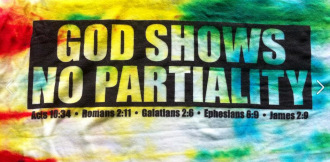
clip_image011[1] It makes God into a Being of partiality who plays the favourites. This especially violates the biblical teaching, ā€˜for God does not show favoritism’ (Rom 2:11 NIV). In Romans 2, the context is no favouritism between Jews and Greeks (Gentiles). Then in Acts 10:34-35 (NIV), Peter preached the good news to the Gentiles, ā€˜Then Peter began to speak: ā€œI now realize how true it is that God does not show favoritism but accepts from every nation the one who fears him and does what is right’.

Caleb Colley explained:

Exactly what does it mean that God is impartial? God offers salvation to every man, no matter what external circumstances, such as socioeconomic status or nationality, might apply to him. God does not offer salvation only to the Jew, just because he is a Jew, or only to the Gentile because he is a Gentile. The Greek word translated ā€œrespecter of personsā€ in the King James Version of Acts 10:34 (ā€œGod is no respecter of personsā€) is prosopolemptes, a word that refers to a judge who looks at a man’s face instead of at the facts of the case, and makes a decision based on whether or not he likes the man (Lenski, 1961, p. 418). Under Roman law, for example, a defendant’s societal status was weighed heavily along with evidence. Any human judge might show undue favor to a plaintiff or a defendant because of private friendship, bribery, rank, power, or political affiliation, but God, the perfect Judge, cannot be tempted by any of the things that might tempt a human judge to show unfair partiality.[19]

D. Conclusion

This is not an article where I provide a refutation of every verse the Calvinists use to try to counter prevenient grace. It is an overview of some of the issues. I write as a Reformed, classical Arminian who is convinced from Scripture of the doctrine of prevenient grace as taught in Titus 2:11 (ESV).

For a refutation of one of the primary Calvinistic verses against prevenient grace, see Craig L. Adams, ā€œCalvinism and John 6:44?. John 6:44 (ESV) reads, ā€˜No one can come to me unless the Father who sent me draws him. And I will raise him up on the last day’.

I am convinced that the biblical evidence points to prevenient grace that is an antecedent to salvation, but it is grace that is available to all but can be resisted.

Works consulted

Lemke, S W 2010. A biblical and theological critique of irresistible grace. David L. Allen & Steve W. Lemke (eds). Whosoever Will: A Biblical-Theological Critique of Five-Point Calvinism, 109-162. Nashville, Tennessee: B&H Academic.

Packer, J I 1993. Concise Theology. Wheaton, Illinois: Tyndale House Publishers Inc.

Phillips, N 2013. Packer’s last words to his son. The Sydney Morning Herald (online), February 11. Available at: http://www.smh.com.au/entertainment/tv-and-radio/packers-last-words-to-his-son-20130210-2e6jw.html (Accessed 2 February 2016).

Rowe, D 2009. What Should I Believe? Why Our Beliefs about the Nature of Death and the Purpose of Life Dominate Our Lives. London and New York: Routledge.

Sproul, R C 1992. Essential Truths of the Christian Faith. Wheaton, Illinois: Tyndale House Publishers Inc.

Spurgeon, C H 1856. Effectual calling, sermon 73, 30 March. Available at: http://www.spurgeon.org/sermons/0073.htm (Accessed 5 October 2011).

Steele, D N, Thomas C C, & Quinn S L 2004. The Five Points of Calvinism: Defined, Defended, Documented. Philadelphia: Presbyterian and Reformed.

Thiessen, H C 1949. Introductory lectures in systematic theology. Grand Rapids, Michigan: Wm. B. Eerdmans Publishing Company.


Notes

[1] Christianity Board, Grace, The Barrd#1. Available at: http://www.christianityboard.com/topic/22258-grace/#entry268559 (Accessed 31 December 2015).

[2] Ibid., OzSpen#4.

[3] The Age, Kerry Francis Bullmore Packer 1937-2005: Obituary (online), 28 December 2005. Available at: http://www.theage.com.au/articles/2005/12/27/1135445572500.html?page=fullpage (Accessed 1 January 2016).

[4] This report stated that Packer was ā€˜without a pulse for six minutes’, Emma Alberici, Kerry Packer dies, The 7.30 Report (online), 27 December 2005. Available at: http://www.abc.net.au/7.30/content/2005/s1538560.htm (Accessed 1 January 2016).

[5] See the photograph of Kerry Packer on his hospital bed, who had been ā€˜admitted to Saint Vincent’s Hospital after suffering a heart attack while playing polo at Warwick Farm, 7 October 1990’. Available from gettyimages at: http://www.gettyimages.com.au/detail/news-photo/kerry-packer-is-admitted-to-saint-vincents-hospital-after-news-photo/539703913 (Accessed 1 January 2016). See other details of this Packer experience in ā€˜Kerry Packer and a plea for privacy’ (Oxford University Press 2015), available at: http://www.oup.com.au/orc/extra_pages/higher_education/hirst__and__patching/kerry_packer (Accessed 1 January 2016).

[6] For an example of research into near-death experiences, see the interview with Dr Peter Fenwick, one of Britain’s leading neuropsychiatrists, on a year-old research project in the cardiac unit, Southampton General Hospital on Australia’s Lateline, 30 October 2000. Available at: http://www.abc.net.au/lateline/stories/s206217.htm (Accessed 1 January 2016).

[7] With help from Thiessen (1949:155-156).

[8] Christianity Board, loc cit., The Barrd#5.

[9] With considerable help from Thiessen (1949:155-156).

[10] Christianity Board, loc cit., The Barrd#7.

[11] Ibid., OzSpen#8.

[12] Desiring God, ā€˜What we believe about the five points of Calvinism’ (rev. March 1998). Available at: http://www.desiringgod.org/resource-library/articles/what-we-believe-about-the-five-points-of-calvinism#Grace (Accessed 5 October 2011). I was alerted to this reference from Piper in Lemke (2010)..

[13] Ibid.

[14] This contradiction was pointed out in Lemke (2010:112).

[15] The Calvinist Corner, available at: http://calvinistcorner.com/tulip (Accessed 3 October 2011).

[16] Christian Forums.com, The ā€˜Free Will’ Dilemma, Hammster #517, June 23, 2013. Available at: http://www.christianforums.com/threads/the-free-will-dilemma.7746203/page-26 (Accessed 31 December 2015).

[17] Ibid., OzSpen#519.

[18] This was posted, July 5, 2010.

[19] Apologetics Press 2004. God is no respecter of persons (online). Available at: http://www.apologeticspress.org/apcontent.aspx?category=12&article=1440 (Accessed 31 December 2015).


Copyright Ā© 2016 Spencer D. Gear. This document last updated at Date: 4 June 2016.

Does God love the world or only the elect?

God is Love

(courtesy ChristArt)


By Spencer D Gear

This is a reasonable question:

When christians tell non-believers God loves them, before sharing the gospel. There are many verses I can refer to with regards to the Love shown by God to both believer and unbeliever. But when we say ā€œGod loves youā€, is there scripture to show this?[1]

After a reply, he wrote this response:

The problem I run into is the context.

1. John 3:16 is the top verse I hear. Does it mean the WHOLE WORLD.
I pray for them: I pray not for the world, but for them which thou hast given me; for they are thine. (John 17:9 KJV)
*why not the world?
2. When verses are referring to believers (Israel/ church) and not unbelievers.
3. I know God sends the rain to both the wicked and the righteous.
A better question I should ask is…..
Would YOU tell Esau ā€œGod loves youā€?[2]

My response was:[3]

John 17:9 states, ā€˜I am praying for them. I am not praying for the world but for those whom you have given me, for they are yours’ (ESV).

With regard to John 17:9 and who it is that Jesus is praying for, we get the answer by reading the context. Please read the whole of John 17 to know who Jesus is praying for. Evangelical commentator, Leon Morris, wrote of John 17:9:

Very simply Jesus prays for them. He makes a distinction between the little band of disciples and the world. His prayer is not for ā€œthe worldā€. This does not mean that ā€œthe worldā€ is beyond God’s love. Elsewhere we are specifically told that He loves it (3:16). And throughout this chapter it is plain that Jesus came with a mission to the world, and that the disciples were now to carry it on. A little later Jesus prays that the disciples may do certain things ā€œthat the world may believeā€¦ā€ (v. 21), and ā€œthat the world may knowā€ (v. 23). The world is to be reached through the disciples and it is for His agents that Jesus prays. But He could scarcely pray for ā€œthe worldā€ as such. As ā€œthe worldā€ it was ranged in opposition to God. Its salvation lay precisely in its ceasing to be ā€œthe worldā€. Prayer for the world could only be that it be converted and no longer by the world. But that would be a different prayer. We see it for example in His prayer for those who crucified Him (Luke 23:34). Now He prays rather for the little group of His friends. Notice that they are again described in terms of their relationship to the Father. They have been ā€œgivenā€ to Christ. They belong to the Father (Morris1971:725).

Another wrote:

There are passages in John that can reasonably be interpreted that way [God loved the world, John 3:16] , e.g. John 14:23. Personally I tend towards a more universal concept. Luke 6:35 suggests that our love for enemies is based on God’s own love for his enemies, but I think a reasonable case can be made that God only loves his people, and in John, only the elect.[4]

My response was:

If God only loved the elect, that makes ā€œfor God so loved the worldā€ an oxymoron.

It makes God commit self-contradiction, which he does not do. Could it be that your doctrine of God only loving the elect is the one in error? ā€œGod so loved the worldā€ cannot be dissected and deconstructed to mean ā€œGod so loved the electā€, unless one wants to get into eisegesis.

Luke 6:35 has no relation to God’s love for the world or the elect. It relates to what he told his disciples to do, ā€˜But love your enemies, do good to them, and lend to them without expecting to get anything back. Then your reward will be greatā€¦ā€ It is talking about rewards for believers, not whether or not God loves the world or only the elect. In context, I think you are wanting Luke 6:35 to say something it does not say. Clutching at straws?[5]

Norman Geisler (1999:77) agreed: ā€˜Few teachings are more evident in the New Testament than that God loves all people, that Christ died for the sins of all human beings (cf. 1 Tim 2:4-6; 1 John 2:2), and that God desires all people to be saved (2 Peter 3:9)’.


References

Geisler, N 1999. Chosen but free. Minneapolis, Minnesota: Bethany House Publishers.

Morris, Leon 1971. The Gospel according to John (The New International Commentary on the New Testament). Grand Rapids, Michigan: Wm. B. Eerdmans Publishing Co.


Notes:

[1] Christian Forums, Christian Apologetics, ā€˜The Love of God’, toolmanjantzi#1, Available at: http://www.christianforums.com/t7721033/ (Accessed 3 February 2013).

[2] Ibid, toolmanjantzi#3.

[3] Ibid., OzSpen#13.

[4] Ibid., Hendrick#12.

[5] Ibid., OzSpen#14.


Copyright Ā© 2013 Spencer D. Gear. This document last updated at Date: 2 February 2016.

Pedophiles: It’s not their fault!!

Sin Paint

(image courtesy ChristArt)

By Spencer D Gear PhD

There are some outrageous views in the world of secular journalism. I came across an opinion piece in the Melbourne (Australia), Herald Sun newspaper online, ‘Should we help paedophiles? What choice do we have?‘ (Shepherd 2015).[1] The sub-heading was, ‘If people are born straight, or gay, is it possible that paedophiles can’t help being what they are?’ The article began:

Evidence shows that it might be true; paedophiles are born that way. Recent research suggests some faulty wiring in the brain. Things about children that are meant to elicit a protective response instead elicit a sexual one.

A published paper from Toronto’s Centre for Addiction and Mental Health found paedophiles are far more likely to be left-handed, and have a lower IQ, which indicates there’s a problem with brain development.

Which would make it not their fault.

Why don’t you take a read of what I consider to be an extremist view of an alibi for sexually deviant behaviour of paedophilia in ā€˜The Science of Pedophilia: Is It a Sexual Orientation?’ This article states, ā€˜The good news, though, is that, if researchers can figure out how the brain’s wiring becomes crossed, scientists could figure out ways for mothers to minimize their chances of giving birth to pedophiles’ (Brice 2012).

What an excuse for justification of wicked sexual abuse of children by adults (mostly males).

A. What is paedophilia?

Michael Seto,[2] who wants to legitimise paedophilia as a sexual orientation, provided this definition, ā€˜Pedophilia can be defined as a sexual attraction to prepubescent children, as indicated by persistent and recurrent sexual thoughts, fantasies, urges, arousal, or behavior (ā€œorā€ because the diagnosis can be made on the basis of thoughts and urges alone)’ (Seto 2012:231-232).

Margo Kaplan, assistant professor of law, states that paedophilia ā€˜refers to a type of sexual interest – specifically an intense and persistent sexual interest in prepubescent children. Pedophilia need not entail any behavior; one may be a celibate pedophile, similar to how one may have sexual desires for adults while remaining celibate’ (Kaplan 2015:86-87).

In common language, these two professionals define paedophilia as adults having a sexual attraction to children through thoughts, fantasies and sometimes involving sexual behaviour between an adult and a child.

B. Why is paedophilia a crime?

Here in Australia, those who are found guilty of paedophilia have committed a criminal act and these are five examples of penalties for such crimes.

1. Dennis Ferguson

clip_image002(Dennis Ferguson 2009, photo courtesy Wikipedia)


One of Australia’s most notorious paedophiles was Dennis Raymond Ferguson. In sentencing him to jail for his crimes, it was reported in The Daily Telegraph:

The evil man Ferguson seems intent on forgetting he ever was.

Such vile criminals don’t come much worse.

As one judge put it, Ferguson is a “cunning and scheming man – not without some intelligence – a danger to children and foolish parents”.

Justice Derrington said Ferguson’s chances of rehabilitation were zero when sentencing him to 14 years in a Queensland jail in 1988 (Lawrence 2009).

2. Forty-one year old paedophile

The Australian newspaper reported in 2010 on the disparity between the length of sentencing for the crime of paedophilia in the USA compared to the drastic leniency in Australia. The report stated that an American pedophile was sentenced to 21 years jail for pleading guilty to photographing a 2-year-old girl and trading the child pornography on the Internet. His Australian (Canberra) cohort was jailed for a quarter of that time for doing the same actions with 4 children.

The 41-year-old [Australian] – who cannot be named – was sentenced … to seven years jail, and must serve a minimum of 4 1/2 years after pleading guilty to 13 counts of indecency against children, using a child to produce child pornography and transmitting child pornography.

Four children, including his own infant son, were captured in the images, which the ACT Supreme Court was told were regarded as “trophies” by the man.

The other children were aged five, seven and nine and included his godchild (McKenna 2010).

3. Brett Peter Cowan

clip_image003

(Daniel Morcombe, phogo courtesy Wikipedia)

One of the most prominent and extremely sad examples of the action of a paedophile here in Queensland was the death of Daniel Morcombe, a 13-year-old, who was abducted from the Sunshine Coast (Woombye) and killed by paedophile, Brett Peter Cowan. Cowan’s paedophilia is confirmed in Olding (2014). This article states:

  • ā€˜A man who was raped and almost killed by Brett Peter Cowan 27 years ago, when he was seven years old, says the predator destroyed his life’.
  • ā€˜Cowan had a shocking record of paedophilia and a hole in his alibi but he told the inquiry he would not have taken Daniel because he liked boys that were six or seven years old, not 13’.
  • ā€˜A former girlfriend of Cowan’s told the program about the night he abducted a six-year-old boy from a Darwin caravan park in 1993 and raped him. He left the boy for dead with horrific injuries but the child survived’.

4. Abuse by clergy or workers at Christian institutions

Then there are horrifying examples of sexual abuse of children by clergy. Here is but one example of many about which I, as a Christian, am utterly ashamed. This abuse victim wrote:

I would think seriously about donating a kidney if I am given the opportunity to stand before the Royal Commission into Child Sexual Abuse. And after eight years of battling the Anglican Church for answers, something exciting has happened concerning the sexual and physical abuse of more than 200 children.

Yes, to hell with the kidney, it means nothing compared to the horrific and violent abuse children suffered at the hands of Anglican clergy and staff over the five decades the Church of England North Coast Children’s Home was functioning.

I was raised in that Anglican home for 14 years, 10 of which were brutal. I was sexually violated and physically abused. To this day I bear the scars on my back from a flogging.

The scars in my mind are deeper (Campion 2013).

5. Fifty-six year old paedophile

As I was writing this article, there appeared a lead item on the Brisbane Times website, ā€˜Convicted paedophile who raped stepdaughter to be watched until 2021’ (Branco 2016). Here it was stated that this 56-year-old was convicted of raping his 7-year-old step daughter. ā€˜The man was sentenced to eight years in jail in January 2008 after pleading guilty to offences including rape and grievous bodily harm. He was released on parole in September 2010 but hauled back into prison four years later when he was found living with a 15-year-old girl but had since been released again’. Although released on 17 January 2016, he has to report to authorities for another 5 years. Psychiatrists diagnosed him with paedophilia or a similar condition of paraphilia and ā€˜classed him a low to medium risk of reoffending’ (Branco 2016). These are the kinds of despicable acts in which he engaged:

He raped the girl when she was just seven years old, beating her, holding her upside down and smacking her.

When the girl was only eight, he punched her so hard she fell down the stairs.

In some cases, the offences occurred while the girl’s mother was asleep in another room….

[The psychiatrists] each noted a tendency for the 56-year-old to minimise and deny his crimes, with Dr Josephine Sundin even noting he perceived himself as an “unhappy and unlucky victim” (Branco 2016).

Now scientists want to label this kind of predatory, sordid behaviour as something over which the paedophile has no control as it is wired into his physical being – the brain (see Shepherd 2015).

C. The victims

Bill Glaser wrote in 1997:

Paedophilia: The health problem of the decade – Dr Bill Glaser

Imagine a society afflicted by a scourge which struck down a quarter of its daughters and up to one in eight of its sons.

Imagine also that this plague, while not immediately fatal, lurked in the bodies and minds of these young children for decades, making them up to sixteen times more likely to experience its disastrous long-term effects.

Finally, imagine the nature of these effects: life-threatening starvation, suicide, persistent nightmares, drug and alcohol abuse and a whole host of intractable psychiatric disorders requiring life-long treatment. What would the society’s response be?

The scourge that we are speaking of is child sexual abuse. It has accounted for probably more misery and suffering than any of the

great plagues of history, including the bubonic plague, tuberculosis and syphilis. Its effects are certainly more devastating and widespread than those of the modern-day epidemics which currently take up so much community attention and resources: motor vehicle accidents, heart

disease and, now, AIDS. Yet the public response to child sexual abuse, even now, is fragmented, poorly coordinated and generally ill-informed.

Its victims have no National AIDS Council to advise governments on policy and research issues; They have no National Heart Foundation to promote public education as to the risks of smoking and unhealthy

lifestyles; They do not have a Transport Accident Commission to provide comprehensive treatment and rehabilitation services for them.

A massive public health problem like child sexual abuse demands a massive societal response. But firstly, we need to acknowledge and understand the problem itself, and this is, sadly enough, a task which both professionals and the community have been reluctant to undertake despite glaringly obvious evidence in front of us.

Source: Excerpt from Glaser, W. ā€œPaedophilia: The Public Health Problem of the Decadeā€ – Australian Institute of Criminology Conference on Paedophilia, Sydney, April 1997.[3]

As a long-term counsellor and counselling manager (now retired), I have deep compassion for helping victims and perpetrators of sexual abuse. However, as will be evident in this article, I do not support the solutions offered by a secular worldview because I’m convinced it does not get to the core of what motivates a person to violate another sexually – especially a child.

This I will admit: The need is urgent to do something substantial about finding a solution to the problem. However, I’m not convinced my secular society has the understanding for doing this. Some have the will to do something, like Bravehearts, but what is the best long-term solution?

I’ll declare my colours as we examine two radically different worldviews and their impact on the paedophilia issue, using Shepherd’s (2015) article as an example.

D. Worldview of a difference

What is a worldview? All of us have one. It may be defined as ā€˜a set of presuppositions (assumptions which may be true, partially true or entirely false) which we hold (consciously or subconsciously, consistently or inconsistently) about the basic make-up of our world’ (Sire1988:17). James Sire explained that these are the seven rock-bottom questions that need to be answered to uncover the elements of a worldview:

(a) What is prime reality – the really real?

(b) What is the nature of external reality, that is, the world around us?

(c) What is a human being?

(d) What happens to a person at death?

(e) Why is it possible to know anything at all?

(f) How do we know what is right and wrong?

(g) What is the meaning of human history? (Sire 1988:18)

What are the worldview dimensions in Tory Shepherd’s article (Shepherd 2015) in her proposing that for the paedophiles, it is not their faults that they have these thoughts towards and then sexually abuse children?

Whether she wants to acknowledge it or not, she is promoting a worldview that deals with at least 3 dimensions of such a view. My analysis of her article reveals three primary dimensions of the following worldview dimensions: (a) external reality, (b) the nature of human beings, and, (c) the nature of right and wrong.

(a) The nature of external reality

This deals with ā€˜whether we see the world as created or autonomous, as chaotic or orderly, as matter or spirit, or whether we emphasize our subjective, personal relationship to the world or its objectivity apart from us’ (Sire 1988:18)

Shepherd was into the ā€˜it feels’ subjectivity when she stated that the uncovering of every dirty secret and hints of new ones ā€˜feels unending, unendable’[4], and ā€˜it also feels as though giving any kind of helping hand to paedophiles is an insult to survivors’. This is an example of subjective emphasis.

The personal relationship to the world of external reality is seen in Shepherd’s statement that ā€˜under the Circles of Support and Accountability program’ volunteers would ā€˜support paedophiles … emotionally and practically to reintegrate into society’. This assumes that this will help them to be autonomously functioning paedophiles. Nothing is said here about the paedophile being cured of his disorder, disease, malfunction, or – dare I mention it – sin.

(b) Teaching on the nature of human beings

Are people only physical beings, highly complex machines, without a soul and spiritual dimension?

Shepherd points to ā€˜evidence’ of the possibility that ā€˜paedophiles are born that way’. So the nature of human beings is driven by the worldview of naturalism. Human beings are physical beings with ā€˜some faulty wiring in the brain’. Thus, when these physical beings are supposed to have ā€˜a protective response’ to children instead of ā€˜a sexual one’, it is because of bad wiring in the brain.

This brain development, according to the Toronto research, also is driven by naturalism as paedophilia is associated with being left-handed and lower IQ, ā€˜which indicates there’s a problem with brain development’.

It needs to be noted that naturalism, in philosophy, is ā€˜a theory that relates scientific method to philosophy by affirming that all beings and events in the universe (whatever their inherent character may be) are natural. Consequently, all knowledge of the universe falls within the pale of scientific investigation’ (Encyclopaedia Britannica 2016. S v naturalism).

The Virtuous Paedophile website (quoted by Shepherd) stated, ā€˜We do not choose to be attracted to children, and we cannot make that attraction go away’. This affirms the physical being dimension of paedophilia. Their view is that they can’t do anything about it as it is physically caused (genetic). This is further confirmed by the language, ā€˜We did not choose it, cannot change, and [we] successfully resist’ the ā€˜temptation to abuse children sexually’.

(c) Demonstrates a perspective on what is right and wrong

Are human beings made in the image of a good God whose character is righteous, or are right and wrong ā€˜determined by human choice alone, or the motions simply developed under an impetus toward cultural or physical survival’ (Sire 1988:18).

Shepherd raises that question that, like straight and gay people, paedophiles ā€˜can’t help being what they are’. However, she does speak of ā€˜every dirty secret’ being uncovered and ā€˜hints of new ones’ cropping up and this goes on and on. But there is no discussion of how one knows it is a dirty as opposed to a clean secret. She wants to disclose some aspect of what seems wrong or ā€˜dirty’, but no criteria for identification are given.

She mentions the Toronto Centre for Addiction and Mental Health study that found paedophiles are more likely to be left-handed and have lower IQ, thus indicating ā€˜a problem with brain development’. Then she draws the moral conclusion that this ā€˜would make it not their fault’ because it is physically caused by the brain. She did admit that ā€˜not all experts agree’, claiming ā€˜it’s genetic’ or ā€˜learned behaviour’ that could be ā€˜triggered by trauma or abuse’, but Shepherd did not get into discussion of right or wrong actions and what makes it morally one way or the other.

Then there is a push to try to differentiate ā€˜between a paedophile and a sexual offender’, which she claims is a ā€˜seldom-made distinction’. Here definition is that ā€˜it is possible to be deviant’ (presumably referring to a sex offender) and not deviant (ā€˜attracted to children, but to never act on it’). I found it puzzling that no criteria were given to make this differentiation and then extending that to an understanding of how being attracted to children and thinking on children may lead to acting out paedophilic behaviour. This read like a relativistic attempt to explain and justify attraction to children.

In speaking of a USA based group, Virtuous Paedophiles,[5] Shepherd wrote, ā€˜I suspect the mere idea of a paedophile calling himself or herself virtuous will have the self-appointed virtue police shuddering in their jim jams, but it’s an interesting concept’ (Shepherd 2015). This is Shepherd’s judgmental, value-laden assessment of how those who oppose ā€˜virtuous paedophiles’ could respond. She wants to make a right vs wrong assessment against those who oppose any thought of a group of Virtuous Paedophiles. So, she is making a value judgment but her view is loaded with anti-conservative values. She judgmentally labelled those who opposed ā€˜virtuous paedophiles’ as ā€˜self-appointed virtue police’ whose behaviour is to shudder ā€˜in their jim jams’. She is the one who has morally decided it is suitable to engage in put-downs of those whose values she rebels against. To label them as ā€˜virtue police’ is an extremist, rebellious opinion.

Shepherd’s value judgments of right and wrong continued. She could not see politicians having the ā€˜will to spend the money’ to roll out a nationwide program to help paedophiles (and thus save children) as it ā€˜will never be a vote winner’. She adds that ā€˜only the brave and petrified’ would be courageous enough ā€˜to try to get help’. Her value judgment is that ā€˜shame and fear would stop most of them’. From where did she gain that information to reach that verdict?

She is not identifying the criteria for her to determine what is right or wrong. Her moral challenges continued: Financial compensation for the children sexually abused in institutional care and considering ā€˜the actual cost to society of the pervasive trauma’ were raised by Shepherd. There is no discussion here of the impact on the psyche, soul or spirit, although one has to read between the lines to see some possible hint with the language of ā€˜pervasive trauma’ – but that’s a remote indicator.

She wrote of ā€˜every dirty secret uncovered’ and hints of more cropping up. There was no indicator of how to know it was a ā€˜dirty secret’. If it is ā€˜not their fault’ (her language, borrowed from ā€˜recent research), to call it a ā€˜dirty secret’ is provocative, contradictory language in my understanding. A ā€˜dirty secret … (that is) not their fault’ is anĀ oxymoron way of putting it.

What about this value judgment? ā€˜What if, for less than the price of helping one survivor to heal, we can stop several from being hurt in the first place?’ (Shepherd 2015). I ask: Why should one pursue that which is right when it is not the paedophile’s fault and morality is not the issue? Why should a paedophile be morally blamed when it is an issue with wiring in the brain? How does one choose to save children (which I would do) and prevent paedophiles from committing acts (which I would do)? It is honourable to choose the vulnerable over the perpetrator, but what values of right and wrong are being used and how are they chosen? Shepherd does not articulate these and give a moral framework for deciding right from wrong.

What morality is contained in Shepherd’s (2015) statement, ā€˜If paedophiles get sympathy, respect and treatment, they say, there would be fewer offences. Fewer children raped. Surely that’s something worth thinking about?’ I find that to be another oxymoron. How can they receive ā€˜respect and treatment’ if it is ā€˜not their fault’? Why not accept these values: If we let paedophiles do what comes naturally to them (because their paedophilia is not their fault), why should we be worrying about how they practise paedophilia? It’s their natural desire being expressed and surely it would be inappropriate to inhibit something they can do nothing about? The way I’ve just stated it represents the values of a relativistic worldview that is expressed in this article by Shepherd. If the paedophile can say, ā€˜I will think and do what is right for me’, he/she is expressing relativism in action.

This journalist reported on phone calls to the Centres Against Sexual Assault from ā€˜people fantasising about children’ and they want help but there is little help available and ā€˜hardly any publicly funded programs’ for these paedophiles who are ā€˜potential offenders’. So these people have to be turned away from getting help. Wait a moment! These are the paedophiles for whom it is ā€˜not their fault’ and the problem is related to a physical malfunction in the brain’s wiring over which they have no control. This is another oxymoron. They can’t have it both ways: (i) It’s not their fault; (ii) it’s caused by a brain problem, but (iii) they need help through government funded programmes.

The Royal Commission into Institutional Responses to Child Sexual Abuse is ā€˜only just starting to bring home the horror’ how ā€˜institutions have forever attracted and then protected paedophiles’. What makes child sexual abuse a ā€˜horror’ when this abuser is not the fault of paedophiles? The problem is wrong wiring in the brain (Shepherd 2015).

Can’t you see the anomalies of trying to obtain help for paedophiles and victims when a journalist wants to label childhood sexual abuse as a ā€˜horror’ without providing a framework of morality to determine that sexual abuse is wrong and the abuse by the paedophile is a ā€˜horror’? I do not support child sexual abuse nor the paedophile’s behaviour, but again we see the values of relativism in action as promoted by Shepherd in her article.

For a more detailed analysis of worldviews, see Norman Geisler & Peter Bocchino, ā€˜Questions about worldviews’ (Geisler & Bocchino 2001: 55-69).

Are values relative or absolute? This issue will be investigated now.

C. The paedophile cure

Three factors are exposed in Shepherd’s article: (1) Moral relativism, (2) Humanism, and (3) Secularism. The paedophile cure involves dealing with these three threats and promoting absolute truth. Let’s examine the issues.

1. Moral relativism

Moral relativists

argue that there are no objective moral values which help us to determine what is right or wrong. They claim ā€œeverything is relative.ā€ In order to defend this position, the relativist puts forth two arguments: (1) Since people and cultures dis agree about morality, there are no objective moral values; (2) Moral relativism leads to tolerance of practices we may find different or odd (Beckwith 2009).

I find it to be a deceitful tactic to raise the expectation of a paedophile’s reputation to, ‘It is not their fault’, when not even bothering to explain how paedophilia and child sexual abuse can be regarded as wrong or ā€˜a horror’ (language cited by Shepherd). Please understand that I oppose paedophilia and child sexual abuse with vehemence, but Shepherd gave no grounds for determining what is right or wrong with these views. Moral relativism and secularism were assumed.

We live in a world that has many following the theme of Frank Sinatra’s song, ā€˜I Did It My Way’. If I’m allowed to choose my own values and do it my way, I need to allow you to do it your way. That means paedophiles, rapists, terrorists and thieves need to be allowed to pursue their own morality. The logical outcome of moral relativism is that nobody can stop anyone from doing what they want to do. That system of values will lead to chaos in society. Could we be seeing that in certain examples around the world? I’m thinking of,

What is the other value system that counters this? Truth is absolute! What does that teach? More on that below.

2. Humanism

This term is a little more difficult to define as it has at least two dimensions. In one of its forms, ā€˜humanism itself is the overall attitude that human beings are of special value; their aspirations, their thoughts, their yearnings are significant’. This is an emphasis that I support as it asserts ā€˜the value of the individual person’. Since the time of the Renaissance there have been many thoughtful Christians and non-Christians who were pleased to call themselves humanists in a positive sense. These have included some Christians, including John Calvin (1509-1564), William Shakespeare (1564-1616), and John Milton (1608-1674) [Sire 1988:74-75].

There has been another negative view of humanism. Its tenets were drafted in Paul Kurtz & Edwin H Wilson’s Humanist Manifesto II (The American Humanist Association, 1973). Secular humanists would probably find the first 6 tenets of this Manifesto to harmonise with their secular values for the practice of secular humanism. In the words of the Preface to this Manifesto, ā€˜varieties and emphases of naturalistic humanism include “scientific,” “ethical,” “democratic,” “religious,” and “Marxist” humanism. Free thought, atheism, agnosticism, skepticism, deism, rationalism, ethical culture, and liberal religion all claim to be heir to the humanist tradition’ (The American Humanist Association, 1973).

However, what is secular?

3. Secularism

What does it mean to have a secular view of life? Albert Mohler states that ā€˜secular refers to the absence of any binding divine authority or belief. Secularization is a sociological process whereby societies become less theistic as they become more modern’ (Mohler 2015:5).

The Council of Australian Humanist Societies claims that ā€˜Australia is and has always been a country with secular values’ (Harrad 2015). We know that this is not the case because when the first fleet arrived in Sydney Cove on 26 January 1788 with convicts from Great Britain, Richard Johnson was the first chaplain on The Endeavour and he represented the Anglican Church of Great Britain.

(image courtesy Wikipedia)

Rev Richard Johnson (ca. 1756 – 1827)


If you were to go into downtown Sydney, there’s a place where I would like you to stand.

clip_image004It’s down at the Circular Quay end of Castlereagh street – on the corner of Bligh and Hunter Streets. In a little square, there’s a monument – passed by and unread by hundreds of people every day.

Imagine you are standing in that spot, but instead of looking up at the tall buildings, and hearing the noise of the cars and the buses, above you is a great tree. You are in a wilderness – and the sounds you hear are the sounds of kookaburras – and the sounds of marching feet. For it is very near that spot – at the corner of Bligh and Hunter Streets – that, on Sunday 3rd February 1788, the first Christian church service was held in the Colony of New South Wales.

Just imagine it… Out in the harbour are moored eleven ships – the ships of the First Fleet, having carried just over a thousand people from Southampton.

There’s the Governor, Captain Arthur Phillip, twenty officials and their servants, 213 marines with some wives and children, more than 750 convicts – one chaplain and his wife – as well as one eternal optimist – a certain James Smith, the man who had actually stowed away on the First Fleet! (Marcus Loane, Hewn from the Rock, 1997-2016).

clip_image005

(photo courtesy Anglican Church League)

Marcus Loane explained the conflict between evangelical Christian values and secularism in the start of the Australian colony.

In 1792, he [Richard Johnson] wrote to the inhabitants of the Colony. It was a booklet he had published because the population of the Colony was increasing, and there was no way he could see everyone … so he wrote this booklet to set forth the gospel and to call upon men and women to repent. This is a part of what he wrote, and it gives us a good insight into what Johnson saw was his task and his message….

I have told you again and again, that Christ is the way, the truth, and the life, and that there is no coming to God with comfort, either in this world, or in that which is to come, but by him. He has told you so himself. And the apostle assures you, that there is no other name under heaven, given unto men, whereby they can be saved. Look unto him, and you shall be saved; if not, you must be damned. This is the plain truth, the express declaration of the Bible. Life and death are set before you.

Permit me then, as your minister, your friend, and a well-wisher to your souls, to press these serious and weighty considerations home upon your consciences once more. I hope and believe that I have asserted nothing, but what can be proved by the highest authority, the word of the living God.

They certainly deserve your closest and most careful attention, since it is plain beyond a doubt. that upon your knowledge or ignorance, your acceptance or rejection of this gospel, your everlasting happiness or misery must depend.

Yes, Richard Johnson was a man of the gospel – but there are two other men of whom we should take note –

Two other Men

The clear preaching of the gospel by Johnson soon brought him into conflict with the Governor, Arthur Phillip.

Phillip had no time for such strong Evangelical stuff and asked Johnson to ā€œbegin with moral subjectsā€.

This shows the fundamental division between these two key people in the new colony. Johnson was an evangelical, called to preach the gospel. He was concerned for the eternal welfare of the men and women of the colony. He wanted to see them turn to Christ and be saved.

Phillip, on the other hand, was called to establish the new settlement, and what he was concerned about was good order and a solid moral fibre for the community. He was happy to use what he saw as ā€œreligionā€ as a means to an end. It was OK to have a chaplain, as long as he didn’t take things too seriously.

But, as we know, Johnson did….

Let’s face it – if we preach the pure gospel of Christ today, we are not going to have civic leaders or social commentators or the media queuing up to thank us. The message we are called to proclaim is a lot more demanding than the polite morality many want to church to teach!

But there was another reaction to Richard Johnson’s preaching that was less favourable.

When, due to ill health, Arthur Phillip returned to England in December 1792, Major Francis Grose assumed control as Acting Governor.

Grose hated Johnson and the gospel he preached, and he set out to make life as hard as possible for the Chaplain.

In 1793, after continued government inaction on the construction of a promised church building, Mr Johnson built a church – largely with his own hands. It was big enough to hold 500 people and it opened on 25th August 1793 (Loane 1997-2016).

Yes, there were secularists with the first fleet who wanted to promote their agendas and oppose the faithful, evangelical chaplain, Richard Johnson, who planted biblical Christianity at Australia’s beginning. The result is that today the evangelicals have a large Anglican evangelical diocese in Sydney. The Bible Society reported:

In the Anglican Church, the presence of the evangelical diocese of Sydney makes things clear. Unlike other dioceses, it is the only one with better than expected attendance, according to the report’s criteria based on Census data.

In Sydney, 68,000 Anglicans are in church each Sunday. In Melbourne 21,000 Anglicans are in church on Sunday. It was pointed out at General Synod … that the growing churches were evangelical such as City on a Hill in Melbourne, and the Trinity group of churches in Adelaide (Sandeman 2014).

You will note in the Shepherd (2015) article that she does not provide any worldview framework for determining that the practice of paedophilia is wrong or a ā€˜horror’ and the sexual abuse of children is wrong. God did not come into the picture in determining values, so she is promoting a secular perspective for determining values. When this happens, the morals are determined by the government in power and there is no divine standard to which one or a government can appeal for determining morality and what is legal vs illegal.

My understanding is that Shepherd, in relying on the research she quoted, has arrived at an ethical view of paedophilia that could be described as relativistic secular humanism. However, Shepherd is espousing a view that I find prevalent in the daily radio & TV news and news online. The emphases are:

flamin-arrow-small The are no absolute values of right and wrong;

flamin-arrow-small Progressive liberalism and free thought;

flamin-arrow-small Belief about paedophilia that has no relationship with God’s values;

flamin-arrow-small Paedophilia related to a physical attribute – wiring in the brain.

In avoiding a Christian solution through a theistic worldview (which is expected from a secular newspaper journalist), Shepherd has avoided dealing with a core issue that could help fix the problem.

That is also the case with Kylie Miller’s assessment. She is a senior analyst of the National Crime Authority in Australia, who concluded her presentation on ā€˜Paedophilia: Police and Prevention’ with this viewpoint:

Given the very low rehabilitation rate for paedophiles, their tendency towards lifelong offending, and the high number of potential victims, it is clear that the resources expended on the detection of child sexual abuse, need to be balanced against resources devoted to the prevention of child sexual abuse. Although law enforcement plays an important role in detecting and countering child sexual abuse, the criminal justice system cannot deal with this problem alone: it needs to be tackled holistically. Police, lawyers, the courts, community services, teachers, doctors, parents and the media all have a role to play in countering child sexual abuse, and a cooperative and coordinated effort is vital to successfully reduce paedophile activity (Miller n d).[6]

Miller, although her emphasis was on a law enforcement perspective, in this summary conclusion has omitted an important dimension of a holistic solution. This is now addressed.

4. A diagnosis and cure provided by a Christian worldview

Scripture is very clear that the problem of sinful humanity, with its many manifestations, has to deal with a deceitful human heart that not only affects paedophiles, writers dealing with paedophilia, and those of us reading this article on paedophiles. In addition, the problem of sexual immorality is a sin that is an unrighteous action that will prohibit people from entering God’s kingdom. The language from 1 Corinthians 6:9 is very clear, ‘Do not be deceived’. There is a deception being practised when one does not want to deal with the sins of sexual immorality (including paedophilia). See the context of this statement about deception in 1 Corinthians 6:9-11 (NIV).

Try convincing a 5-year-old raped by a paedophile that it’s not the paedophile’s fault but the paedophile was born that way and he can’t help it because of a brain malfunction. I find this to be straining at a gnat to justify immoral, wicked, devastating behaviour.

Scripture’s perspective is:

Do you not know that wrongdoers will not inherit the kingdom of God? Do not be deceived: Neither the sexually immoral nor idolaters nor adulterers nor men who have sex with men 10 nor thieves nor the greedy nor drunkards nor slanderers nor swindlers will inherit the kingdom of God. 11 And that is what some of you were. But you were washed, you were sanctified, you were justified in the name of the Lord Jesus Christ and by the Spirit of our God (1 Corinthians 6:9-11 NIV).

Where does the paedophile fit into this list of ā€˜wrongdoers’? He would be among ā€˜the sexually immoral’ or ā€˜men who have sex with men’. The ā€˜sexually immoral’ term is based on the Greek, pornos, which means ā€˜the sexually immoral persons in this world … differentiated from an adulterer ( 1 Cor 6:9; Heb 13:4)’ (Arndt & Gingrich 1957:700).

I find it to be half-baked or whacko when the world’s standards can become such that they want to redefine sexually immoral behaviour into that ‘which would make it not their fault’ and ‘if paedophiles got sympathy, respect and treatment, they say, there would be fewer offences. Fewer children raped. Surely that’s something worth thinking about?’ (Shepherd 2015)

Yes, it’s certainly worth thinking about for one second and no more and then dumping the idea because it is right off base when compared with a biblical worldview of the cause of sexual perversion, ‘The heart is deceitful above all things, and desperately sick; who can understand it?’ (Jeremiah 17:9 ESV)

Where is the cure? It is through a heart change, an inner change of one’s being, that brings a change of view towards the nature of human beings, the human dilemma, right versus wrong, and how the Lord God is involved in the change process through Jesus Christ. Let’s examine some of these emphases:

flamin-arrow-small Psalm 51:10 (NIV), ā€˜Create in me a pure heart, O God, and renew a steadfast spirit within me’.

flamin-arrow-small Proverbs 4:23 (NIV), ā€˜Above all else, guard your heart, for everything you do flows from it’.

flamin-arrow-small 2 Corinthians 5:17 (NIV), ā€˜Therefore, if anyone is in Christ, the new creation has come:[7] The old has gone, the new is here!’

flamin-arrow-small Colossians 3:1 (NIV), ā€˜Since, then, you have been raised with Christ, set your hearts on things above, where Christ is, seated at the right hand of God’.

What does ā€˜heart’ mean in the Old Testament Scriptures here cited? In Psalm 51:10, ā€˜ā€œHeartā€ is in the Hebrew the center where thoughts and plans originate. This is to be redone, as is also the spirit of the man [human being] himself, which had wavered in uncertainty and vacillated between hope and despair’ (Leupold 1959:405).

That new creation for every person, including the paedophile, requires acknowledgement of the real problem. It is not primarily a wiring in the brain issue, it is a sinful human heart. See the article by Greg Herrick,Ā ā€˜The Seat of Sin, the Heart’ (Herrick 2004). But a relativistic secular humanist will run a mile from wanting to label the paedophile’s problem sin. But that’s exactly what it is. If researchers spent more time on allowing the Gospel to be proclaimed to paedophiles and then those who responded to be discipled, we should get closer to the cure. However, it still leaves us with punishment in prison for those who do not respond to Christ’s salvation. For them, there is no cure and they will have to be constantly monitored whenever they are out of jail. That’s the sad situation we face with paedophile back-sliders (recidivists)

The Christian worldview difference that provides a diagnosis and cure for the paedophile problem, which is the problem for any sinner, is covered in my summary article, The Content of the Gospel . . . and some discipleship.

However, don’t expect a secular audience to accept this diagnosis.

5. Sin and an antagonistic, secular, Australian culture

The rejection of the Christian diagnosis is seen in what happened to a Christian street preacher on Queensland’s Gold Coast in December 2015. Family Voice Australia covered the story:

clip_image006

A member of Operation 513 preaches in Cavill Mall on the Gold Coast (photo courtesy Family Voice Australia, 7 December 2015).

George, a Queensland street preacher with the Operation 513 group, was arrested on Friday night, despite being authorised to assemble and preach peacefully in the Surfers Paradise Cavill Mall under the state’s Peaceful Assembly Act. Operation 513 had preached in Cavill Mall on several previous occasions without any complaints.

At about 10.30 pm, a police sergeant approached George and told him to ā€œmove onā€ after he had mentioned some sins listed in the Bible (eg 1 Corinthians 6:9-10) – such as adultery, slander, theft, greed, swindling and homosexual conduct.

George and the group organiser Ryan Hemelaar asked for clarification.Ā  The female sergeant said (in part): ā€œYou have talked about homosexuality, offending members of the public about homosexuality.Ā  You are talking about other religions – [saying] that they aren’t right, aren’t God’s way.Ā  Now we have members of the public here who are of other religions. Your words over this speaker are causing anxiety. A member of the public has had a go at you and this man here [George] is antagonising him by quoting [from the Bible] in the opposite of what he is trying to say.ā€

Ryan Hemelaar tried in vain to explain that the group had official authorisation, so that under section 45 of the Police Powers and Responsibilities Act, police could not lawfully give a ā€œmove onā€ order.

An acting senior police sergeant and an inspector then arrived and told George to move on immediately or be arrested.Ā  George refused to move on. He was handcuffed and arrested for disobeying a police direction. He was later released andĀ  issued with a notice to appear in court later this month.

Family Voice Queensland director Geoffrey Bullock is deeply concerned by the police action.

ā€œSince when has it been an offence to discuss Bible teaching in Queensland?ā€ he asked. ā€œWhatever happened to religious freedom?Ā  Are we rapidly becoming a ā€˜police state’?ā€ (Family Voice Australia 2016)

I don’t expect that a relativistic, secular humanist perspective like that promoted in Shepherd’s article will want to be open to the biblical worldview in this article because ā€˜the heart is deceitful’ for paedophiles, paedophile researchers, journalists, and me. Without changed hearts, we’ll be seeking all kinds of secular alibis to explain or justify sinful behaviour.

D. What makes paedophilia immoral and unlawful?

Notice how a secular, anti-Christian expresses it crudely and blasphemously online. The topic was, ā€˜What does the Bible say about pedophilia?’[8] This person wrote:

Bugger what the bible says or does’nt (sic) say. IT’S WHAT WE BELIEVE IS RIGHT OR NOT AND IT’S NOT. Believe it or not we live in a different century to when the bible was written and we deal with things according to the current bible which is the book of law and common ethics.[9]

That’s a crude, moral relativist’s way of expressing it. However, the fact remains that for paedophilia to be immoral, there has to be an absolute law of right or wrong. ā€˜It’s what we believe is right or not’ is not the way to build a just society. That’s the means of promoting moral relativism of all people doing what’s right in their own eyes.

We had an example of such in the Old Testament: ā€˜In those days Israel had no king; all the people did whatever seemed right in their own eyes’ (Judges 17:6; 21:25 NLT). What was the result? They departed from the Lord God and made ā€˜household gods’ and ordained priests to lead worship to these false gods (Judges 17:5 NIV). There were no judges in the land of Israel to point out the wrong and how this behaviour deviated from God’s law. There were no judges in the land of Israel to point out the wrong and how this behaviour deviated from God’s law.

The essence is: For paedophilia to be unlawful, there needs to be laws made by the governments to convict paedophiles. Here are the laws proposed by the Australian state of New South Wales, as reported by Brittany Hughes of Triple M:

Paedophiles who prey on children younger than 10 for sexual intercourse will face life behind bars under new laws to be introduced to NSW Parliament….

Attorney General Gabrielle Upton will introduce legislation increasing the maximum penalty for the offence from 25 years to life behind bars.

The proposal is part of a series of measures taken by the government following a pre-election promise by Premier Mike Baird to get tough on child sex offenders.

If passed, Ms Upton says the laws will see paedophiles hit with lengthy jail terms and ā€œbring sentences into line with community expectations,ā€

ā€œThese are the worst crimes against the most vulnerable in our community, our children, our young people and too often sentences handed down don’t align with community expectationā€ (Hughes 2015, emphasis in original).

This NSW legislation was passed on 24 June 2015 that increased the maximum sentence for sexual intercourse with a child under age 10 from 25 years to life in prison (Mamamia News 2015)

How do the laws in my home state of Queensland (Qld) against paedophilia compare with other states. Sadly there is no uniformity of legislation across the Australia. However, this is the Qld situation when compared with Victoria and South Australia:

In Victoria the crime of sex with a child under 10 attracts a maximum penalty of 25 years’ imprisonment.

In Queensland and South Australia, many serious sex offences against children already carry a maximum penalty of life imprisonment (Mamamia News 2015).

The Queensland government has made available online a copy of its Crime and Misconduct Act 2001 (effective at 19 March 2014 when this legislation was published online), that states that ā€˜criminal activity’, including criminal paedophilia, ā€˜involves an indictable offence punishable on conviction by a term of imprisonment not less than 14 years’ (Queensland: Crime and Misconduct Act 2001).

Paedophilia is illegal because the law of the country in which one lives makes it illegal, along with punishment for the perpetrator.

However, who or what informs the content of this legislation? Obviously people in government and in the community consider that it is wrong for an adult to sexually violate a child. But what makes it wrong?

That’s not how Tory Shepherd (2015) reported it. Her article began with:

Evidence shows that it might be true; paedophiles are born that way. Recent research suggests some faulty wiring in the brain. Things about children that are meant to elicit a protective response instead elicit a sexual one (Shepherd 2015).

Notice the language, ā€˜It might be true’. It did not begin with a statement such as, ā€˜Paedophilia is wrong. The law of the land states that it is morally reprehensible behaviour that is always immoral. It is an indictable offense and that conduct should never be tolerated in a civil society. Children should be protected from such vile predators’. Could you imagine a journalist in a secular newspaper writing what I created in this paragraph?

Why could she not conclude that way? It seems that her relativistic, secular humanism worldview enables her to brush aside the absolutes of morally repulsive paedophilia because if it is a problem with ā€˜wiring in the brain’, then it ā€˜would make it not their fault’ (Shepherd 2015).

What is morally right or wrong does not appear in Shepherd’s worldview, based on her article.

1. What informs government legislation?

This is where the crunch comes. Can people be good without God? Can they develop truly just legislation for all in society? Is it possible for both paedophile and victim to be treated with compassion in a secular society?

Peter Hitchens, a world renowned journalist and brother of the late Christopher Hitchens (leading British columnist and prominent atheist), attempted to address this in his article, ā€˜Good without God? Morality’s Foundations Crumble in the Absence of Christianity’ (Hitchens 2014). Peter’s claim was that Christopher’s dismissal of absolute theistic morality and his claim that ā€˜the order to ā€œlove thy neighbour as thyselfā€ is too extreme and too strenuous to be obeyed’. Christopher claimed that human beings ā€˜are not so constituted as to care for others as much as themselves’. Peter contradicted this as being ā€˜demonstrably untrue’ by examples of mothers devoted to children, doctors and nurses risking infection and death to care for others, husbands and/or wives caring for sick, incontinent and demented spouses at the ends of their lives. Peter noted that ā€˜the absolute code has been jettisoned, and we have all become adept at making excuses for shirking such duties’ and ā€˜selflessness of this kind will become less common’ with many spin-off effects in diverse disciples and situations. Part of his assessment was:

Christianity is without doubt difficult and taxing, and all of us must fail to emulate the perfection of Christ himself, but we are far better for trying than for not trying, and we know that there is forgiveness available for honest failure. My brother’s suggestion that we are urged to be superhuman “on pain of death and torture” reveals a misunderstanding both of the nature of the commandments and of the extent of forgiveness. There is also some excuse-making involved (Peter Hitchins 2014).

Some of the comments online about Peter Hitchens’ article included:

  • ā€˜The freedom to pick and choose what one feels is appropriate provides both perspective and flexability [sic] (tolerance and harmony). A fixed or ‘absolute’ stance leaves no room for compromise or accommodation’ (GR8APE in Hitchens 2014).
  • ā€˜I think this article is wrestling with how do you say something is right or wrong if there is no higher authority or giver of morality?
    ā€˜I don’t think it is saying that unless you are a Christian you cannot do good things. Indeed, the gospel says nothing of the sort. It says we are all sinners and have fallen short. Unlike every other religion, the gospel says we are not saved by works, we are saved by the grace of God, so no one can boast. It also says we all know right from wrong, not because we have accepted Christ, but because He has written it on all our hearts’ (Belinda in Hitchens 2014).

These two comments represent the divide I’ve been attempting to expose in this article:

  1. If everyone has the ā€˜freedom to pick and choose what one feels is appropriate’ with tolerance and harmony and there are no ā€˜fixed’ absolutes, why should I choose ā€˜tolerance and harmony’? That’s one person’s point of view (I happen to agree with the person, but my foundation is biblical Christianity). If anyone picks and chooses what is appropriate, the paedophile, murderer, thief and terrorist must be allowed to do the same thing. This is relativism in action and will lead to disaster in society.
  2. However, the second example demonstrates the need for a higher authority than human beings to determine right and wrong of morals. God has written this on the conscience of all human beings (see Romans 2:15-16 ESV).. To be able to put this into action, a person needs a changed heart that only Christian conversion can bring. Other attempts at doing good works are sustained by human energy and have a serious potential to fail when there is no change of heart that Jesus brings to a Christian believer.

Romans 1:19-23 (NIV) is clear that all human beings know the attributes of God clearly, but they suppress the truth of this ā€˜by their wickedness’ (Rom 1:18). The consequence of this is that there is no such person as an atheist as all people know ā€˜God’s invisible qualities—his eternal power and divine nature’ from creation and all people are ā€˜without excuse’ (Rom 1:20) So those who claim to be atheists are really agnostics who don’t want to know what God has revealed to them because of ā€˜their wickedness’ which causes them to ā€˜suppress the truth’ of God’s revelation to them (Rom 1:18).

From the beginning of time, there have been two options for moral direction in any society and they are demonstrated by those two examples: (1) Human beings choose their own values and this could involve turning to world religions (including relativistic, secular humanism), or (2) People turn to the God of Scripture for his absolutes on moral behaviour and use these values for personal and societal morals.

This leads to my concluding evaluation, an issue that has faced humanity throughout its history:

2. What is truth?

These are the words of Pontius Pilate at the time when Jesus was handed over to him. Pilate said to Jesus, ā€˜ā€œSo you are a king?ā€ Jesus answered, ā€œYou say that I am a king. For this purpose I was born and for this purpose I have come into the world—to bear witness to the truth. Everyone who is of the truth listens to my voice.ā€ 38 Pilate said to him, ā€œWhat is truth?ā€ā€™ (John 18:37-38 ESV).

The Christian answers this question with what Jesus said. He did not want his disciples taken out of the world but that they be kept from the evil one. Thus his absolute is paramount, ā€˜Sanctify them in the truth; your word is truth’ (John 17:17). Jesus’ further word was in what he said to Thomas, ā€˜I am the way, and the truth, and the life’ (John 14:6). What the Scriptures say is true, is absolutely true. ā€˜You shall not murder’ is true for all people at all times (Ex 20:13; Matt 5:21; Rom 13:9). How is that so? The Scriptures endorse that command. There are two covenants revealed in Scripture: (a) The Old Covenant for the Israelites, contained in the Old Testament, and (b) The New Covenant revealed in the New Testament. Christians pursue the New Covenant.

But what about the other view, ā€˜I will do what’s right for me; you do what’s right for you’. This is a relativistic view of truth and has these consequences according to Paul Copan:

  • If my belief is only true for me, then why isn’t your belief only true for you? Aren’t you saying you want me to believe the same thing you do?
  • You say that no belief is true for everyone, but you want everyone to believe what you do.
  • You’re making universal claims that relativism is true and absolutism is false. You can’t in the same breath say, ā€˜Nothing is universally true’ and ā€˜My view is universally true.’ Relativism falsifies itself. It claims there is one position that is true – relativism!
  • You’re applying your view to everyone but yourself. You expect others to believe your views (the ā€˜self-excepting fallacy’) [Copan 1998].

How then does one determine what is true?

This actually happened when I was aged 6 years. I had just begun primary school and used to walk to our one room, one teacher school, with about 6 grades in the one room, from our cane farm just up the road. One morning I woke up with horrific pains in my knees and ankles which were so swollen and painful that I could not bear to have the sheets touch them.

clip_image008

(Ford Prefect A493A utility – photo courtesy commons.wikimedia.com)

My parents rushed me to hospital from our cane farm near Bundaberg. It took 30 minutes in our old Ford Prefect utility to where I was admitted to St. Vincent’s Hospital (now known as The Friendly Society Private Hospital – the Friendlies – Bundaberg, Qld., Australia). I was there for some weeks as the doctors sought a diagnosis. It was there that Thelma Stay, radio announcer of ā€˜Hello the Hospitals’ on 4BU Bundaberg became my friend as parents, relatives and friends sent me get well greetings through that programme and one of my favourite country music songs was sung – often by Slim Dusty with a song such as, ā€˜When the rain tumbles down in July’.

I had contracted rheumatic fever and must remain in bed, flat on my back, not raising my head as that would cause further heart damage. When home from hospital, my Dad made a special wooden trestle to put over my body as I lay on the bed, on which to place school books to do school work.

This same kind of experience happened again with further bouts of rheumatic fever at ages 10 and 12 that left me with leaking heart valves.

These descriptions of my rheumatic fever attacks and the excruciating pain remain with me today in my mature age. I live with the truth that corresponds with reality of three rheumatic fever attacks. I can make truthful statements about what happened in those years that could be confirmed by my parents (they are at home with the Lord now). My brother and sister can confirm the events that happened. They were younger so they probably remember the bouts at ages 10 and 12 better. However, with plausible accuracy, we can remember the health issues that happened in my early years. There is evidence that could have been accumulated from doctors, hospitals and others. We live with this view of truth – that which corresponds with the facts of reality.

If objective truth were not available (through correspondence with the facts) and the absolutes of God’s moral laws in Scripture were denied, society would be swimming in the sea of relativism with no absolute view of right and wrong.

For a more detailed explanation of the nature of truth, see, ā€˜Questions about Truth’ by Norman Geisler & Peter Bocchino (Geisler & Bocchino 2001:31-53).

E. Conclusion

A seemingly inoffensive article appeared in the Herald Sun in April 2015 that promoted the view that ā€˜if people are born straight, or gay, is it possible that paedophiles can’t help being what they are?’ (Shepherd 2015) She introduced the possibility that research into paedophilia has attempted to confirm that for paedophiles they have some faulty wiring in the brain that ā€˜would make it not their fault’.

A closer look at Tory Shepherd’s article found some other dynamics in the agenda being promoted in the article. After defining paedophilia and revealing why it is a crime, several examples of convicted paedophiles were given and this included acknowledgement of the impact on victims.

After explaining the nature of a worldview and the dimensions of such a view, it was shown that Shepherd appears to promote a worldview of relativistic secular humanism. An attempt was made to demonstrate that that worldview misses a critical diagnosis and cure for paedophilia and other sins, that are available through a Christian worldview. The diagnosis and cure relate to dealing with the heart of the matter, the sinful heart that needs a radical change provided by the Gospel and a relationship with Jesus Christ.

The final section examined why paedophilia is immoral and unlawful and how one informs the content of government legislation. This involved an examination of the nature of truth – relativism versus absolutes. Truth is that which corresponds with reality when the evidence is gathered.

Why are people not listening to the truth of Jesus and God’s absolutes revealed in Scripture? ā€˜But God shows his anger from heaven against all sinful, wicked people who suppress the truth by their wickedness’ (Rom 1:18 NLT).

Jesus said: ā€˜The reason I was born and

came into the world is to testify to the

truth. Everyone on the side of truth

listens to me’ (John 18:37 NIV).

Ā thumbnail

Works consulted

Arndt, W F & Gingrich, F W 1957. A Greek-English lexicon of the New Testament and other early Christian literature.[10] Chicago: The University of Chicago Press (limited edition licensed to Zondervan Publishing House).

Beckwith, F J 2009. Philosophical problems with moral relativism. Christian Research Institute (online), April 6. Available at: http://www.equip.org/article/philosophical-problems-with-moral-relativism/ (Accessed 26 January 2016).

Branco, J 2016. Convicted paedophile who raped stepdaughter to be watched until 2021. Brisbane Times (online), January 17. Available at: http://www.brisbanetimes.com.au/queensland/convicted-paedophile-who-raped-stepdaughter-to-be-watched-until-2021-20160115-gm6xat.html (Accessed 17 January 2016).

Campion, T 2013. Tommy Campion and Phillip Aspinall – the road to redemption. news.com.au (online), May 25. Available at: http://www.news.com.au/national/nsw-act/tommy-campion-and-phillip-aspinall-the-road-to-redemption/story-fnii5s3x-1226650281095 (Accessed 16 January 2016).

Copan, P 1998. ā€˜That’s true for you but not for me’ (Relativism). uccf: thechristianunions (online). Available at bethinking, at: http://www.bethinking.org/truth/thats-true-for-you-but-not-for-me-relativism (Accessed 30 January 2016).

Family Voice Australia 2016. Gold Coast preacher arrested for talking about sin (online), December 7. Available at: http://www.fava.org.au/news/2015/gold-coast-preacher-arrested-for-talking-about-sin/ (Accessed 30 January 2016).

Geisler, N & Bocchino, P 2001. Unshakable foundations. Bloomington, Minnesota: Bethany House Publishers.

Harrad, S 2015. Australian Humanist Conference – Brisbane 2016. Council of Australian Humanist Societies (online), September 28. Available at: http://www.humanist.org.au/ (Accessed 30 January 2016).

Herrick, G 2004. The seat of sin, the heart. Bible.org (online), June 9. Available at: https://bible.org/seriespage/3-seat-sin-heart (Accessed 29 January 2016).

Hitchens, P 2014. Good without God? Morality’s foundations crumble in the absence of Christianity. ABC Religion and Ethics (online), December 3. Available at: http://www.abc.net.au/religion/articles/2014/12/03/4141760.htm (Accessed 30 January 2016).

Hughes, B 2015. Paedophiles who prey on kids under 10 to get life in jail: Laws tightened to crack down on offenders. Triple M (online), May 11. Available at: http://www.triplem.com.au/sydney/news/blog/2015/5/paedophiles-who-prey-on-kids-under-10-to-get-life-in-jail/ (Accessed 30 January 2016).

Kaplan, M 2015. Taking pedophilia seriously. Washington and Lee Law Review (online), 72(1), Winter, 75-170. Available at: http://scholarlycommons.law.wlu.edu/cgi/viewcontent.cgi?article=4438&context=wlulr (Accessed 16 January 2016).

Lawrence, K 2009. Inside the mind of evil predator, convicted paedophile Dennis Ferguson. The Daily Telegraph (online), September 19. Available at: http://www.dailytelegraph.com.au/inside-the-mind-of-evil-predator-convicted-paedophile-dennis-ferguson/story-e6freuy9-1225776838465 (Accessed 15 January 2016).

Leupold, H C 1959. Exposition of The Psalms. London: Evangelical Press.[11]

Loane, M 1997-2016. Hewn from the Rock. In ā€˜Richard Johnson – first Chaplain to Australia’, Anglican Church League (online). Available at: http://acl.asn.au/resources/richard-johnson-first-chaplain-to-australia/ (Accessed 30 January 2016).

Mamamia News 2015. New laws mean life in prison for convicted paedophiles, June 25. Available at: http://www.mamamia.com.au/paedophiles-maximum-penalty/ (Accessed 30 January 2016).

McKenna, M 2010. Aussie pedophile’s jail sentence a fraction of US term. The Australian (online), September 9. Available at: http://www.theaustralian.com.au/news/nation/aussie-pedophiles-jail-sentence-a-fraction-of-us-term/story-e6frg6nf-1225916110205 (Accessed 16 January 2016).

Miller, K n d. Paedophilia: Policy and prevention. Detection and reporting of paedophilia: A law enforcement perspective. Australian Institute of Criminology (online). Available at: http://www.aic.gov.au/media_library/conferences/paedophilia/miller.pdf (Accessed 30 January 2016).

Mohler, Jr., R A 2015. We Cannot Be Silent. Nashville, Tennessee: Nelson Books.

Sandeman, J 2014. Two Australian denominations face big challenges. Bible Society (online), July 11. Available at: http://www.biblesociety.org.au/news/two-australian-denominations-face-big-challenges (Accessed 30 January 2016).

Seto, M C 2012. Is pedophilia a sexual orientation? Archives of Sexual Behavior 41, 231-236.[12]

Shepherd, T 2015, Should we help paedophiles? What choice do we have? The Herald Sun (online) April 7. Available at: http://www.heraldsun.com.au/rendezview/should-we-help-paedophiles-what-choice-do-we-have/news-story/8bdfbee176a10520706f67c19a3bb8fd (Accessed 15 January 2016).

Sire, J 1988. The Universe Next Door: A Basic World View Catalog, b updated & exp. Downers Grove, Illinois: InterVarsity Press.

Notes


[1] Throughout the body of this article, I have used the Australian (British) spelling of paedophile and its derivatives, but have used the American spelling, pedophile, in the title for Internet recognition by search engines.

[2] Dr Michael C Seto is a Canadian clinical psychologist, associate professor, and a director of forensic rehabilitation research. His CV details are at: http://individual.utoronto.ca/michaelseto/ (Accessed 16 January 2016).

[3] Bravehearts 2012. Child Sexual Assault: Facts and Statistics, December. Available at: http://www.bravehearts.org.au/files/Facts%20and%20Stats_updated141212.pdf (Accessed 15 January 2016).

[4] The word ā€˜unendable’ was not found in Oxford dictionaries (online), Merriam-Webster dictionary (online), dictionary.reference.com, and The Macquarie Dictionary. There is a brief discussion of the meaning and use of ā€˜unendable’ at: http://forum.wordreference.com/threads/unendable.2351375/ (Accessed 26 January 2016).

[5] This is not the correct spelling as paedophile in the USA where the group is called ā€˜Virtuous Pedophiles’. See: https://en.wikipedia.org/wiki/Virtuous_Pedophiles (Accessed 15 January 2016).

[6] No date is given for this presentation, but she cites statistics from 1994 and footnotes from 1996.

[7] The footnote at this point stated, ā€˜Or Christ, that person is a new creation’.

[8] Yahoo! Answers n d. Available at: https://answers.yahoo.com/question/index?qid=20070703010944AAI5VAc (Accessed 17 January 2016).

[9] Ibid., knackers

[10] This is ā€˜a translation and adaptation of Walter Bauer’s Griechisch-Deutsches Wƶrtbuch zu den Schriften des Neuen Testaments und der übrigen urchristlichen Literatur’, 4th rev and aug ed, 1952 (Arndt & Gingrich 1957:iii).

[11] This is a 1969 reprint edition. The original publication of 1959 was with The Wartburg Press, assigned to Augsburg Publishing House in 1961.

[12] Only the abstract of the article is able free online at: http://link.springer.com/article/10.1007%2Fs10508-011-9882-6#page-1 (Accessed 16 January 2016).


Copyright Ā© 2016 Spencer D. Gear. This document last updated at Date: 20 May 2016.

Another scam email

Scam Laptop Shows Scheming Hoax Deceit And Fraud Online

(courtesy dreamstime.com)

By Spencer D Gear PhD

This is aĀ  scam email I received on 23 January 2016:

Subject: ACCOUNT 7.0 UPDATE
Date: Sat, 23 Jan 2016 07:20:53 +0100
From: Mail iiNet <mveerappan.co@gmail.com>

DEAR iiNet USER,

We have upgraded the security on all account due to complain on identity theft, You are advised to update your account. Click, Updated Page for instant update
Regards,

©2016 iiNet Web, Inc

The indicators of a hoax

Fraud Warning(courtesy dreamstime.com)


These hoax indicators are mixed with signs of the real thing. My Internet provider is iinet.com.au. The hoax is from ā€˜Mail iiNet’ that looks like iinet and is addressed to ā€˜DEAR iiNet USER’. It is signed, ā€˜Ā©2016 iiNet Web, Inc’. This reads oh so normal.

BUT, there is a give-away indicator and it is one that should always be checked with unknown and unexpected messages that come from one’s Internet provider or from any other source. Who is the email from? The full address of the person or organisation is, ā€˜Mail iiNet <mveerappan.co@gmail.com>’ The address in this line gives it away: mveerappan.co@gmail.com. That is not iinet but a scam, hoax, fraud – however you want to put it.

That email address told me it was not from iinet, but was a scam, designed to get me to link to some scam website that was called ā€˜Updated Page’ for security. Who knows what I would have encountered if I had clicked on ā€˜Updated Page’, What would have happened to my PC?

There is another indicator of it being a possible hoax. That is found in the incorrect grammar used in the email: ā€˜We have upgraded the security on all account (sic) due to complain (sic) on identity theft’. These two spelling errors signify it was possibly sent from an overseas and foreign source without knowledge of some fundamental English grammar and spelling.

What to do with the spam email

Computer Monitor Screen ...(courtesy shutterstock)


I immediately forwarded it to iinet Provisioning Team at: support@iinet.net.au, advising that ā€˜this is a hoax email I received re iinet and thought I should advise you of this’.

Then I removed it from my email inbox by choosing the letter j to send it to the junk folder (I use Thunderbird as my email programme).

Be warned!

If an email looks fishy in its title or content, it probably is. Make sure you read the sender’s email address carefully. There you will pick up the hoax or scam email signs in a wrong address. If you have any doubts, forward a copy to your Internet provider and ask if this email is sourced from that provider.

The more emails that come into our inbox, the higher the risk of receiving hoax and potentially dangerous email will be. We can be caught, unless we remain vigilant all of the time.

May you enjoy your computing, while taking the necessary precautions.


Copyright Ā© 2016 Spencer D. Gear. This document last updated at Date: 25 January 2016.

Queensland Senator bullying Queensland MPs

(image courtesy clker.com)

By Spencer D Gear PhD

How do you think a politician would push her views on abortion? I wrote to her on 5 November 2015 by email to expose what I understood she was doing. The title of my email was, ā€˜Quit your histrionics[1] and bullying’:

I read the article in the Brisbane Times (2 November 2015) about what you are doing to Queensland State MPs, ‘Greens Senator Larissa Waters wants Queensland MPs to show position on abortion‘.

Please quit this action of bullying Qld MPs. They are big boys and girls who are capable of thinking through the abortion issues themselves.

We already have provision for doctors to abort if there is physical or mental danger to the mother.

It is important that children be protected from conception. You obviously don’t give a hoot about that view. It’s important to safeguard children from murder while they are in the womb. There are life and death reasons for keeping the Qld abortion laws as they are.

It is time for you, a federal Qld senator, to remove yourself from wanting to influence State MPs like this and using the mass media to push your view. What you are doing is engaging in histrionic bullying of MPs with your public demands.[2]

How do you think her office would reply to this kind of personal email from me?

A. Red herring reply from a Senator’s office

I want to commend the Senator’s office for replying to my email because many of the Senators I contact do not get back to me at all. It’s as if my writing to them, for whom I have voted, is a waste of time. However, how did the person in the senator’s office reply? Here it is:

Thank you for contacting Senator Larissa Waters regarding abortion.

Senator Waters respects your concerns and acknowledges your perspective on this issue.

The Australian Greens have been, and continue to be, strong supporters of women’s right to access free, safe and legal termination services.Ā  The Greens believe it’s unacceptable that so many Australian women still struggle to access this basic health service, which is why we will continue to work to improve women’s access to termination services.

Thank you again for contacting Senator Waters to express your views.

Regards,

[staff member’s name]

Office of Senator Larissa Waters [3]

Notice what she missed from my email of 5 November to Senator Waters? She omitted one of my primary emphases that I placed in the email title, ā€˜Quit your histrionics and bullying’. Not once in this reply did the staff member mention my accusation of bullying of Qld MPs – not once. She avoided it to push Senator Waters’ pro-abortion agenda.

(Herrings kippered by smoking and salting until they turn reddish-brown, i.e. a “red herring”. Prior to refrigeration kipper was known for being strongly pungent; courtesy Wikipedia)

By avoiding the topic I raised of histrionic bullying of MPs, Senator Waters’ office has practised a red herring logical fallacy. What is that? The Nizkor Project explains:

A Red Herring is a fallacy in which an irrelevant topic is presented in order to divert attention from the original issue. The basic idea is to “win” an argument by leading attention away from the argument and to another topic. This sort of “reasoning” has the following form:

1. Topic A is under discussion.

2. Topic B is introduced under the guise of being relevant to topic A (when topic B is actually not relevant to topic A).

3. Topic A is abandoned.

This sort of “reasoning” is fallacious because merely changing the topic of discussion hardly counts as an argument against a claim (The Nizkor Project 2012. S v red herring).

Therefore, I responded to Catherine Garner via email:[4]

Your response is a red herring logical fallacy. You did not address the issue I raised of Senator Waters bullying Qld MPs about their views on abortion. Please quit it. Bullying in all its forms should not be promoted, let alone practised, by Senator Waters.

1. Politicians among least trusted

Your reply endorses fallacious reasoning. No wonder in 2011, reported by The Sydney Morning Herald, it was found that ‘this year’s Reader’s Digest survey on the most-trusted professions sandwiches politicians between car salesmen and telemarketers, in the bottom three out of a list of 45 vocations’. Politicians were 44 on the list of 45′ (The Sydney Morning Herald 2011). Sadly, journalists were competing with politicians near the bottom of that list at No. 40. In fact, sex workers are at #39, meaning that politicians are less trusted than prostitutes.[5]

How was Senator Waters tackling the views of Queensland MPs on abortion?

B. Politician bullying other politicians

clip_image002(photo of Senator Larissa Waters, courtesy Wikipedia)


This federal Greens’ senator for Queensland, Larissa Waters was bullying Qld MPs with some of these emphases, as reported by the Brisbane Times:[6]

1. She was asking Queensland State MPs to declare their position on decriminalising abortion. Why? It was a component of her campaign to expose what she considers is Qld’s ā€˜outdated law’ that she wants changed. To me, this seems like a predicted technique. She is pushing for a change in Qld State legislation. So what better way to do this than to unmask the politicians’ perspectives on abortion so that she could then attempt to debunk or parade their values for possible ridicule or exposure in their electorates?

However, she is a federal politician and should be leaving State politics to the state political sphere. This doesn’t prevent her from expressing her views. However, she did it in a very public sphere through this article in the Brisbane Times.[7]

2. This was associated with a report in the Brisbane Times that Qld women were travelling interstate to obtain abortions (Mitchell-Whitington 2015). This article claimed Qld women wanting abortions were breaking the law by going south for the procedure. ā€˜In 2014, Children by Choice referred 77 women interstate, with similar organisations making the same type of referrals so that figure is probably much higher’, claimed Professor Caroline de Costa of James Cook University School of the College of Medicine and Dentistry.[8] De Costa’s contention was that ā€˜extensive abortion ā€œtourismā€ from all Australian states to Victoria and overseas (is occurring) in the face of barriers to access to abortion’.

So this Brisbane Times article garnered a pro-abortion response from a Professor of Medicine. Where was the balance? I did not find a right of response from Cherish Life, a right-to-life organisation.

3. This is how Waters is bullying Qld MPs. It was reported that ā€˜Larissa Waters has begun campaigning to decriminalise the procedure [of abortion] in the sunshine state, with plans to publish where Queensland’s MPs stand on the issue’ (Remeikis 2015). This kind of threat amounts to bullying by intimidation, in my view.

4. This article stated, ā€˜”The fact that abortion is still a crime in Queensland creates stigma and legal uncertainty for women and for doctors,” Ms Waters said in the letter to the state’s MPs’. So Waters is pushing the stigma and legal side to try to get MPs to declare their hand on abortion so that she will shame them (this is how I see it) about ā€˜the dearth of access to abortion in Queensland’ (Remeikis 2015).

5. The bullying by shaming continues: ā€˜Our outdated laws, are hurting Queensland women’. This is guilt by association. If Qld MPs support the current abortion laws they are endorsing old fashioned laws that are hurting women, according to Waters.

6. The guilt by association and bullying continued: ā€˜Ms Waters said polling shows four out of five voters supported decriminalising abortion, with the Australian Medical Association of Queensland calling the current law “a barrier to a doctor’s first duty – best patient care”’. Not one statistic was quoted by the Brisbane Times or Ms Waters to support this assertion of the percentage of Queenslanders who support abortion. However, elsewhere these are the polling statistics that were not 80% in favour of abortion:

ALMOST two-thirds of Queenslanders support the decriminalisation of abortion, according to an exclusive Galaxy opinion poll.

The poll of 800 voters, conducted exclusively for The Courier-Mail, found 64 per cent believed abortion should be legalised, while 31 per cent disagreed. Five per cent were uncommitted (Miles 2009, emphasis in original).

A year later it was reported:

Image result for clipart research public domain

(image courtesy clipartpal.com)

New independent polling by Galaxy Research reveals Queensland voters are evenly split on whether to “decriminalise abortion”, despite widespread media coverage of the recent Cairns court trial and contrary to recent claims by the pro-abortion lobby that there is 90 per cent support.

The poll, taken after the week-long trial, shows a cautious attitude towards abortion with 29 per cent saying they would not allow abortion “at any stage of pregnancy”. This makes a total of 74 per cent of Queenslanders who would not permit abortion beyond the first trimester, or not at all.

Even support for first-trimester abortions is qualified because half (49 per cent) of Queensland voters do not support abortion for non-medical reasons (that is, social or financial reasons). Of course, it is deemed common knowledge that the majority of the annual 14,000+ abortions in Queensland are carried out for non-medical reasons, something which may shock the general public if they knew.

Catapulting the cause for abortion law reform into media headlines was the trial of a young couple in Cairns during October 12-14. After only one hour of deliberation the jury found them not guilty of the two charges: procuring one’s own abortion and supplying a drug to procure an abortion (McCormack 2010, emphasis in original).

Commenting on this poll, the Australian Christian Lobby stated:

ā€œDespite activist organisation GetUp! reportedly claiming that decriminalising abortion has 90% public support, this new poll shows that 74% of Queensland voters are opposed to abortion past the first trimester,ā€ ACL Managing Director Jim Wallace said. ā€œAnother important finding is that almost everybody (94%) believes that a woman should receive free independent counseling to enable a fully informed decision. Three quarters of respondents (77%) believed that abortion can harm the mental and physical health of a woman.

ā€œThe poll also found that 29% of respondents did not support abortion at any stage of a pregnancy, and that nearly half of those surveyed (49%) said they did not support abortion for non-medical reasons. This is particularly noteworthy considering that the vast majority of abortions carried out in Australia today are not for medical reasons, but for purely for financial or social reasons.

ā€œThere is clearly no consensus that abortion laws should be changed except to introduce better safeguards for women such as independent counseling, cooling-off periods and parental consent for girls under 16,ā€ Mr Wallace said (Australian Christian Lobby 2010).

A 2008 survey reported in The Medical Journal of Australia came to different conclusions. It was ā€˜an anonymous online survey of 1050 Australians aged 18 years or older (stratified by sex, age and location) using contextualised questions, conducted between 28Ā  and 31 July 2008’ and reached the conclusion that there was,

a high level of support for access to early abortion; 87% of respondents indicated that abortion should be lawful in the first trimester (61% unconditionally and 26% depending on the circumstances). In most of the clinical and social circumstances described in our survey, a majority of respondents indicated that doctors should not face professional sanctions for performing abortion after 24 weeks’ gestation.

Conclusions: Our data show that a majority of Australians support laws which enable women to access abortion services after 24 weeks’ gestation, and that support varies depending on circumstances. Simple yes/no polls may give a misleading picture of public opinion (de Crespigny et al 2010).

However, this study did admit that ā€˜late abortion is especially controversial, although less than 2% of abortions occur at 20 weeks or later. Few data support the belief that Australians strongly oppose women’s access to late abortion, while surveys in the United Kingdom and United States do report opposition’ (de Crespigny et al 2010).

C. Abortion ā€˜tourism’ is pathetic publicity

passenger airplaneProfessor de Costa of James Cook School of Medicine used a wretched designation for the travelling to another city to have an abortion. She called it, ā€˜extensive abortion ā€œtourismā€ā€¦ in the face of barriers to access to abortion’ (Mitchell-Whitington 2015). Sarah Colyer (2015) for the Australian Medical Association also used the language of ā€˜abortion tourism’ and cited Professor de Costa in her article, along with others. In a Media Release for the Australian Medical Association on 26 October 2015, Professor de Costa again repeated the offensive language of ā€˜tourism’ to obtain an abortion because of the divergence in legislation across Australia: ā€˜The result of these differences is continuing and extensive abortion ā€œtourismā€ from all Australian states to

Victoria and overseas in the face of barriers to access to abortion’ (de Costa 2015).

1. ā€˜Medical tourism’ in action

I find it abominable that any medical doctor or professor could call the killing of an unborn child in abortion to be an example of tourism in action. Wouldn’t travelling interstate to murder somebody be a better description of what goes on?

How do you think others see this view of ā€˜tourism’? One comment to Colyer (2015) was: ā€˜The use of the word “tourism” in this article is in the same context as “medical tourism” – where people travel to have procedures or treatment that are not accessible to them locally – either due to availability or cost. The term does not intend to trivialise the treatment, but to describe the act of travelling’ (comment by Sue Ieraci). Another’s response was more provocative, ā€˜ā€œTourism’ā€??? Really???? I find this both an inflammatory and demeaning term to be used in the exploration of a significant health issue’ (Nicole L in Colyer 2015). How does a doctor of conscience with a different view to that of de Costa and others deal with abortion?

I work in Victoria and am always concerned about the welfare and rights of both mother and baby when a woman with an unwanted pregnancy presents. It happens to me very rarely now as I get older.

Unless the mother’s viability is in real danger and there therefore exists the mother’s right to act in self defence of her life, I will not be part of killing anyone. Therefore, I refuse to be involved in a referral for abortion to someone who is not of the same moral belief. i.e. I will break the law in Victoria where my right as a citizen to act according to my conscience has been legislated away as a result of the unfortunate alliance of left wing Victorian Labor politicians of the early 2000s. Emily’s List is a very powerful lobby group in the Labor Party who have engineered legislation which allows the legal killing of babies while in utero until birth. What barbarity! (Paul Jenkinson in Colyer 2015).

I’m with you, Nicole. To describe travelling to have a procedure to kill an unborn child as ā€˜tourism’ is not only demeaning and abominable but profane,[9] in my view. The abuse of a life given by God (the child in the womb) through killing is vulgar and wicked to redefine as tourism, even medical tourism. What is a nation coming to where a professor of medicine is prepared to publicly go on record as regarding murder of an unborn child as tourism?

This does get down to worldview and scientific issues regarding the commencement of human life.

D. Conclusion

This article commenced with a Qld example of a Qld federal Senator, Larissa Waters, who was pressuring (bullying was my language) Qld MPs for their views on abortion so that she could pressure them to decriminalise abortion in Qld.

What was her purpose? She wanted to prevent ā€˜medical tourism’ by which a pregnant woman would travel to another state or territory to have her abortion – the killing of her unborn child.

The Brisbane-based ā€˜Children by Choice’, states that the organisation ā€˜is proud to have the support of our three patrons – Senators Claire Moore, Sue Boyce and Larissa Waters’. So that nails Senator Waters’ colours to the mast. She’s a promoter of abortion and her bullying Qld MPs to obtain their views on abortion seems to be to pressure them into providing evidence that her pro-abortion side can use to manipulate Qld laws for pro-abortion change to decriminalise abortion.

I find the tactic abominable that she has used.

Works consulted

Australian Christian Lobby 2010. Qld polling challenges pro-abortionist claims (online), 29 October. Available at: http://www.acl.org.au/2010/10/qld-polling-challenges-pro-abortionist-claims/ (Accessed 10 November 2015).

Colyer, S 2015. Call to end ā€œabortion tourismā€. MJAInSight[10] (online), 26 October. Available at: https://www.mja.com.au/insight/2015/41/call-end-abortion-tourism (Accessed 11 November 2015).

de Costa, C 2015. Advances in fetal medicine outstrip abortion law reform. The Medical Journal of Australia: Media Release (online), 26 October. Available at: https://www.scimex.org/__data/assets/file/0007/57355/Abortion-Laws_MJA_Media-release.pdf (Accessed 11 November 2015)

de Crespigny, L J; Wilkinson, D J; Douglas, T; Textor, M & Savulescu, J 2010. Australian attitudes to early and late abortion. The Medical Journal of Australia (online), 193 (1), 9-12. Available at: https://www.mja.com.au/journal/2010/193/1/australian-attitudes-early-and-late-abortion (Accessed 10 November 2015).[11]

McCormack, L 2010. QUEENSLAND: 12 per cent swing in favour of protecting unborn. News Weekly, November 13. Available at: http://newsweekly.com.au/article.php?id=4491 (Accessed 10 November 2015).

Merriam-Webster Dictionary 2015. Available at: http://www.merriam-webster.com/ (Accessed 11 November 2015).

Miles, J 2009. Two thirds support abortion law change: poll. The Courier-Mail, September 15. Available at: http://www.couriermail.com.au/news/two-thirds-support-abortion-law-change-poll/story-e6freon6-1225773035076 (Accessed 10 November 2015).

Mitchell-Whitington, A 2015. Outdated Queensland abortion laws creating a ‘tourism’ of women travelling south. Brisbane Times (online), October 26. Available at: http://www.brisbanetimes.com.au/queensland/outdated-queensland-abortion-laws-creating-a-tourism-of-women-travelling-south-20151023-gkhbe6 (Accessed 11 November 2015).

Oxford Dictionaries 2015. Oxford University Press. Available at: http://www.oxforddictionaries.com/ (Accessed 11 November 2015).

Remeikis, A 2015. Greens Senator Larissa Waters wants Queensland MPs to show position on abortion. Brisbane Times (online), November 2. Available at: http://www.brisbanetimes.com.au/queensland/greens-senator-larissa-waters-wants-queensland-mps-to-show-position-on-abortion-20151101-gko8sy.html (Accessed 10 November 2015).

The Nizkor Project 1991-2012. Fallacies (online). Available at: http://www.nizkor.org/features/fallacies/ (Accessed 11 November 2015).

The Sydney Morning Herald 2011. Australia’s most trusted: sex workers trump pollies in public confidence stakes (online), June 22. Available at: http://www.smh.com.au/national/australias-most-trusted-sex-workers-trump-pollies-in-public-confidence-stakes-20110622-1ge82.html (Accessed 10 November 2015).


Notes


[1] ā€˜Histrionic’ means being ā€˜excessively theatrical or dramatic in character or style’ (Oxford dictionaries 2015. S v histrionic):

[2] I sent this to Senator Waters’ email address: Senator.Waters@aph.gov.au.

[3] The staff member sent this email on 10 November 2015 from email: Senator.Waters@aph.gov.au.

[4] I do not make my personal email available on this ā€˜Truth Challenge’ website.

[5] I did not include this last sentence in my email to Waters’ office.

[6] Remeikis (2015).

[7] Ibid.

[8] This professorship is confirmed in the MJA InSight (Colyer 2015).

[9] I am using ā€˜profane’ as meaning ā€˜to treat (something sacred) with abuse, irreverence, or contempt: desecrate; to debase by a wrong, unworthy, or vulgar use’ (Merriam-Webster 2015. S v profane).

[10] This is a Medical Journal of Australia publication.

[11] There was no pagination for this online edition.


Copyright Ā© 2016 Spencer D. Gear. This document last updated at Date: 14 January 2016.

I fell for an email hoax

an attack happened here by Andy_Gardner

The hoax email sounded so plausible

By Spencer D Gear PhD

I have been warning people on this homepage since 2013 about the damage done by hoax email and misinformation on the Internet.

However, on 7 January 2016 I was a sucker to such an email myself. When I woke up to its content and origin, I deleted it immediately. This is how it happened.

Hoax email content

I received an email with a heading that incorporated UPS [United Parcel Service]. Since I have lived in the USA, I knew of the extensive delivery of packages by UPS. The email stated that a UPS package was unable to be delivered to me and that I should pick it up at my local UPS agency. There was an attachment that gave the details.

What caused me to query such a statement in my mind was that I live in Australia and do not know of a local UPS agency. UPS is a USA based agency that has a worldwide distribution network.

What made it sound plausible was that it gave a delivery number and there was an attachment that I attempted to open. It was then that I realised this was a hoax with a nasty intent. My virus protector kicked in with a scan.

I immediately looked at the sender’s email address and it had no connection to UPS.

Confirmation of evil intent

I went searching to find if this kind of hoax had been experienced by others. Snopes.com confirmed the fraudulent nature of this email:

#We have become aware there is a fraudulent email being sent that says it is coming from UPS and leads the reader to believe that a UPS shipment could not be delivered. The reader is advised to open an attachment reportedly containing a waybill for the shipment to be picked up.
This email attachment contains a virus. We recommend that you do not open the attachment, but delete the email immediately.
UPS may send official notification messages on occasion, but they rarely include attachments. If you receive a notification message that includes an attachment and are in doubt about its authenticity, please contact customerservice@ups.com.
Please note that UPS takes its customer relationships very seriously, but cannot take responsibility for the unauthorized actions of third parties (snopes.com 1995-2016, ā€˜Package Delivery Virus’).

address book

The UPS offers this warning on its website, ā€˜New Fraudulent Email Circulating’. It stated:

View Examples of Fraudulent Emails

Please be advised that UPS does not request payments, personal information, financial information, account numbers, IDs, passwords, or copies of invoices in an unsolicited manner through email, mail, phone, or fax or specifically in exchange for the transportation of goods or services. UPS accepts no responsibility for any costs or charges incurred as a result of fraudulent activity.

In its preventive work to fight fraud, UPS recommended this approach:

Help Us Prevent Email Fraud

errors

If you suspect someone is fraudulently claiming to be UPS, let us know. Email us at fraud@ups.com. Reporting fake or bogus emails helps us in our fight against criminal activity.
UPS is a global company with one of the most recognized and admired brands in the world. Occasionally, fraudsters take advantage of UPS’s reputation by using our name or services to target your personal and sensitive business information. By creating tempting downloads and attractive websites, fraudsters can lure you to links that prompt you to enter sensitive information or download malware — malicious software such as viruses or spyware. While UPS is not liable for the actions of third parties, we are working to prevent and detect fraud where possible (Fight Fraud, 1994-2016. United Parcel Service of America Inc).

Unfortunately, I had deleted the email I received before I was able to report it to UPS. In fact, it was only after deletion that I investigated what UPS recommended that I should do.

Criteria for identifying email and Internet hoaxes

The Australian government has online help with its article, ā€˜Recognise scam or hoax emails and websites’ (Department of Communications and the Arts).

WikiHow has a valuable article on How to Spot an Email Hoax or Phishing Scam. This article deals with:

# Understanding Phishing

#Ā Spotting the Hoax

#Ā When Not to Reply (Most Times)

#Ā Hoax-Proofing Yourself and Your Family Questions and Answers

Alert

On 7 January 2016, I learned these criteria from the mistakes I made:

1. If the wording of the heading of the email sounds strange, it probably is and warning bells should be ringing not to open it.

2. I should have recognised this as I’ve had nothing to do with UPS and knew of nobody who was sending me a parcel via UPS. My three overseas books from the UK had arrived in the last few days and I knew they were coming through Australia Post.

3. Then look at the email address of the sender. Is it an email with which you are unfamiliar or is it a variation of a familiar email, but with some contamination?

4. If so, do not open the email but go searching the hoax sites (see below), using the exact wording of your email content, to investigate if this is a phishing method that has been used previously and is being used on you.

5. If possible, advise the reputable source that may be associated with the hoax email so that it knows of this contamination of its product.

Beware of those email fraudsters

Many people are falling victim to circulating Internet and email hoaxes about various subjects. I got caught myself yesterday. We are all vulnerable to these con men and women on the Internet who want our money and to ruin our computers and reputations through spreading viruses.

Many of these hoaxes can be checked out at various sites on the Internet that investigate possible hoax emails and Internet smears. These are the ones I use regularly:

#Snopes.com;

#Urban Legends;

#Hoax-Slayer; and

#TruthorFiction.com.


Copyright Ā© 2016 Spencer D. Gear. This document last updated at Date: 8 January 2016.

Is there no ‘Scripture alone’ in early church fathers?

(courtesy Reformed on Pinterest)

By Spencer Gear PhD

ā€˜Sola Scriptura’ is the teaching that the Bible alone is the only supreme source of authority in spiritual matters for the Christian. This has been a contentious issue between Protestants and Roman Catholics since the time of the Reformation. Generally, historians date the Protestant Reformation to 1517 when Martin Luther nailed his ’95 Theses’ to the All Saints Church door in Wittenberg, Germany, on 31 October 1517.

(Martin Luther, shown in a portrait by Lucas Cranach the Elder, initiated the Protestant Reformation in 1517. Portrait courtesy Wikipedia)


The Reformation’s ending can be placed anywhere from the 1555 Peace of Augsburg, which allowed for the coexistence of Catholicism and Lutheranism in Germany, to the 1648 Treaty of Westphalia, which ended the Thirty Years’ War. The key ideas of the Reformation were ā€˜a call to purify the church and a belief that the Bible, not tradition, should be the sole source of spiritual authority’. The new power of the printing press enabled these ideas to gain publicity and exposure to a wider audience. (history.com Reformation)

This sixteenth century schism in the European Roman Catholic Church was triggered by Luther (Germany) and other reformers such as John Calvin (France & Switzerland), Huldrych Zwingli (Switzerland), Theodore Beza (Switzerland), Thomas Cranmer (England, martyr) and John Knox (Scotland). There were even earlier promoters of reform with Peter Waldo (Waldensian, Lyons, d. 1205), John Wycliffe (England, d. 1384) and Jan Hus (Czech, d. 1415). But it was to Luther that the start of the Reformation schism can be attributed.

One of the key doctrines of the Protestant Reformation was sola scriptura, which is Latin for ā€˜scripture alone’. Lutheran theology explains:

In other words, if you can’t back it up with scripture, then it probably shouldn’t be part of the Christian faith and life.

The slogan Sola Scriptura developed out of the perception that certain Christian teachings and practices—especially some teachings and practices formulated during the medieval period of Western Christianity—had little or no Biblical basis….

On the other hand Sola Scriptura in Lutheran form is not against tradition per se.Ā  While some brands of Christianity might insist that if it’s not in the Bible then it’s not Christian, Lutheran theology understands that a tradition is allowable when (a) it is not contradicted by scripture, (b) it serves a purpose that is scriptural, and (c) it is not enforced as a pre-condition for Christian unity.

It is nonetheless possible to assert the principle of Sola Scriptura in a manner similar to the bumper sticker that says: ā€œThe Bible Says It, I Believe It, That Settles It.ā€Ā  However, a Lutheran theological approach resists simplification.Ā  For Lutheran Christians, reading the Bible does not mean setting aside critical thinking skills.Ā  Instead, the Lutheran understanding of Sola Scriptura includes certain rules for thought.

These rules for thought include:

  • Understand that the Bible is the manger in which Christ is laid.Ā· Be aware that some books of the Bible are more central than other books of the Bible.
  • Ā Recognize that Scripture interprets Scripture.
  • When reading and hearing the Word of God, discern Law and Gospel (Dr Hans Wiersma, Lutheran Theology: An Online Journal, 2011).

There were 5 solas of the Reformation:

clip_image002[4]

(image courtesy Christian Worldview Journal 2016)

Those five solas are: grace alone, faith alone, Christ alone, Scripture alone, and glory to God alone.

We have a need to flesh out the details and significance of the meaning of sola Scriptura.

A. Meaning of sola scriptura

Jennifer Hay of Catholic Answers states that ā€˜The most common Catholic argument against sola scriptura is that it has splintered the Church. Thousands of Protestant denominations exist today, each one claiming to interpret Scripture by the guidance of the Holy Spirit…. We find that sola scriptura did not work in the early Church any better than it has in the last 500 years, because it is unworkable’ (Hay 2009).

Note that this interpretation by Hay is an example of pragmatism: It did not work in the early church or now. Surely, that is not the best way to test the validity of a teaching. ā€˜Was it taught by Scripture and was it affirmed by the early churches?ā€ would seem to be a better approach to determining the content of sound doctrine.

Protestant theologians Gordon Lewis & Bruce Demarest[1] explain how this situation developed:

During the medieval era Roman Catholic theology became corrupted with the doctrine of salvation by works, the veneration of relics, the idea of a treasury of merit, and the sale of indulgences. Abuses such as these led to the protest movement known as the Reformation. Guided by the themes sola scriptura [Scripture alone], sola gratia [grace alone], and sola fide [faith alone], the Protestant Reformers forged a return to the teachings of the Bible as the primary authority….

With the Protestant Reformers, we affirm that although there are many sources of theological knowledge, there is but one inerrant, final authority: sola scriptura. In seeking to integrate biblical truth with other knowledge, we constantly face, for example, the issue of whether the biblical or the scientific has priority. The liberal tradition tended to accommodate the biblical to the psychological or philosophical in order to communicate to contemporary society. Natural theology corrected scriptural theology.[2] In the process, the essence of revealed truth was lost. We must adapt our communication of theology to our generation but be alert to the great danger of accommodating the message to its errors. As Fulton J. Sheen once said, ā€œHe who marries the spirit of the age will become a widower in the age to comeā€ (Lewis & Demarest 1987:50, 34).

Leading Protestant and Calvinistic pastor, John MacArthur Jr’s, explanation is:

The Reformation principle of sola Scriptura has to do with the sufficiency of Scripture as our supreme authority in all spiritual matters. Sola Scriptura simply means that all truth necessary for our salvation and spiritual life is taught either explicitly or implicitly in Scripture. It is not a claim that all truth of every kind is found in Scripture. The most ardent defender of sola Scriptura will concede, for example, that Scripture has little or nothing to say about DNA structures, microbiology, the rules of Chinese grammar, or rocket science. This or that ā€œscientific truth,ā€ for example, may or may not be actually true, whether or not it can be supported by Scripture—but Scripture is a ā€œmore sure Word,ā€ standing above all other truth in its authority and certainty (MacArthur 2015).

Wayne Grudem, another Calvinistic Protestant theologian, explained its meaning, ā€˜The Bible alone is the Word of God written. There are no other written words of God anywhere else in the entire world. And the Bible in its entirety is the Word of God written. Every single bit of this book in the original documents has a fundamentally different character from every other bit of writing in the entire world’ (Grudem 2000).

This view does not go down well with Roman Catholics. Joel Peters is so opposed to it that he has written an article for Catholic Apologetics, ā€˜Twenty one reasons to reject sola scriptura’. Of the Reformation, Peters wrote, ā€˜The Protestant Reformation was not a reform in the true sense of the word, but rather it was a revolution – an upheaval of the legitimate, established religious and civil order of the day’ (n. 1).

B. Roman Catholic position on authority

It was at the RC Council of Trent (meeting 3 times between AD 1545 and 1563) that it was affirmed that

the purity itself of the Gospel be preserved in the Church; which (Gospel), before promised through the prophets in the holy Scriptures, our Lord Jesus Christ, the Son of God, first promulgated with His own mouth, and then commanded to be preached by His Apostles to every creature, as the fountain of all, both saving truth, and moral discipline; and seeing clearly that this truth and discipline are contained in the written books, and the unwritten traditions which, received by the Apostles from the mouth of Christ himself, or from the Apostles themselves, the Holy Ghost dictating, have come down even unto us, transmitted as it were from hand to hand; (the Synod) following the examples of the orthodox Fathers, receives and venerates with an equal affection of piety, and reverence, all the books both of the Old and of the New Testament–seeing that one God is the author of both –as also the said traditions, as well those appertaining to faith as to morals, as having been dictated, either by Christ’s own word of mouth, or by the Holy Ghost, and preserved in the Catholic Church by a continuous succession (The Council of Trent, The Fourth Session).

Then the Council proceeded to identify the books of the Bible. These included the Old Testament (39 books), Apocrypha or deutero-canonical (14 books), and the New Testament (27 books).

The Council of Trent’s response to the Reformation avowed the authority in the Roman Catholic Church of written books of the Bible (including Apocrypha), unwritten traditions alleged to have come from Christ to the Apostles – dictated by the Holy Spirit – and transmitted to the church through apostolic succession. This tradition is preserved in the Catholic Church, which is really the Roman Catholic Church. ā€˜Catholic’ has come to mean (1) ā€˜Roman Catholic’ but it also (2) is ā€˜connected with all Christians or the whole Christian Church’ (Oxford dictionaries 2015. s v catholic). Catholic, meaning all Christians, refers to the body of Christ and not to all who nominally take their religious association as ā€˜Christian’.

How would a contemporary Roman Catholic respond to those promoting sola scriptura?

C. Roman Catholic outlook

This is one example of a Roman Catholic who promoted his cynical view in an online Christian forum: ā€˜You are the one that brought up Augustine. The claim made by funnymentalists like pope Rudd[3] (and many other anti-Catholic “ministers”): that the Early Church Fathers were sola scripturists is ludicrous. There is no point in flooding the thread with more ECF [early church fathers] quotes disproving the false claim’.[4]

His contorted understanding continues: ā€˜”Only doctrines explicitly grounded in the teaching of the Bible are trustworthy.ā€ This concept is self-destructive, and is not found in scripture. Unless you can find a scripture that explicitly says this, which you can’t, then you must re-phrase it to say: “Only doctrines explicitly grounded in the teaching of the Bible are trustworthy, except this oneā€ā€™.[5]

D. Early church fathers’ views [6]

Is this true or false that the early church fathers (ECF) did not teach sola Scriptura? My response was to ask:[7] What about this kind of evidence from the early church and these church fathers’ views of Scripture?[8] The following is only a limited list of samples of statements from the ECF. For more, see the article by James White, ā€˜Sola scriptura and the early church’ (White 2009).

1. Theophilus of Antioch (ca 115-181).[9]

‘It would be acting according to demonic inspiration to follow the thinking of the human mind and to think there could be anything divine apart from the authority of the Scriptures‘ (Pascal Letter 401).[10]

2. Irenaeus (ca 120/140-200/203)[11]

Saint Irenaeus.jpg(Irenaeus, engraving in Lyons, France, courtesy Wikipedia)
In Against Heresies (written ca AD 185), he stated, ‘If they had known the Scriptures, and been taught by the truth, they would have known, beyond doubt, that God is not as men are; and that His thoughts are not like the thoughts of men’ (Kirby 2015, Against Heresies 2.13.2, emphasis added). In addition,

If, however, we cannot discover explanations of all those things in Scripture which are made the subject of investigation, yet let us not on that account seek after any other God besides Him who really exists. For this is the very greatest impiety. We should leave things of that nature to God who created us, being most properly assured that the Scriptures are indeed perfect, since they were spoken by the Word of God and His Spirit; but we, inasmuch as we are inferior to, and later in existence than, the Word of God and His Spirit, are on that very account destitute of the knowledge of His mysteries (Kirby 2015, Against Heresies 2.28.2).

Also, ‘we have learned from none others the plan of our salvation, than from those through whom the Gospel has come down to us, which they did at one time proclaim in public, and, at a later period, by the will of God, handed down to us in the Scriptures, to be the ground and pillar of our faith‘ (Kirby 2015, Against Heresies 3.1.1).

3. Tertullian (ca 155-222)[12]

ā€˜If it is nowhere written, then let it fear the woe which impends on all who add to or take away from the written word’ (Against Hermogenes, ch 22).

Writing of the prophecies in Isaiah and the Psalms concerning Christ’s humiliation, he wrote: ā€˜It is right that His conduct be investigated according to the rule of Scripture’ (Against Marcion 3.17).

Robert Preus found that in Against Heresies, Irenaeus ‘cites Scripture no fewer than 1,200 times’ (Preus 1979:360).

4. Origen (185-232)[13]

(Origen, image courtesy Wikipedia)


In writing about the Holy Spirit, Origen wrote of, ā€˜those Scriptures alone which were inspired by the Holy Spirit, i.e., the Gospels and Epistles, and the law and the prophets, according to the declaration of Christ Himself’ (De Principiis 1.3.1).

Origen’s context was explaining details about people who had received heavenly words from God in order to uproot and demolish kingdoms. His interpretation for the young and others who might be discouraged was, ‘If we seek to bring these words up to the Savior according to the worthiness of the Word and according to the truth, it is necessary to take the Scriptures as witnesses. For without witnesses, our interpretations and exegeses are unfaithful’ (Jeremiah, Homily 1.7(3)].

In explaining ā€˜the unity and harmony of Scripture’ and after explaining the agreement of all parts of Scripture with each other and comparing with those ā€˜well taught in God’s harmonies’, he used this comparison:

Those who are not skilled in hearing the harmony of God in the sacred Scriptures think that the Old is not in harmony with the New, or the Prophets with the Law, or the Gospels with one another, or the Apostle with the Gospel, or with himself, or with the other Apostles. But he who comes instructed in the music of God …. For he knows that all the Scripture is the one perfect and harmonised instrument of God, which from different sounds gives forth one saving voice to those willing to learn’ (Commentary on the Gospel of Matthew, Bk 2).

5. Antony of Egypt (ca 251-356),[14]

ā€˜One day when he had gone forth because all the monks had assembled to him and asked to hear words from him, he spoke to them in the Egyptian tongue as follows: ā€œThe Scriptures are enough for instruction, but it is a good thing to encourage one another in the faith, and to stir up with wordsā€ā€™ (Athanasius, ā€˜Life of St. Anthony’ 16).

6. Athanasius of Alexandria (ca 298-373),[15]

Ikone Athanasius von Alexandria.jpg(St Athanasius of Alexandria, image courtesy Wikipedia)
ā€˜For although the sacred and inspired Scriptures are sufficient to declare the truth – while there are other works of our blessed teachers compiled for this purpose, if he meet with which a man will gain some knowledge of the interpretation of the Scriptures, and be able to learn what he wishes to know’ (Athanasius, Against the Heathen, i.e. Contra Gentiles, 1.3).

ā€˜These [Old & New Testament canonical books] are fountains of salvation, that they who thirst may be satisfied with the living words they contain. In these alone is proclaimed the doctrine of godliness. Let no man add to these, neither let him take ought from these’ (Athanasius Letters 39.6).

ā€˜Wherefore it is good and needful for us to pray that we may receive the gift of discerning spirits, so that every one may know, according to the precept of John, whom he ought to reject, and whom to receive as friends and of the same faith. Now one might write at great length concerning these things, if one desired to go into details respecting them; for the impiety and perverseness of heresies will appear to be manifold and various, and the craft of the deceivers to be very terrible. But since holy Scripture is of all things most sufficient for us, therefore recommending to those who desire to know more of these matters, to read the Divine word’ (Athanasius, Ad Episcopus Aegypti et Libyae 1.4). Following this statement, Athanasius addresses the Arian heresy where the Arians were proposing a Creed to replace the Nicene Creed. So, Athanasius was urging his readers to counter false teaching with the sufficiency of Scripture. The authority of Scripture does not negate the need for the Christian gift of discerning of spirits.

Writing on how to deal with heretical teaching, Athanasius wrote concerning ā€˜the notorious Aetius, who was surnamed godless’. This person, who did not discover

any mania of his own, but under stress of weather has been wrecked upon Arianism, himself and the persons whom he has beguiled. Vainly then do they run about with the pretext that they have demanded Councils for the faith’s sake; for divine Scripture is sufficient above all things; but if a Council be needed on the point, there are the proceedings of the Fathers, for the Nicene Bishops did not neglect this matter, but stated the doctrine so exactly, that persons reading their words honestly, cannot but be reminded by them of the religion towards Christ announced in divine Scripture (Athanasius, De Synodis 1.6).

There is more than ample evidence from Athanasius that he appeals to the sufficiency of divine canonical Scriptures of both Old and New Testaments to declare the Christian truth. In these alone do Christians find that which is sufficient for godliness. However, this does not pre-empt the need for teachers who use the gift of discernment and interpret the Scriptures. There also are other valuable writings, but the Scriptures are the divine standard of Christian religion.

7. Cyril of Jerusalem (ca 315-386)[16]

ā€˜For concerning the divine and holy mysteries of the Faith, not even a casual statement must be delivered without the Holy Scriptures; nor must we be drawn aside by mere plausibility and artifices of speech. Even to me, who tell you these things, give not absolute credence, unless thou receive the proof of the things which I announce from the Divine Scriptures. For this salvation which we believe depends not on ingenious reasoning, but on demonstration of the Holy Scriptures’ (Catechetical Lecture 4.17).

So for the present listen while I simply say the Creed, and commit it to memory; but at the proper season expect the confirmation out of Holy Scripture of each part of the contents. But in learning the Faith and in professing it, acquire and keep that only, which is now delivered to you by the Church, and which has been built up strongly out of all the Scriptures…. For the articles of the Faith were not composed as seemed good to men; but the most important points collected out of all the Scripture make up one complete teaching of the Faith (Catechetical Lecture 5.12).

8. Basil the Great of Caesarea (329-379)[17]

In his work on morals, Basil wrote:

What is the mark of a faithful soul? To be in these dispositions of full acceptance on the authority of the words of Scripture, not venturing to reject anything nor making additions. For, if ā€œall that is not of faith is sinā€ as the Apostle says, and ā€˜faith cometh by hearing and hearing by the Word of God,’ everything outside Holy Scripture, not being of faith, is sin (Ascetical Works, The Morals, Rule Eighty, Cap. 22).

In another publication, he wrote: ā€˜We are not content simply because this is the tradition of the Fathers. What is important is that the Fathers followed the meaning of the Scripture’ (On the Holy Spirit, ch 7, p. 34).

Basil wrote, ‘The hearers taught in the Scriptures ought to test what is said by teachers and accept that which agrees with the Scriptures but reject what is foreign‘ (Moralia 72:1).[18]

Elsewhere, he wrote, ā€˜Therefore let God-inspired Scripture decide between us; and on whichever side be found doctrines in harmony with the word of God, in favour of that side will be cast the vote of truth’ (To Eustathius the physician, Letter 189.3).

9. John Chrysostom (ca 347-407)[19]

File:Johnchrysostom.jpg(John Chrysostom, image courtesy Wikimedia Commons 2014)


ā€˜Wherefore I exhort and entreat you all, disregard what this man and that man thinks about these things, and inquire from the Scriptures all these things; and having learned what are the true riches, let us pursue after them that we may obtain also the eternal good things'(Homily 13, 2 Corinthians 7:1).

‘If anything is said without Scripture, the thinking of the hearers limps. But where the testimony proceeds from the divinely given Scripture, it confirms both the speech of the preacher and the soul of the hearer’ (Commenting on Psalm 95).[20]

ā€˜Sacred Scripture, though, whenever it wants to teach us something like this, gives its own interpretation, and doesn’t let the listener go astray…. So, I beg you, block your ears against all distractions of that kind, and let us follow the norm[21] of Sacred Scripture…. Not to believe in the contents of Sacred Scripture, and introduce instead other views from one’s own reasoning, is in my opinion to bring great peril to those rash enough to attempt it’ ’ [Homily 13 (13) on Genesis, pp 175-176].

It was Chrysostom who affirmed the canon of Scripture, ā€˜We, for our part, who have been fortunate enough to benefit from the rays of the sun, should obey the teaching of Sacred Scripture; let us follow its canon, place its wholesome doctrines within the recesses of our minds’ (Homily 5, Genesis, p 74, italics in original, bold emphasis added). Let us ā€˜place our credence in Sacred Scripture and heed what is told us there’ (Homily 13, Genesis, pp 177-178).

He continues his emphasis on the accuracy of Scripture, even down to a single syllable: ā€˜Let us act so as to interpret everything precisely and instruct you not to pass by even a brief phrase or a single syllable contained in the Holy Scriptures. After all, they are not simply words, but words of the Holy Spirit, and hence the treasure to be found in even a single syllable is great’ (Homily 15, Genesis, p 195).

How does a Christian separate the false from the true? Chrysostom had this penetrating insight: ā€˜As a trusty door, Scripture[22] shuts out heretics, securing us from error, in whatsoever we desire; and, unless we damage it, we are unassailable by our enemies. By means of it, we shall know who are pastors and who are not’ (Homily 58 on John).[23]

10. Augustine of Hippo (354-430)[24]

(St Augustine in his study by Sandro Botticelli, 1494, Uffizi Gallery; image courtesy Wikipedia)


ā€˜What more can I teach you, than what we read in the Apostle? For holy Scripture sets a rule to our teaching, that we dare not be wise more than it behooves to be wise; but be wise, as himself says, unto soberness, according as unto each God has allotted the measure of faith. Be it not therefore for me to teach you any other thing, save to expound to you the words of the Teacher, and to treat of them as the Lord shall have given to me’ (De bono viduitatis 2).[25]

Augustine continued his emphasis on the importance and authority of Scripture: ‘Let us therefore give in and yield our assent to the authority of Holy Scripture, which knows not how either to be deceived or to deceive’ (De Peccatorum 1.33).

Augustine continues his emphasis on the superiority of Scripture over other worldly information:

ā€˜But just as poor as the store of gold and silver and garments which the people of Israel brought with them out of Egypt was in comparison with the riches which they afterwards attained at Jerusalem, and which reached their height in the reign of King Solomon, so poor is all the useful knowledge which is gathered from the books of the heathen when compared with the knowledge of Holy Scripture. For whatever man may have learnt from other sources, if it is hurtful, it is there condemned; if it is useful, it is therein contained.Ā  And while every man may find there all that he has learnt of useful elsewhere, he will find there in much greater abundance things that are to be found nowhere else, but can be learnt only in the wonderful sublimity and wonderful simplicity of the Scriptures’’ (City of God and Christian doctrine 42.63).

In a letter to Jerome, he wrote:

I have learned to yield this respect and honour only to the canonical books of Scripture: of these alone do I most firmly believe that the authors were completely free from error. And if in these writings I am perplexed by anything which appears to me opposed to truth, I do not hesitate to suppose that either the manuscript is faulty, or the translator has not caught the meaning of what was said, or I myself have failed to understand it (Letter to Jerome 82.1.3).

These early church fathers had a very high view of the authority of Scripture.

E. Summary of early church fathers on Scripture

What do these early church fathers teach us about sola scriptura and the authority of Scripture? This is a synopsis of the above information from their publications:

clip_image004 There is nothing ā€˜divine apart from the authority of the Scriptures’ (Theophilus of Antioch)

clip_image004[1] Know the Scriptures to be taught by the truth (Irenaeus);

clip_image004[2] ā€˜The Scriptures are indeed perfect’, being spoken by the Word of God and his Spirit (Irenaeus);

clip_image004[3] The will of God comes through the Scriptures which are the ground and pillar of the faith (Irenaeus);

clip_image004[4] Woes come to those who ā€˜add to or take away from the written Word’ (Tertullian);

clip_image004[5] Christian conduct is investigated according to whether it conforms with ā€˜the rule of Scripture’ (Tertullian).

clip_image004[6] ā€˜Scriptures alone which are inspired by the Holy Spirit’ (Origen);

clip_image004[7] The worthiness of the Word of truth of which the Scriptures are ā€˜witnesses’ (Origen);

clip_image004[8] ā€˜The harmony of God in the sacred Scriptures’ is seen in ā€˜all the Scripture’ which ā€˜is the one perfect and harmonised instrument of God’ (Origen).

clip_image004[9] ā€˜The Scriptures are enough for instruction’ (Antony of Egypt);

clip_image004[10] While there are other helpful works, ā€˜the sacred and inspired Scriptures are sufficient to declare the truth’ (Athanasius);

clip_image004[11] ā€˜In these alone’, the Old and New Testaments books, ā€˜is proclaimed the doctrine of godliness. Let no man add to these, neither let him take ought from these’ (Athanasius);

clip_image004[12] ā€˜The holy Scripture is of all things most sufficient for us’. It is the Divine word (Athanasius);

clip_image004[13] ā€˜Divine Scripture is sufficient above all things’ (Athanasius);

clip_image004[14] If speaking about the holy mysteries of the Christian faith, ā€˜not even a casual statement must be delivered without the Holy Scripturesā€˜ (Cyril of Jerusalem);

clip_image004[15] Salvation does not depend on ingenious human reasoning by ā€˜on demonstration of the Holy Scriptures’ (Cyril of Jerusalem);

clip_image004[16] Every part of the contents of the Creed needs ā€˜confirmation out of Holy Scripture’ (Cyril of Jerusalem);

clip_image004[17] The articles of Faith are not composed by human beings but are ā€˜collected out of all the Scripture’ which ā€˜make up one complete teaching of the faith’ (Cyril of Jerusalem);

clip_image004[18] The mark of a faithful Christian (soul) is to fully accept ā€˜the authority of the words of Scripture’ and not rejecting or making additions (Basil the Great of Caesarea)

clip_image004[19] Disregard what a person teaches you, but inquire from the Scriptures all these things’ (Chrysostom);

clip_image004[20] Human thinking ā€˜limps … if anything is said without Scripture’ (Chrysostom);

clip_image004[21] ā€˜The divinely given Scripture’ confirms the speech of preacher and soul of the hearer (Chrysostom);

clip_image004[22] ā€˜Let us follow the norm [canon] of sacred Scripture’ and not introduce other views from one’s own reasoning (Chrysostom);

clip_image004[23] Christians ā€˜should obey the teaching of Sacred Scripture’, follow the canon of Scripture, place their credence in Sacred Scripture and pay attention to what it says (Chrysostom);

clip_image004[24] Do not pass by a brief phrase or single syllable ā€˜contained in Holy Scriptures’ because they are ā€˜the words of the Holy Spirit’ and there is great treasure to be found in even a single syllable (Chrysostom);

clip_image004[25] ā€˜Scripture shuts out heretics, securing us from error’. By means of Scripture ā€˜we shall know who are pastors and who are not’ (Chrysostom);

clip_image004[26] ā€˜Holy Scripture sets a rule to our teaching’ (St Augustine of Hippo);

clip_image004[27] Yield assent ā€˜to the authority of Holy Scripture, which knows not how either to be deceived or to deceive’ (St Augustine of Hippo);

clip_image004[28] The useful knowledge from the books of the heathen is poor ā€˜when compared with the knowledge of Holy Scripture’ (St Augustine of Hippo);

clip_image004[29] Of the writers of the canonical books of Scripture, ā€˜the authors are completely free from error’ (St Augustine of Hippo).

F. A flashy Roman Catholic retort

Jennifer Hay gives this pragmatic response to sola scriptura: ā€˜The most common Catholic argument against sola scriptura is that it has splintered the Church. Thousands of Protestant denominations exist today, each one claiming to interpret Scripture by the guidance of the Holy Spirit’ (Hay 2009).

This is not a biblically based position nor is it one that has a strong historical affirmation from the early church. It is driven by expediency.

G. Conclusion

How do I answer the question posed by this article? Is there no ā€˜Scripture alone’ or sola scriptura in the early church fathers? The evidence gained from the early church fathers is that they had a high view of the authority of Scripture, even using this language:

flamin-arrow-small The scriptural authors are completely free from error;

flamin-arrow-small Holy Scripture sets a rule for our teaching;

flamin-arrow-small Scripture helps determine error from truth and thus shuts out heretics;

flamin-arrow-small Yield assent to the authority of Scripture;

flamin-arrow-small A faithful Christian accepts the authority of Scripture;

flamin-arrow-small Christians should place their credence in the canon of Scripture;

flamin-arrow-small The Scriptures are perfect;

flamin-arrow-small All Scripture is the one perfect and harmonised instrument of God;

flamin-arrow-small In the Old and New Testaments books alone is proclaimed the doctrine of godliness and nothing must be added to or taken from these.

flamin-arrow-small Let us follow the norm [canon] of sacred Scripture.

Sola scriptura – Scripture alone – as the Reformation standard of teaching and of life for the Christian is found in the teachings of the early church fathers. One has to be promoting another agenda to ignore such teaching.

Works consulted

Beeke, J R et al 2009. Sola Scriptura: The Protestant Position on the Bible, Lake Mary, Fl: Reformation Trust Publishing (a division of Ligonier Ministries).

Fisher, G P 1913. History of the Christian Church. London: Hodder & Stoughton.

Foakes Jackson, F J 1924. The History of the Christian Church from the Earliest Times to A.D. 461, 6th ed. Cambridge: J Hall & Son.

Grudem, W 2000. Do we act as if we really believe that ā€œthe Bible alone, and the Bible in its entirety, is the word of God written?ā€ Journal of the Evangelical Theological Society (online), 43(1), March. Available at: http://www.etsjets.org/files/JETS-PDFs/43/43-1/43-1-pp005-026_JETS.pdf (Accessed 19 October 2015).

Hay, J 2009. Did the early Christians subscribe to sola scriptura? An early misunderstanding. This Rock (online), 20(4), April. Available at: http://www.catholic.com/magazine/articles/did-the-early-christians-subscribe-to-sola-scriptura (Accessed 20 October 2015).

Jackson, G L 2007. Catholic, Lutheran, Protestant. Glendale, Arizona: Martin Chemnitz Press.

Kirby, P 2015. Irenaeus of Lyons. Early Christian Writings, 10 October. Against heresies. Available at: http://www.earlychristianwritings.com/irenaeus.html (Accessed 10 October 2015).

Latourette, K S 1965. Christianity Through the Ages. New York: Harper & Row, Publishers.

Lewis, G R & Demarest, B A1987. Integrative Theology, vol 1. Grand Rapids, Michigan: Academie Books (Zondervan Publishing House).

MacArthur, J 2009. The sufficiency of the written Word, in J R Beeke et al, Sola Scriptura: The Protestant Position on the Bible, 71-90. Lake Mary, Fl: Reformation Trust Publishing (a division of Ligonier Ministries).

MacArthur, J 2015. What does sola Scrptura mean?[26] Ligonier Ministries (online), August 07. Available at: http://www.ligonier.org/blog/what-does-sola-scriptura-mean/ (Accessed 19 October 2015).
Preus, R D 1979. The view of the Bible held by the church: The early church through Luther. In N L Geisler (ed), Inerrancy, 357-384. Grand Rapids, Michigan: Zondervan Publishing House. Part of it is available online HERE.

The Catholic Encyclopedia 2012. Ā© K Knight. Available at: http://www.newadvent.org/cathen/ (Accessed 20 October 2015).

White, J 2009. Sola scriptura and the early church, in J R Beeke et al, Sola Scriptura: The Protestant Position on the Bible, 17-38. Lake Mary, Fl: Reformation Trust Publishing (a division of Ligonier Ministries). Part of it is available online HERE.

Notes

[1] At the time of writing this systematic theology text, Lewis & Demarest were professors at Denver Seminary. In 2012, it was listed as an inter/multidenominational school.

[2] The footnote at this point was: ā€˜L. Harold DeWolf. The Case for Theology in a Liberal Perspective (Philadelphia: Westminster, 1959), 19-41’ (Lewis & Demarest 1987:338, n. 20).

[3] This seems to be referring to William (Bill) J Rudd, senior pastor, Calvary Baptist Church, Muskegon, MI. See: http://www.mlive.com/news/muskegon/index.ssf/2012/08/resurrected_calvary_christian.html (Accessed 19 October 2015).

[4] Christianity Board, ā€˜Name a really bad doctrine that needs retiring’ (online), 11 September 2015, kepha31#191. Available at: http://www.christianityboard.com/topic/20155-name-a-really-bad-doctrine-that-needs-retiring/page-7 (Accessed 19 October 2015).

[5] Ibid.

[6] With all of the following citations, the emphasis in bold has been added.

[7] Christianity Board op cit., OzSpen#195.

[8] The following list of church fathers who promote the importance of Scripture is obtained mainly from the Eternal Word Television Network, which is an American TV network that presents 24/7 Roman Catholic programming. Available at: https://www.ewtn.com/library/SCRIPTUR/TRAD.TXT (Accessed 19 October 2015).

[9] Lifespan dates are from Philip Schaff, ā€˜Theophilus of Antioch’, in History of the Christian Church, available at: http://www.ccel.org/ccel/schaff/anf02.iv.i.html (Accessed 6 January 2016).

[10] This has to be from a secondary source as the primary document is no longer extant. Available at: https://www.ewtn.com/library/SCRIPTUR/TRAD.TXT (Accessed 6 January 2016).

[11] Lifespan dates from Encyclopaedia Britannica (2016. S v Saint Irenaeus).

[12] Lifespan dates from Latourette (1965:48).

[13] Lifespan dates from Catholic Encyclopedia (S v Origen and Origenism).

[14] Dates from Christian History 2008. Antony of Egypt. Available at: http://www.christianitytoday.com/ch/131christians/innertravelers/antonyegypt.html (Accessed 20 October 2015).

[15] Fisher (1913:122).

[16] The Catholic Encyclopedia (2012. S v St. Cyril of Jerusalem) (Accessed 20 October 2015). Foakes Jackson (1924:324, n. 2) wrote: ā€˜Cyril of Jerusalem, A. D. 346, speaks of the wood of the True Cross’, thus confirming the era in which he lived.

[17] Lifespan dates are from Encyclopaedia Britannica 2015. S v Saint Basil the Great. Available at: http://www.britannica.com/biography/Saint-Basil-the-Great (Accessed 31 October 2015).

[18] I have only been able to locate this in a secondary source at ā€˜Sola Scriptura and the Church Fathers’, justforcatholics.org. Available at: http://www.justforcatholics.org/a186.htm (Accessed 4 January 2016).

[19] Lifespan dates are from the Catholic Encyclopedia (2012. S v St John Chrysostom).

[20] Available in Jackson (2007:20).

[21] Chrysostom’s term for ā€˜norm’ was canon.

[22] Here he is speaking of the Old Testament.

[23] In Newman (1838:387-388).

[24] Lifespan dates are from Encyclopaedia Britannica 2015. s v Saint Augustine, available at: http://www.britannica.com/biography/Saint-Augustine (Accessed 31 October 2015).

[25] Meaning, ā€˜Of the good of widowhood’.

[26] This article is based on MacArthur (2009).


Copyright Ā© 2016 Spencer D. Gear. This document last updated at Date: 11 April 2016.

How to Cut Christ out of Christmas

https://charlespaolino.files.wordpress.com/2009/12/manger.jpg?resize=492%2C369

(Nativity scene, courtesy Charles Paolino, public domain)

Ā By Spencer D Gear PhD

If you wanted to pollute Christmas and distort its true meaning, how would you do it? It has been done all around the world for centuries with the Santa Claus commercial phenomenon.

clip_image002

(courtesy www.marines.mil)

How did the legend of Santa Claus begin? According to history.com,

the legend of Santa Claus can be traced back hundreds of years to a monk named St. Nicholas. It is believed that Nicholas was born sometime around 280 A.D. in Patara, near Myra in modern-day Turkey. Much admired for his piety and kindness, St. Nicholas became the subject of many legends. It is said that he gave away all of his inherited wealth and traveled the countryside helping the poor and sick….

St. Nicholas made his first inroads into American popular culture towards the end of the 18th century. In December 1773, and again in 1774, a New York newspaper reported that groups of Dutch families had gathered to honor the anniversary of his death.

The name Santa Claus evolved from Nick’s Dutch nickname, Sinter Klaas, a shortened form of Sint Nikolaas (Dutch for Saint Nicholas) (www.history.com 2016. S v Santa Claus).

A.Ā  A special Christmas attraction

Here is how a local business in northern Brisbane, Qld., Australia, took the Christ out of Christmas – for commercial reasons. This is one way that this shopping centre advertised the season and how to support its enterprise.[1] The event had been promoted by this shopping centre, MarketPlace, at Warner Qld, for a couple of months. It was advertising that on December 15, 2015, the ā€˜Car-istmas Giveaway closes on Friday at 5pm! Zoom zoom in for your remaining chances to enter’. It was giving away ā€˜a Mazda 3 Maxx’, supplied by a local Mazda dealer. It promoted, ā€˜Or 1 of 20, $100 MarketPlace Gift Cards. Simply spend $15 or more in any’ store there or $50 in Aldi or Woolworths. It advertised some ā€˜Car-istmas give away conditions of entry’.[2]

B. What had this business done with Christmas?

I was concerned with how the ā€˜Christ’ in Christmas had been replaced by ā€˜Car-ist’, so I wrote this email to the management of MarketPlace Warner on 17 November 2015, with the subject heading, ā€˜Your sacrilegious attack on Christ’:

Centre Management
MarketPlace Warner

Dear management members,

Since I live in North Lakes, I read your full-page advertisement in the North Lakes Times, November 12, 2015, p. 12. As a marketing ploy, the advertisement had the heading, ‘CAR-ISTMAS Giveaway’. I have now seen your link online at: http://www.marketplacewarner.com.au/car-ristmas-giveaway-second-draw/

I write to object strongly to the way you have desecrated the name of Christ for commercial purposes. You may have thought ‘CAR-ISTMAS’ was an attention-seeking headline, but I as a Christian am offended by what you have done to my Lord and Saviour, Jesus Christ. This is a special season of the year for the Christian community for the celebration of Christ’s birth, not for a marketing grab to eliminate Christ from the season, which is what your MarketPlace advertisement has done.

I urge you to quit this sacrilege immediately. If you tried that approach with Muhammad at the time of Ramadan, could you imagine the response?

I added this P.S.: Sacrilege is ‘an act of treating a holy thing or place without respect’ (Oxford dictionaries 2015. S v sacrilege). I also included my home phone number.

C. Response: ā€˜We are all Christians here’

The next morning (18 November 2015), I received a courteous phone call from a woman in the office of MarketPlace Warner, saying, ā€˜We are all Christians here’. Interesting that she included, ā€˜all’. I took this to mean ā€˜all in management’. I urged her to get the management to remove the emphasis of this advertising immediately. She did not respond to my gentle request. However, the advertising in the North Lakes Times continued the following week with ā€˜Car-istmas’ on 19 November 2015 (p. 8):

On 18 November after the phone call, I sent this email to MarketPlace Warner:

Dear management staff,

Thank you for the phone call I received this morning about my email from yesterday regarding the sacrilege of your use of CAR-ISTMAS Giveaway in promotion of MarketPlace.

However, my disappointment with the phone call is that no attempt was made to admit that you got it wrong and that CAR-ISTMAS takes the CHRIST out of CHRISTMAS and you will eliminate such a sacrilegious statement from your present advertising.

I commend MarketPlace for its nativity scene at a time when such are disappearing from shopping centres.

This is how MarketPlace Warner advertised on its homepage at Christmas 2015:[3]

clip_image004

Notice the emphasis. The ā€˜Merry Christmas’ greeting (online) is with Santa and not with the nativity scene. So much for ā€˜we are all Christians here’! If they were, Christ should have received a more prominent place.

The woman who phoned told me that MarketPlace Warner has a large nativity scene at the centre, which she said was more than I would find at most other centres. As a result of this conversation, I checked on what was displayed at my local Westfield Shopping Centre, North Lakes, and found a very small nativity scene (near the NAB Bank entrance to the mall), but there was no wording to say what it represented. Instead, Santa was large as life near the food court and he had children lined up with parents for the children to be photographed with Santa.

D. Newspaper letter’s censorship

I adapted the letter sent to MarketPlace Warner in a letter-to-the-editor, North Lakes Times. My letter, sent on 17 November 2015, with the heading, ā€˜Sacrilege at Christmas’, read:

I read the full-page advertisement for MarketPlace Warner, with the heading, ‘CAR-ISTMAS Giveaway’ (North Lakes Times, Nov 12, page 12).
I object strongly to the way MarketPlace has desecrated the name of Christ for commercial purposes. It may have thought ‘CAR-ISTMAS’ was an attention-seeking headline.
I as a Christian am offended by what this business has done to my Lord and Saviour, Jesus Christ. This is a special season of the year for the Christian community for the celebration of Christ’s birth, not for a marketing grab to eliminate Christ from the season.
I urge MarketPlace Warner to quit this sacrilege immediately. If it tried that approach with Muhammad at the time of Ramadan, could you imagine the response?

How do you think the North Lakes Times published this letter? Here is a Print Screen copy that appeared in the North Lakes Times, 26 Nov 2015, ā€˜Conversations’, p. 8, with the changed heading, ā€˜Reason for the season’:

clip_image006

1. The nature of the editing

Notice what the North Lakes Times did with my letter. It censored the last paragraph which read, ā€˜I urge MarketPlace Warner to quit this sacrilege immediately. If it tried that approach with Muhammad at the time of Ramadan, could you imagine the response?’

2. Is this an important issue?

Is this a trifling issue? Have I made a mountain out of a mole hill? I don’t think so, for this primary reason. Jesus told Christians:

ā€œYou are the salt of the earth. But if the salt loses its saltiness, how can it be made salty again? It is no longer good for anything, except to be thrown out and trampled underfoot.

14 ā€œYou are the light of the world. A town built on a hill cannot be hidden. 15 Neither do people light a lamp and put it under a bowl. Instead they put it on its stand, and it gives light to everyone in the house. 16 In the same way, let your light shine before others, that they may see your good deeds and glorify your Father in heaven (Matt 5:13-16 NIV).

a. Salt and light are indispensable

SaltIn the world of the first century and extending to the twenty-first century, salt has the qualities of a sharp taste and preservative power. It is this latter quality, ā€˜the potency of salt as an antiseptic, a substance that prevents and retards decay, upon which the emphasis falls here, though the subsidiary function of imparting flavor must obviously not be excluded (see Lev. 2:13; Job 6:6; Col 4:6)’. The negative function of salt is seen in how it combats deterioration. Christians should be in seen in action against moral and spiritual decay (Hendriksen 1973:282). Why would a woman in the office at a reasonable sized shopping centre own up to, ā€˜We are all Christians here’, if it were not for my challenge to that centre? As of 2 January 2016, there had not been one letter of opposition published by the newspaper to the content of my letter.

The qualities of light should be self evident in exposing the darkness. In Scripture, we see light associated with true knowledge of God (Ps 36:9, Sun Rays 4cf Matt 6:22-23), goodness, righteousness and truthfulness (Eph 5:8-9); joy, gladness, true happiness (Ps 97:11; Isa 9:1-7). From Eph 5:8 we know that Christians are ā€˜a light in the Lord’. Believers are reflections of Christ who is the true light (John 8:12; 9:5; 12:35-36, 46). Jesus’ words were, ā€˜I am the light of the world. Whoever follows me will not walk in darkness, but will have the light of life’ (John 8:12 ESV).[4]

I consider I was being salt and light in action in exposing the censorship of Christ at Christmas, all in the name of commercialism. This is engaging in the ministry of cultural apologetics. The Colson Center for Christian Worldview has stated that cultural apologetics involves the ā€˜working to transform the rhythms and practices of our culture – including the culture of our Christian communities – to reflect the beauty and desirability of Christ’ (ā€˜Cultural Apologetics’).

E. Conclusion

What lengths will a significant sized business go to promote the commercialism of Christmas and take Christ out of Christmas?

MarketPlace Warner decided to attract customers to its shopping centre for Christmas 2015 by engaging with a local Mazda car dealership to put customers in the draw to win a motor vehicle if customers would make a certain amount of purchases. Of course, there was advertising chosen to promote this commercial venture that was designed to attract people to that shopping centre.

In doing this, MarketPlace Warner deliberately downgraded the Christ of Christmas to replace him with the Car of Christmas. This is sacrilegious marketing, in my view. In spite of the claim by an administrative staff member that ā€˜we are all Christians here’, I wouldn’t know that from the nature of the Christmas advertising in the full-page advertisements in the North Lakes Times (Nov 12, 2015, pp 12-14 and Nov 19, 2015, pp 8-9). There were half-page advertisements that I noticed on 10 Dec, 2015, p. 8 and 17 Dec, 2015, p. 2.

When I submitted a letter to the editor of the North Lakes Times, it was published, but the newspaper censored the portion when I compared it with what would happen if it did a similar thing to Muhammad at Ramadan.

The end result is that this message was nowhere to be found in the promotion of Christmas by MarketPlace Warner on its website or in the commercial (full page advertisements) in the North Lakes Times. This kind of proclamation was excluded, ā€˜I bring you good news that will bring great joy to all people. The Savior—yes, the Messiah, the Lord—has been born today in Bethlehem, the city of David!’ (Luke 2:10-11 NLT).

You may say, of course it would be eliminated because that is not a viable message to sell goods at Christmastime. That’s my very point. Christmas is not a time for commercialism but for declaring Messiah’s coming into the world, becoming flesh, and this led to the provision of salvation to come through his sacrificial death on the cross (Matt 26:28), available to those who put their faith in Jesus.

Works consulted

Hendriksen, W 1973. New Testament Commentary: Exposition of the Gospel According to Matthew. Grand Rapids, Michigan: Baker Academic.

Notes


[1] Facebook. Available at: https://www.facebook.com/marketplacewarner/posts/534421553374133?fref=nf (Accessed 1 January 2016).

[2] MarketPlace Warner 2015. Available at: http://www.marketplacewarner.com.au/file/2015/11/MPW-CARISTMAS-GIVEAWAY-2015-TERMS-CONDITIONS.pdf (Accessed 1 January 2016).

[3] Available at: http://www.marketplacewarner.com.au/merry-christmas-from-the-team-at-marketplace-warner/ (Accessed 1 January 2016).

[4] These Scriptures and emphases were supplied by Hendriksen (1973:284).


Copyright Ā© 2016 Spencer D. Gear. This document last updated at Date: 2 January 2016.